Maggie Hennefeld - Böcker
Visar alla böcker från författaren Maggie Hennefeld. Handla med fri frakt och snabb leverans.
8 produkter
8 produkter
1 177 kr
Skickas inom 7-10 vardagar
Women explode out of chimneys and melt when sprayed with soda water. Feminist activists play practical jokes to lobby for voting rights, while overworked kitchen maids dismember their limbs to finish their chores on time. In early slapstick films with titles such as Saucy Sue, Mary Jane’s Mishap, Jane on Strike, and The Consequences of Feminism, comediennes exhibit the tensions between joyful laughter and gendered violence. Slapstick comedy often celebrates the exaggeration of make-believe injury. Unlike male clowns, however, these comic actresses use slapstick antics as forms of feminist protest. They spontaneously combust while doing housework, disappear and reappear when sexually assaulted, or transform into men by eating magic seeds—and their absurd metamorphoses evoke the real-life predicaments of female identity in a changing modern world.Specters of Slapstick and Silent Film Comediennes reveals the gender politics of comedy and the comedic potentials of feminism through close consideration of hundreds of silent films. As Maggie Hennefeld argues, comedienne catastrophes provide disturbing but suggestive images for comprehending gendered social upheavals in the early twentieth century. At the same time, slapstick comediennes were crucial to the emergence of film language. Women’s flexible physicality offered filmmakers blank slates for experimenting with the visual and social potentials of cinema. Specters of Slapstick and Silent Film Comediennes poses major challenges to the foundations of our ideas about slapstick comedy and film history, showing how this combustible genre blows open age-old debates about laughter, society, and gender politics.
300 kr
Skickas inom 7-10 vardagar
Women explode out of chimneys and melt when sprayed with soda water. Feminist activists play practical jokes to lobby for voting rights, while overworked kitchen maids dismember their limbs to finish their chores on time. In early slapstick films with titles such as Saucy Sue, Mary Jane’s Mishap, Jane on Strike, and The Consequences of Feminism, comediennes exhibit the tensions between joyful laughter and gendered violence. Slapstick comedy often celebrates the exaggeration of make-believe injury. Unlike male clowns, however, these comic actresses use slapstick antics as forms of feminist protest. They spontaneously combust while doing housework, disappear and reappear when sexually assaulted, or transform into men by eating magic seeds—and their absurd metamorphoses evoke the real-life predicaments of female identity in a changing modern world.Specters of Slapstick and Silent Film Comediennes reveals the gender politics of comedy and the comedic potentials of feminism through close consideration of hundreds of silent films. As Maggie Hennefeld argues, comedienne catastrophes provide disturbing but suggestive images for comprehending gendered social upheavals in the early twentieth century. At the same time, slapstick comediennes were crucial to the emergence of film language. Women’s flexible physicality offered filmmakers blank slates for experimenting with the visual and social potentials of cinema. Specters of Slapstick and Silent Film Comediennes poses major challenges to the foundations of our ideas about slapstick comedy and film history, showing how this combustible genre blows open age-old debates about laughter, society, and gender politics.
1 142 kr
Skickas inom 7-10 vardagar
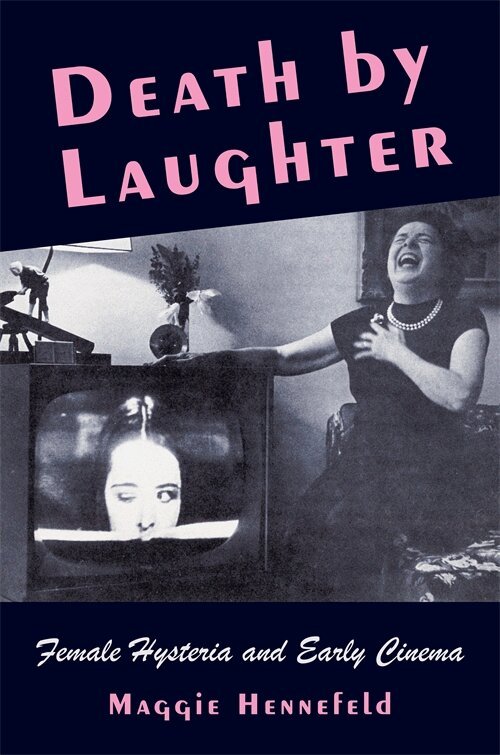
Winner, 2025 Limina Award for Best International Film Studies Book, Cinéma & CieShortlisted, 2025 Modernist Studies Association Book PrizeShortlisted, 2025 Eiffel Award - Cinema Interpretation, Eiffel FoundationFinalist, 2024 Richard Wall Memorial Award, Theatre Library AssociationCan you really die from laughing too hard? Between 1870 and 1920, hundreds of women suffered such a fate—or so a slew of sensationalist obituaries would have us believe. How could laughter be fatal, and what do these reports of women’s risible deaths tell us about the politics of female joy?Maggie Hennefeld reveals the forgotten histories of “hysterical laughter,” exploring how women’s amusement has been theorized and demonized, suppressed and exploited. In nineteenth-century medicine and culture, hysteria was an ailment that afflicted unruly women on the cusp of emotional or nervous breakdown. Cinema, Hennefeld argues, made it possible for women to laugh outrageously as never before, with irreversible social and political consequences. As female enjoyment became a surefire promise of profitability, alarmist tales of women laughing themselves to death epitomized the tension between subversive pleasure and its violent repression.Hennefeld traces the social politics of women’s laughter from the heyday of nineteenth-century sentimentalism to the collective euphoria of early film spectatorship, traversing contagious dancing outbreaks, hysteria photography, madwomen’s cackling, cinematic close-ups, and screenings of slapstick movies in mental asylums. Placing little-known silent films and an archive of remarkable, often unusual texts in conversation with affect theory, comedy studies, and feminist film theory, this book makes a timely case for the power of hysterical laughter to change the world.
291 kr
Skickas inom 7-10 vardagar
Winner, 2025 Limina Award for Best International Film Studies Book, Cinéma & CieShortlisted, 2025 Modernist Studies Association Book PrizeShortlisted, 2025 Eiffel Award - Cinema Interpretation, Eiffel FoundationFinalist, 2024 Richard Wall Memorial Award, Theatre Library AssociationCan you really die from laughing too hard? Between 1870 and 1920, hundreds of women suffered such a fate—or so a slew of sensationalist obituaries would have us believe. How could laughter be fatal, and what do these reports of women’s risible deaths tell us about the politics of female joy?Maggie Hennefeld reveals the forgotten histories of “hysterical laughter,” exploring how women’s amusement has been theorized and demonized, suppressed and exploited. In nineteenth-century medicine and culture, hysteria was an ailment that afflicted unruly women on the cusp of emotional or nervous breakdown. Cinema, Hennefeld argues, made it possible for women to laugh outrageously as never before, with irreversible social and political consequences. As female enjoyment became a surefire promise of profitability, alarmist tales of women laughing themselves to death epitomized the tension between subversive pleasure and its violent repression.Hennefeld traces the social politics of women’s laughter from the heyday of nineteenth-century sentimentalism to the collective euphoria of early film spectatorship, traversing contagious dancing outbreaks, hysteria photography, madwomen’s cackling, cinematic close-ups, and screenings of slapstick movies in mental asylums. Placing little-known silent films and an archive of remarkable, often unusual texts in conversation with affect theory, comedy studies, and feminist film theory, this book makes a timely case for the power of hysterical laughter to change the world.
375 kr
Skickas inom 7-10 vardagar
We all have images that we find unwatchable, whether for ethical, political, or sensory and affective reasons. From news coverage of terror attacks to viral videos of police brutality, and from graphic horror films to transgressive artworks, many of the images in our media culture might strike us as unsuitable for viewing. Yet what does it mean to proclaim something “unwatchable”: disturbing, revolting, poor, tedious, or literally inaccessible? With over 50 original essays by leading scholars, artists, critics, and curators, this is the first book to trace the “unwatchable” across our contemporary media environment, in which viewers encounter difficult content on various screens and platforms. Appealing to a broad academic and general readership, the volume offers multidisciplinary approaches to the vast array of troubling images that circulate in global visual culture.
1 085 kr
Skickas inom 7-10 vardagar
We all have images that we find unwatchable, whether for ethical, political, or sensory and affective reasons. From news coverage of terror attacks to viral videos of police brutality, and from graphic horror films to transgressive artworks, many of the images in our media culture might strike us as unsuitable for viewing. Yet what does it mean to proclaim something “unwatchable”: disturbing, revolting, poor, tedious, or literally inaccessible? With over 50 original essays by leading scholars, artists, critics, and curators, this is the first book to trace the “unwatchable” across our contemporary media environment, in which viewers encounter difficult content on various screens and platforms. Appealing to a broad academic and general readership, the volume offers multidisciplinary approaches to the vast array of troubling images that circulate in global visual culture.
1 466 kr
Skickas inom 7-10 vardagar
From the films of Larry Clark to the feminist comedy of Amy Schumer to the fall of Louis C. K., comedic, graphic, and violent moments of abjection have permeated twentieth- and twenty-first-century social and political discourse. The contributors to Abjection Incorporated move beyond simple critiques of abjection as a punitive form of social death, illustrating how it has become a contested mode of political and cultural capital-empowering for some but oppressive for others. Escaping abjection's usual confines of psychoanalysis and aesthetic modernism, core to theories of abjection by thinkers such as Kristeva and Bataille, the contributors examine a range of media, including literature, photography, film, television, talking dolls, comics, and manga. Whether analyzing how comedic abjection can help mobilize feminist politics or how expressions of abjection inflect class, race, and gender hierarchies, the contributors demonstrate the importance of competing uses of abjection to contemporary society and politics. They emphasize abjection's role in circumscribing the boundaries of the human and how the threats abjection poses to the self and other, far from simply negative, open up possibilities for radically new politics.Contributors. Meredith Bak, Eugenie Brinkema, James Leo Cahill, Michelle Cho, Maggie Hennefeld, Rob King, Thomas Lamarre, SylvÈre Lotringer, Rijuta Mehta, Mark Mulroney, Nicholas Sammond, Yiman Wang, Rebecca Wanzo
362 kr
Skickas inom 7-10 vardagar
From the films of Larry Clark to the feminist comedy of Amy Schumer to the fall of Louis C. K., comedic, graphic, and violent moments of abjection have permeated twentieth- and twenty-first-century social and political discourse. The contributors to Abjection Incorporated move beyond simple critiques of abjection as a punitive form of social death, illustrating how it has become a contested mode of political and cultural capital-empowering for some but oppressive for others. Escaping abjection's usual confines of psychoanalysis and aesthetic modernism, core to theories of abjection by thinkers such as Kristeva and Bataille, the contributors examine a range of media, including literature, photography, film, television, talking dolls, comics, and manga. Whether analyzing how comedic abjection can help mobilize feminist politics or how expressions of abjection inflect class, race, and gender hierarchies, the contributors demonstrate the importance of competing uses of abjection to contemporary society and politics. They emphasize abjection's role in circumscribing the boundaries of the human and how the threats abjection poses to the self and other, far from simply negative, open up possibilities for radically new politics.Contributors. Meredith Bak, Eugenie Brinkema, James Leo Cahill, Michelle Cho, Maggie Hennefeld, Rob King, Thomas Lamarre, SylvÈre Lotringer, Rijuta Mehta, Mark Mulroney, Nicholas Sammond, Yiman Wang, Rebecca Wanzo