Mahmood Mamdani - Böcker
Visar alla böcker från författaren Mahmood Mamdani. Handla med fri frakt och snabb leverans.
16 produkter
16 produkter
597 kr
Skickas inom 10-15 vardagar
Define and Rule focuses on the turn in late nineteenth-century colonial statecraft when Britain abandoned the attempt to eradicate difference between conqueror and conquered and introduced a new idea of governance, as the definition and management of difference. Mahmood Mamdani explores how lines were drawn between settler and native as distinct political identities, and between natives according to tribe. Out of that colonial experience issued a modern language of pluralism and difference.A mid-nineteenth-century crisis of empire attracted the attention of British intellectuals and led to a reconception of the colonial mission, and to reforms in India, British Malaya, and the Dutch East Indies. The new politics, inspired by Sir Henry Maine, established that natives were bound by geography and custom, rather than history and law, and made this the basis of administrative practice.Maine’s theories were later translated into “native administration” in the African colonies. Mamdani takes the case of Sudan to demonstrate how colonial law established tribal identity as the basis for determining access to land and political power, and follows this law’s legacy to contemporary Darfur. He considers the intellectual and political dimensions of African movements toward decolonization by focusing on two key figures: the Nigerian historian Yusuf Bala Usman, who argued for an alternative to colonial historiography, and Tanzania’s first president, Mwalimu Julius Nyerere, who realized that colonialism’s political logic was legal and administrative, not military, and could be dismantled through nonviolent reforms.
321 kr
Skickas
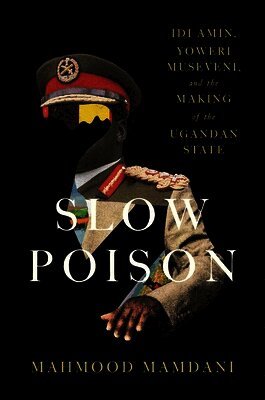
A leading public intellectual gives his authoritative and personal account of the tragic postcolonial fate of Uganda, his homeland. In 1972, when Mahmood Mamdani came home to Uganda, he found a country transformed by “an orgy of violence.” Two years earlier, with support from the colonial powers of Great Britain and Israel, Idi Amin had forcefully cemented his rule. He soon expelled Uganda’s Indian minority in hopes of fostering a nation for Black Ugandans. The plan backfired. Amin was followed by Yoweri Museveni, who has now ruled for nearly four decades. Whereas Amin tried to create a Black nation out of the majority, Museveni sought to fragment this majority into multiple ethnic minorities, recreating a version of colonial indirect rule.Slow Poison is Mamdani’s firsthand report on the tragic unraveling of his country’s struggle for decolonialization. A witness to East Africa’s endlessly intricate power plays, and one of the most insightful political philosophers of his generation, Mamdani casts a learned and wary eye on Amin, internationally depicted as a buffoon, the radical scholar Museveni, and the global heavyweights that exploited and manipulated Uganda before and after its independence.Each leader made violence central to his project, but Mamdani sees a signal difference between Amin, who retained popular support to the end, and Museveni, who has not. The Asian expulsion made Amin a monster in the eyes of the West. In contrast, Museveni was hailed as standard bearer of the “war on terror” in Africa and was protected from accountability for far greater crimes. In exchange for adopting the package of neoliberal reforms known as the Washington Consensus, he became Africa’s poster child. Amin, who aimed to create a nation of Black millionaires, never became one himself. Meanwhile, Uganda’s surrender to privatization has brought Museveni’s family immense wealth, even as the country remains one of the world’s poorest.
210 kr
Skickas inom 7-10 vardagar
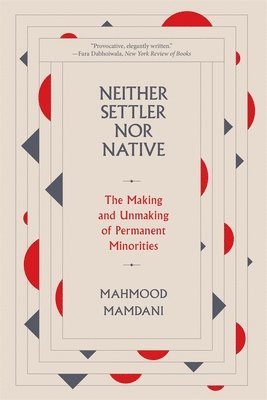
Prospect Top 50 Thinker of 2021British Academy Book Prize FinalistPROSE Award Finalist“Provocative, elegantly written.”—Fara Dabhoiwala, New York Review of Books“Demonstrates how a broad rethinking of political issues becomes possible when Western ideals and practices are examined from the vantage point of Asia and Africa.”—Pankaj Mishra, New York Review of BooksIn case after case around the globe—from Israel to Sudan—the colonial state and the nation-state have been constructed through the politicization of a religious or ethnic majority at the expense of an equally manufactured minority. The model emerged in America, where genocide and internment on reservations created a permanent native minority. In Europe, this template would be used both by the Nazis and the Allies.Neither Settler nor Native offers a vision for arresting this process. Mahmood Mamdani points to inherent limitations in the legal solution attempted at Nuremberg. Political violence demands political solutions: not criminal justice but a rethinking of the political community to include victims and perpetrators, bystanders and beneficiaries. Making the radical argument that the nation-state was born of colonialism, he calls on us to delink the nation from the state so as to ensure equal political rights for all who live within its boundaries.“A deeply learned account of the origins of our modern world…Mamdani rejects the current focus on human rights as the means to bring justice to the victims of this colonial and postcolonial bloodshed. Instead, he calls for a new kind of political imagination…Joining the ranks of Hannah Arendt’s Imperialism, Frantz Fanon’s The Wretched of the Earth, and Edward Said’s Orientalism, this book is destined to become a classic text of postcolonial studies and political theory.”—Moustafa Bayoumi, author of How Does It Feel to Be a Problem?“A masterwork of historical comparison and razor-sharp political analysis, with grave lessons about the pitfalls of forgetting, moralizing, or criminalizing this violence. Mamdani also offers a hopeful rejoinder in a revived politics of decolonization.”—Karuna Mantena, Columbia University“A powerfully original argument, one that supplements political analysis with a map for our political future.”—Faisal Devji, University of Oxford
300 kr
Skickas inom 7-10 vardagar
W. E. B. Du Bois was a public intellectual, sociologist, and activist on behalf of the African American community. He profoundly shaped black political culture in the United States through his founding role in the NAACP, as well as internationally through the Pan-African movement. Du Bois's sociological and historical research on African-American communities and culture broke ground in many areas, including the history of the post-Civil War Reconstruction period. Du Bois was also a prolific author of novels, autobiographical accounts, innumerable editorials and journalistic pieces, and several works of history.Collected in one volume for the first time, The World and Africa and Color and Democracy are two of W E. B. Du Bois's most powerful essays on race. He explores how to tell the story of those left out of recorded history, the evils of colonialism worldwide, and Africa's and African's contributions to, and neglect from, world history. More than six decades after W. E. B. Du Bois wrote The World and Africa and Color and Democracy, they remain worthy guides for the twenty-first century. With a series introduction by editor Henry Louis Gates, Jr., and two introductions by top African scholars, this edition is essential for anyone interested in world history.
259 kr
Skickas inom 3-6 vardagar
268 kr
Skickas inom 3-6 vardagar
464 kr
Skickas inom 7-10 vardagar
In analyzing the obstacles to democratization in post- independence Africa, Mahmood Mamdani offers a bold, insightful account of colonialism's legacy--a bifurcated power that mediated racial domination through tribally organized local authorities, reproducing racial identity in citizens and ethnic identity in subjects. Many writers have understood colonial rule as either "direct" (French) or "indirect" (British), with a third variant--apartheid--as exceptional. This benign terminology, Mamdani shows, masks the fact that these were actually variants of a despotism. While direct rule denied rights to subjects on racial grounds, indirect rule incorporated them into a "customary" mode of rule, with state-appointed Native Authorities defining custom. By tapping authoritarian possibilities in culture, and by giving culture an authoritarian bent, indirect rule (decentralized despotism) set the pace for Africa; the French followed suit by changing from direct to indirect administration, while apartheid emerged relatively later. Apartheid, Mamdani shows, was actually the generic form of the colonial state in Africa.Through case studies of rural (Uganda) and urban (South Africa) resistance movements, we learn how these institutional features fragment resistance and how states tend to play off reform in one sector against repression in the other. The result is a groundbreaking reassessment of colonial rule in Africa and its enduring aftereffects. Reforming a power that institutionally enforces tension between town and country, and between ethnicities, is the key challenge for anyone interested in democratic reform in Africa.
292 kr
Skickas inom 7-10 vardagar
An incisive look at the causes and consequences of the Rwandan genocide"When we captured Kigali, we thought we would face criminals in the state; instead, we faced a criminal population." So a political commissar in the Rwanda Patriotic Front reflected after the 1994 massacre of as many as one million Tutsis in Rwanda. Underlying his statement was the realization that, though ordered by a minority of state functionaries, the slaughter was performed by hundreds of thousands of ordinary citizens, including judges, doctors, priests, and friends. Rejecting easy explanations of the Rwandan genocide as a mysterious evil force that was bizarrely unleashed, When Victims Become Killers situates the tragedy in its proper context. Mahmood Mamdani coaxes to the surface the historical, geographical, and political forces that made it possible for so many Hutus to turn so brutally on their neighbors. In so doing, Mamdani usefully broadens understandings of citizenship and political identity in postcolonial Africa and provides a direction for preventing similar future tragedies.
215 kr
Tillfälligt slut
Saviours and Survivors is the first account of the Darfur crisis to consider recent events within the broad context of Sudan's history, and to examine the efficacy of the world's response to the ongoing violence. Illuminating the deeply rooted causes of the current conflict, Mamdani works from its colonial and Cold War origins to the war's intensification from the 1990s to the present day. Examining how the conflict has drawn in national, regional, and global forces, Mamdani deconstructs the powerful Western lobby's persistent calls for a military response dressed up as "humanitarian intervention". Incisive and authoritative, Saviours and Survivors will radically alter our understanding of the crisis in Darfur.
717 kr
Skickas inom 5-8 vardagar
1 888 kr
Skickas inom 5-8 vardagar
692 kr
Skickas inom 5-8 vardagar
Understanding the Crisis in Kivu
Report of the CODESRIA Mission to the Democratic Republic
Häftad, Engelska, 2000
360 kr
Skickas inom 5-8 vardagar
274 kr
Skickas inom 5-8 vardagar
278 kr
Skickas inom 5-8 vardagar
Scholars in the Marketplace
The Dilemmas of Neo-Liberal Reform at Makerere University, 1989-2005
Häftad, Engelska, 2007
717 kr
Skickas inom 5-8 vardagar