Makoto Nishibe - Böcker
Visar alla böcker från författaren Makoto Nishibe. Handla med fri frakt och snabb leverans.
7 produkter
7 produkter
1 210 kr
Skickas inom 11-20 vardagar
In contrast, community currencies conveying both economic and social/cultural values are distinct platform institutions that are expected to endogenously change such basic replicators in outer and inner institutions for agents to a noncapitalistic market economy.
982 kr
Skickas inom 10-15 vardagar
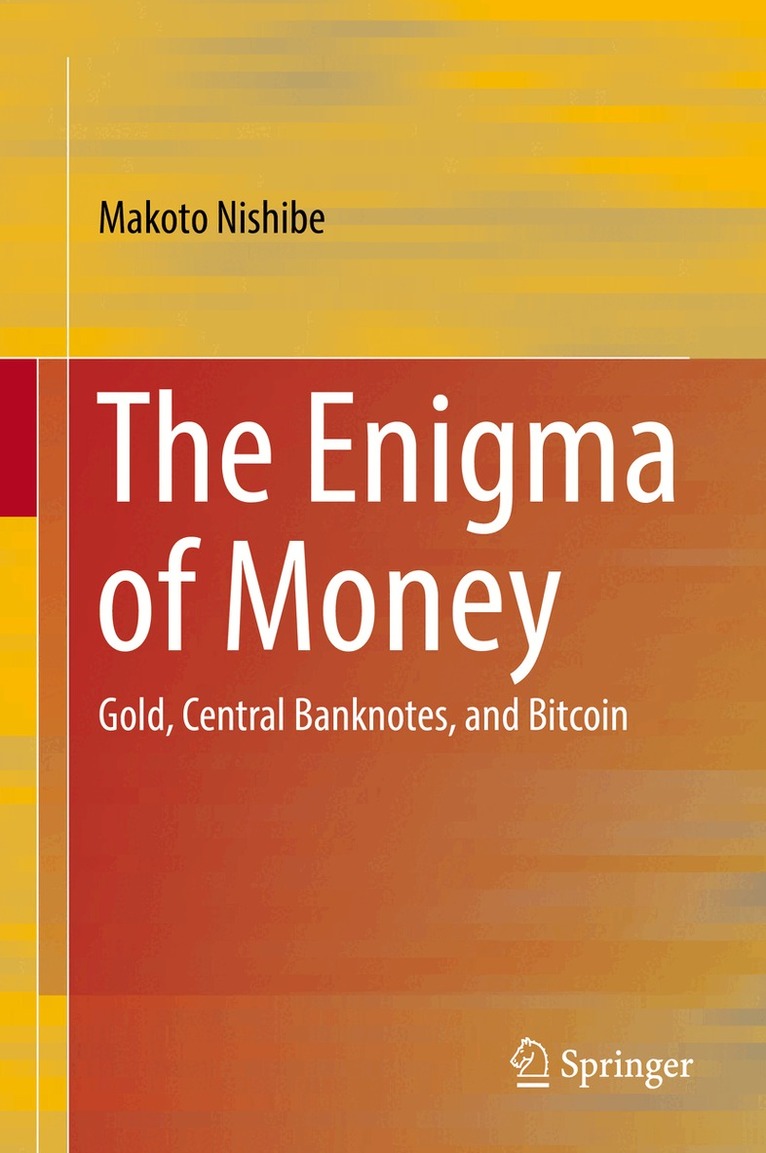
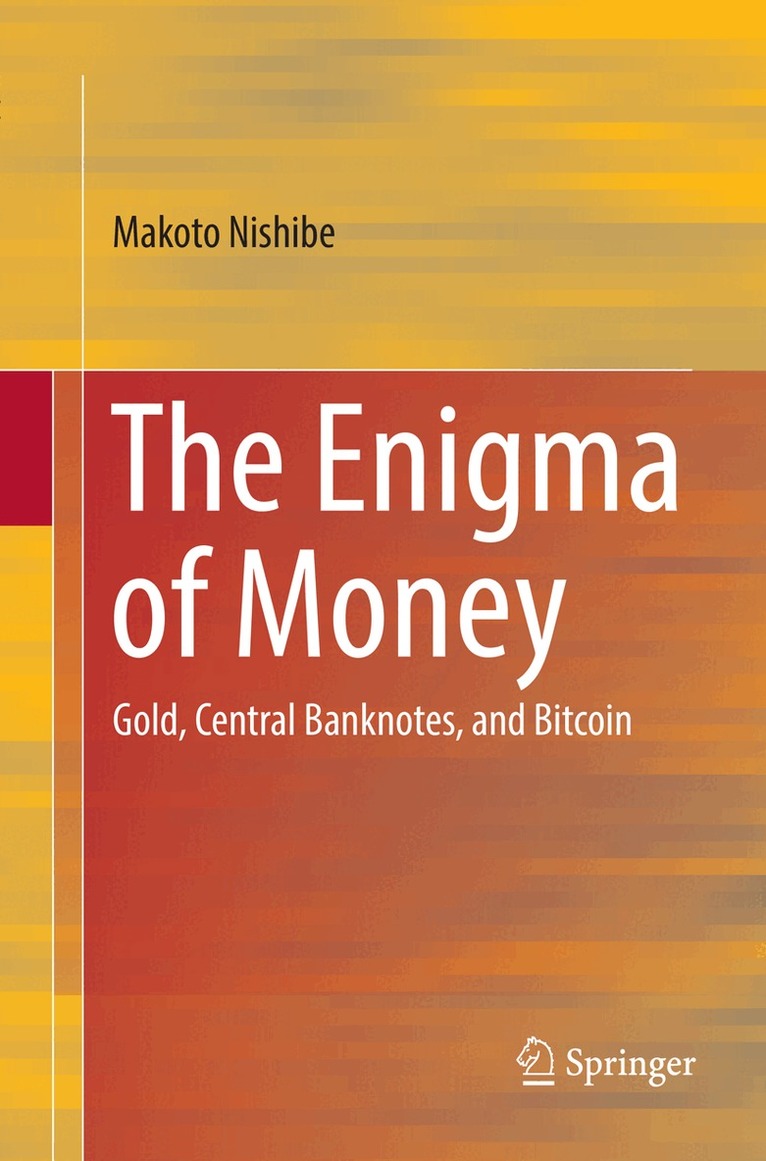
This book provides a new way of understanding modern money and markets by stressing their self-fulfilling/self-destructive properties as institutions from evolutionary perspectives. In contrast to an unrealistic view of the neoclassical general equilibrium theory that models the price mechanism of a “concentrated market” without using money, presented here is an alternative theory of markets on how a realistic “dispersive market” using a stock of money and inventory as buffers can work as a multilayered price-quantitative adjustment system. The central features of modern sovereign moneys seen in inconvertible IOUs of central banknotes can be depicted as “The Emperor's New Clothes” that correspond to the U.S. dollar and the Euro void of their own value. The image captures such characteristics of national currencies as “self-fulfilling ideas” by the inertia of conventions in the past and expectations of an uncertain future. Both ideas normally make money more acceptableand circulative so that its value can become more stable unless expectations for the future turn very pessimistic.The same logic also applies to such other currencies as Bitcoin and community currencies. Their recent diffusion has shown that Hayek's idea of denationalization of money and competition between multiple currencies in terms of its qualities, not its quantities sought as in ongoing quantitative easing, become more relevant under current situations. The qualities of money refer not only to stable monetary values and low transaction costs, but also to high ability in creating, sharing, and communicating social and cultural value.The potential of the logic of self-fulfillment of ideas can thus open up a new economic society when we realize that such various non-national currencies all depend on the same logic of money.
982 kr
Skickas inom 10-15 vardagar
This book provides a new way of understanding modern money and markets by stressing their self-fulfilling/self-destructive properties as institutions from evolutionary perspectives. In contrast to an unrealistic view of the neoclassical general equilibrium theory that models the price mechanism of a “concentrated market” without using money, presented here is an alternative theory of markets on how a realistic “dispersive market” using a stock of money and inventory as buffers can work as a multilayered price-quantitative adjustment system. The central features of modern sovereign moneys seen in inconvertible IOUs of central banknotes can be depicted as “The Emperor's New Clothes” that correspond to the U.S. dollar and the Euro void of their own value. The image captures such characteristics of national currencies as “self-fulfilling ideas” by the inertia of conventions in the past and expectations of an uncertain future. Both ideas normally make money more acceptableand circulative so that its value can become more stable unless expectations for the future turn very pessimistic.The same logic also applies to such other currencies as Bitcoin and community currencies. Their recent diffusion has shown that Hayek's idea of denationalization of money and competition between multiple currencies in terms of its qualities, not its quantities sought as in ongoing quantitative easing, become more relevant under current situations. The qualities of money refer not only to stable monetary values and low transaction costs, but also to high ability in creating, sharing, and communicating social and cultural value.The potential of the logic of self-fulfillment of ideas can thus open up a new economic society when we realize that such various non-national currencies all depend on the same logic of money.
1 091 kr
Skickas inom 10-15 vardagar
This book is the first to clarify the essential meaning and serious impact of globalization at the most abstract level from the point of view of Polanyi's three socioeconomic principles of exchange, reciprocity and redistribution. It also provides a theoretically coherent explanation of the evolution of the market and capitalist economies with respect to the advancement of commodification through Marx's internalization of the market into the community and state.Globalization is the long-term tendency of the market to extensively expand and deepen, and of the community and state to contract and become shallower. The ultimate goal of globalization is free investment capitalism for all people – not only capitalists and speculators, but workers, students, and housewives as well.The book also examines Hayek's criticism of a centrally planned economy and Lange's proposal of market socialism in the “Socialist Calculation” debate, which has been ongoing since the 1920s, and acknowledges Hayek's vision of a distributed market with local and tacit knowledge to explain why socialism is infeasible and capitalism is robust.The outcomes of globalization are disastrous in socioeconomic, cultural and ecological realms. As such, it argues that in the twenty-first century, a post-capitalist, cooperative market economy mediated by new forms of money as communication media must be achieved. These new media will include community currencies and local exchange trading systems (LETS) that can maintain the merits of money and the market and can overcome the defects of free investment capitalism.Lastly, this English version of the book includes a postscript explaining the significance and prospects of the socioeconomic changes around the globe since the publication of Japanese version in 2011.
766 kr
Skickas inom 10-15 vardagar
This book is the first to clarify the essential meaning and serious impact of globalization at the most abstract level from the point of view of Polanyi's three socioeconomic principles of exchange, reciprocity and redistribution. It also provides a theoretically coherent explanation of the evolution of the market and capitalist economies with respect to the advancement of commodification through Marx's internalization of the market into the community and state.Globalization is the long-term tendency of the market to extensively expand and deepen, and of the community and state to contract and become shallower. The ultimate goal of globalization is free investment capitalism for all people – not only capitalists and speculators, but workers, students, and housewives as well.The book also examines Hayek's criticism of a centrally planned economy and Lange's proposal of market socialism in the “Socialist Calculation” debate, which has been ongoing since the 1920s, and acknowledges Hayek's vision of a distributed market with local and tacit knowledge to explain why socialism is infeasible and capitalism is robust.The outcomes of globalization are disastrous in socioeconomic, cultural and ecological realms. As such, it argues that in the twenty-first century, a post-capitalist, cooperative market economy mediated by new forms of money as communication media must be achieved. These new media will include community currencies and local exchange trading systems (LETS) that can maintain the merits of money and the market and can overcome the defects of free investment capitalism.Lastly, this English version of the book includes a postscript explaining the significance and prospects of the socioeconomic changes around the globe since the publication of Japanese version in 2011.
Del 31 - Evolutionary Economics and Social Complexity Science
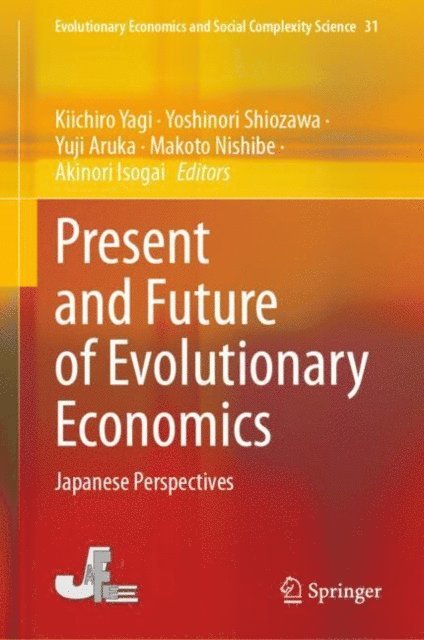
Present and Future of Evolutionary Economics
Japanese Perspectives
Inbunden, Engelska, 2024
2 391 kr
Skickas inom 7-10 vardagar
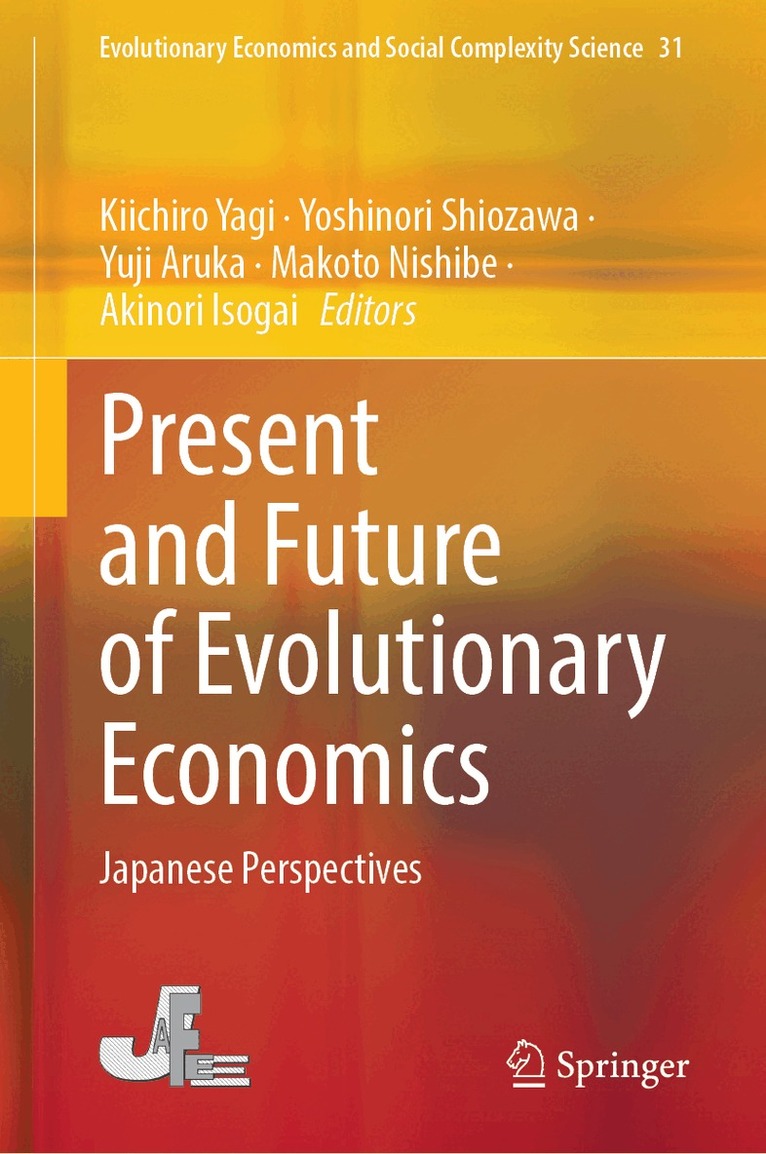
This edited volume celebrates a quarter-century’s anniversary of the foundation of the Japan Association for Evolutionary Economics (JAFEE) and proposes the future perspectives of evolutionary economics on the grounds of its achievements in Japan.
Del 31 - Evolutionary Economics and Social Complexity Science
Present and Future of Evolutionary Economics
Japanese Perspectives
Häftad, Engelska, 2025
2 391 kr
Skickas inom 10-15 vardagar
This edited volume celebrates a quarter-century’s anniversary of the foundation of the Japan Association for Evolutionary Economics (JAFEE) and proposes the future perspectives of evolutionary economics on the grounds of its achievements in Japan. When JAFEE was founded in 1997, hundreds of ambitious non-neo-classical economists gathered in this forum to advance new directions of economic research. Succeeding in 2004, JAFEE launched an international academic journal, Evolutionary and Institutional Economics Review (EIER), which is now published by Springer.Evolutionary economics found rich soil for growth in Japan, where non-orthodox directions in economic theory and historical interest in the past masters’ works occupied a solid portion of economics academism. Evolutionary economics in Japan has grown with the collaboration of non-neoclassical economics including Marxian and post-Keynesian economics, agent-based modeling, complexity studies, comparative economic systems, and studies in industrial evolution. Combining the renovation of classical value theory as the micro-foundation of evolutionary economics is one of its most conspicuous achievements. Experimental methods are also used in the artificial domain, regional studies (community currencies), and other domains. Further, evolutionary ideas stimulated comparative analysis of national economies in the development and system transition. The variety of chapters in this volume reflects the broad perspective and the multiplicity of approaches to evolutionary economics in Japan, which thus stimulates its worldwide advance.