Kiichiro Yagi – författare
2 031 kr
Skickas inom 10-15 vardagar
585 kr
Skickas inom 10-15 vardagar
2 320 kr
Skickas inom 10-15 vardagar
2 320 kr
Skickas inom 10-15 vardagar
695 kr
Skickas inom 10-15 vardagar
693 kr
Läs direkt efter köp
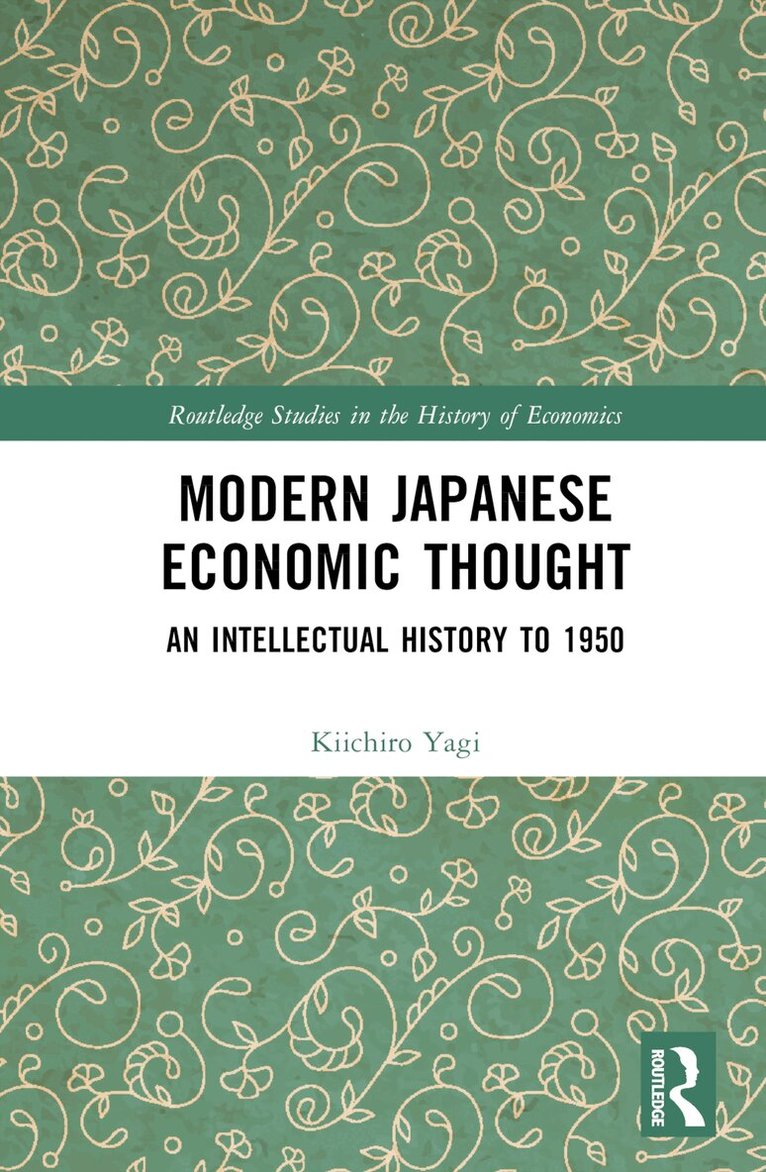
Since the late-19th century, Japan has made remarkable strides in industrialization. Beginning with the economic vision of Miura Baien in the 18th century, and employing a detailed comparison with the West, this book delves into the economic thought of the scholars who played a pivotal role in Japan’s modernization process.
The author takes Fukuzawa Yukichi’s theory of ‘civilization’ as the standard measure of Japan’s modernization and compares it with differing visions from various critics whose research focused on rural poverty and social problems, such as Maeda Masana, early socialists, Yanagita Kunio and Kawakami Hajime. Further, the book explores new liberalism (Ishibashi Tanzan, Fukuda Tokuzo) and Marxism (Yamada Moritaro, Uno Kozo) in the 1920s and 1930s. After discussing the dilemmas faced by economists during wartime (Takata Yasuma, Ryu Shintaro, Shibata Kei), the author concludes this intellectual history with the country’s post-1945 democratic reforms and their early demise.
This book is valuable reading for students and researchers of Japan’s intellectual history. However, due to the book’s comparative perspective, as well as the universality of the modernization experience, it will also appeal to students and researchers of the history of economic thought and modern intellectual history.
693 kr
Läs direkt efter köp
Since the late-19th century, Japan has made remarkable strides in industrialization. Beginning with the economic vision of Miura Baien in the 18th century, and employing a detailed comparison with the West, this book delves into the economic thought of the scholars who played a pivotal role in Japan’s modernization process.
The author takes Fukuzawa Yukichi’s theory of ‘civilization’ as the standard measure of Japan’s modernization and compares it with differing visions from various critics whose research focused on rural poverty and social problems, such as Maeda Masana, early socialists, Yanagita Kunio and Kawakami Hajime. Further, the book explores new liberalism (Ishibashi Tanzan, Fukuda Tokuzo) and Marxism (Yamada Moritaro, Uno Kozo) in the 1920s and 1930s. After discussing the dilemmas faced by economists during wartime (Takata Yasuma, Ryu Shintaro, Shibata Kei), the author concludes this intellectual history with the country’s post-1945 democratic reforms and their early demise.
This book is valuable reading for students and researchers of Japan’s intellectual history. However, due to the book’s comparative perspective, as well as the universality of the modernization experience, it will also appeal to students and researchers of the history of economic thought and modern intellectual history.
849 kr
Läs direkt efter köp
826 kr
Läs direkt efter köp
952 kr
Läs direkt efter köp
This book intends to renovate the view of social sciences in the German-speaking world. It explores the intellectual tension in the social science in Austria and Germany in the late-nineteenth and early-twentieth centuries. It deals with how the emergence of the new school (Austrian School) changed the focus of social science in the German speaking world, and how it prepared the introduction of an evolutionary perspective in economics, politics, and sociology. Based on (mostly hitherto unknown) primary evidence, this development is lively described in a series of encounters and decisions by each social scientists.
952 kr
Läs direkt efter köp
This book intends to renovate the view of social sciences in the German-speaking world. It explores the intellectual tension in the social science in Austria and Germany in the late-nineteenth and early-twentieth centuries. It deals with how the emergence of the new school (Austrian School) changed the focus of social science in the German speaking world, and how it prepared the introduction of an evolutionary perspective in economics, politics, and sociology. Based on (mostly hitherto unknown) primary evidence, this development is lively described in a series of encounters and decisions by each social scientists.
687 kr
Skickas inom 10-15 vardagar
802 kr
Skickas inom 10-15 vardagar
2 393 kr
Skickas inom 10-15 vardagar
814 kr
Läs direkt efter köp
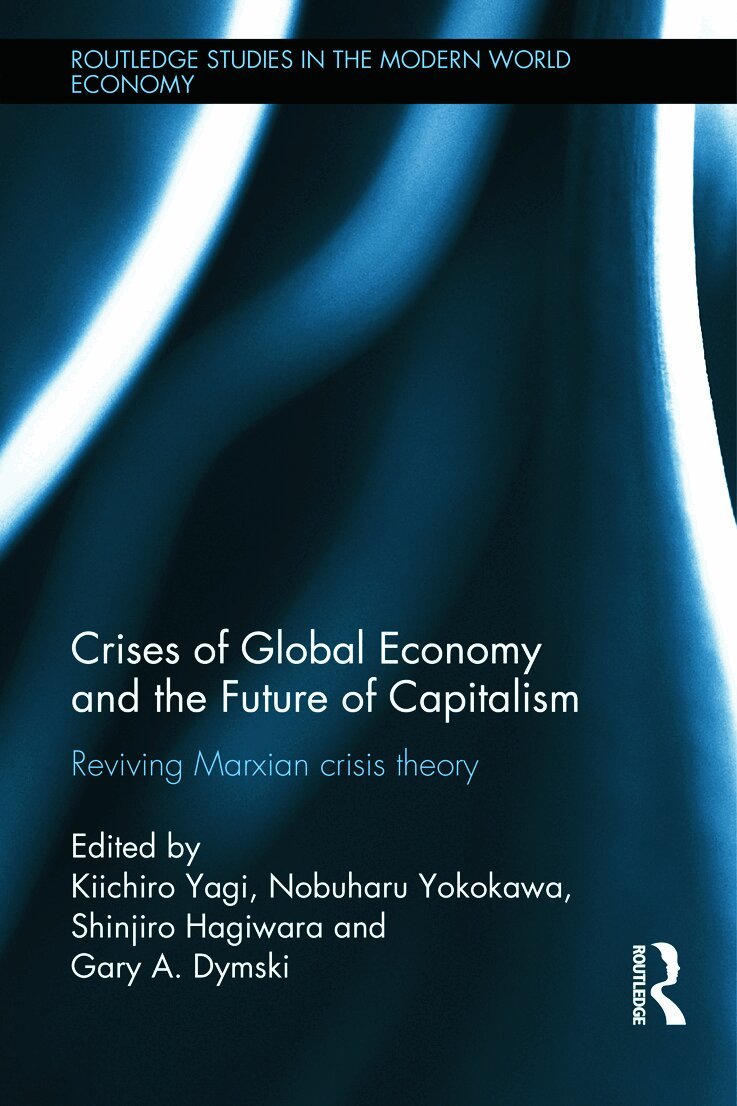
This book provides the basic knowledge of Japanese contributions in political economy and the ongoing research agenda, such as the pursuit of theoretical consistency in Marxian economics by Uno School; the concept of ‘civil society’ as a criterion of existing socio-economic structure; a mathematical reconstruction of Marxian theory; and an analysis of environmental pollution. The new generation of Japanese political economists in collaboration with their overseas counterparts has produced new insights into political economy and into the newly emerging structure of the world economy.
The book provides useful insights into international capitalism and how past patterns of uneven development are now changing; the role of international finance in affecting both national and international growth and employment patterns; an analysis of recent growth patterns in Asia; and the specific issue emerging within the Asian region and the implications for economics, social change and geopolitics.
814 kr
Läs direkt efter köp
This book provides the basic knowledge of Japanese contributions in political economy and the ongoing research agenda, such as the pursuit of theoretical consistency in Marxian economics by Uno School; the concept of ‘civil society’ as a criterion of existing socio-economic structure; a mathematical reconstruction of Marxian theory; and an analysis of environmental pollution. The new generation of Japanese political economists in collaboration with their overseas counterparts has produced new insights into political economy and into the newly emerging structure of the world economy.
The book provides useful insights into international capitalism and how past patterns of uneven development are now changing; the role of international finance in affecting both national and international growth and employment patterns; an analysis of recent growth patterns in Asia; and the specific issue emerging within the Asian region and the implications for economics, social change and geopolitics.
1 635 kr
Skickas inom 10-15 vardagar
2 049 kr
Läs direkt efter köp
1 635 kr
Skickas inom 10-15 vardagar
From Reproduction to Evolutionary Governance
Toward an Evolutionary Political Economy
1 235 kr
Skickas inom 10-15 vardagar
1 108 kr
Läs direkt efter köp
From Reproduction to Evolutionary Governance
Toward an Evolutionary Political Economy
900 kr
Skickas inom 10-15 vardagar
Present and Future of Evolutionary Economics
Japanese Perspectives
2 463 kr
Skickas inom 10-15 vardagar
3 137 kr
Läs direkt efter köp
This edited volume celebrates a quarter-century’s anniversary of the foundation of the Japan Association for Evolutionary Economics (JAFEE) and proposes the future perspectives of evolutionary economics on the grounds of its achievements in Japan. When JAFEE was founded in 1997, hundreds of ambitious non-neo-classical economists gathered in this forum to advance new directions of economic research. Succeeding in 2004, JAFEE launched an international academic journal, Evolutionary and Institutional Economics Review (EIER), which is now published by Springer.Evolutionary economics found rich soil for growth in Japan, where non-orthodox directions in economic theory and historical interest in the past masters’ works occupied a solid portion of economics academism. Evolutionary economics in Japan has grown with the collaboration of non-neoclassical economics including Marxian and post-Keynesian economics, agent-based modeling, complexity studies, comparative economic systems, and studies in industrial evolution. Combining the renovation of classical value theory as the micro-foundation of evolutionary economics is one of its most conspicuous achievements. Experimental methods are also used in the artificial domain, regional studies (community currencies), and other domains. Further, evolutionary ideas stimulated comparative analysis of national economies in the development and system transition.
The variety of chapters in this volume reflects the broad perspective and the multiplicity of approaches to evolutionary economics in Japan, which thus stimulates its worldwide advance.
Present and Future of Evolutionary Economics
Japanese Perspectives
2 463 kr
Skickas inom 10-15 vardagar