Richard Westra – författare
1 086 kr
Skickas inom 10-15 vardagar
1 086 kr
Skickas inom 10-15 vardagar
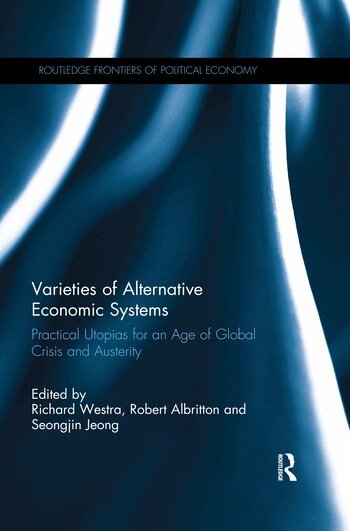
Varieties of Alternative Economic Systems
Practical Utopias for an Age of Global Crisis and Austerity
687 kr
Skickas inom 10-15 vardagar
687 kr
Skickas inom 10-15 vardagar
2 248 kr
Skickas inom 10-15 vardagar
658 kr
Skickas inom 10-15 vardagar
2 465 kr
Skickas inom 10-15 vardagar
2 253 kr
Skickas inom 10-15 vardagar
716 kr
Skickas inom 10-15 vardagar
695 kr
Skickas inom 10-15 vardagar
2 393 kr
Skickas inom 10-15 vardagar
2 394 kr
Skickas inom 10-15 vardagar
306 kr
Skickas inom 3-6 vardagar
779 kr
Läs direkt efter köp
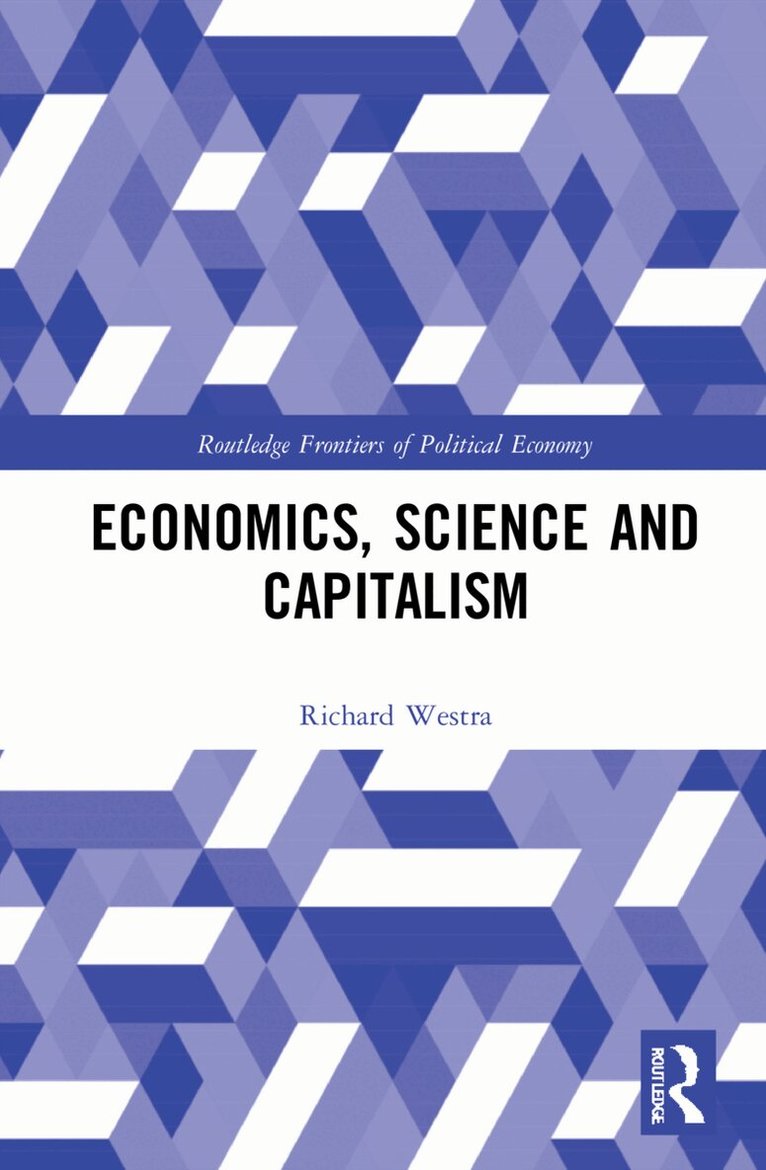
Various strains of heterodox economics have sought, and largely failed, to dismount orthodoxy from its dominant position. This book critiques the criticizers, explaining why heterodox economics challenges have faltered, and then presents a coherent alternative paradigm of its own. This simultaneously exposes the vacuousness of neoclassical economics, the limitations of heterodox critique and the subverting of Karl Marx’s revolutionary economic thought by his own disciples.
The book draws in particular on two key intellectual traditions in making its arguments: critical realism and Marxism. From the refounding of critical realist philosophy of science in the hands of Roy Bhaskar, emphasis is placed upon the position that the ontological nature of the object of study determines the form of its possible science. However, in their theoretical constructions, neither orthodox economics nor heterodox economics problematizes the unique ontology of capitalism to the detriment of knowledge about the social world. The book maintains that a century of misthinking over Marx’s corpus has resulted in a missed opportunity to construct a paradigmatic alternative to orthodox economics. Drawing upon the tradition of the Japanese Uno approach to Marxism, and supported by Bhaskar’s development of critical realism as underlaborer for science, the book defends Marx’s writing in his monumental Capital as founding an economic science adequate to its ontological object of study. It then elaborates upon how Marxian economic theory exposes the hidden scourges of capitalism and what is required to unleash the potential of this theory for comprehensive analysis of capitalist vicissitudes, the study of economic life in precapitalist societies and the design of a desperately needed postcapitalist social order.
Broadening its appeal as it sets out to reclaim Marx’s revolutionary legacy, this original volume critically traverses writings in mainstream and heterodox economics, cutting edge philosophy of science and Marxian political economy and introduces readers to a reconstruction of Marx’s Capital engineered in Japan. This provocative book is essential reading for everyone interested in heterodox economics, critical realism, Marxian economics and critiques of capitalism.
752 kr
Läs direkt efter köp
Various strains of heterodox economics have sought, and largely failed, to dismount orthodoxy from its dominant position. This book critiques the criticizers, explaining why heterodox economics challenges have faltered, and then presents a coherent alternative paradigm of its own. This simultaneously exposes the vacuousness of neoclassical economics, the limitations of heterodox critique and the subverting of Karl Marx’s revolutionary economic thought by his own disciples.
The book draws in particular on two key intellectual traditions in making its arguments: critical realism and Marxism. From the refounding of critical realist philosophy of science in the hands of Roy Bhaskar, emphasis is placed upon the position that the ontological nature of the object of study determines the form of its possible science. However, in their theoretical constructions, neither orthodox economics nor heterodox economics problematizes the unique ontology of capitalism to the detriment of knowledge about the social world. The book maintains that a century of misthinking over Marx’s corpus has resulted in a missed opportunity to construct a paradigmatic alternative to orthodox economics. Drawing upon the tradition of the Japanese Uno approach to Marxism, and supported by Bhaskar’s development of critical realism as underlaborer for science, the book defends Marx’s writing in his monumental Capital as founding an economic science adequate to its ontological object of study. It then elaborates upon how Marxian economic theory exposes the hidden scourges of capitalism and what is required to unleash the potential of this theory for comprehensive analysis of capitalist vicissitudes, the study of economic life in precapitalist societies and the design of a desperately needed postcapitalist social order.
Broadening its appeal as it sets out to reclaim Marx’s revolutionary legacy, this original volume critically traverses writings in mainstream and heterodox economics, cutting edge philosophy of science and Marxian political economy and introduces readers to a reconstruction of Marx’s Capital engineered in Japan. This provocative book is essential reading for everyone interested in heterodox economics, critical realism, Marxian economics and critiques of capitalism.
2 423 kr
Skickas inom 10-15 vardagar
652 kr
Skickas inom 5-8 vardagar
2 495 kr
Skickas inom 10-15 vardagar
774 kr
Läs direkt efter köp
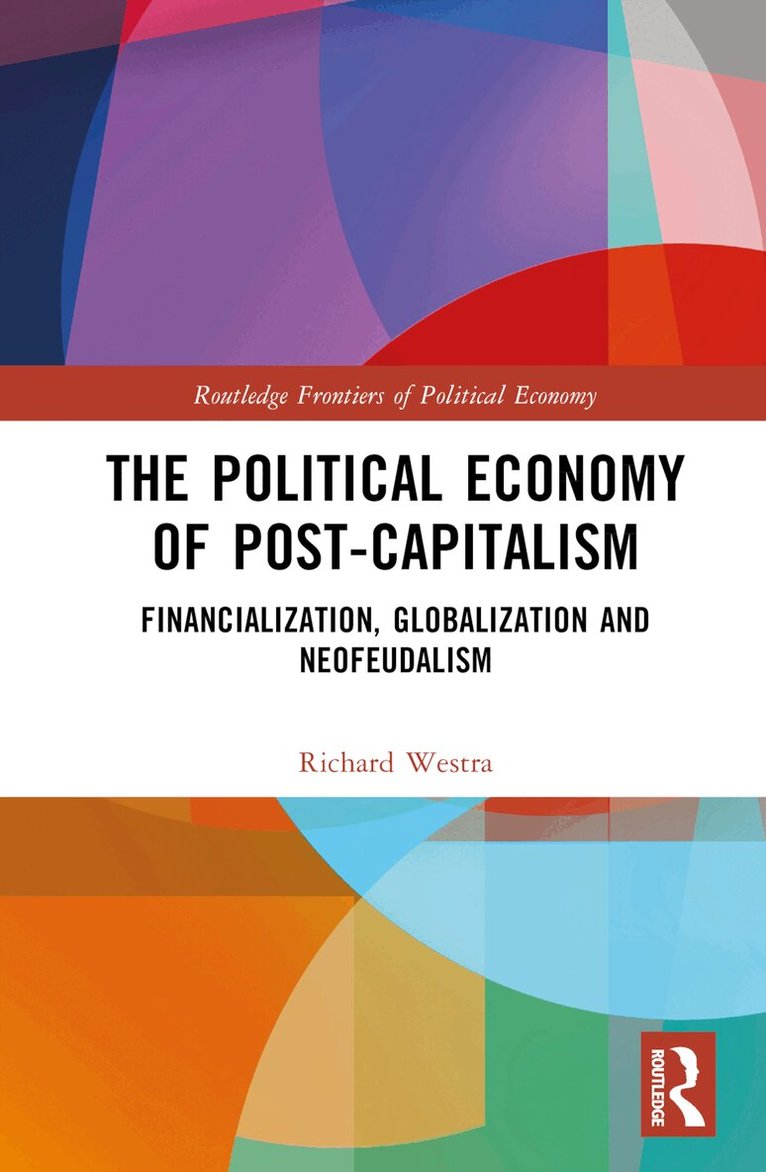
Westra explores a nuanced literature on post-capitalism which claims that instead of constituting the end of history or ending in its supplanting by socialism, capitalism has transmuted into something else. Foci of this literature ranges from questions of financial system and technological change through evidence of shifting class contours metastasizing a more predatory constellation.
In exposing the dire consequences for humanity of capitalist unravelling, Westra remedies the lacunae of current writings which leave fundamental questions of what precisely capitalism is or was and the historical delimitations of capitalism unanswered. He not only critically analyzes the arguments over capitalisms passing under key rubrics of financialization, globalization, intangible assets and social class, but grounds determinations over the existence of capitalism in a novel synthetic definition of it drawn from Marx. While capitalism has always been an exploitative, asymmetric wealth distributive, alienating, class divisive, crises ridden society, Westra explains how current economic transmutations undermine what coherence capitalism had historically maintained.
This book, written in a clear and compelling fashion, is a clarion call for social change. It will be of interest to academics and students across fields of economics, political economy, economic history, political science and sociology as well as to progressive policymakers and social activists.
774 kr
Läs direkt efter köp
Westra explores a nuanced literature on post-capitalism which claims that instead of constituting the end of history or ending in its supplanting by socialism, capitalism has transmuted into something else. Foci of this literature ranges from questions of financial system and technological change through evidence of shifting class contours metastasizing a more predatory constellation.
In exposing the dire consequences for humanity of capitalist unravelling, Westra remedies the lacunae of current writings which leave fundamental questions of what precisely capitalism is or was and the historical delimitations of capitalism unanswered. He not only critically analyzes the arguments over capitalisms passing under key rubrics of financialization, globalization, intangible assets and social class, but grounds determinations over the existence of capitalism in a novel synthetic definition of it drawn from Marx. While capitalism has always been an exploitative, asymmetric wealth distributive, alienating, class divisive, crises ridden society, Westra explains how current economic transmutations undermine what coherence capitalism had historically maintained.
This book, written in a clear and compelling fashion, is a clarion call for social change. It will be of interest to academics and students across fields of economics, political economy, economic history, political science and sociology as well as to progressive policymakers and social activists.
797 kr
Läs direkt efter köp
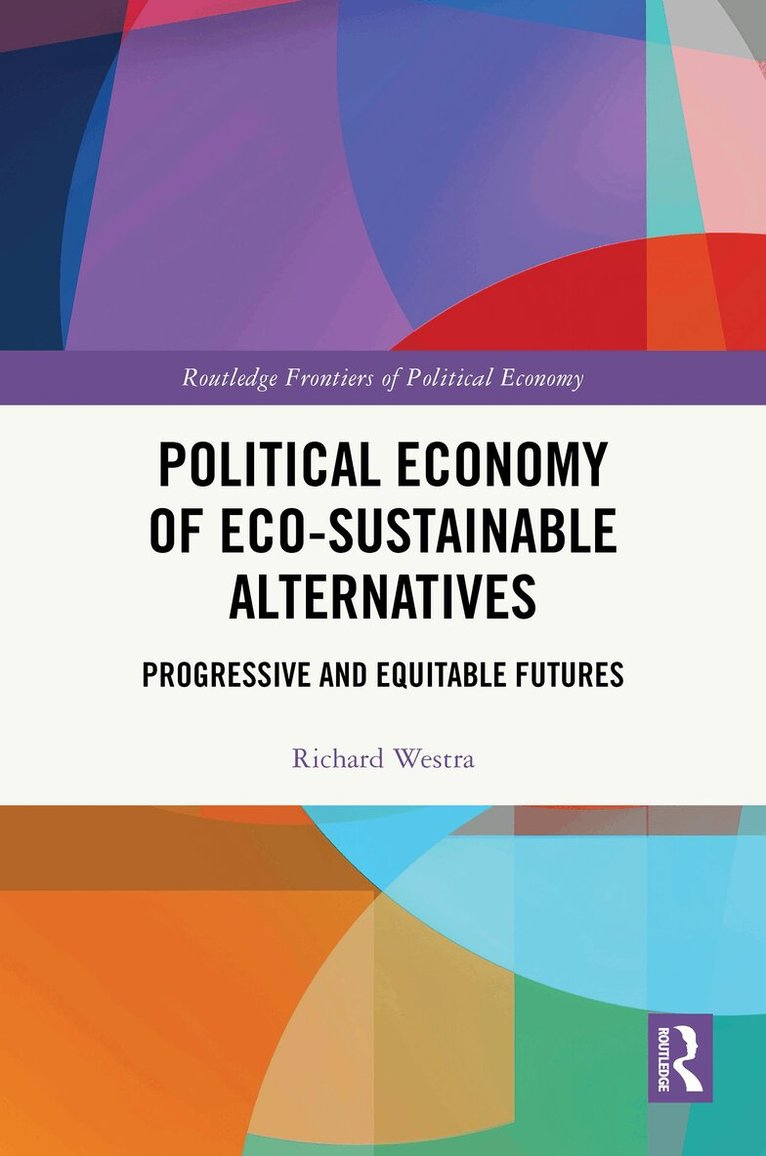
Westra recounts how the unceremonious collapse of Soviet-style socialism coupled with mounting awareness of unfolding environmental destruction and irreversible climate change opened the door to a new, wide-ranging, social change literature. In this exciting book, he begins by tracing out the case for the Anthropocene. He then provides an unparalleled, inclusive critical exploration of the plurality of progressive designs on offer. These include the Green New Deal, “nowtopias” of cooperative, solidarity and commoning economies, ecofeminism, Degrowth society as well as ecosocialism and democratic socialism.
Westra firstly explains why the Green New Deal program to sustainably develop capitalism is unworkable given the boundedness of resources necessary to generalize the advanced economy “way of life” it seeks to maintain. Secondly, while he concurs with much that the new social change literature offers, his concern is with the way it abandons a major caution that had been levelled at so-called “utopian socialists” in the past. To be sure, the problem does not reside with bursts of creative, future directed thinking in themselves. Rather, where difficulties arise is over the paucity of attention devoted to questions of economic coordination and principles of economic viability. Westra explains how only by combining several economic principles, each operating at a determinate scale and devoted to specific elements of human social and material reproduction will the promise of an equitable, ecosustainable human future be realized.
This unique volume will be of interest to academic specialists and students of political economy, economics, environmental sustainability, sociology and political science. Progressive policy makers and social activists will also find its arguments refreshing and compelling.
769 kr
Läs direkt efter köp
Westra recounts how the unceremonious collapse of Soviet-style socialism coupled with mounting awareness of unfolding environmental destruction and irreversible climate change opened the door to a new, wide-ranging, social change literature. In this exciting book, he begins by tracing out the case for the Anthropocene. He then provides an unparalleled, inclusive critical exploration of the plurality of progressive designs on offer. These include the Green New Deal, “nowtopias” of cooperative, solidarity and commoning economies, ecofeminism, Degrowth society as well as ecosocialism and democratic socialism.
Westra firstly explains why the Green New Deal program to sustainably develop capitalism is unworkable given the boundedness of resources necessary to generalize the advanced economy “way of life” it seeks to maintain. Secondly, while he concurs with much that the new social change literature offers, his concern is with the way it abandons a major caution that had been levelled at so-called “utopian socialists” in the past. To be sure, the problem does not reside with bursts of creative, future directed thinking in themselves. Rather, where difficulties arise is over the paucity of attention devoted to questions of economic coordination and principles of economic viability. Westra explains how only by combining several economic principles, each operating at a determinate scale and devoted to specific elements of human social and material reproduction will the promise of an equitable, ecosustainable human future be realized.
This unique volume will be of interest to academic specialists and students of political economy, economics, environmental sustainability, sociology and political science. Progressive policy makers and social activists will also find its arguments refreshing and compelling.
824 kr
Läs direkt efter köp
824 kr
Läs direkt efter köp
824 kr
Läs direkt efter köp
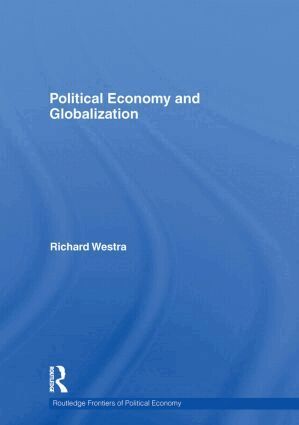
Based upon distinguishing capitalism from other economic systems, as well as analysis of capitalist change across its stages of development, Richard Westra argues that the economic tendencies we refer to as globalization constitute a world historic transition away from capitalism. Westra forcefully rejects claims from both Right and Left sides of economic debate that globalization embodies the ultimate world diffusion of capitalism. He concludes that the choice facing humanity is no longer between capitalism and socialism but between socialism and global barbarism.
The argument is meticulously interwoven through four key foci of political economy -
The role of Marx’s Capital in producing knowledge of capitalism,
The periodizing of capitalism and study of its historical models,
The altering trajectories of production and finance under current globalization,
The place of socialism in a progressive future.
A central point of the book is that determinations over the capitalist substance of existing economies demand precise understanding of how in its basic operation capitalism manages to secure the economic reproducibility of human society in the first place. To make the case for the passing of capitalism from history the volume draws upon the novel Japanese Uno approach to Marxian political economy.
From the pages of Political Economy and Globalization emerges a grim picture of our human future should current economic trends persist. It also offers a positive vision for socio-material betterment in redistributive, eco-sensitive socialist societies of tomorrow. This is a must read book for scholars, students, progressive policy makers and activists.
824 kr
Läs direkt efter köp
Based upon distinguishing capitalism from other economic systems, as well as analysis of capitalist change across its stages of development, Richard Westra argues that the economic tendencies we refer to as globalization constitute a world historic transition away from capitalism. Westra forcefully rejects claims from both Right and Left sides of economic debate that globalization embodies the ultimate world diffusion of capitalism. He concludes that the choice facing humanity is no longer between capitalism and socialism but between socialism and global barbarism.
The argument is meticulously interwoven through four key foci of political economy -
The role of Marx’s Capital in producing knowledge of capitalism,
The periodizing of capitalism and study of its historical models,
The altering trajectories of production and finance under current globalization,
The place of socialism in a progressive future.
A central point of the book is that determinations over the capitalist substance of existing economies demand precise understanding of how in its basic operation capitalism manages to secure the economic reproducibility of human society in the first place. To make the case for the passing of capitalism from history the volume draws upon the novel Japanese Uno approach to Marxian political economy.
From the pages of Political Economy and Globalization emerges a grim picture of our human future should current economic trends persist. It also offers a positive vision for socio-material betterment in redistributive, eco-sensitive socialist societies of tomorrow. This is a must read book for scholars, students, progressive policy makers and activists.
824 kr
Läs direkt efter köp
''The ecological challenge demands a paradigm shift in our thinking about the human-environment relation. Reconciling Human Existence with Ecological Integrity provides a ‘state of the art account of work on ecological integrity - and offers a compelling vision for the future. Derek Bell, Senior Lecturer at the School of Geography, Politics and Sociology, University of Newcastle
A book of vast scope and richness ... If policymakers around the world took notice of this insightful set of messages, we would all live with greater happiness, health, and wellbeing, with a brighter future for our children and grandchildren. Lawrence O. Gostin, O‘Neill Professor of Global Health Law, Georgetown University Law Center
This book attempts to do in theory what the world needs to do in practice. It is an ecological master plan that shows how we can not only survive but also flourish. James P. Sterba, President of the American Philosophical Association, Central Division
Ecosystems have been compared to a house of cards: remove or damage a part and you risk destroying or fundamentally and irreversibly altering the whole. Protecting ecological integrity means maintaining that whole - an aim which is increasingly difficult to achieve given the ever-growing dominance of humanity. This book is the definitive examination of the state of the field now, and the way things may (and must) develop in the future.
Written and edited by members of the Global Ecological Integrity Group - an international collection of the worlds most respected authorities in the area - the book considers the extent to which human rights (such as the rights to food, energy, health, clean air or water) can be reconciled with the principles of ecological integrity. The issue is approached from a variety of economic, legal, ethical and ecological standpoints, providing an essential resource for researchers, students and those in government or business in a wide range of disciplines.
824 kr
Läs direkt efter köp
''The ecological challenge demands a paradigm shift in our thinking about the human-environment relation. Reconciling Human Existence with Ecological Integrity provides a ‘state of the art account of work on ecological integrity - and offers a compelling vision for the future. Derek Bell, Senior Lecturer at the School of Geography, Politics and Sociology, University of Newcastle
A book of vast scope and richness ... If policymakers around the world took notice of this insightful set of messages, we would all live with greater happiness, health, and wellbeing, with a brighter future for our children and grandchildren. Lawrence O. Gostin, O‘Neill Professor of Global Health Law, Georgetown University Law Center
This book attempts to do in theory what the world needs to do in practice. It is an ecological master plan that shows how we can not only survive but also flourish. James P. Sterba, President of the American Philosophical Association, Central Division
Ecosystems have been compared to a house of cards: remove or damage a part and you risk destroying or fundamentally and irreversibly altering the whole. Protecting ecological integrity means maintaining that whole - an aim which is increasingly difficult to achieve given the ever-growing dominance of humanity. This book is the definitive examination of the state of the field now, and the way things may (and must) develop in the future.
Written and edited by members of the Global Ecological Integrity Group - an international collection of the worlds most respected authorities in the area - the book considers the extent to which human rights (such as the rights to food, energy, health, clean air or water) can be reconciled with the principles of ecological integrity. The issue is approached from a variety of economic, legal, ethical and ecological standpoints, providing an essential resource for researchers, students and those in government or business in a wide range of disciplines.
695 kr
Skickas inom 10-15 vardagar
2 465 kr
Skickas inom 10-15 vardagar