Mandakranta Bose – författare
Visar alla böcker från författaren Mandakranta Bose. Handla med fri frakt och snabb leverans.
20 produkter
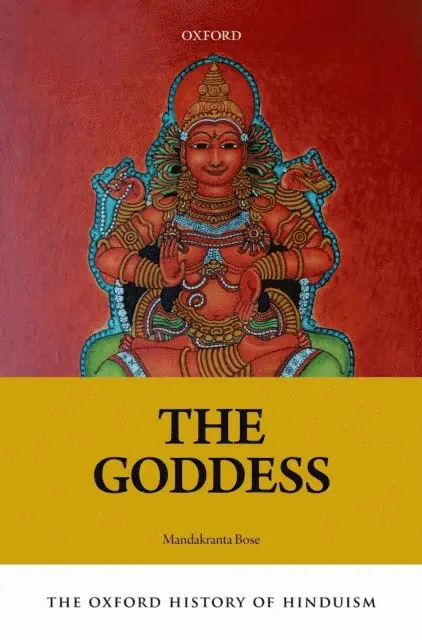
Oxford History of Hinduism: The Goddess
E-bok, 2018
1357 kr
Lägg i varukorg
The Oxford History of Hinduism: The Goddess provides a critical exposition of the Hindu idea of the divine feminine, or DevÄ«, conceived as a singularity expressed in many forms. With the theological principles examined in the opening chapters, the book proceeds to describe and expound historically …
Oxford History of Hinduism: The Goddess
E-bok, 2018
1357 kr
Lägg i varukorg
The Oxford History of Hinduism: The Goddess provides a critical exposition of the Hindu idea of the divine feminine, or DevÄ«, conceived as a singularity expressed in many forms. With the theological principles examined in the opening chapters, the book proceeds to describe and expound historically …
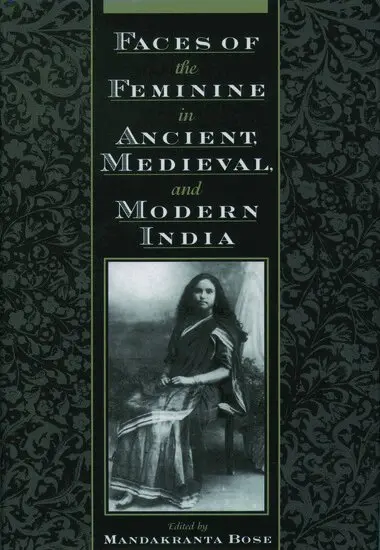
Faces of the Feminine in Ancient, Medieval, and Modern India
Inbunden, 2000
1620 kr
Lägg i varukorg
The essays in this collection explore ideas about women and their positions in Indian society from the earliest historical period up to the present day. The collection is designed both to provide students and researchers with primary material from literary, historical and sociological sources and …
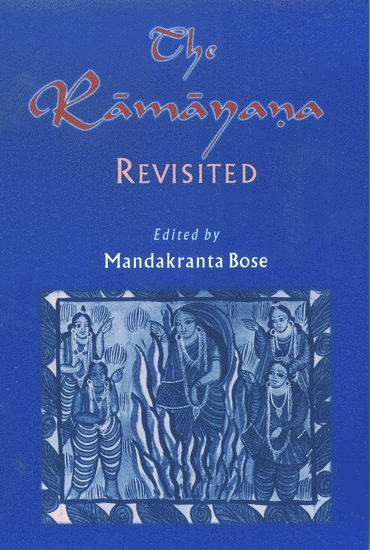
The Ramayana Revisited
Häftad, 2004
1253 kr
Lägg i varukorg
While the "standard" version of the Ramayana is a 14th-century Sanskrit text by Valmiki, the diversity and adaptability of this narrative are extraordinary. Many regions and languages have their own versions of the tale that they consider authoritative. In addition, the basic tale of the Ramayana …
Faces of the Feminine in Ancient, Medieval, and Modern India
E-bok, 2000
642 kr
Lägg i varukorg
This book offers a variety of scholarly studies in the idea, situation, and definition-including the self-definition-of women in India, from the earliest historical period up to the present day. Both in its range of topics and depth of research, this volume creates a sustained focus that is not …
R-am-ayana Revisited
E-bok, 2004
782 kr
Lägg i varukorg
The Ramayana is one of India''s foundational epics, and it demonstrates a continuing power to influence social, religious, cultural, and political life. Brought to textual life in Sanskrit by the legendary "first poet," Valmiki, over the ensuing centuries the tale has been recycled with …
The Oxford History of Hinduism: The Goddess
Av BOSE, Mandakranta Bose
Inbunden, 2018
1940 kr
Lägg i varukorg
The Oxford History of Hinduism: The Goddess provides a critical exposition of the Hindu idea of the divine feminine, or Devī, conceived as a singularity expressed in many forms. With the theological principles examined in the opening chapters, the book proceeds to describe and expound historically …
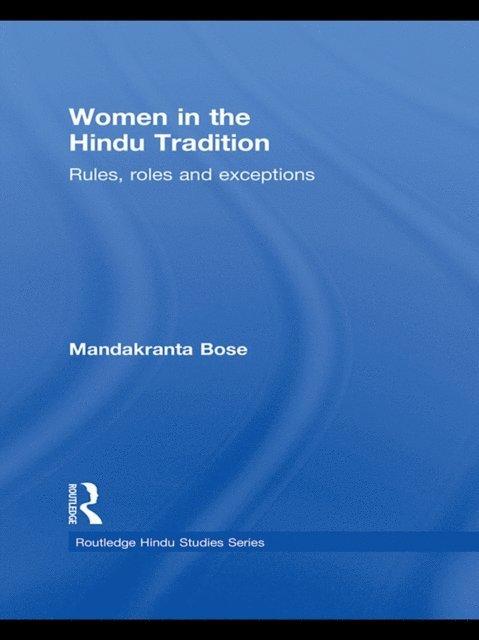
Women in the Hindu Tradition
Rules, Roles and Exceptions
Häftad, 2011
909 kr
Lägg i varukorg
This book accounts for the origin and evolution of the nature and roles of women within the Hindu belief system. It explains how the idea of the goddess has been derived from Hindu philosophical ideas and texts of codes of conduct and how particular models of conduct for mortal women have been …
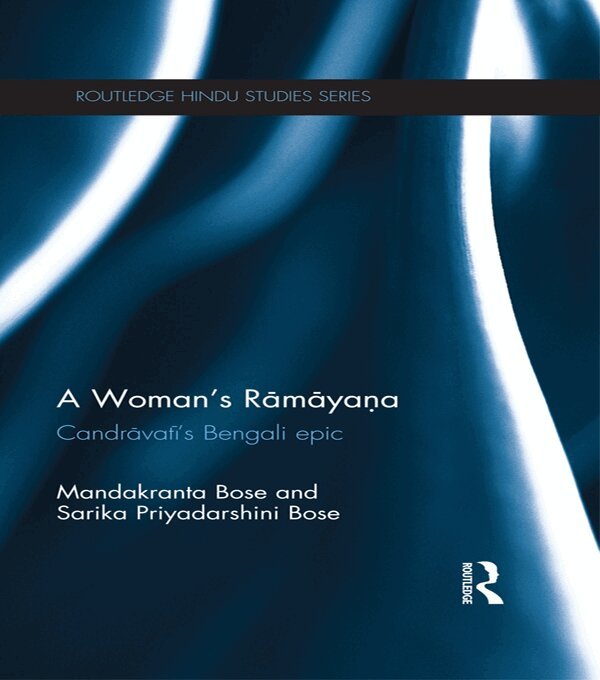
Woman's Ramayana
Candrāvatī's Bengali Epic
Av Mandakranta Bose, Sarika Bose
Inbunden, 2013
2743 kr
Lägg i varukorg
The Rāmāyana, an ancient epic of India, with audiences across vast stretches of time and geography, continues to influence numberless readers socially and morally through its many re-tellings. Made available in English for the first time, the 16th century version presented here is by Candrāvatī, a …
Women in the Hindu Tradition
Rules, Roles and Exceptions
Inbunden, 2010
2510 kr
Lägg i varukorg
This book accounts for the origin and evolution of the nature and roles of women within the Hindu belief system. It explains how the idea of the goddess has been derived from Hindu philosophical ideas and texts of codes of conduct and how particular models of conduct for mortal women have been …
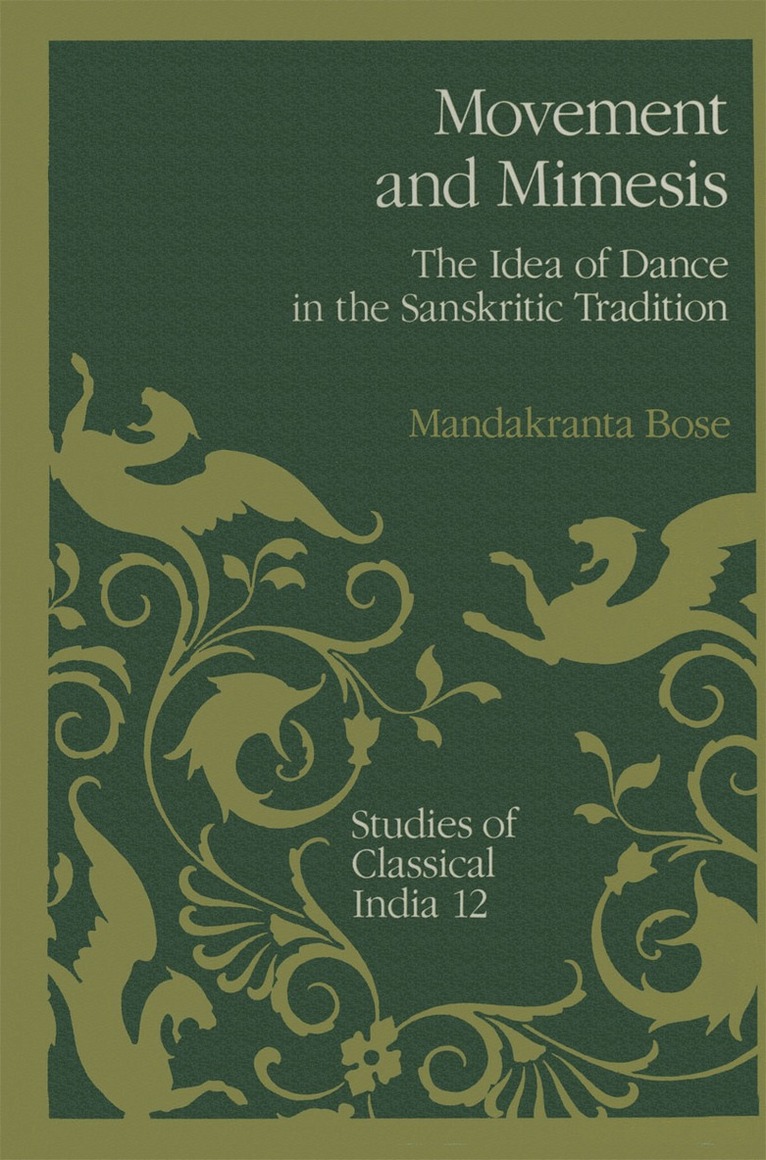
Movement and Mimesis
The Idea of Dance in the Sanskritic Tradition
Inbunden, 1991
875 kr
Lägg i varukorg
1. Introduction.- 2. The Literature of Dance.- 3. The N?tya??stra and the Concept of Dance.- 4. L?sya: A Dramatic Art.- 5. Nrtya and Upar?paka.- 6. Bandha and Anibandha.- 7. The De?? Tradition.- 8. Conclusion.
Woman's Ramayana
Candrāvatī's Bengali Epic
Av Mandakranta Bose, Sarika Bose
E-bok, 2013
1130 kr
Lägg i varukorg
The Rāmāyana, an ancient epic of India, with audiences across vast stretches of time and geography, continues to influence numberless readers socially and morally through its many re-tellings. Made available in English for the first time, the 16th century version presented here is by Candrāvatī, a …
Woman's Ramayana
Candrāvatī's Bengali Epic
Av Mandakranta Bose, Sarika Bose
E-bok, 2013
1155 kr
Lägg i varukorg
The Rāmāyana, an ancient epic of India, with audiences across vast stretches of time and geography, continues to influence numberless readers socially and morally through its many re-tellings. Made available in English for the first time, the 16th century version presented here is by Candrāvatī, a …
Women in the Hindu Tradition
Rules, Roles and Exceptions
E-bok, 2010
1051 kr
Lägg i varukorg
This book accounts for the origin and evolution of the nature and roles of women within the Hindu belief system. It explains how the idea of the goddess has been derived from Hindu philosophical ideas and texts of codes of conduct and how particular models of conduct for mortal women have been …
Women in the Hindu Tradition
Rules, Roles and Exceptions
E-bok, 2010
1074 kr
Lägg i varukorg
This book accounts for the origin and evolution of the nature and roles of women within the Hindu belief system. It explains how the idea of the goddess has been derived from Hindu philosophical ideas and texts of codes of conduct and how particular models of conduct for mortal women have been …
Woman's Ramayana
Candrāvatī's Bengali Epic
Av Mandakranta Bose, Sarika Bose
Häftad, 2017
851 kr
Lägg i varukorg
The Rāmāyana, an ancient epic of India, with audiences across vast stretches of time and geography, continues to influence numberless readers socially and morally through its many re-tellings. Made available in English for the first time, the 16th century version presented here is by Candrāvatī, a …
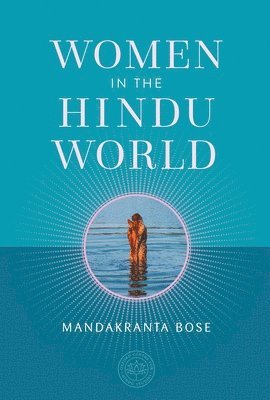
Women in the Hindu World
Av Mandakranta Bose, The Oxford Centre for Hindu Studies
Inbunden, 2023
230 kr
Lägg i varukorg
Women in the Hindu World encourages readers to develop and nurture their own understanding of the life of a woman as a Hindu. The seven chapters proceed both historically and thematically, exploring abstract philosophical concepts about women, as well as concrete worldly conditions of the lives …
Movement and Mimesis
The Idea of Dance in the Sanskritic Tradition
Häftad, 2012
550 kr
Lägg i varukorg
The most comprehensive view of the evolution of dancing in India is one that is derived from Sanskrit textual sources. These texts are the basic material that students of the dance in India must examine in order to uncover its past. Since the rebirth of informed interest in dancing in early …
Movement and Mimesis
The Idea of Dance in the Sanskritic Tradition
E-bok, 2012
710 kr
Lägg i varukorg
The most comprehensive view of the evolution of dancing in India is one that is derived from Sanskrit textual sources. These texts are the basic material that students of the dance in India must examine in order to uncover its past. Since the rebirth of informed interest in dancing in early …
Women in the Hindu World
Av Mandakranta Bose, The Oxford Centre for Hindu Studies
E-bok, 2023
213 kr
Lägg i varukorg
Women in the Hindu World explores the role of womanhood in Hindu religious culture and how the faith influences women’s social experiences. Women in the Hindu World encourages readers to develop and nurture their own understanding of the life of a woman as a Hindu. The seven chapters proceed both …