Manthia Diawara - Böcker
Visar alla böcker från författaren Manthia Diawara. Handla med fri frakt och snabb leverans.
8 produkter
8 produkter
249 kr
Skickas inom 10-15 vardagar
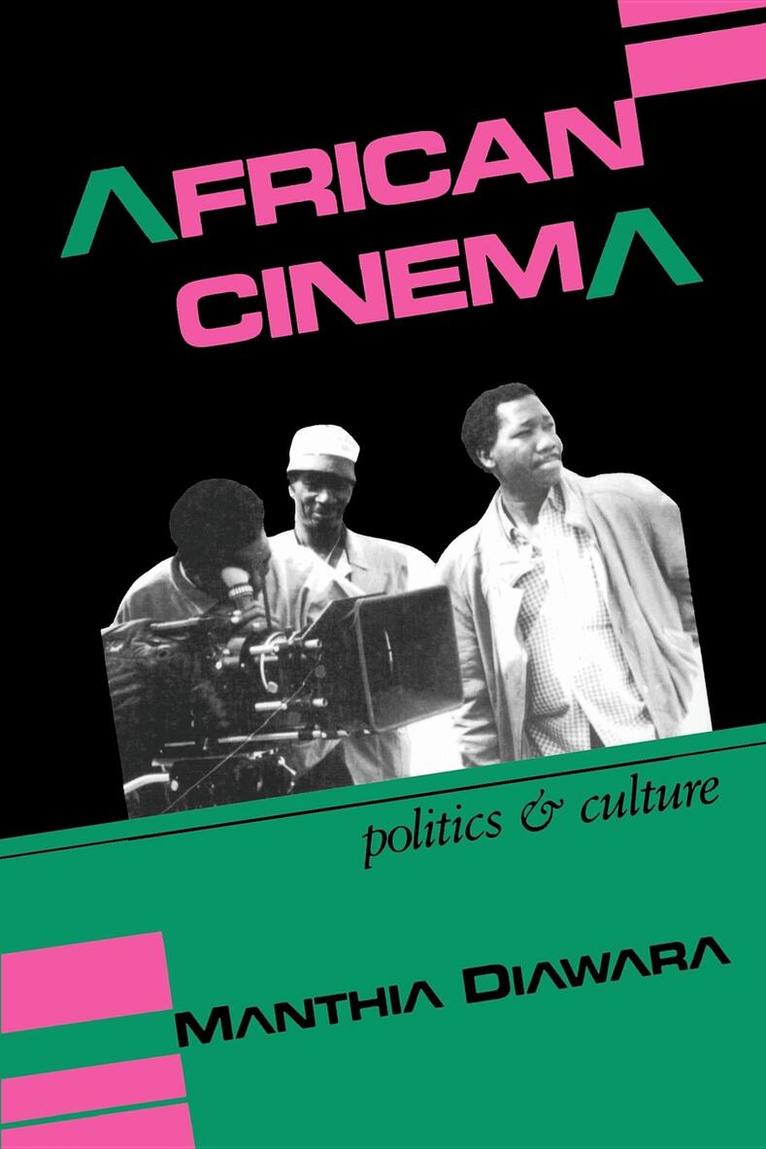
"Manthia Diawara is quite simply the best critic (in any language) currently writing on African cinema." —Robert Stam"Diawara has produced a useful history, a cogent analysis, and, in his arguments on how African cinema should develop, an undoubtedly controversial book." —Studies in Popular Culture"This is a good, solid and reliable history of filmmaking on the African continent, beginning with colonial production and moving on to independent filmmaking . . . an important and welcome reference source." —Classic Images"Diawara's work is comprehensive, based on rigorous research and sound analyses . . . it aptly illustrates the intricate correlations between politics, economics and culture." —Black Film Review"In a relatively new field of historical 'film theory', African Cinema: Politics and Culture will become indispensable." —The Year's Work in Critical and Cultural Theory, Vol. 1-3, 1996Drawing on political science, economics, history, and cultural studies, Diawara provides an insider's account of the development and current status of African cinema. He discusses such issues as film production and distribution, and film aesthetics from the colonial period to the present.
286 kr
Skickas inom 5-8 vardagar
From Spike Lee's encouragement of independent, community fundraising to Joycelyn Elders's warning about the failings of our "sick-care" system to Stanley Crouch's disputation on "heroic" versus "anarchic" individuality, Black Genius is an exceptional, unique colloquy. Conceived by acclaimed novelist Walter Mosley and sponsored by the New York University Africana Studies Program and the Institute of African American Affairs, this book originated as a series of community conversations where "visionaries with solutions" shared powerful views on personal and communal struggles, triumphs, and aspirations. The list of contributors suggests the range of perspectives and talents brought to bear on such issues as economics, political power, work, authority, and culture. Black Genius is a point of departure for vigorous discussion of our current realities and goals for the future-and a portrait of "genius" that leads the way to enriching American life in the twenty-first century.
2 160 kr
Skickas inom 10-15 vardagar
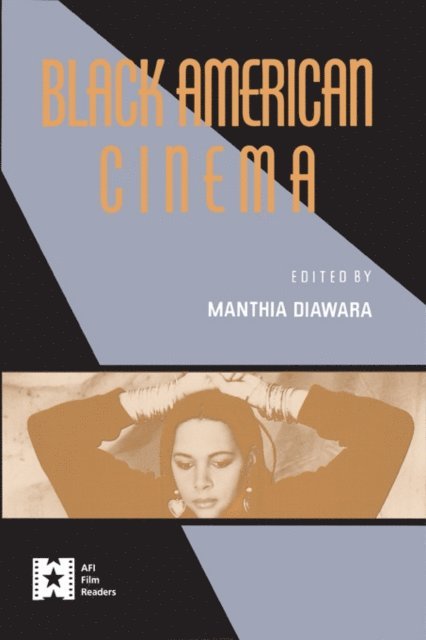
This is the first major collection of criticism on Black American cinema. From the pioneering work of Oscar Micheaux and Wallace Thurman to the Hollywood success of Spike Lee, Black American filmmakers have played a remarkable role in the development of the American film, both independent and mainstream.In this volume, the work of early Black filmmakers is given serious attention for the first time. Individual essays consider what a Black film tradition might be, the relation between Black American filmmakers and filmmakers from the diaspora, the nature of Black film aesthetics, the artist's place within the community, and the representation of a Black imaginary. Black AmericanCinema also uncovers the construction of Black sexuality on screen, the role of Black women in independent cinema, and the specific question of Black female spectatorship. A lively and provocative group of essays debate the place and significance of Spike LeeOf crucial importance are the ways in which the essays analyze those Black directors who worked for Hollywood and whose films are simplistically dismissed as sell-outs, to the Hollywood "master narrative," as well as those "crossover" filmmakers whose achievements entail a surreptitious infiltration of the studios. Black AmericanCinema demonstrates the wealth of the Black contribution to American film and the complex course that contribution has taken.Contributors: Houston Baker, Jr., Toni Cade Bambara, Amiri Baraka, Jacquie Bobo, Richard Dyer, Jane Gaines, Henry Louis Gates, Jr., Ron Green, Ed Guerrero, bell hooks, Phyllis Klotman, Ntongele Masilela, Clyde Taylor, and Michele Wallace.
694 kr
Skickas inom 10-15 vardagar
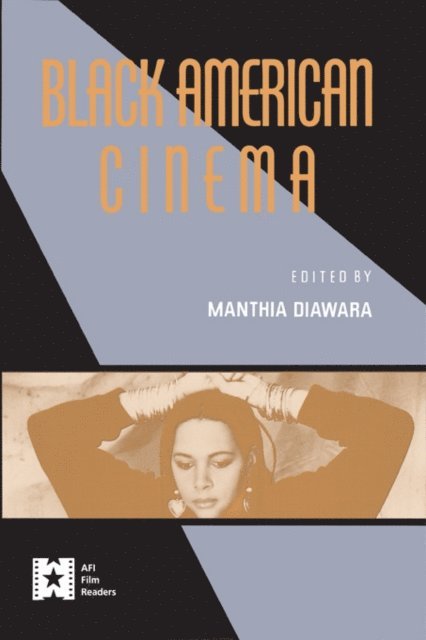
This is the first major collection of criticism on Black American cinema. From the pioneering work of Oscar Micheaux and Wallace Thurman to the Hollywood success of Spike Lee, Black American filmmakers have played a remarkable role in the development of the American film, both independent and mainstream.In this volume, the work of early Black filmmakers is given serious attention for the first time. Individual essays consider what a Black film tradition might be, the relation between Black American filmmakers and filmmakers from the diaspora, the nature of Black film aesthetics, the artist's place within the community, and the representation of a Black imaginary. Black AmericanCinema also uncovers the construction of Black sexuality on screen, the role of Black women in independent cinema, and the specific question of Black female spectatorship. A lively and provocative group of essays debate the place and significance of Spike LeeOf crucial importance are the ways in which the essays analyze those Black directors who worked for Hollywood and whose films are simplistically dismissed as sell-outs, to the Hollywood "master narrative," as well as those "crossover" filmmakers whose achievements entail a surreptitious infiltration of the studios. Black AmericanCinema demonstrates the wealth of the Black contribution to American film and the complex course that contribution has taken.Contributors: Houston Baker, Jr., Toni Cade Bambara, Amiri Baraka, Jacquie Bobo, Richard Dyer, Jane Gaines, Henry Louis Gates, Jr., Ron Green, Ed Guerrero, bell hooks, Phyllis Klotman, Ntongele Masilela, Clyde Taylor, and Michele Wallace.
1 725 kr
Kommande
304 kr
Skickas inom 3-6 vardagar
352 kr
Skickas inom 10-15 vardagar
"There I was, standing alone, unable to cry as I said goodbye to Sidimé Laye, my best friend, and to the revolution that had opened the door of modernity for me--the revolution that had invented me." This book gives us the story of a quest for a childhood friend, for the past and present, and above all for an Africa that is struggling to find its future.In 1996 Manthia Diawara, a distinguished professor of film and literature in New York City, returns to Guinea, thirty-two years after he and his family were expelled from the newly liberated country. He is beginning work on a documentary about Sékou Touré, the dictator who was Guinea's first post-independence leader. Despite the years that have gone by, Diawara expects to be welcomed as an insider, and is shocked to discover that he is not.The Africa that Diawara finds is not the one on the verge of barbarism, as described in the Western press. Yet neither is it the Africa of his childhood, when the excitement of independence made everything seem possible for young Africans. His search for Sidimé Laye leads Diawara to profound meditations on Africa's culture. He suggests solutions that might overcome the stultifying legacy of colonialism and age-old social practices, yet that will mobilize indigenous strengths and energies.In the face of Africa's dilemmas, Diawara accords an important role to the culture of the diaspora as well as to traditional music and literature--to James Brown, Miles Davis, and Salif Kéita, to Richard Wright, Spike Lee, and the ancient epics of the griots. And Diawara's journey enlightens us in the most disarming way with humor, conversations, and well-told tales.
115 kr
Skickas inom 7-10 vardagar