Manuel Hinds – författare
Visar alla böcker från författaren Manuel Hinds. Handla med fri frakt och snabb leverans.
5 produkter
5 produkter
Inbunden, Engelska, 2003
717 kr
Skickas inom 10-15 vardagar
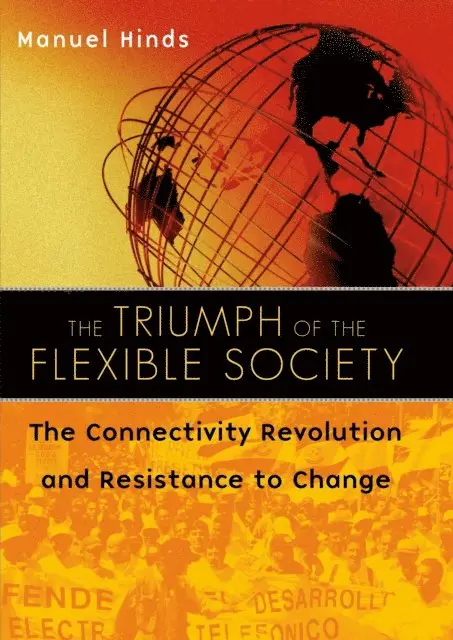
Hinds takes offers a fresh perspective on the social, political, and economic disturbances now affecting our world. This book looks at those disturbances not as separate problems, but rather as the coherent symptoms of a deep technological revolution that is changing the shape of society on the scale of the Industrial Revolution: the Connectivity Revolution, the basis of the New Economy. Analyzing the resistance to change that erupted violently in response to that last major economic upheaval, Hinds shows how Communism, Nazism, and fundamentalism owe their triumphs not to the prevalence of poverty or oppression but to the rigidity of societies threatened by profound social changes prompted by rapid technological progress. Demonstrating that their rigidity was caused by the same kind of state intervention in the economy that is now being proposed to stop globalization, he argues persuasively that only a horizontal, flexible society can smoothly manage change in such a way that the pain of transformation—and therefore, the risk of giving birth to new varieties of destructive regimes—is minimized.
Inbunden, Engelska, 2006
586 kr
Skickas inom 5-8 vardagar
Why should a developing country surrender its power to create money by adopting an international currency as its own? This comprehensive book explores the currency problems that developing countries face and offers sound, practical advice for policy makers on how to deal with them. Manuel Hinds, who has extensive experience in real-world economic policy making, challenges the myths that surround domestic currencies and shows the clear rationality for dollarization or the use of a standard international currency.The book opens with an entertaining story of the Devil, who, through a series of common macroeconomic maneuvers, coaches the president of a mythical country into financial ruin. This ruler’s path is not unlike that taken in several real developing countries, to their detriment. Hinds goes on to introduce new ways of thinking about financial systems and monetary behavior in Third World countries.
Häftad, Engelska, 2010
500 kr
Skickas inom 5-8 vardagar
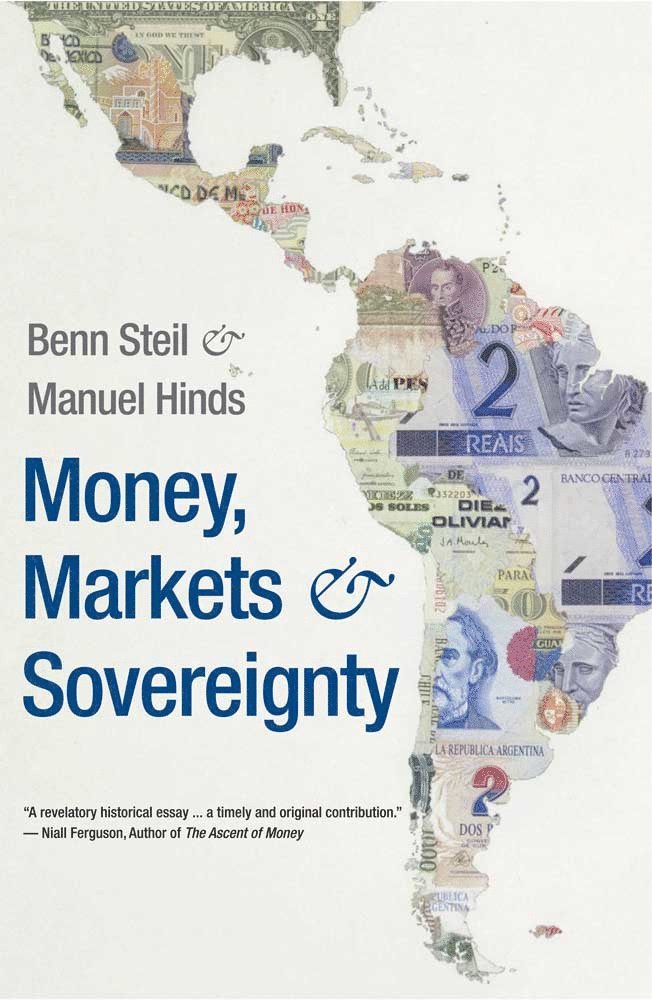
Winner of the 2010 Hayek Book Prize given by the Manhattan Institute "Money, Markets and Sovereignty is a surprisingly easy read, given the complicated issues covered. In it, Mr. Steil and Mr. Hinds consistently challenge today's statist nostrums."—Doug Bandow, The Washington Times In this keenly argued book, Benn Steil and Manuel Hinds offer the most powerful defense of economic liberalism since F. A. Hayek published The Road to Serfdom more than sixty years ago. The authors present a fascinating intellectual history of monetary nationalism from the ancient world to the present and explore why, in its modern incarnation, it represents the single greatest threat to globalization. Steil and Hinds describe the current state of international economic relations as both unusual and precarious. Eras of economic protectionism have historically coincided with monetary nationalism, while eras of liberal trade have been accompanied by a universal monetary standard. But today, the authors show, an unprecedentedly liberal global trade regime operates side by side with the most extreme doctrine of monetary nationalism ever contrived—a situation bound to trigger periodic crises. Steil and Hinds call for a revival of the political and economic thinking that underlay earlier great periods of globalization, thinking that is increasingly under threat by more recent ideas about what sovereignty means.
E-bok
PDF, Engelska, 2003730 kr
Läs direkt efter köp
Hinds takes offers a fresh perspective on the social, political, and economic disturbances now affecting our world. This book looks at those disturbances not as separate problems, but rather as the coherent symptoms of a deep technological revolution that is changing the shape of society on the scale of the Industrial Revolution: the Connectivity Revolution, the basis of the New Economy. Analyzing the resistance to change that erupted violently in response to that last major economic upheaval, Hinds shows how Communism, Nazism, and fundamentalism owe their triumphs not to the prevalence of poverty or oppression but to the rigidity of societies threatened by profound social changes prompted by rapid technological progress. Demonstrating that their rigidity was caused by the same kind of state intervention in the economy that is now being proposed to stop globalization, he argues persuasively that only a horizontal, flexible society can smoothly manage change in such a way that the pain of transformation—and therefore, the risk of giving birth to new varieties of destructive regimes—is minimized.
E-bok
Spanska, 202280 kr
Läs direkt efter köp
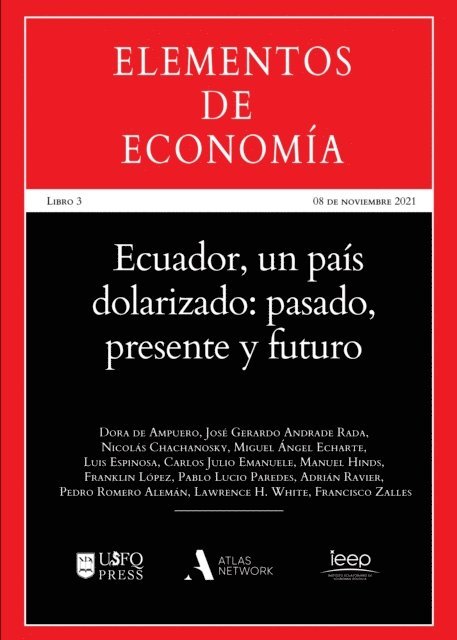
La presente obra abarca una aproximación de visiones académicas y testimoniales de lo que fue la la dolarización como Sistema Monetario Financiero en el Ecuador, transcurridas más de dos décadas. También documenta su condición paradigmática de política monetaria exitosa para otras naciones latinoamericanas, bien porque siguieron otros derroteros macroeconómicos (Argentina) o bien por que inspiró acciones similares (El Salvador).Como el fenómeno que estudia, una coyuntura factual que marcó la aplicación del dólar como moneda de curso legal en sustitución del sucre, este libro reúne las voluntades de trece investigadores y expertos en economía de Iberoamérica, convocados por el Instituto Ecuatoriano de Economía Política, Atlas Network y la Universidad San Francisco de Quito USFQ; para brindar, no solo la revisión retrospectiva, sino su valoración crítica de las tareas pendientes en reformas fiscales, de fondos de ahorro, laboral, financiera y comercial.El elemento medular que plantea Ecuador, un país dolarizado: pasado, presente y futuro es la concepción de su naturaleza institucional, que marcó la ruta de cambio de una política económica extractiva basada en soberanía monetaria a otra inclusiva de una sociedad abierta donde el ciudadano será el propietario de su destino.