489 kr
Benn Steil – författare
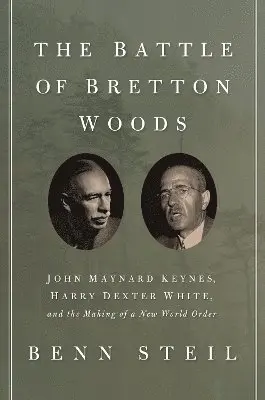
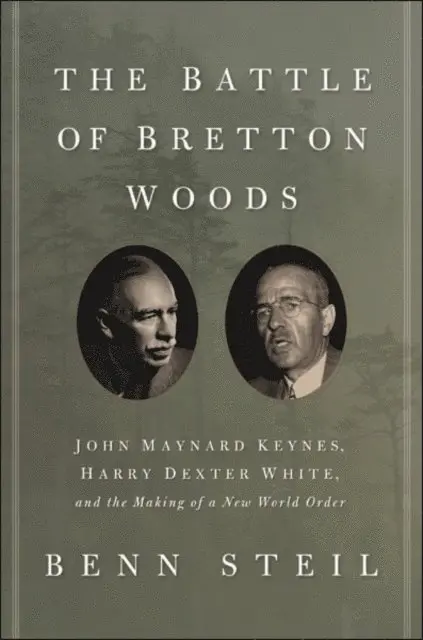
- Inbunden, Engelska, 2013When turmoil strikes world monetary and financial markets, leaders invariably call for 'a new Bretton Woods' to prevent catastrophic economic disorder and defuse political conflict. The name of the remote New Hampshire town where representatives of forty-four nations gathered in July 1944, in the midst of the century's second great war, has become shorthand for enlightened globalization. The actual story surrounding the historic Bretton Woods accords, however, is full of startling drama, intrigue, and rivalry, which are vividly brought to life in Benn Steil's epic account. Upending the conventional wisdom that Bretton Woods was the product of an amiable Anglo-American collaboration, Steil shows that it was in reality part of a much more ambitious geopolitical agenda hatched within President Franklin D. Roosevelt's Treasury and aimed at eliminating Britain as an economic and political rival. At the heart of the drama were the antipodal characters of John Maynard Keynes, the renowned and revolutionary British economist, and Harry Dexter White, the dogged, self-made American technocrat.Bringing to bear new and striking archival evidence, Steil offers the most compelling portrait yet of the complex and controversial figure of White--the architect of the dollar's privileged place in the Bretton Woods monetary system, who also, very privately, admired Soviet economic planning and engaged in clandestine communications with Soviet intelligence officials and agents over many years. A remarkably deft work of storytelling that reveals how the blueprint for the postwar economic order was actually drawn, The Battle of Bretton Woods is destined to become a classic of economic and political history.
- Inbunden, Engelska, 2018
369 kr
Skickas
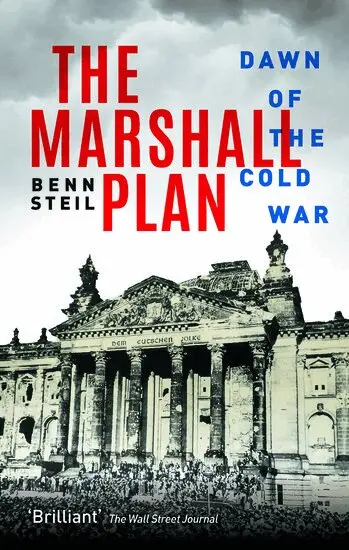
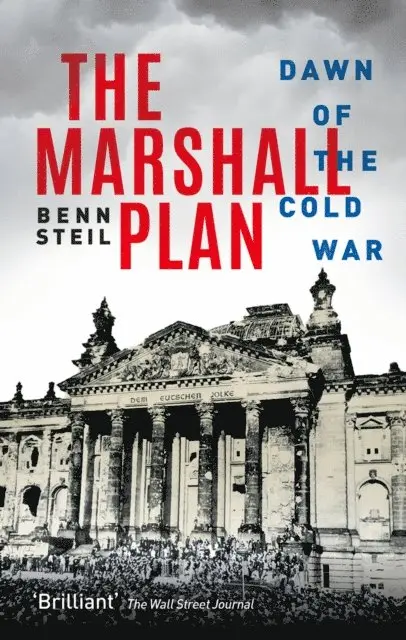
With Britain's empire collapsing and Stalin's ascendant, U.S. officials under new Secretary of State George C. Marshall set out to reconstruct western Europe as a bulwark against communist authoritarianism. Their massive, costly, and ambitious undertaking would confront Europeans and Americans alike with a vision at odds with their history and self-conceptions. In the process, they would drive the creation of NATO, the European Union, and a Western identity that continues to shape world events.This is the story behind the birth of the Cold War, and the U.S.-led liberal global order, told with verve, insight, and resonance for today. Bringing to bear fascinating new material from American, Russian, German, and other European archives, Benn Steil's book will forever change how we see the Marshall Plan.Focusing on the critical years 1947 to 1949, Steil's gripping narrative takes us through the seminal episodes marking the collapse of postwar U.S.-Soviet relations: the Prague coup, the Berlin blockade, and the division of Germany. In each case, Stalin's determination to crush the Marshall Plan and undermine American power in Europe is vividly portrayed. And in a riveting epilogue, Steil shows how the forces which clove Europe in two after the Second World War have reasserted themselves since the collapse of the Soviet Union.A polished and masterly work of historical narrative, The Marshall Plan is an instant classic of Cold War literature. - E-bokEngelska, 2009
187 kr
Läs direkt efter köp
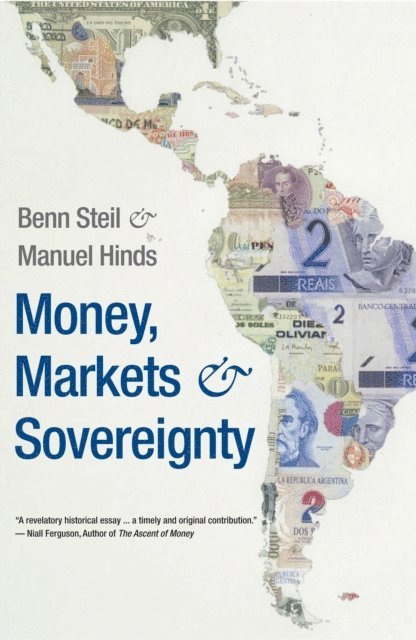
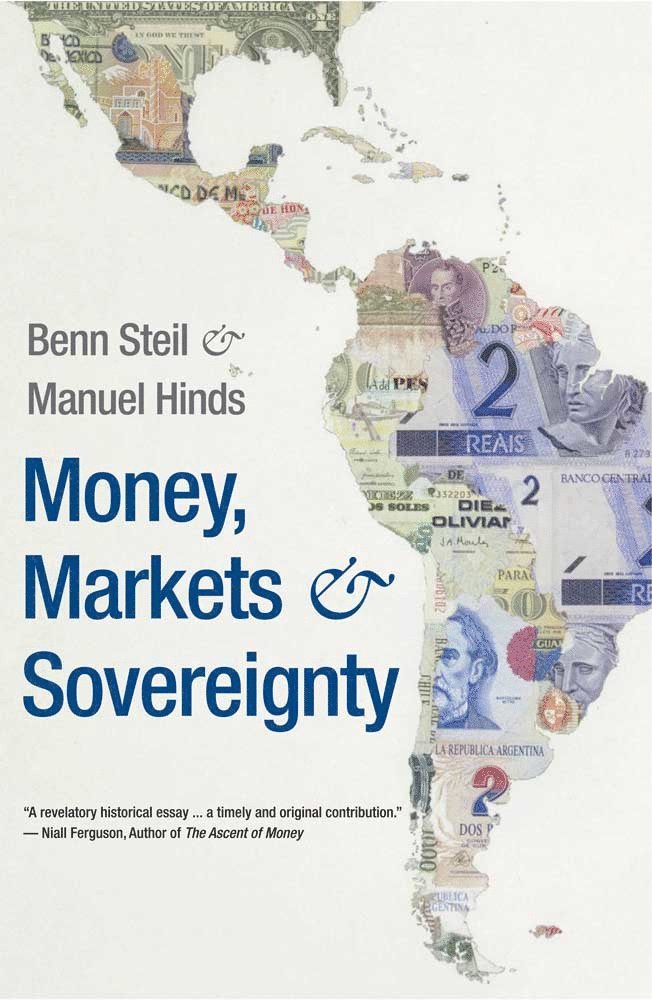
Winner of the 2010 Hayek Book Prize given by the Manhattan Institute"Money, Markets and Sovereignty is a surprisingly easy read, given the complicated issues covered. In it, Mr. Steil and Mr. Hinds consistently challenge today''s statist nostrums."—Doug Bandow, The Washington TimesIn this keenly argued book, Benn Steil and Manuel Hinds offer the most powerful defense of economic liberalism since F. A. Hayek published The Road to Serfdom more than sixty years ago. The authors present a fascinating intellectual history of monetary nationalism from the ancient world to the present and explore why, in its modern incarnation, it represents the single greatest threat to globalization.Steil and Hinds describe the current state of international economic relations as both unusual and precarious. Eras of economic protectionism have historically coincided with monetary nationalism, while eras of liberal trade have been accompanied by a universal monetary standard. But today, the authors show, an unprecedentedly liberal global trade regime operates side by side with the most extreme doctrine of monetary nationalism ever contrived—a situation bound to trigger periodic crises. Steil and Hinds call for a revival of the political and economic thinking that underlay earlier great periods of globalization, thinking that is increasingly under threat by more recent ideas about what sovereignty means. - E-bokPDF, Engelska, 2018
308 kr
Läs direkt efter köp
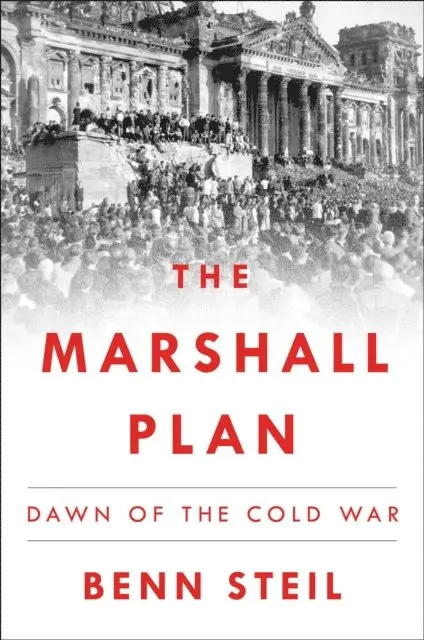
A polished and masterly work of historical narrative, The Marshall Plan is an instant classic of Cold War literature.With Britain''s empire collapsing and Stalin''s ascendant, U.S. officials under new Secretary of State George C. Marshall set out to reconstruct western Europe as a bulwark against communist authoritarianism. Their massive, costly, and ambitious undertaking would confront Europeans and Americans alike with a vision at odds with their history and self-conceptions. In the process, they would drive the creation of NATO, the European Union, and a Western identity that continues to shape world events.This is the story behind the birth of the Cold War, and the U.S.-led liberal global order, told with verve, insight, and resonance for today. Bringing to bear fascinating new material from American, Russian, German, and other European archives, Benn Steil''s book will forever change how we see the Marshall Plan.Focusing on the critical years 1947 to 1949, Steil''s gripping narrative takes us through the seminal episodes that marked the collapse of postwar U.S.-Soviet relations: the Prague coup, the Berlin blockade, and the division of Germany. In each case, Stalin''s determination to crush the Marshall Plan and undermine American power in Europe is vividly portrayed. And in a riveting epilogue, Steil shows how the forces which clove Europe in two after the Second World War have reasserted themselvessince the collapse of the Soviet Union. - E-bokEngelska, 2018
308 kr
Läs direkt efter köp
A polished and masterly work of historical narrative, The Marshall Plan is an instant classic of Cold War literature.With Britain''s empire collapsing and Stalin''s ascendant, U.S. officials under new Secretary of State George C. Marshall set out to reconstruct western Europe as a bulwark against communist authoritarianism. Their massive, costly, and ambitious undertaking would confront Europeans and Americans alike with a vision at odds with their history and self-conceptions. In the process, they would drive the creation of NATO, the European Union, and a Western identity that continues to shape world events.This is the story behind the birth of the Cold War, and the U.S.-led liberal global order, told with verve, insight, and resonance for today. Bringing to bear fascinating new material from American, Russian, German, and other European archives, Benn Steil''s book will forever change how we see the Marshall Plan.Focusing on the critical years 1947 to 1949, Steil''s gripping narrative takes us through the seminal episodes that marked the collapse of postwar U.S.-Soviet relations: the Prague coup, the Berlin blockade, and the division of Germany. In each case, Stalin''s determination to crush the Marshall Plan and undermine American power in Europe is vividly portrayed. And in a riveting epilogue, Steil shows how the forces which clove Europe in two after the Second World War have reasserted themselvessince the collapse of the Soviet Union. - Häftad, Engelska, 2021
199 kr
Skickas
A polished and masterly work of historical narrative, The Marshall Plan is an instant classic of Cold War literature.With Britain's empire collapsing and Stalin's ascendant, U.S. officials under new Secretary of State George C. Marshall set out to reconstruct western Europe as a bulwark against communist authoritarianism. Their massive, costly, and ambitious undertaking would confront Europeans and Americans alike with a vision at odds with their history and self-conceptions. In the process, they would drive the creation of NATO, the European Union, and a Western identity that continues to shape world events.This is the story behind the birth of the Cold War, and the U.S.-led liberal global order, told with verve, insight, and resonance for today. Bringing to bear fascinating new material from American, Russian, German, and other European archives, Benn Steil's book will forever change how we see the Marshall Plan.Focusing on the critical years 1947 to 1949, Steil's gripping narrative takes us through the seminal episodes that marked the collapse of postwar U.S.-Soviet relations: the Prague coup, the Berlin blockade, and the division of Germany. In each case, Stalin's determination to crush the Marshall Plan and undermine American power in Europe is vividly portrayed. And in a riveting epilogue, Steil shows how the forces which clove Europe in two after the Second World War have reasserted themselves since the collapse of the Soviet Union. - E-bokEngelska, 2006
216 kr
Läs direkt efter köp
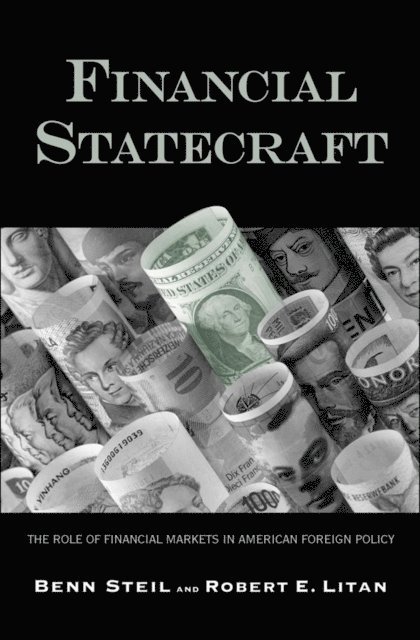
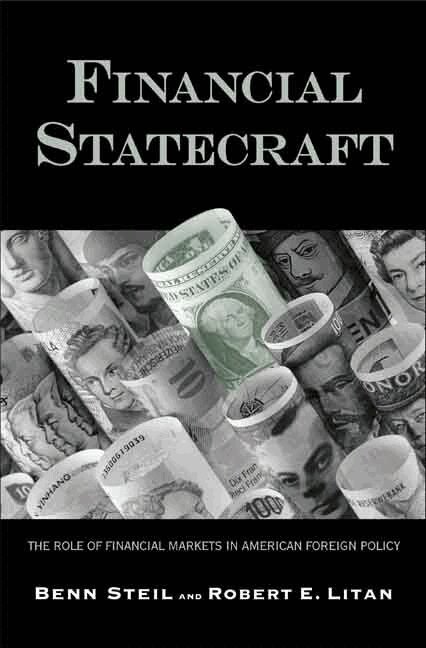
"This is a useful, accessible book for lay readers seeking an understanding of the important role that capital flows play in . . . foreign policy." —The EconomistAs trade flows expanded and trade agreements proliferated after World War II, governments—most notably the United States—came increasingly to use their power over imports and exports to influence the behavior of other countries. But trade is not the only way in which nations interact economically. Over the past two decades, another form of economic exchange has risen to a level of vastly greater significance and political concern: the purchase and sale of financial assets across borders.Nearly $2 trillion worth of currency now moves cross-border every day, roughly ninety percent of which is accounted for by financial flows unrelated to trade in goods and services—a stunning inversion of the figures in 1970. The time is ripe to ask fundamental questions about what Benn Steil and Robert Litan have coined as "financial statecraft," or those aspects of economic statecraft directed at influencing international capital flows. How precisely has the American government practiced financial statecraft? How effective have these efforts been? And how can they be made more effective? The authors provide penetrating and incisive answers in this timely and stimulating book."Benn Steil and Robert Litan have written the first book devoted to financial statecraft, and it is essential reading for anyone interested in the critical issue of influencing the international capital flows that make an integrated global economy function." —Stuart Eizenstat, former US Ambassador to the EU and Deputy Secretary of Treasury - Häftad, Engelska, 2008
409 kr
Skickas inom 5-8 vardagar
As trade flows expanded and trade agreements proliferated after World War II, governments—most notably the United States—came increasingly to use their power over imports and exports to influence the behavior of other countries. But trade is not the only way in which nations interact economically. Over the past two decades, another form of economic exchange has risen to a level of vastly greater significance and political concern: the purchase and sale of financial assets across borders. Nearly $2 trillion worth of currency now moves cross-border every day, roughly 90 percent of which is accounted for by financial flows unrelated to trade in goods and services—a stunning inversion of the figures in 1970. The time is ripe to ask fundamental questions about what Benn Steil and Robert Litan have coined as “financial statecraft,” or those aspects of economic statecraft directed at influencing international capital flows. How precisely has the American government practiced financial statecraft? How effective have these efforts been? And how can they be made more effective? The authors provide penetrating and incisive answers in this timely and stimulating book. - Häftad, Engelska, 2010
517 kr
Skickas inom 5-8 vardagar
Winner of the 2010 Hayek Book Prize given by the Manhattan Institute "Money, Markets and Sovereignty is a surprisingly easy read, given the complicated issues covered. In it, Mr. Steil and Mr. Hinds consistently challenge today's statist nostrums."—Doug Bandow, The Washington Times In this keenly argued book, Benn Steil and Manuel Hinds offer the most powerful defense of economic liberalism since F. A. Hayek published The Road to Serfdom more than sixty years ago. The authors present a fascinating intellectual history of monetary nationalism from the ancient world to the present and explore why, in its modern incarnation, it represents the single greatest threat to globalization. Steil and Hinds describe the current state of international economic relations as both unusual and precarious. Eras of economic protectionism have historically coincided with monetary nationalism, while eras of liberal trade have been accompanied by a universal monetary standard. But today, the authors show, an unprecedentedly liberal global trade regime operates side by side with the most extreme doctrine of monetary nationalism ever contrived—a situation bound to trigger periodic crises. Steil and Hinds call for a revival of the political and economic thinking that underlay earlier great periods of globalization, thinking that is increasingly under threat by more recent ideas about what sovereignty means. - Häftad, Engelska, 2002
940 kr
Skickas inom 5-8 vardagar
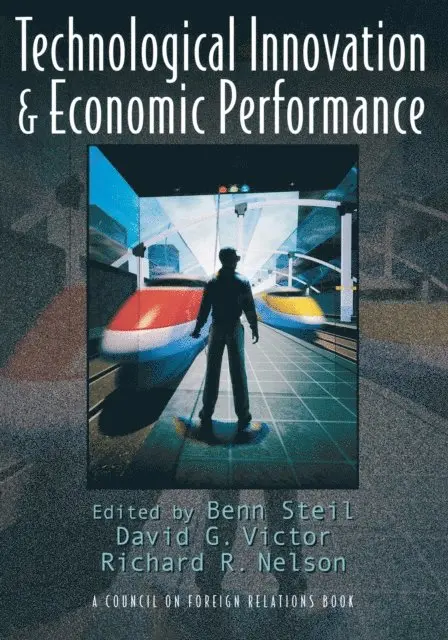
Information technology accounts for over one-third of recent U.S. GDP growth and nearly two-thirds of corporate capital investment. "The New Economy" appears omnipresent, but little is actually known about its workings. This seminal volume brings together the research and critical thinking of many of the world's top macro and micro economists to provide a unique, multifaceted perspective. Through the use of detailed, up-to-date country and industry studies, this book provides the most authoritative and detailed analysis ever assembled into the causes of technological innovation and its relationship to economic performance. The country studies cover the United States, Japan, Germany, France, the United Kingdom, and the Nordic states. Nine industry studies examine the Internet, computers and semiconductors, banking, securities trading, venture capital, energy, agricultural biotechnology, pharmaceutical biotechnology, and automobiles. Commissioned and brought together for the research project by the world-renowned Council on Foreign Relations, the authors have produced one of the most important compendia in applied economics to be published in recent times.The contributors are Charles Calomiris, Ian Domowitz, Robert Evenson, Charles Fine, Robert Gordon, Richard Langlois, Josh Lerner, Markku Malkamaki, Patrick Messerlin, Joel Mokyr, David Mowery, Richard R. Nelson, Stephen Nickell, Gary Pisano, Adam Posen, Daniel Raff, Horst Siebert, Timothy Simcoe, Benn Steil, Michael Stolpe, John Van Reenen, David Victor, and Matti Viren. - Häftad, Engelska, 2014
210 kr
Skickas inom 5-8 vardagar
When turmoil strikes world monetary and financial markets, leaders invariably call for 'a new Bretton Woods' to prevent catastrophic economic disorder and defuse political conflict. The name of the remote New Hampshire town where representatives of forty-four nations gathered in July 1944, in the midst of the century's second great war, has become shorthand for enlightened globalization. The actual story surrounding the historic Bretton Woods accords, however, is full of startling drama, intrigue, and rivalry, which are vividly brought to life in Benn Steil's epic account. Upending the conventional wisdom that Bretton Woods was the product of an amiable Anglo-American collaboration, Steil shows that it was in reality part of a much more ambitious geopolitical agenda hatched within President Franklin D. Roosevelt's Treasury and aimed at eliminating Britain as an economic and political rival. At the heart of the drama were the antipodal characters of John Maynard Keynes, the renowned and revolutionary British economist, and Harry Dexter White, the dogged, self-made American technocrat.Bringing to bear new and striking archival evidence, Steil offers the most compelling portrait yet of the complex and controversial figure of White--the architect of the dollar's privileged place in the Bretton Woods monetary system, who also, very privately, admired Soviet economic planning and engaged in clandestine communications with Soviet intelligence officials and agents over many years. A remarkably deft work of storytelling that reveals how the blueprint for the postwar economic order was actually drawn, The Battle of Bretton Woods is destined to become a classic of economic and political history. - E-bokEngelska, 2021
1 322 kr
Läs direkt efter köp
Information technology accounts for over one-third of recent U.S. GDP growth and nearly two-thirds of corporate capital investment. ''''The New Economy'''' appears omnipresent, but little is actually known about its workings.This seminal volume brings together the research and critical thinking of many of the world''s top macro and micro economists to provide a unique, multifaceted perspective. Through the use of detailed, up-to-date country and industry studies, this book provides the most authoritative and detailed analysis ever assembled into the causes of technological innovation and its relationship to economic performance. The country studies cover the United States, Japan, Germany, France, the United Kingdom, and the Nordic states. Nine industry studies examine the Internet, computers and semiconductors, banking, securities trading, venture capital, energy, agricultural biotechnology, pharmaceutical biotechnology, and automobiles.Commissioned and brought together for the research project by the world-renowned Council on Foreign Relations, the authors have produced one of the most important compendia in applied economics to be published in recent times.The contributors are Charles Calomiris, Ian Domowitz, Robert Evenson, Charles Fine, Robert Gordon, Richard Langlois, Josh Lerner, Markku Malkamäki, Patrick Messerlin, Joel Mokyr, David Mowery, Richard R. Nelson, Stephen Nickell, Gary Pisano, Adam Posen, Daniel Raff, Horst Siebert, Timothy Simcoe, Benn Steil, Michael Stolpe, John Van Reenen, David Victor, and Matti Virén.
- E-bokEngelska, 2013
279 kr
Läs direkt efter köp
A sweeping history of the drama, intrigue, and rivalry behind the creation of the postwar economic orderWhen turmoil strikes world monetary and financial markets, leaders invariably call for ''a new Bretton Woods'' to prevent catastrophic economic disorder and defuse political conflict. The name of the remote New Hampshire town where representatives of forty-four nations gathered in July 1944, in the midst of the century''s second great war, has become shorthand for enlightened globalization. The actual story surrounding the historic Bretton Woods accords, however, is full of startling drama, intrigue, and rivalry, which are vividly brought to life in Benn Steil''s epic account.Upending the conventional wisdom that Bretton Woods was the product of an amiable Anglo-American collaboration, Steil shows that it was in reality part of a much more ambitious geopolitical agenda hatched within President Franklin D. Roosevelt''s Treasury and aimed at eliminating Britain as an economic and political rival. At the heart of the drama were the antipodal characters of John Maynard Keynes, the renowned and revolutionary British economist, and Harry Dexter White, the dogged, self-made American technocrat. Bringing to bear new and striking archival evidence, Steil offers the most compelling portrait yet of the complex and controversial figure of White—the architect of the dollar''s privileged place in the Bretton Woods monetary system, who also, very privately, admired Soviet economic planning and engaged in clandestine communications with Soviet intelligence officials and agents over many years.A remarkably deft work of storytelling that reveals how the blueprint for the postwar economic order was actually drawn, The Battle of Bretton Woods is destined to become a classic of economic and political history.
- Häftad, Engelska, 2019
250 kr
Skickas
- E-bokEngelska, 2018
222 kr
Läs direkt efter köp
“[A] brilliant book…by far the best study yet” (The Wall Street Journal) of the gripping history behind the Marshall Plan and its long-lasting influence on our world.In the wake of World War II, with Britain’s empire collapsing and Stalin’s on the rise, US officials under new Secretary of State George C. Marshall set out to reconstruct western Europe as a bulwark against communist authoritarianism. Their massive, costly, and ambitious undertaking would confront Europeans and Americans alike with a vision at odds with their history and self-conceptions. In the process, they would drive the creation of NATO, the European Union, and a Western identity that continue to shape world events. Benn Steil’s “thoroughly researched and well-written account” (USA TODAY) tells the story behind the birth of the Cold War, told with verve, insight, and resonance for today. Focusing on the critical years 1947 to 1949, Benn Steil’s gripping narrative takes us through the seminal episodes marking the collapse of postwar US-Soviet relations—the Prague coup, the Berlin blockade, and the division of Germany. In each case, Stalin’s determination to crush the Marshall Plan and undermine American power in Europe is vividly portrayed. Bringing to bear fascinating new material from American, Russian, German, and other European archives, Steil’s account will forever change how we see the Marshall Plan. “Trenchant and timely…an ambitious, deeply researched narrative that…provides a fresh perspective on the coming Cold War” (The New York Times Book Review), The Marshall Plan is a polished and masterly work of historical narrative. An instant classic of Cold War literature, it “is a gripping, complex, and critically important story that is told with clarity and precision” (The Christian Science Monitor). Winner of the 2019 New-York Historical Society Barbara and David Zalaznick Book Prize in American History Winner of the 2018 American Academy of Diplomacy Douglas Dillon Award Shortlisted for the 2018 Duff Cooper Prize in Literary Nonfiction Honorable Mention (runner-up) for the 2019 ASEEES Marshall D. Shulman Prize - LjudbokEngelska, 2024
519 kr
Lyssna direkt efter köp
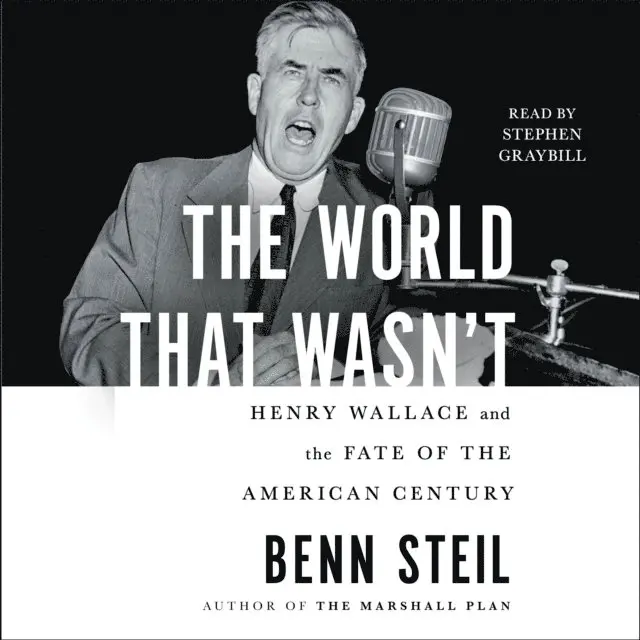
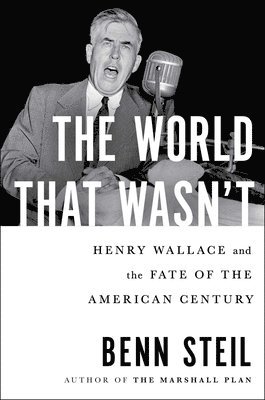
A “timely, riveting” (The Washington Post) new perspective on the political career of Henry Wallace—that will forever change how we view the making of US and Soviet foreign policy at the dawn of the Cold War—from the acclaimed economist-historian and author of The Marshall Plan.Henry Wallace is the most important, and certainly the most fascinating, almost-president in American history. As FDR’s third-term vice president, and a hero to many progressives, he lost his place on the 1944 Democratic ticket in a wild open convention, resulting in Harry Truman becoming president upon FDR’s death. Books, films, and even plays have since portrayed the circumstances surrounding Wallace’s defeat as corrupt, and the results catastrophic. Filmmaker Oliver Stone, among others, has claimed that Wallace’s loss ushered in four decades of devastating and unnecessary Cold War. Now, based on striking new finds from Russian, FBI, and other archives, Benn Steil’s The World That Wasn’t paints a decidedly less heroic portrait of the man, of the events surrounding his fall, and of the world that might have been under his presidency. Though a brilliant geneticist, Henry Wallace was a self-obsessed political figure, blind to the manipulations of aides—many of whom were Soviet agents and assets. From 1933 to 1949, Wallace undertook a series of remarkable interventions abroad, each aimed at remaking the world order according to his evolving spiritual blueprint. As agriculture secretary, he fell under the spell of Russian mystics, and used the cover of a plant-gathering mission to aid their doomed effort to forge a new theocratic state in Central Asia. As vice president, he toured a Potemkin Siberian continent, guided by undercover Soviet security and intelligence officials who hid labor camps and concealed prisoners. He then wrote a book, together with an American NKGB journalist source, hailing the region’s renaissance under Bolshevik leadership. In China, the Soviets uncovered his private efforts to coax concessions to Moscow from Chiang Kai-shek, fueling their ambitions to dominate Manchuria. Running for president in 1948, he colluded with Stalin to undermine his government’s foreign policy, allowing the dictator to edit his most important election speech. It was not until 1950 that he began to acknowledge his misapprehensions regarding the Kremlin’s aims and conduct. Meticulously researched and deftly written, The World That Wasn’t is a spellbinding work that shows how “American history—and world history—could have turned out very differently if just a few things had gone the other way” (The Wall Street Journal). - E-bokRumänska, 2021
76 kr
Läs direkt efter köp
Câștigător în 2019 al New York Historical Society Barbara and David Zalaznick Book Prize in American History
Câștigător în 2018 al American Academy of Diplomacy Douglas Dillon Award
Nominalizat în 2018 la Duff Cooper Prize in Literary Nonfiction
Mențiune de onoare în 2019 la ASEEES Marshall D. Shulman Prize
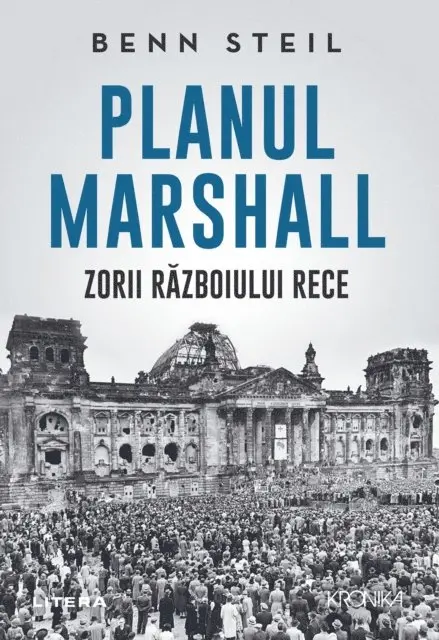
La finalul celui de-al Doilea Război Mondial, odată cu prăbușirea Imperiului Britanic și ridicarea stelei lui Stalin, oficialii americani, conduși de noul secretar de stat, George C. Marshall, au pornit în misiunea de reconstruire a Europei Occidentale ca pavăză împotriva autoritarismului comunist. Întreprinderea lor masivă, costisitoare și ambițioasă avea să îi pună pe europeni și pe americani în fața unei viziuni adesea în conflict cu istoria lor și concepțiile despre sine. În acest proces, se va ajunge la crearea NATO, a Uniunii Europene și a identității occidentale care continuă să dea formă evenimentelor internaționale.
Concentrându-se pe anii hotărâtori 1947–1949, relatarea lui Benn Steil aduce la viață episoade importante marcând prăbușirea relațiilor SUA–URSS de la finalul războiului și lovitura de stat de la Praga, blocada Berlinului și divizarea Germaniei. În fiecare dintre aceste cazuri, vedem și înțelegem ca niciodată înainte hotărârea lui Stalin de a zdrobi Planul Marshall și de a submina puterea americană în Europa.
Având în vedere ecourile actuale ale Războiului Rece, când Putin și Rusia pun la încercare ordinea mondială, fragilul echilibru de putere și ordinea incertă de la finalul anilor 1940 sunt mai relevante ca oricând. Planul Marshall ne oferă contextul critic pentru a înțelege peisajul internațional de azi. Aducând la lumină materiale noi din arhivele americane, ruse, germane și din alte țări ale Europei, povestea lui Steil va schimba definitiv modul în care percepem Planul Marshall și începutul Războiului Rece. O lucrare rafinată de istorie care va deveni un clasic al literaturii despre Războiul Rece.
„Benn Steil s-a specializat în explicarea subiectelor complexe. Beneficiind de cunoștințe de diplomație, economie și strategie, Steil stabilește un nou standard pentru înțelegerea noastră nu doar în ceea ce privește Războiul Rece, ci și epoca post-Război Rece, în care viitorul Europei și rolul Statelor Unite sunt puse din nou sub semnul întrebării. O realizare deosebită, care vine la timp.” John Lewis Gaddis, profesor de istorie militară și navală, Universitatea Yale
„În noua sa carte, Benn Steil ne spune o dublă poveste: cea a lansării Planului Marshall, programul american fără precedent de ajutorare a Europei după cel de-al Doilea Război Mondial, dar și a diverselor tentative sovietice de a-l deturna și împiedica. Însuflețită de portrete realizate cu talent, această relatare emoționantă adaugă o nouă perspectivă asupra uneia dintre cele mai grele perioade din istoria lumii.” Liaquat Ahamed, câștigător al Premiului Pulitzer
„Planul Marshall este o lucrare remarcabilă și minunat scrisă de istorie a diplomației și a economiei. Lideri și oameni de rând continuă să susțină nevoia unor noi Planuri Marshall pe tot globul, dar câți dintre ei înțeleg cu adevărat despre ce a fost vorba în cazul planului original, cum a fost creat și ce a realizat? Această carte va deschide ochi și minți.” Alan Greenspan, fost președinte al Rezervei Federale
BENN STEIL este asociat principal și director de economie internațională în cadrul Consiliului pentru relații internaționale. Este autorul volumului premiat Battle of Bretton Woods: John Maynard Keynes, Harry Dexter White, and the Making of the New World Order. Locuiește în New York împreună cu soția sa și cei doi fii.
- Inbunden, Engelska
141 kr
Tillfälligt slut
- Häftad, Engelska, 2004
82 kr
Tillfälligt slut
- Häftad, Engelska, 2009
212 kr
Tillfälligt slut
- Inbunden, Engelska, 2024
447 kr
Tillfälligt slut
- Häftad, Franska
469 kr
Tillfälligt slut