Marcel Stoetzler - Böcker
Visar alla böcker från författaren Marcel Stoetzler. Handla med fri frakt och snabb leverans.
5 produkter
5 produkter
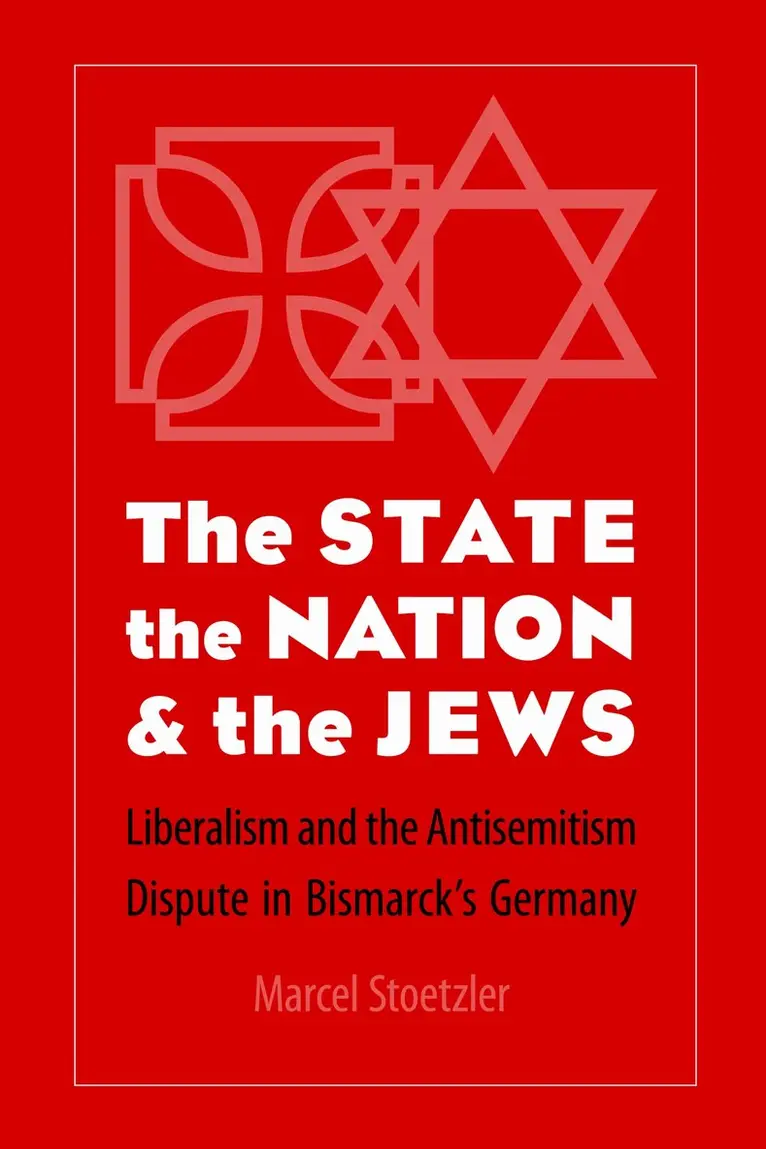
State, the Nation, and the Jews
Liberalism and the Antisemitism Dispute in Bismarck's Germany
Inbunden, Engelska, 2009
722 kr
Skickas inom 10-15 vardagar
The State, the Nation, and the Jews is a study of Germany's late nineteenth-century antisemitism dispute and of the liberal tradition that engendered it. The Berlin Antisemitism Dispute began in 1879 when a leading German liberal, Heinrich von Treitschke, wrote an article supporting anti-Jewish activities that seemed at the time to gel into an antisemitic "movement." Treitschke's comments immediately provoked a debate within the German intellectual community. Responses from supporters and critics alike argued the relevance, meaning, and origins of this "new" antisemitism. Ultimately the Dispute was as much about Germans and how they could best consolidate their recently formed national state as about Jews and those who hated them. Treitschke's liberal antisemitism threw into sharp relief the antinomies inherent in the modern constellation of state, culture, and society.In a newly united Germany the Dispute forced the intellectual community to question the parameters of national identity. Born within the liberal tradition that, at the time, mostly championed Jewish emancipation, the Dispute's core question was how state, nation, race, ethnicity, and religion should relate to one another. From a close analysis of the crucial contributions to the debate, Marcel Stoetzler crafts a compelling critique of liberalism and liberal notions of national identity. The specifics of the Dispute raise uncomfortable questions about the role of race, religion, and ethnicity within modern liberalism. The Dispute provides an avenue for understanding the development of antisemitism within liberal society and, ultimately, is an indictment of liberalism itself.
701 kr
Skickas inom 10-15 vardagar
Modern antisemitism and the modern discipline of sociology not only emerged in the same period, but-antagonism and hostility between the two discourses notwithstanding-also overlapped and complemented each other. Sociology emerged in a society where modernization was often perceived as destroying unity and “social cohesion.” Antisemitism was likewise a response to the modern age, offering in its vilifications of “the Jew” an explanation of society’s deficiencies and crises. Antisemitism and the Constitution of Sociology is a collection of essays providing a comparative analysis of modern antisemitism and the rise of sociology. This volume addresses three key areas: the strong influence of writers of Jewish background and the rising tide of antisemitism on the formation of sociology; the role of antisemitism in the historical development of sociology through its treatment by leading figures in the field, such as Emile Durkheim, Talcott Parsons, and Theodor W. Adorno; and the discipline’s development in the aftermath of the Nazi Holocaust. Together the essays provide a fresh perspective on the history of sociology and the role that antisemitism, Jews, fascism, and the Holocaust played in shaping modern social theory.Contributors: Y. Michal Bodemann, Werner Bonefeld, Detlev Claussen, Robert Fine, Chad Alan Goldberg, Irmela Gorges, Jonathan Judaken, Richard H. King, Daniel Lvovich, Amos Morris-Reich, Roland Robertson, Marcel Stoetzler, and Eva-Maria Ziege.
1 209 kr
Skickas inom 10-15 vardagar
This volume provides a systematic re-examination of the Frankfurt School's theory of antisemitism and, employing this critical theory, investigates the presence of antisemitism in 20th- and 21st-century politics and society.Critical Theory and the Critique of Antisemitism uncovers how critical theory differs from mainstream socialist or liberal critiques of antisemitism, as it frames its rejection of antisemitism in the critique of other aspects of modern capitalist society, which traditional theories leave unchallenged or critique only in passing. Amongst others, these include issues of identity, nation, race, and sexuality. In exploring the Frankfurt School's writings on antisemitism therefore, the chapters in this book reveal connections to other pressing societal issues, such as racism more broadly, patriarchy, statism, and the societal dynamics of the ever-evolving capitalist mode of production.Putting the theory to practice, this volume brings together interdisciplinary scholars and activists who employ critical theory to scrutinise right- and left-wing manifestations of antisemitism. They develop, in their critique of antisemitism, a critique of capitalism, as the authors ask: why does modern capitalist society seem bound to produce antisemitism? And how do we challenge it?At a time when the rise of populism internationally has brought with it new strains of antisemitism, this is an essential resource that demonstrates the continuing relevance of the critical theory of the Frankfurt School for the struggle against antisemitism today.
394 kr
Skickas inom 10-15 vardagar
This volume provides a systematic re-examination of the Frankfurt School's theory of antisemitism and, employing this critical theory, investigates the presence of antisemitism in 20th- and 21st-century politics and society.Critical Theory and the Critique of Antisemitism uncovers how critical theory differs from mainstream socialist or liberal critiques of antisemitism, as it frames its rejection of antisemitism in the critique of other aspects of modern capitalist society, which traditional theories leave unchallenged or critique only in passing. Amongst others, these include issues of identity, nation, race, and sexuality. In exploring the Frankfurt School's writings on antisemitism therefore, the chapters in this book reveal connections to other pressing societal issues, such as racism more broadly, patriarchy, statism, and the societal dynamics of the ever-evolving capitalist mode of production.Putting the theory to practice, this volume brings together interdisciplinary scholars and activists who employ critical theory to scrutinise right- and left-wing manifestations of antisemitism. They develop, in their critique of antisemitism, a critique of capitalism, as the authors ask: why does modern capitalist society seem bound to produce antisemitism? And how do we challenge it?At a time when the rise of populism internationally has brought with it new strains of antisemitism, this is an essential resource that demonstrates the continuing relevance of the critical theory of the Frankfurt School for the struggle against antisemitism today.
218 kr
Skickas inom 5-8 vardagar
Beginning classical social theory introduces students and educated general readers to thirteen key social theorists by way of examining a single, exemplary text by each author, ranging from Comte to Adorno. It answers the need for a book that helps students develop the skill to critically read theory.Rather than learning how to admire the canonical theorists, readers are alerted to the flow of their arguments and the texts’ contradictions and limitations. Having gotten ‘under the skin’ of one key text by each author will provide readers with a solid starting point for further study.The book will be suitable as the principal textbook in social theory modules as much as alongside a more conventional textbook as a recommended additional tool for self-study. It will appeal to undergraduate and postgraduate students as well as educated lay readers.