Marcello Pera – författare
Visar alla böcker från författaren Marcello Pera. Handla med fri frakt och snabb leverans.
13 produkter
Without Roots
Europe, Relativism, Christianity, Islam
Av Joseph Ratzinger, Marcello Pera
Häftad, 2007
4,0 utav 5 stjärnor. Totalt antal röster: (1)
168 kr
Lägg i varukorg
Bringing together their unique vantage points as leaders of Church and State, Cardinal Joseph Ratzinger and Marcello Pera challenge us to imagine what can be the future of a civilization that has abandoned its moral and cultural history. They call on the West to embrace a spiritual rather than …
Scientific Controversies
Philosophical and Historical Perspectives
Av Peter Machamer, Marcello Pera m. fl.
Inbunden, 2000
3040 kr
Lägg i varukorg
Traditionally it has been thought that scientific controversies can always be resolved on the basis of empirical data. Recently, however, social constructionists have claimed that the outcome of scientific debates is strongly influenced by non-evidential factors such as the rhetorical prowess and …
Discourses of Science
Inbunden, 1994
539 kr
Lägg i varukorg
In this revised edition incorporating a translation of "Scienza e Retorica", Marcello Pera argues that rhetoric is central to the making of scientific knowledge. Pera begins with an attack of what he calls the "Cartesian syndrome" - the fixation on method common to both defenders of traditional …
Scientific Controversies
Philosophical and Historical Perspectives
Av Aristides Baltas, Marcello Pera m. fl.
E-bok, 2000
1375 kr
Lägg i varukorg
Traditionally it has been thought that scientific controversies can always be resolved on the basis of empirical data. Recently, however, social constructionists have claimed that the outcome of scientific debates is strongly influenced by non-evidential factors such as the rhetorical prowess and …
Scientific Controversies
Philosophical and Historical Perspectives
Av Aristides Baltas, Marcello Pera m. fl.
E-bok, 2000
1375 kr
Lägg i varukorg
Traditionally it has been thought that scientific controversies can always be resolved on the basis of empirical data. Recently, however, social constructionists have claimed that the outcome of scientific debates is strongly influenced by non-evidential factors such as the rhetorical prowess and …
Ambiguous Frog
The Galvani-Volta Controversy on Animal Electricity
Häftad, 2014
496 kr
Lägg i varukorg
How do ideas become accepted by the scientific community? How and why do scientists choose among empirically equivalent theories? In this pathbreaking book translated from the Italian, Marcello Pera addresses these questions by exploring the politics, rhetoric, scientific practices, and …
Ambiguous Frog
The Galvani-Volta Controversy on Animal Electricity
Inbunden, 2016
2003 kr
Lägg i varukorg
How do ideas become accepted by the scientific community? How and why do scientists choose among empirically equivalent theories? In this pathbreaking book translated from the Italian, Marcello Pera addresses these questions by exploring the politics, rhetoric, scientific practices, and …
Ambiguous Frog
The Galvani-Volta Controversy on Animal Electricity
E-bok, 2014
685 kr
Lägg i varukorg
How do ideas become accepted by the scientific community? How and why do scientists choose among empirically equivalent theories? In this pathbreaking book translated from the Italian, Marcello Pera addresses these questions by exploring the politics, rhetoric, scientific practices, and …
Why We Should Call Ourselves Christians
The Religious Roots of Free Societies
E-bok, 2011
311 kr
Lägg i varukorg
The intellectual and political elite of the West is nowadays taking for granted that religion, in particular Christianity, is a cultural vestige, a primitive form of knowledge, a consolation for the poor minded, an obstacle to coexistence. In all influential environments, the widespread watchword …
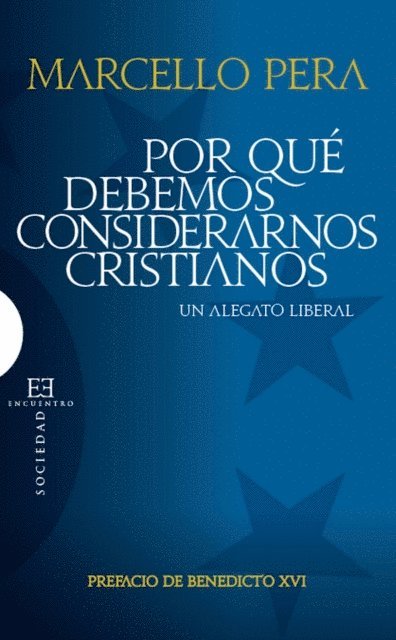
Por qué debemos considerarnos cristianos
Un alegato liberal
E-bok, 2011
113 kr
Lägg i varukorg
¿Por qué deberíamos considerarnos cristianos? Hoy somos liberales y, por consiguiente, no necesitamos dirigirnos al cristianismo para justificar nuestros derechos y libertades fundamentales. Somos laicos y, en consecuencia, podemos considerar las fes religiosas como creencias privadas. Somos …
Rational Changes in Science
Essays on Scientific Reasoning
Av Marcello Pera, Joseph C. Pitt
E-bok, 2012
718 kr
Lägg i varukorg
THE PROBLEMS OF SCIENTIFIC RATIONALITY Fashion is a fickle mistress. Only yesterday scientific rationality enjoyed considerable attention, consideration, and even reverence among phi losophers; "but today''s fashion leads us to despise it, and the matron, rejected and abandoned as Hecuba, …
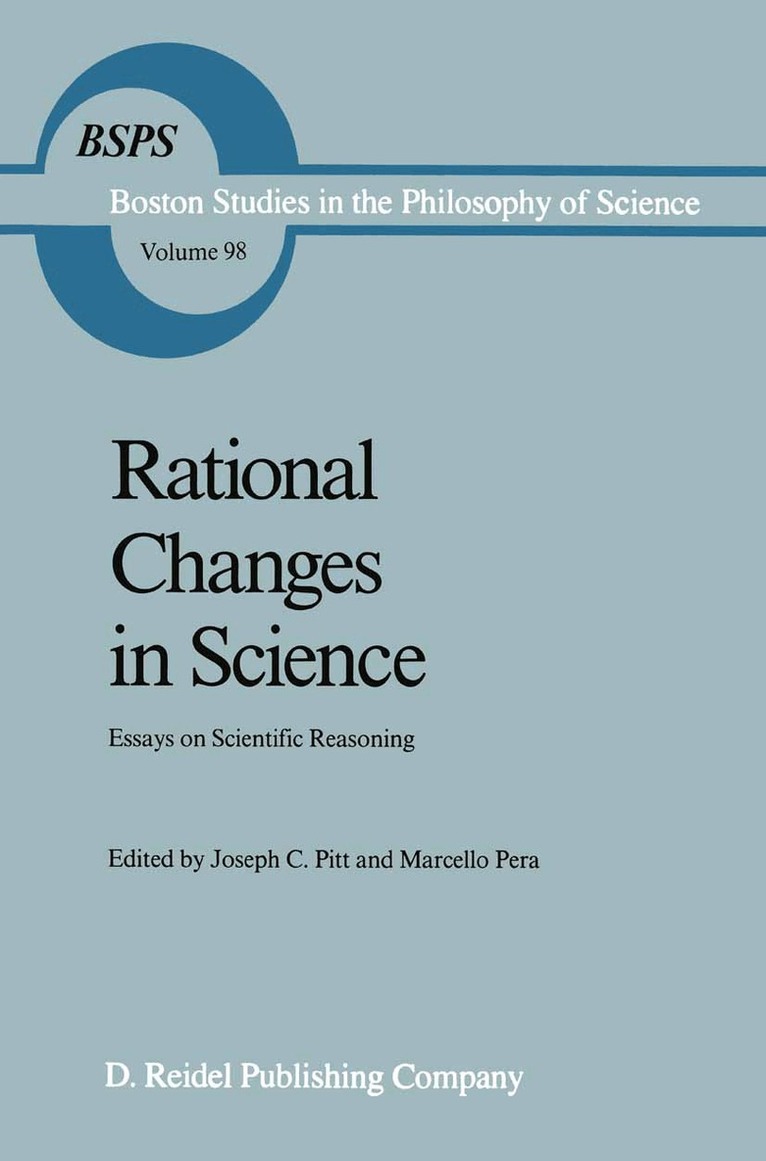
Rational Changes in Science
Essays on Scientific Reasoning
Av Joseph C. Pitt, Marcello Pera
Häftad, 2011
552 kr
Lägg i varukorg
THE PROBLEMS OF SCIENTIFIC RATIONALITY Fashion is a fickle mistress. Only yesterday scientific rationality enjoyed considerable attention, consideration, and even reverence among phi losophers; "but today's fashion leads us to despise it, and the matron, rejected and abandoned as Hecuba, …
Why We Should Call Ourselves Christians
The Religious Roots of Free Societies
Inbunden, 2011
205 kr
Tillfälligt slut
The intellectual and political elite of the West is nowadays taking for granted that religion, in particular Christianity, is a cultural vestige, a primitive form of knowledge, a consolation for the poor minded, an obstacle to coexistence. In all influential environments, the widespread watchword …