Marcia Feuerstein - Böcker
Visar alla böcker från författaren Marcia Feuerstein. Handla med fri frakt och snabb leverans.
5 produkter
5 produkter
593 kr
Skickas inom 10-15 vardagar
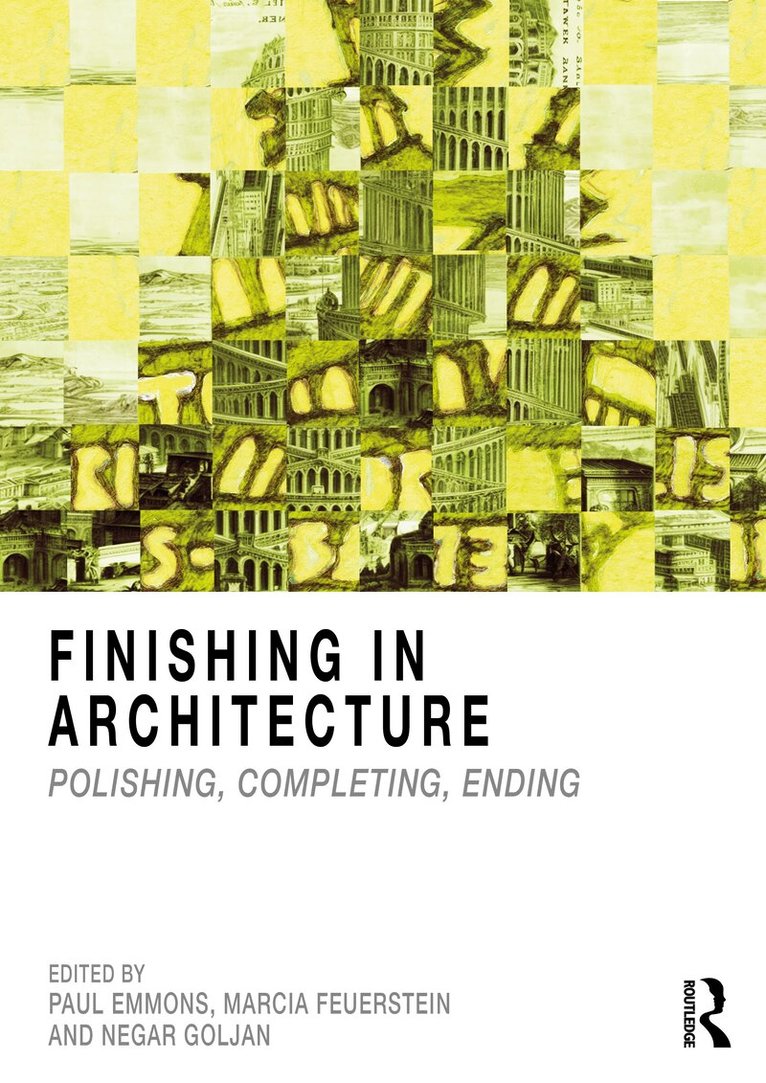
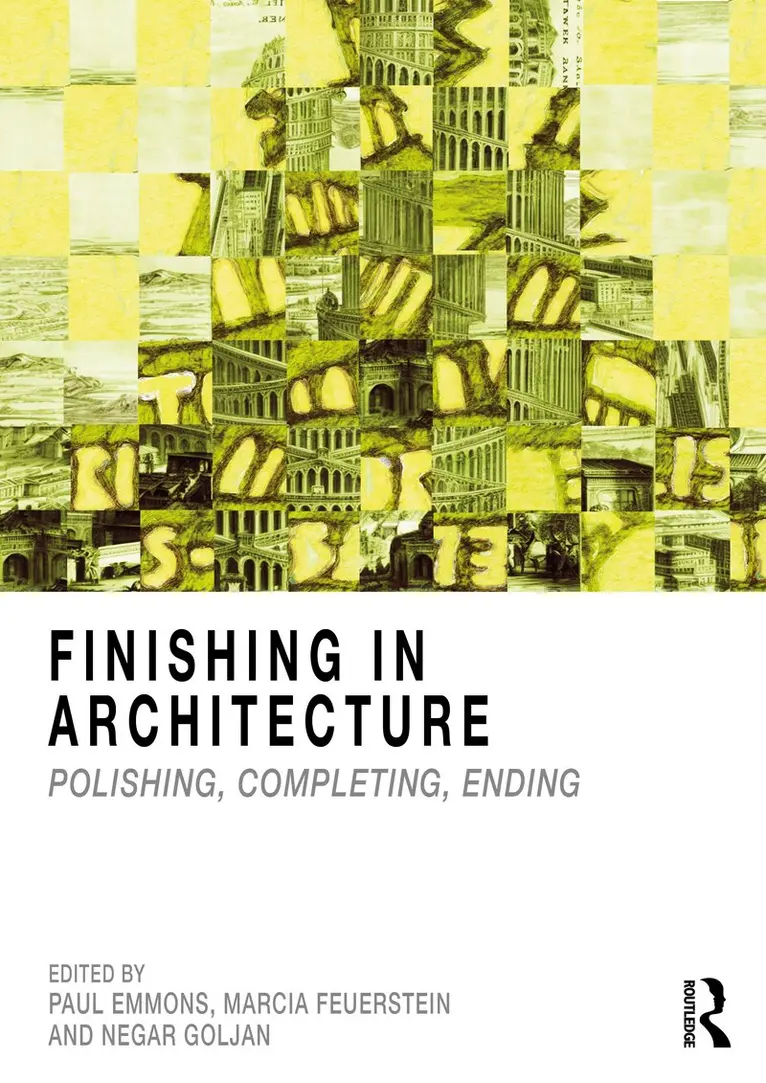
Finishing in Architecture: Polishing, Completing, Ending explores the topic of finishing and the fascinating physical and metaphysical implications of its various conceptions in architecture. Finishing is essential to all human practices and concepts of time, yet simultaneously it is largely impossible to identify an entirely finished state of being. As mortals, we organize our worlds into beginnings and endings, starts and finishes. Architecture’s temporality, however, may contain something of both the mortal and immortal within it – a desire for permanence combined with lamentation over its impossibility.While many approaches to finishing construct two opposed ontological conditions (the finished and the unfinished), this dualistic ploy neglects the complexity of architectural practice, cultural reception, and historiographic shifts in semiotics during the lifetime of a building. More nuanced approaches are examined in this collection of 38 essays and creative works from a diverse group of scholars, architects, and artists who conceptualize finishing not simply as a final outcome, but as an extended action, a mood that presumes an end is near, all the while working continuously toward (but never achieving) completion. It is here that the concept of finishing is not a state of being but a state of becoming, as an active thickening of time when the end is thought to be imminent but not yet attained. Finishing, more than a final endpoint, is a void state that is extended through efforts framing its territory, while never quite containing it.From the material to the procedural and the conceptual, this volume explores the practices of finishing in architecture within three currents: surfaces, projects, and most broadly, architectural times. It will be of interest to students and instructors of architecture and design, architectural historians, and other scholars.
2 150 kr
Skickas inom 10-15 vardagar
Finishing in Architecture: Polishing, Completing, Ending explores the topic of finishing and the fascinating physical and metaphysical implications of its various conceptions in architecture. Finishing is essential to all human practices and concepts of time, yet simultaneously it is largely impossible to identify an entirely finished state of being. As mortals, we organize our worlds into beginnings and endings, starts and finishes. Architecture’s temporality, however, may contain something of both the mortal and immortal within it – a desire for permanence combined with lamentation over its impossibility.While many approaches to finishing construct two opposed ontological conditions (the finished and the unfinished), this dualistic ploy neglects the complexity of architectural practice, cultural reception, and historiographic shifts in semiotics during the lifetime of a building. More nuanced approaches are examined in this collection of 38 essays and creative works from a diverse group of scholars, architects, and artists who conceptualize finishing not simply as a final outcome, but as an extended action, a mood that presumes an end is near, all the while working continuously toward (but never achieving) completion. It is here that the concept of finishing is not a state of being but a state of becoming, as an active thickening of time when the end is thought to be imminent but not yet attained. Finishing, more than a final endpoint, is a void state that is extended through efforts framing its territory, while never quite containing it.From the material to the procedural and the conceptual, this volume explores the practices of finishing in architecture within three currents: surfaces, projects, and most broadly, architectural times. It will be of interest to students and instructors of architecture and design, architectural historians, and other scholars.
831 kr
Skickas inom 10-15 vardagar
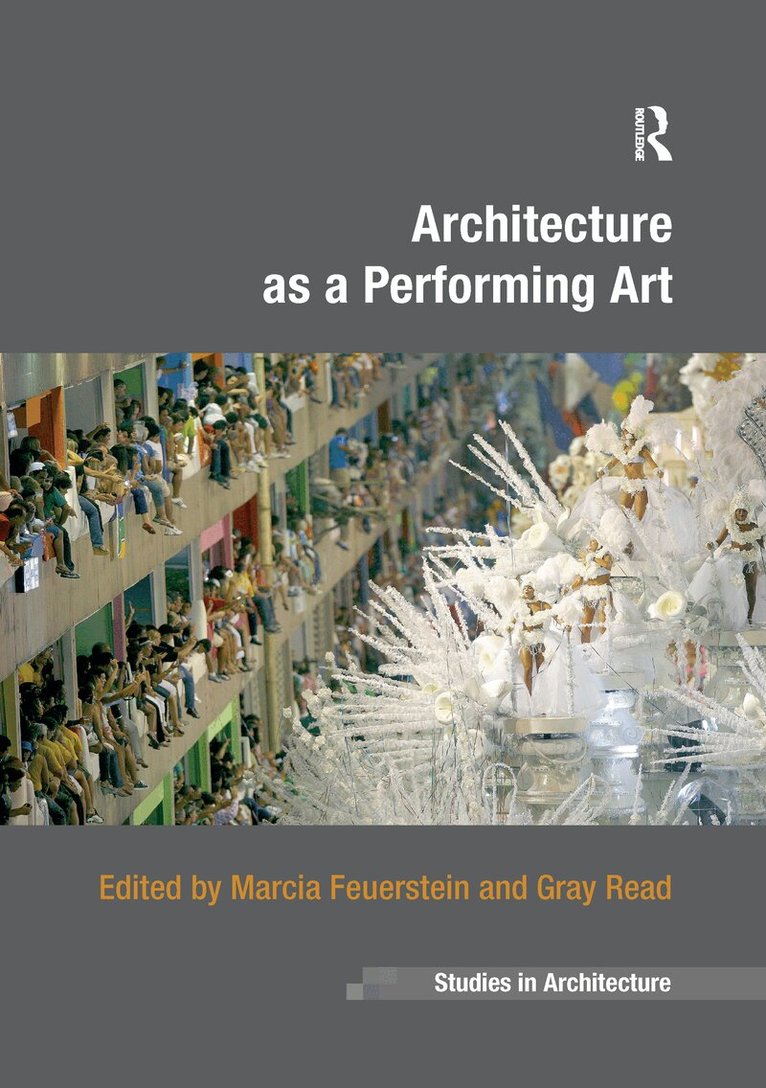
How do buildings act with people and among people in the performances of life? This collection of essays reveals a deep alliance between architecture and the performing arts, uncovering its roots in ancient stories, and tracing a continuous tradition of thought that emerges in contemporary practice. With fresh insight, the authors ask how buildings perform with people as partners, rather than how they look as formal compositions. They focus on actions: the door that offers the possibility of making a dramatic entrance, the window that frames a scene, and the city street that is transformed in carnival. The essays also consider the design process as a performance improvised among many players and offer examples of recent practice that integrates theater and dance. This collection advances architectural theory, history, and criticism by proposing the lens of performance as a way to engage the multiple roles that buildings can play, without reducing them to functional categories. By casting architecture as spatial action rather than as static form, these essays open a promising avenue for future investigation. For architects, the essays propose integrating performance into design through playful explorations that can reveal intense relationships between people and place, and among people in place. Such practices develop an architectural imagination that intuitively asks, 'How might people play out their stories in this place?' and 'How might this place spark new stories?' Questions such as these reside in the heart of all of the essays presented here. Together, they open a position in the intersection between everyday life and staged performance to rethink the role of architectural design.
2 357 kr
Skickas inom 10-15 vardagar
How do buildings act with people and among people in the performances of life? This collection of essays reveals a deep alliance between architecture and the performing arts, uncovering its roots in ancient stories, and tracing a continuous tradition of thought that emerges in contemporary practice. With fresh insight, the authors ask how buildings perform with people as partners, rather than how they look as formal compositions. They focus on actions: the door that offers the possibility of making a dramatic entrance, the window that frames a scene, and the city street that is transformed in carnival. The essays also consider the design process as a performance improvised among many players and offer examples of recent practice that integrates theater and dance. This collection advances architectural theory, history, and criticism by proposing the lens of performance as a way to engage the multiple roles that buildings can play, without reducing them to functional categories. By casting architecture as spatial action rather than as static form, these essays open a promising avenue for future investigation. For architects, the essays propose integrating performance into design through playful explorations that can reveal intense relationships between people and place, and among people in place. Such practices develop an architectural imagination that intuitively asks, 'How might people play out their stories in this place?' and 'How might this place spark new stories?' Questions such as these reside in the heart of all of the essays presented here. Together, they open a position in the intersection between everyday life and staged performance to rethink the role of architectural design.
793 kr
Skickas inom 5-8 vardagar
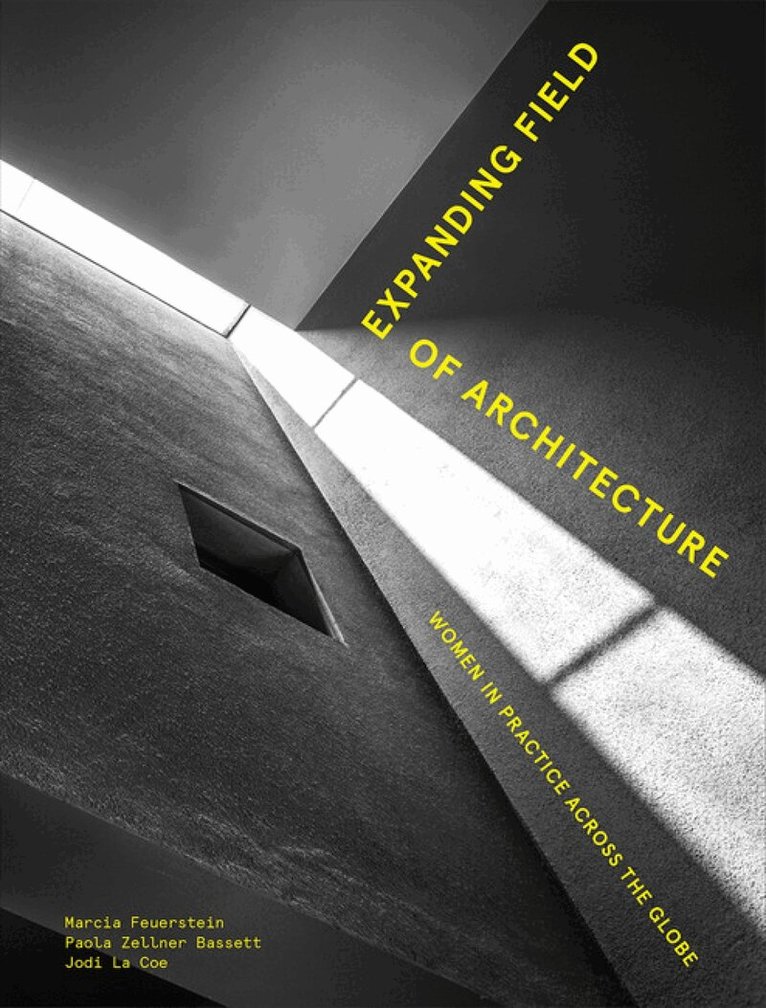
This book documentscontemporary architectural projects designed by women architects participatingin diverse forms of practice in diverse regions around the world. Examiningeach design within its unique context, this collection of forty projectsincludes beautifully illustrated case studies of transformative buildings,encompassing a range of sizes, building types, materials, and constructionmethods. Overcoming historical challenges within architectural practice, thewomen architects in this collection lead their firms and expand the field ofarchitecture. Brit Andresen, Andresen O’Gorman Architects,Australia; Sandra Barclay, Barclay &Crousse Architecture, Perú + France; Tatiana Bilbao Estudio, México; ShirleyBlumberg, KPMB Architects, Canada; ElianaBórmida, Bórmida y Yanzón Arquitectos, Argentina; Fernanda Canales Arquitectura, México;Gabriela Carrillo, México; Aziza ChaouniProjects, Canada; ElizabethDiller, Diller Scofidio + Renfro, USA; Carmen Espegel, Espegel Arquitectos,España; Yvonne Farrell and Shelley McNamara, Grafton Architects,Éire; Jeanne Gang, Studio Gang, USA + France; LinaGhotmeh Architecture, France; MelkanGürsel, Tabanlıoğlu Architects, Turkey, UK + USA; Studio Anna Heringer, Deutschland; FrancineHouben, Mecanoo, Nederland, Taiwan, UK + USA; Carla JuaçabaStudio, Brasil; Antonia Lehmann, IzquierdoLehmann Arquitectos, Chile; InêsLobo Arquitectos, Portugal; Lu Wenyu, AmateurArchitecture Studio, China; Doriana Mandrelli Fuksas, STUDIO FUKSAS, Italia, France,UAE + China; Nina Maritz Architects, Namibia; Valerie Mulvin,McCullough Mulvin Architects, Éire; SheilaO’Donnell, O'Donnell + Tuomey, Éire + UK; PatriciaPatkau, Patkau Architects, Canada; Estudio Carme Pinós, España; Samira Rathod Design Associates,Bhārat Ganarājya; Maria Samaniego,arquitectura x, Ecuador; Kazuyo Sejima, KazuyoSejima and Associates + SANAA, Japan; Brigitte Shim, Shim-Sutcliffe Architects, Canada; Sonja Petrus Spamer Architects, South Africa; Marina Tabassum Architects, Bangladesh; Kerstin Thompson Architects, Australia; Lene Tranberg, Lundgaard& Tranberg Arkitekter A/S, Danmark; Billie Tsien, Tod Williams Billie TsienArchitects | Partners, USA; Claire Weisz, WXYArchitecture + Urban Design, USA; Sarah Wigglesworth Architects, UK; Xu Tiantian, DnA (Design and Architecture), China; EstudioCazú Zegers Arquitectura, Chile; Maruša Zorec,Arrea Arhitektura, Slovenija