Marcus Arvan - Böcker
Visar alla böcker från författaren Marcus Arvan. Handla med fri frakt och snabb leverans.
5 produkter
5 produkter
901 kr
Skickas inom 10-15 vardagar
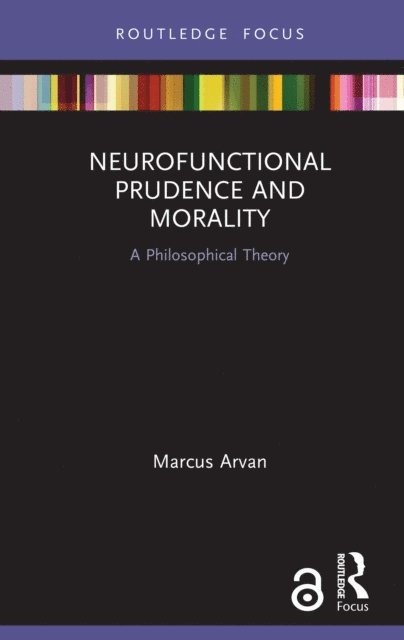
Philosophers across many traditions have long theorized about the relationship between prudence and morality. Few clear answers have emerged, however, in large part because of the inherently speculative nature of traditional philosophical methods. This book aims to forge a bold new path forward, outlining a theory of prudence and morality that unifies a wide variety of findings in neuroscience with philosophically sophisticated normative theorizing.The author summarizes the emerging behavioral neuroscience of prudence and morality, showing how human moral and prudential cognition and motivation are known to involve over a dozen brain regions and capacities. He then outlines a detailed philosophical theory of prudence and morality based on neuroscience and lived human experience. The result demonstrates how this theory coheres with and explains the behavioral neuroscience, showing how each brain region and capacity interact to give rise to prudential and moral behavior.Neurofunctional Prudence and Morality: A Philosophical Theory will be of interest to philosophers and psychologists working in moral psychology, neuroethics, and decision theory.Chapter 3 of this book is freely available as a downloadable Open Access PDF under a Creative Commons Attribution-Non Commercial-No Derivatives 4.0 license.
332 kr
Skickas inom 10-15 vardagar
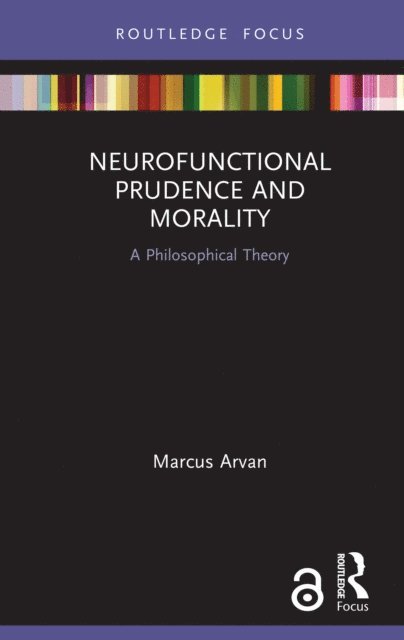
Philosophers across many traditions have long theorized about the relationship between prudence and morality. Few clear answers have emerged, however, in large part because of the inherently speculative nature of traditional philosophical methods. This book aims to forge a bold new path forward, outlining a theory of prudence and morality that unifies a wide variety of findings in neuroscience with philosophically sophisticated normative theorizing.The author summarizes the emerging behavioral neuroscience of prudence and morality, showing how human moral and prudential cognition and motivation are known to involve over a dozen brain regions and capacities. He then outlines a detailed philosophical theory of prudence and morality based on neuroscience and lived human experience. The result demonstrates how this theory coheres with and explains the behavioral neuroscience, showing how each brain region and capacity interact to give rise to prudential and moral behavior.Neurofunctional Prudence and Morality: A Philosophical Theory will be of interest to philosophers and psychologists working in moral psychology, neuroethics, and decision theory.Chapter 3 of this book is freely available as a downloadable Open Access PDF under a Creative Commons Attribution-Non Commercial-No Derivatives 4.0 license.
264 kr
Skickas inom 10-15 vardagar
Conservatives and progressives rarely agree on much—but one thing many agree upon is that it’s not OK to be a moderate. This book shows they are wrong.In Why It’s OK to be a Moderate, Marcus Arvan shows how many of history’s worst evils have resulted from far-right and far-left radicalism, how escalating conflicts between conservatives and progressives are undermining democracy, and how many widely hailed social and political achievements have been achieved by moderates and radicals working in constructive tension with each other.Using philosophy, science, and historical analysis, Arvan shows that critics of moderates tend to equate them with spineless centrists, but that most moderates aren’t centrists, falling into diverse categories across the political spectrum. Arvan then shows that although radicals tend to be popular in their era, many of them have gone down in infamy, while many moderates, like Abraham Lincoln or Clement Attlee, have endured short-term unpopularity to “make history.”Arvan shows that it’s OK to be a moderate precisely because not everyone should be one. He makes this case to you, showing that whatever your reasonable political ideology may be, things tend to go best politically when radicals and moderates effectively complement each other’s virtues while counterbalancing the other’s vices.Key FeaturesUses science and historical analysis to show that while liberals and conservatives may have some political virtues, radicals on both sides of the political spectrum tend to display twelve political vices that undermine democracyExplores how Aristotle’s idea of the “Golden Mean” and Buddhism’s “Middle Way” might be used to better understand far-left and far-right mistakes in the UK, US, Continental Europe, and IndiaShows how moderates are a leading political demographic, existing in greater numbers than liberals or conservatives while falling into diverse categories across the political spectrumDocuments how radicalism has underwritten many of history’s worst political events, along with many of the most widely acknowledged political problems of the 20th and 21st centuriesDemonstrates to the reader that things tend to go best politically when radicals and moderates work in constructive tension with each other, and worst when there aren’t enough moderates
1 752 kr
Skickas inom 10-15 vardagar
Conservatives and progressives rarely agree on much—but one thing many agree upon is that it’s not OK to be a moderate. This book shows they are wrong.In Why It’s OK to be a Moderate, Marcus Arvan shows how many of history’s worst evils have resulted from far-right and far-left radicalism, how escalating conflicts between conservatives and progressives are undermining democracy, and how many widely hailed social and political achievements have been achieved by moderates and radicals working in constructive tension with each other.Using philosophy, science, and historical analysis, Arvan shows that critics of moderates tend to equate them with spineless centrists, but that most moderates aren’t centrists, falling into diverse categories across the political spectrum. Arvan then shows that although radicals tend to be popular in their era, many of them have gone down in infamy, while many moderates, like Abraham Lincoln or Clement Attlee, have endured short-term unpopularity to “make history.”Arvan shows that it’s OK to be a moderate precisely because not everyone should be one. He makes this case to you, showing that whatever your reasonable political ideology may be, things tend to go best politically when radicals and moderates effectively complement each other’s virtues while counterbalancing the other’s vices.Key FeaturesUses science and historical analysis to show that while liberals and conservatives may have some political virtues, radicals on both sides of the political spectrum tend to display twelve political vices that undermine democracyExplores how Aristotle’s idea of the “Golden Mean” and Buddhism’s “Middle Way” might be used to better understand far-left and far-right mistakes in the UK, US, Continental Europe, and IndiaShows how moderates are a leading political demographic, existing in greater numbers than liberals or conservatives while falling into diverse categories across the political spectrumDocuments how radicalism has underwritten many of history’s worst political events, along with many of the most widely acknowledged political problems of the 20th and 21st centuriesDemonstrates to the reader that things tend to go best politically when radicals and moderates work in constructive tension with each other, and worst when there aren’t enough moderates
959 kr
Skickas inom 10-15 vardagar
Rightness as Fairness provides a uniquely fruitful method of 'principled fair negotiation' for resolving applied moral and political issues that requires merging principled debate with real-world negotiation.