Marek Okólski – författare
Visar alla böcker från författaren Marek Okólski. Handla med fri frakt och snabb leverans.
6 produkter
Stabilization and Structural Adjustment in Poland
Av Henryk Kierzkowski, Marek Okólski m. fl.
Inbunden, 1993
2588 kr
Lägg i varukorg
The Solidarity-led government which came into power in Poland in Autumn 1989 faced two enormous tasks. First, to stabilize an economy prone to hyperflation. Second, to replace a crumbling command system in favour of a market mechanism, in a country whose market institutions had been destroyed under …
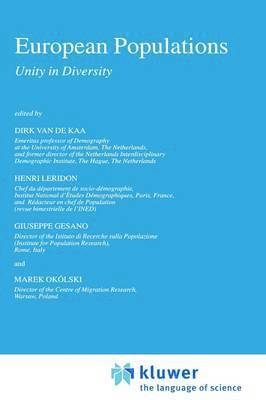
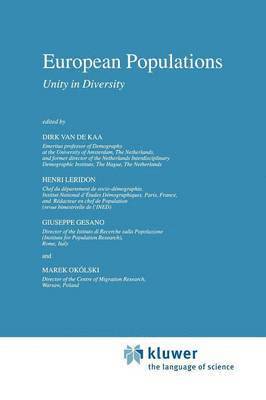
European Populations: Unity in Diversity
Av Dirk J. van de Kaa, Henri Leridon m. fl.
Inbunden, 1999
1098 kr
Lägg i varukorg
A selection of presentations from the 1999 European Population Conference, which convened in The Hague from 30 August to 3 September on behalf of the European Association for Population Studies (IUSSP), The Netherlands Interdisciplinary Demographic Institute (NIDI), Statistics Netherlands (SN), and …
Stabilization and Structural Adjustment in Poland
Av Stanislaw H. Wellisz, Marek Okolski m. fl.
E-bok, 2013
838 kr
Lägg i varukorg
The Solidarity-led government which came into power in Poland in Autumn 1989 faced two enormous tasks. First, to stabilize an economy prone to hyperflation. Second, to replace a crumbling command system in favour of a market mechanism, in a country whose market institutions had been destroyed under …
Stabilization and Structural Adjustment in Poland
Av Stanislaw H. Wellisz, Marek Okolski m. fl.
E-bok, 2013
838 kr
Lägg i varukorg
The Solidarity-led government which came into power in Poland in Autumn 1989 faced two enormous tasks. First, to stabilize an economy prone to hyperflation. Second, to replace a crumbling command system in favour of a market mechanism, in a country whose market institutions had been destroyed under …
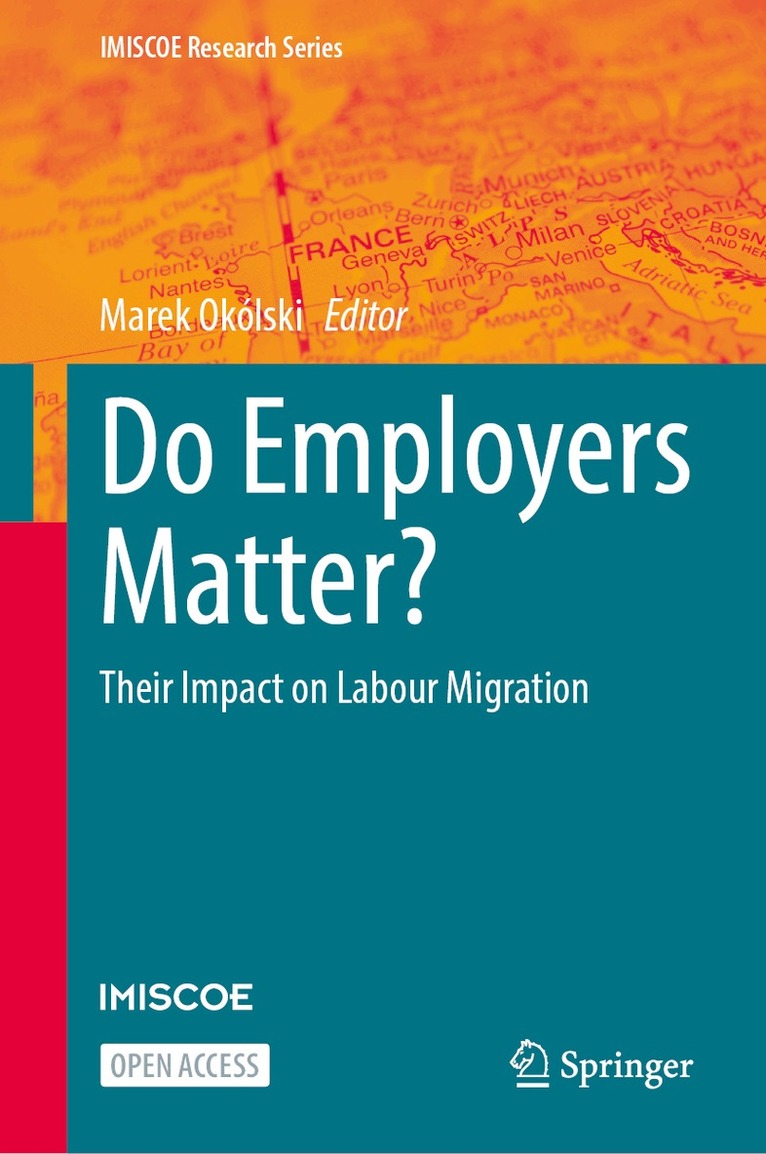
Do Employers Matter?
Their Impact on Labour Migration
Inbunden, 2026
551 kr
Lägg i varukorg
This open access book explores employers’ interests in international labour migration, arguing that employers’ interests have consistently been a major force shaping and directing international labour migration in market economies.Employers’ interests have been underestimated in part due to the …
European Populations: Unity in Diversity
Av Dirk J. van de Kaa, Henri Leridon m. fl.
Häftad, 2010
1094 kr
Lägg i varukorg
European Populations: Unity in Diversity was the general theme of the 1999 European Population Conference, which convened in The Hague (The Netherlands) from 30 August to 3 September on behalf of the European Association for Population Studies (EAPS), The International Union for the Scientific …