Henryk Kierzkowski – författare
Visar alla böcker från författaren Henryk Kierzkowski. Handla med fri frakt och snabb leverans.
8 produkter
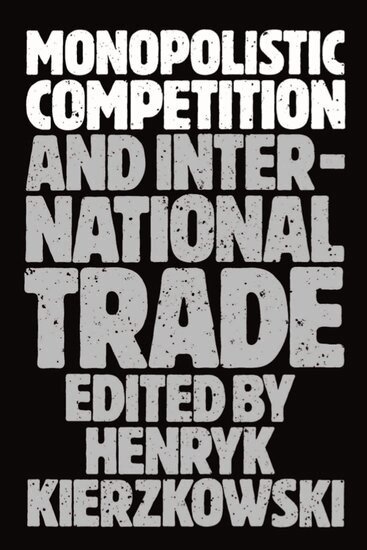
Monopolistic Competition and International Trade
Av Kierkowski, Henryk Kierzkowski
Häftad, 1989
1280 kr
Lägg i varukorg
The 1980s have seen advances in linking the analyses of foreign trade with industrial organization and exploring the impact of imperfect competition on international trade flows. The contributors in this volume look into questions related to this, such as the theories of intra-industry trade, the …
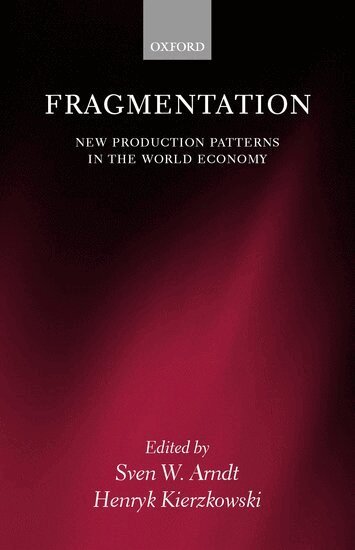
Fragmentation
New Production Patterns in the World Economy
Av Dven W. Arndt, Sven W. Arndt m. fl.
Inbunden, 2001
4216 kr
Lägg i varukorg
"Fragmentation" is a term used in this volume to describe cross-border component specialization and production-sharing. Examination of recent trade data suggests that offshore sourcing of parts and components, as well as offshore assembly, are assuming an increasing role in the world economy. The …
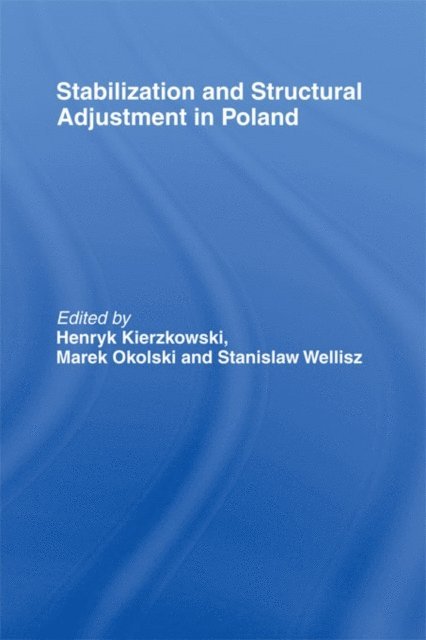
Stabilization and Structural Adjustment in Poland
Av Henryk Kierzkowski, Marek Okólski m. fl.
Inbunden, 1993
2588 kr
Lägg i varukorg
The Solidarity-led government which came into power in Poland in Autumn 1989 faced two enormous tasks. First, to stabilize an economy prone to hyperflation. Second, to replace a crumbling command system in favour of a market mechanism, in a country whose market institutions had been destroyed under …
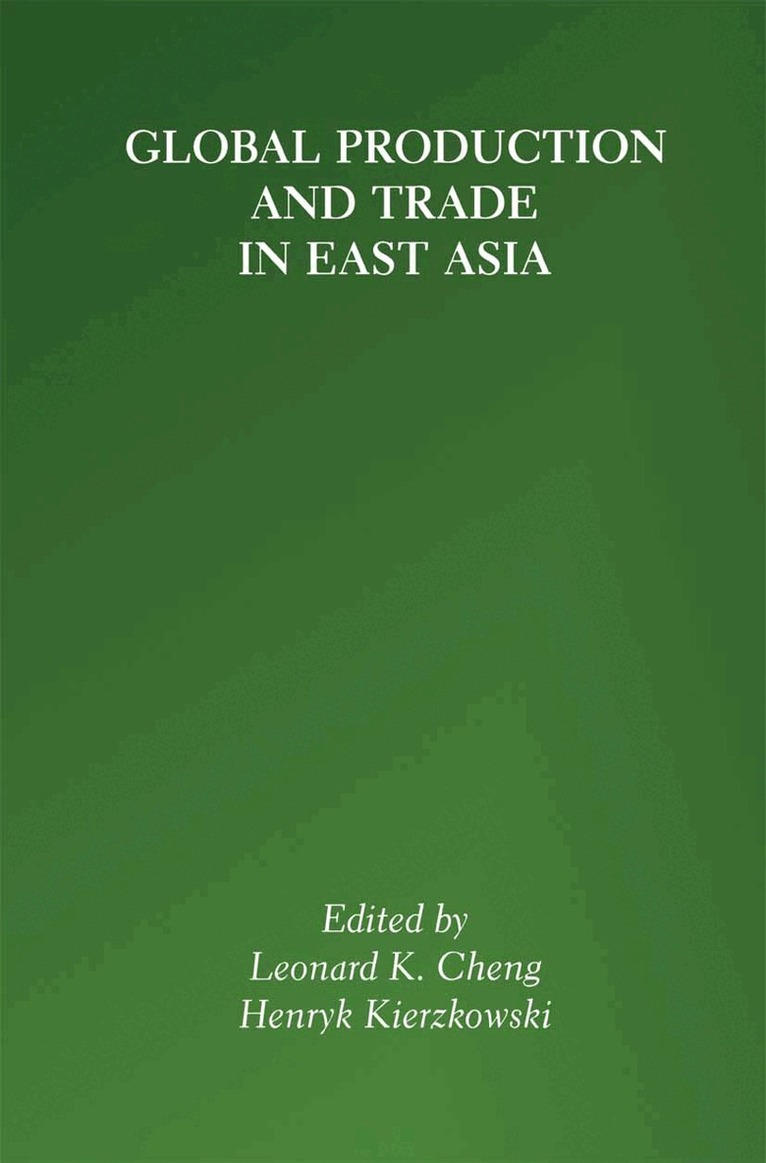
Global Production and Trade in East Asia
Av Leonard K. Cheng, Henryk Kierzkowski
Inbunden, 2001
1693 kr
Lägg i varukorg
Global Production and Trade in East Asia focuses on the profound change that the traditional paradigm of production and international trade has undergone in the last two decades or so as a result of worldwide trade and investment liberalization. This ongoing transformation has been both aided and …
Stabilization and Structural Adjustment in Poland
Av Stanislaw H. Wellisz, Marek Okolski m. fl.
E-bok, 2013
838 kr
Lägg i varukorg
The Solidarity-led government which came into power in Poland in Autumn 1989 faced two enormous tasks. First, to stabilize an economy prone to hyperflation. Second, to replace a crumbling command system in favour of a market mechanism, in a country whose market institutions had been destroyed under …
Stabilization and Structural Adjustment in Poland
Av Stanislaw H. Wellisz, Marek Okolski m. fl.
E-bok, 2013
838 kr
Lägg i varukorg
The Solidarity-led government which came into power in Poland in Autumn 1989 faced two enormous tasks. First, to stabilize an economy prone to hyperflation. Second, to replace a crumbling command system in favour of a market mechanism, in a country whose market institutions had been destroyed under …
Global Production and Trade in East Asia
Av Leonard K. Cheng, Henryk Kierzkowski
Häftad, 2012
1687 kr
Lägg i varukorg
Global Production and Trade in East Asia focuses on the profound change that the traditional paradigm of production and international trade has undergone in the last two decades or so as a result of worldwide trade and investment liberalization. This ongoing transformation has been both aided and …
Global Production and Trade in East Asia
Av Henryk Kierzkowski, Leonard K. Cheng
E-bok, 2012
2174 kr
Lägg i varukorg
Global Production and Trade in East Asia focuses on the profound change that the traditional paradigm of production and international trade has undergone in the last two decades or so as a result of worldwide trade and investment liberalization. This ongoing transformation has been both aided and …