Marek Ryś - Böcker
Visar alla böcker från författaren Marek Ryś. Handla med fri frakt och snabb leverans.
9 produkter
9 produkter
188 kr
Tillfälligt slut
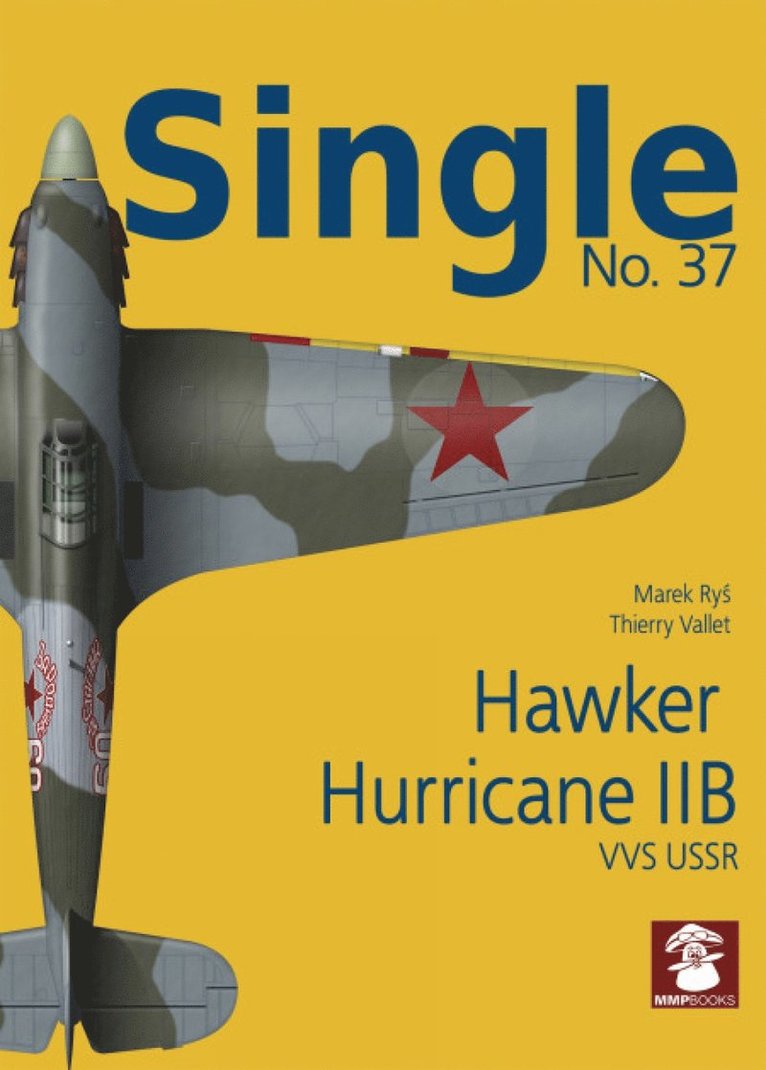
Scale plans in 1/72, 1/48 and 1/32 of Hurricane Mk II, IV and SeaHurricane variants. All late subversions are shown.
Del 94 - Top Drawings
Gloster Gladiator
Mk. I, I Trop, II, II Meteo, Sea Gladiator, J-8
Häftad, Engelska, 2020
172 kr
Tillfälligt slut
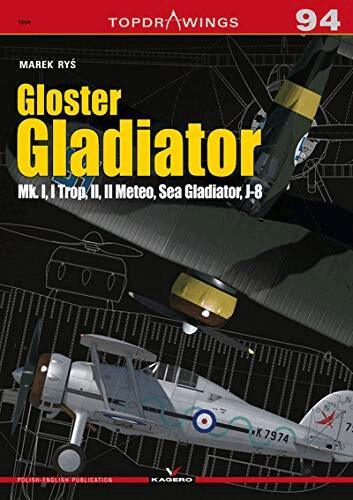
Gloster Gladiator is a British fighter constructed at the Gloster Aircraft Company. The prototype was created in 1934. It was powered by a 645 HP Bristol Mercury VIS engine. Gloster Gladiator Mk I had a 8382 mm long fuselage, which consisted of four numbered sections. The first of these included the engine bed. The second front fuselage, the third – the rear fuselage, and the fourth – tail. The arrangement of instrumentation and equipment inside the truss was marked with letters or numbered from one to eight fuselage partitions corresponding to the distances between the frames. Clearly straight main panels with a span of 9845 mm were built around two Hawker steel girders. The upper and lower supports of the girders were made of rolled octagonal elements, and the wavy lining provided strong points for attaching four aerodynamically profiled transverse struts. Such wing structure was finished with light alloy ribs, stringers and steel and duralumin spreader bars.
292 kr
Tillfälligt slut
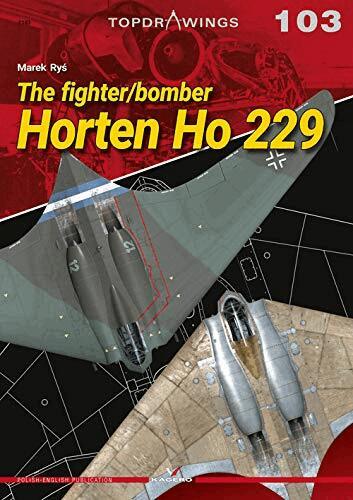
Horten Ho 229 is the first ever “flying wing” jet. The machine was built at the very end of World War II in the German Gotha factory. Today, the best-known structure of this type is the American strategic bomber Northrop B-2 Spirit, but the two planes are separated by a difference of 44 years of technological development. It was a very unusual structure, not only due to the shape of the airframe, but also the materials it was made of – it was largely plywood and wood, not only duralumin and steel. The plane was powered by two Junkers Jumo 004B jet engines. The Horten Ho 229 was flown in January 1945. It was armed with two powerful 30mm MK 108 cannons, and the performance exceeded all Allied planes at that time. Nevertheless, the Ho 229 was planned to be used as a bomber.
198 kr
Skickas
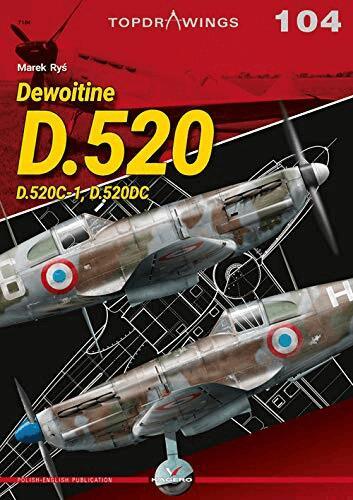
In 1936 the D-513 fighter designed by Emil Dewoitine made its first flight. It was supposed to be the successor of the slightly outdated D-500 and D-510 models, and built according to modern trends: with a closed cabin and a retractable undercarriage. Unfortunately, the tests turned out to be very disappointing. At the same time, as a result of the nationalization of the aviation industry, Dewoitine's industries were absorbed by the SNCAM. Dewoitine, however, did not give up on the project and, in cooperation with his engineers, developed a new model - the D-520.
178 kr
Tillfälligt slut
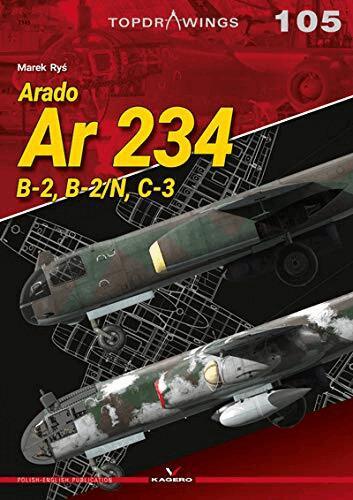
As the first functional jet engines became available, the RLM published a requirement for a reconnaissance aircraft capable of long-range patrols over Britain, all the way up to Scapa Flow. The task to build the machine was given to Arado, who put Rüdiger Kosin in charge of the design team. The initial E370 project was gradually tweaked and modified until it evolved into its final form as a single-seat aircraft powered by two jet engines in underwing pods, designated Ar 234. In order to maximize the aircraft’s range, Arado’s design team embarked on a radical weight-shedding crusade. Among the components eliminated from the design was the conventional landing gear, which was replaced with a jettisonable three-wheel trolley used for take-offs and retractable skids mounted under the fuselage for landings. These design features were incorporated into the first A series prototypes, powered by Junkers Jumo 004A engines. The B-2 was a bomber version, with a maximum bombload of 1,500 kg and the B-2/N a night fighter version. The C-3 was the multi-purpose version, armed with two 20 mm MG 151/20 cannons beneath the nose.
186 kr
Skickas
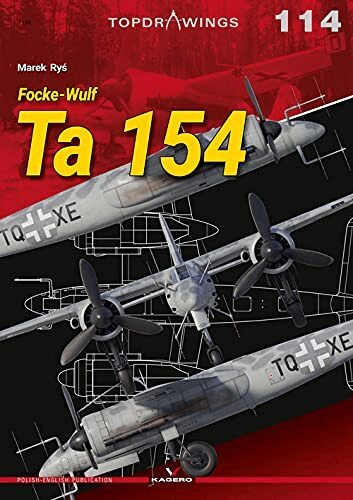
The Focke-Wulf Ta 154 Moskito was a fast twin-engined German night fighter aircraft. The German Ta 154 night fighter which supposed to be an answer to the British Mosquito.
183 kr
Skickas
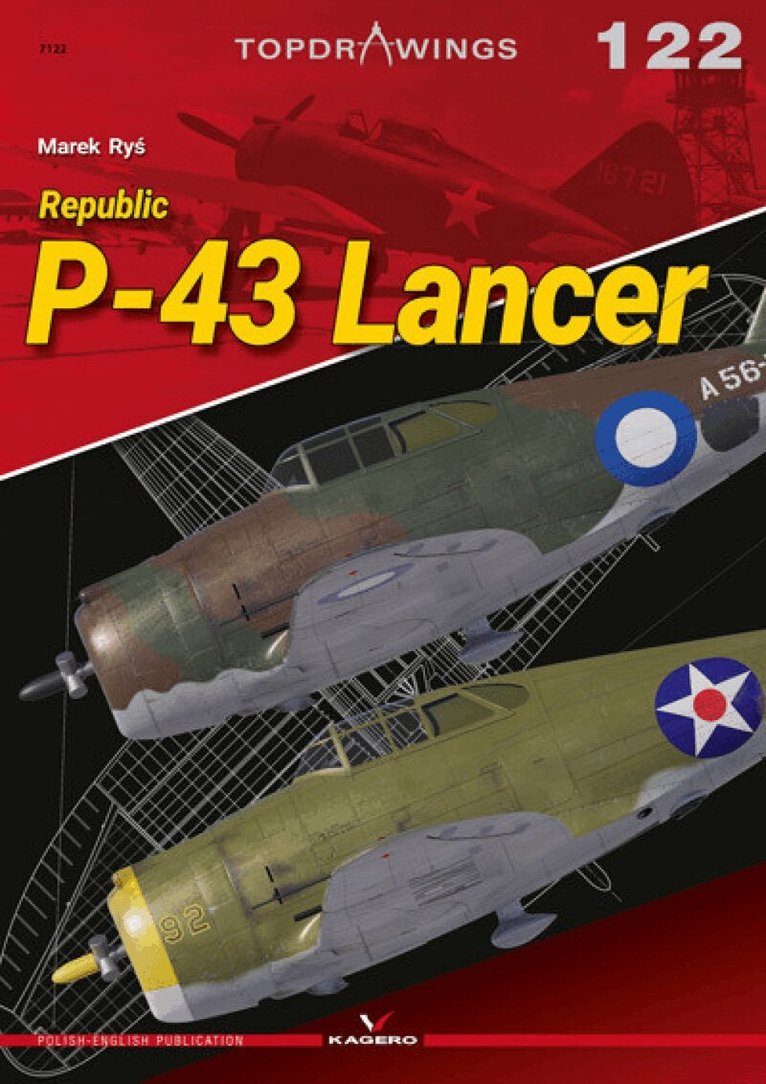
Aleksander Siewierski, originally from Georgia, was in the United States in 1917 and was there when the revolution in Russia broke out. As Alexander Seversky, he founded the Seversky Aero Corporation. Alexander Kartvelli (also a Georgian) became his main designer. Unfortunately, financial problems led to firing Seversky, and his company changed its name to Republic Aviation Corporation. The projects started and developed by Seversky, which resulted in the P-35 fighter, were continued, though. As a result of its further development, a design for the XP-41 high-altitude fighter equipped with a turbocharger was prepared. Only a prototype was built, while many of its solutions went to a more advanced aircraft, designated AP-4, and finally P-43.
198 kr
Skickas
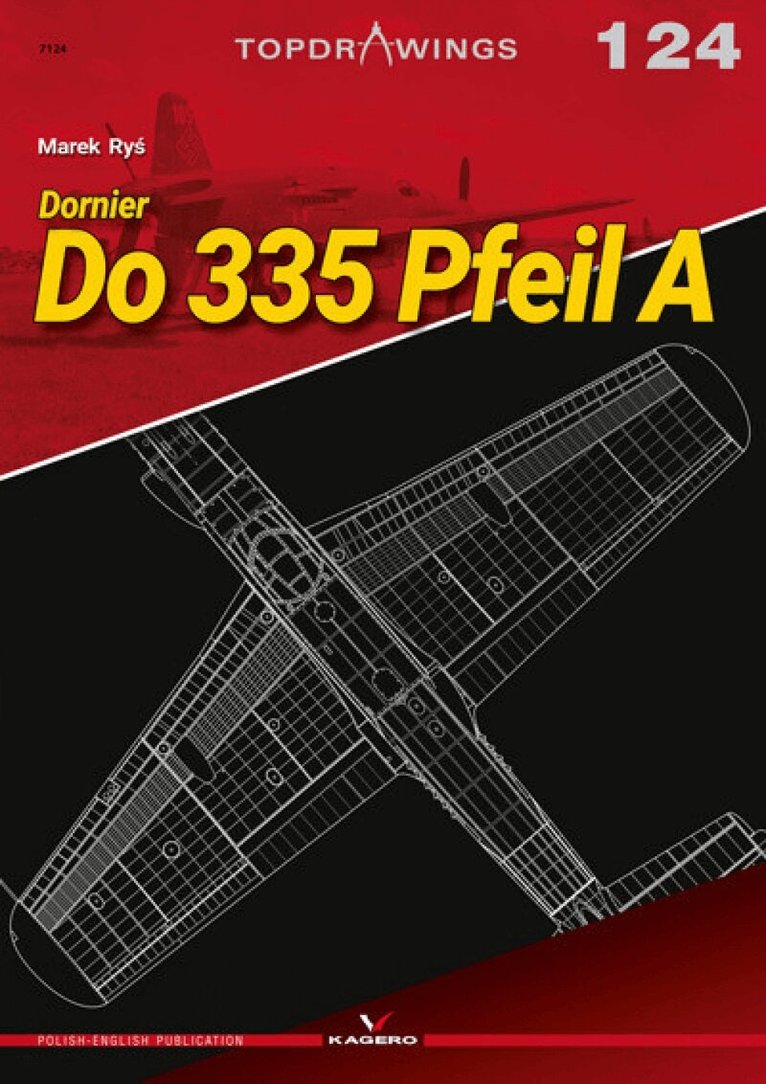
In 1937, Dornier obtained a patent for a plane with two engines in the fuselage, driving the pull and push propellers. The design was marked P.59, and its concepts were refined in 1939 in the P.59-05 variant, after which the design was put in a drawer. This type of plane was not needed at the time. Nevertheless, limited experimental work was carried out, the result of which was a small Goppingen Go-9 plane, with an aerodynamic system obtained from P.59, as well as three-support landing gear with a front wheel and an engine driving a push propeller through a long shaft. The results of these experiments were used when designing the P.231 aircraft in several variants - also combining piston and jet propulsion. When in 1942 the RLM announced the requirements for a high-speed multipurpose aircraft, the equivalent of the British Mosquito, Dornier proposed the P.231 as a rather unusual answer. Despite the risks posed by the different P.231 concept, Dornier was commissioned to build several prototypes.
183 kr
Skickas
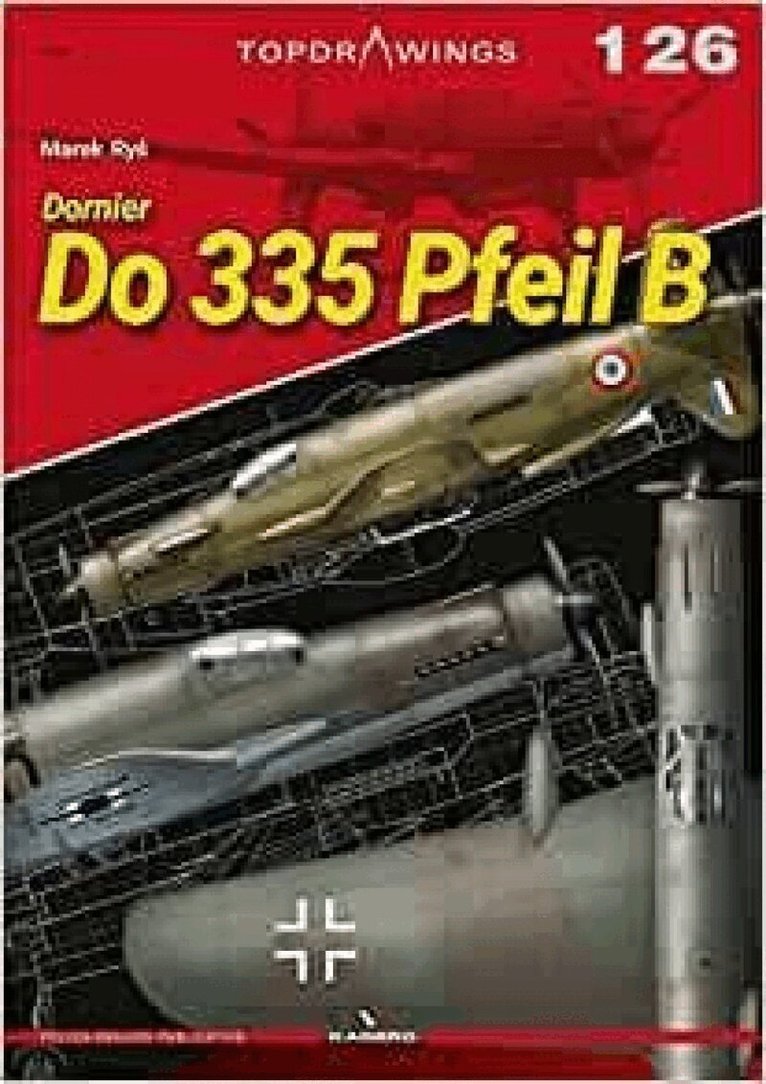
The Dornier Do 335A did not meet all the Luftwaffe requirements. First, the cockpit armor was too weak, which excluded the machine from the role of a fighter intercepting heavily defended Allied bombers. Therefore, in the summer of 1944, a modified version of the Do 335 - marked with the letter “B”- was developed. The main difference was to be an armored pilot’s cockpit with a new, easier to manufacture windscreen. The front wheel had larger tire. To be able to retract it without any changes in the landing gear bay construction, it was rotated around the leg axis by 45° during the retraction. The rest of the equipment and weapons were to be the same as in the case of the Do 335A-1. The developed version was designated Do 335B-1, but it was quickly abandoned in favor of heavily armed versions B-2 and B-3, known as Zerstörer. The prototypes of the version B-2 were Do 335M-13 and M-14 powered, like the A-1, by the DB 603E (front) and DB-603QE (rear) engines, but with significantly reinforced armament. The 15 mm MG 151/15 cannons above the engine were replaced with a 20 mm MG 151/20, and the wings were fitted with two 30 mm MK 103 cannons with 70 rounds per barrel. The same cannon fired through the propeller axis.