Margaret D. Bauer - Böcker
Visar alla böcker från författaren Margaret D. Bauer. Handla med fri frakt och snabb leverans.
6 produkter
6 produkter
533 kr
Skickas inom 5-8 vardagar
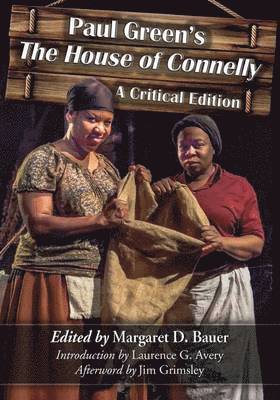
One of Paul Green's best plays, The House of Connelly, was the first play performed (on Broadway in 1931) by the renowned Group Theatre of New York. This book reintroduces the play, and the playwright--famous in his day, but largely forgotten now, although his outdoor symphonic drama The Lost Colony continues to be performed every summer in Manteo, North Carolina.The House of Connelly, is a more traditional drama, comparable to the writing of Tennessee Williams, and the editor asserts that the play deals more directly and fully with racial issues of the early 20th-century South than Williams did in his work. A new edition of the play includes both the original tragic ending and the revised ending Green wrote upon the Group Theatre directors' request. The writing, production and publication history of the play is provided, as well as a scene-by-scene critical analysis and a discussion of the 1934 film adaptation, Carolina. The play's theme is change and Green shows with both endings that the South had to change to survive.
235 kr
Skickas inom 7-10 vardagar
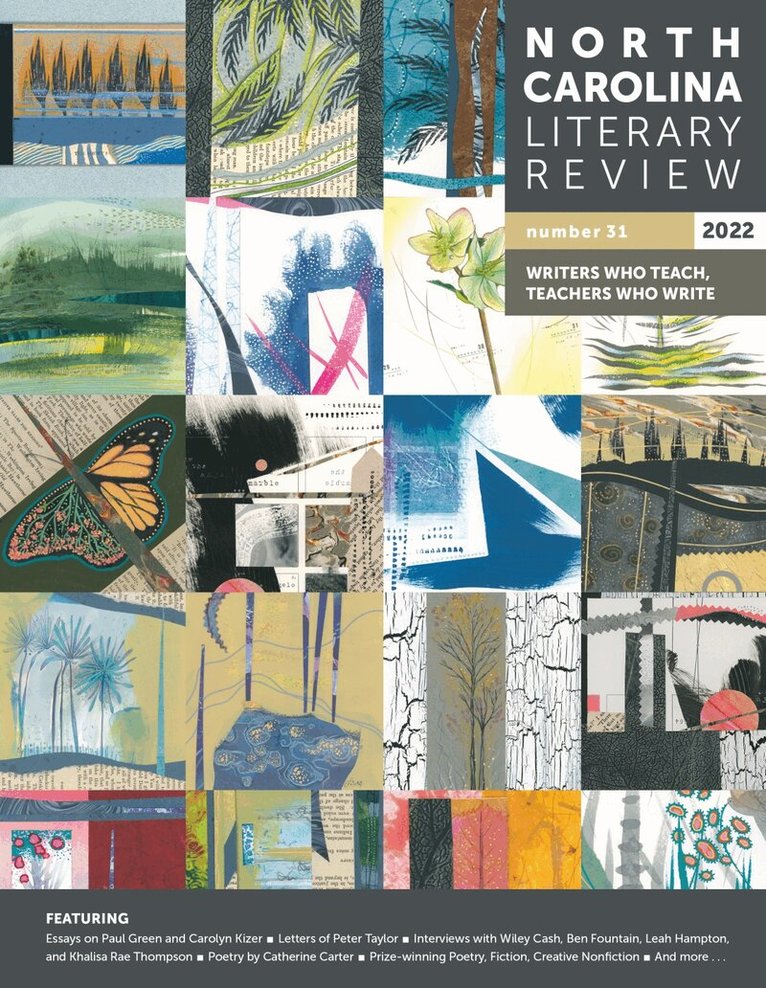
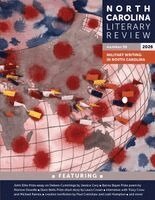
This year's feature section, guest edited by Kirstin L. Squint, is historic, the first focused on Native American Literature of North Carolina. The feature section includes creative nonfiction by Annette Saunooke Clapsaddle (Eastern Band of Cherokee Indians), and poetry by Mary Leauna Christensen (Eastern Band of Cherokee Indians), and Tonya Holy Elk (Oglala Lakota/Lumbee descent), as well as painting, photography, sculpture, and pottery by Cherokee, Lumbee, and Catawba artists. The cover is a paper weaving, a new form created by Eastern Band and Santa Clara Pueblo artist Rhiannon Skye Tafoya, based on the traditional Cherokee river cane basket. In addition to the work by Indigenous writers and artists, the special feature section also includes literary criticism and an interview by scholars of Native American and Southern literature. They discuss work by Cherokee writers Annette Saunooke Clapsaddle, Gladys Cardiff, and Blake Hausman; Lumbee writers Brittany D. Hunt, Leslie Locklear, Christina Pacheco, Barbara Braveboy-Locklear, Anetra L. Dial, Becky Goins, and Wendy Moore-Cummings; and the eighteenth century testimonio of a woman from the town of Joara, mostly likely Catawba, Teresa Martin.The Flashbacks and North Carolina Miscellany sections of this issue include another interview (with Phillip Lewis about his debut novel The Barrowfields) and more literary criticism (on John Darnielle's fiction), as well as the 2022 winners and other honorees of the Doris Betts Fiction Prize (1st place, Ellen Miller Reid, and 2nd place, Theresa Dowell Blackinton), Alex Albright Creative Nonfiction Prize (winner Audrey Jennifer Smith), and James Applewhite Poetry Prize contests (1st place and honorable mention poems by Barbara Campbell and second place by Nancy Swanson).
235 kr
Skickas inom 7-10 vardagar
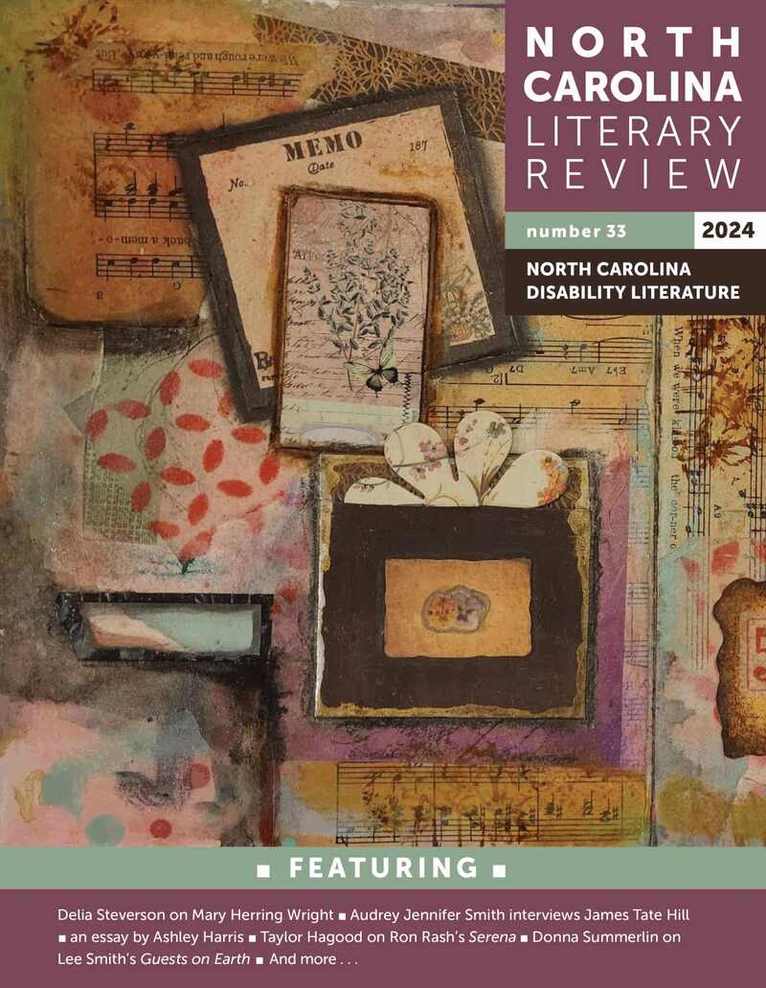
The North Carolina Literary Review's 33rd flagship print issue continues illuminating the 2024 feature of North Carolina writings about disabilities, with Guest Feature Editor Dr. Casey Kayser. The feature section contains Delia Steverson's essay on the autobiographical writings by deaf/blind author Mary Herring White and author Audrey Jennifer Smith's interview with James Tate Hill, a writer with Leber's hereditary optic neuropathy. From our 2023 Alex Albright Creative Nonfiction Prize contest is the essay "Buy Now!" by finalist Ashley Harris, a writer with M.S., and concludes with Taylor Hagood's essay on disability and deformity in Ron Rash's novel Serena and Donna Summerlin discussing mental health in Lee Smith's novel Guests on Earth. In the remainder of the issue, NCLR founding editor Alex Albright remembers Fred Chappell, former NC Poet Laureate, who passed away earlier this year. Award-winning author David Joy talked to Leah Hampton. Mark Powell was interviewed by Zackary Vernon. Donald Paul Haspel explores the impact of Paul Green's World War I experience on The Lost Colony. Also included are an investigative piece by Stephanie Browner on Lorraine Hansberry's planned play based on Charles W. Chesnutt's Marrow of Tradition and Biographer Jean W. Cash writes about the influence of Gail Godwin's Peace College years on her fiction. Contest winners included are the 2023 James Applewhite Poetry Prize contest winning poem by Janis Harrington, and the third-place poem by Debra Kaufman and the Doris Betts Fiction Prize (sponsored by the North Carolina Writers' Network) by Paul D. Reali. Other fiction in the issue is Gary V. Powell's short story. NC visual artists featured within the print issue are Max Herbert (cover), RaeAnn McDonough, Catherine Edgerton, Joan Mansfield, Frank Hunter, Katharin Wiese, Andrea Bruce, Cameron Johnson, Ashley T. Evans, and Kate Nartker.
235 kr
Skickas inom 7-10 vardagar
The 2025 issues, feature LGBTQ writers of North Carolina, guest edited by Dwight Tanner, a Visiting Assistant Professor at Appalachian State University. The print issue opens with Eric Solomon’s essay about R.F.D., “a rural national periodical connecting rural gay men and lesbians,” co-founded in the early 1970s by North Carolina native Allan Troxler and his life partner. This essay is described by editorial board member Zackary Vernon as “a fascinating exploration of . . . a little-known chapter of North Carolina’s queer literary and cultural history” and “an important rural/activist strain in queer thinking that is at once social and environmental.” This essay is followed by an interview with Andy Martrich talking about his new book on the unpublished manuscripts of the Jargon Society, inspired by correspondence with Thomas Meyer, partner of Jonathan Williams, the Asheville native and Black Mountain College alumnus who founded the small press. According to interviewer J. Gordon Faylor, Martrich has “discovered a ‘peripheral history’ of The Jargon Society that provides a striking, alternative history to one of the most quietly impactful small presses in American history.” Other interviews in the feature section are with Gabrielle Calvocoressi, Jessica Jacobs, and De’Shawn Charles Winslow, and the issue includes two essays on Randall Kenan and an essay on Carter Sickels’s novel The Prettiest Star, which has been awarded NCLR’s Randall Kenan Prize for an essay or interview on a new North Carolina writer. The featured creative writing includes a short story by Jim Grimsley, author of the critically acclaimed novel Dream Boy, and the 2024 Alex Albright Creative Nonfiction Prize essay by Ashlen Renner. Several of these works are complemented by art created by North Carolina LGBTQ artists, and the cover art collage, designed by NCLR Art Director Dana Ezzell, features art by Tim Tate from his Queer Glass: 30 Years of Craft Activism collection. Tate co-founded the Washington Glass Studio/School in Washington, DC, based on Penland School of Crafts and his experience there as an instructor, as well as continued close association with the school as a supporter. In other sections of the issue read Katherine Henninger’s John Ehle Prize essay on Kaye Gibbons’s novel Ellen Foster, Ben Fountain’s Thomas Wolfe lecture, and the winners of the 2024 James Applewhite Poetry Prize and Doris Betts Fiction Prize, as well as honorees and finalists from these contests and the Alex Albright Creative Nonfiction Prize contest, again, all complemented by fine art created by North Carolina artists. The North Carolina Literary Review, edited by Margaret D. Bauer, is produced at East Carolina University.
552 kr
Skickas inom 7-10 vardagar
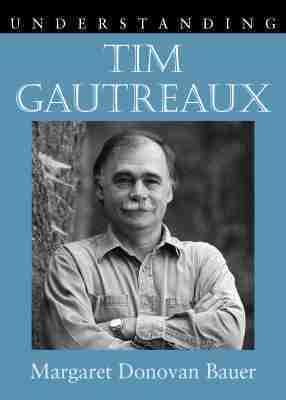
This book offers an introduction to the works of a Cajun writer who finds optimism in his blue-collar tales. Margaret Donovan Bauer presents the first book-length study of the Louisiana storyteller, who injects a seldom heard Cajun voice into Southern literature and offers a rare optimistic vision among other contemporary writers of the hardscrabble American South. Bauer surveys Tim Gautreaux's three novels - ""The Next Step in the Dance"", ""The Clearing, and ""The Missing"" - and two collections of short fiction - ""Same Place, Same Things"" and ""Welding with Children"" - to identify his major themes, character types, and structures. She views his chief contribution to Southern letters to be an authentic insider's view of Cajun culture, one resulting in a skillful, realistic, and sympathetic vision of historical and contemporary Acadiana in flux. Bauer addresses how Gautreaux's hopeful vision distinguishes him from other contemporary writers of the blue-collar South. She views Gautreaux's poor white protagonists as action-oriented characters who, while trapped by circumstances, still strive to affect positive change in their lives.
398 kr
Skickas inom 11-20 vardagar
There are two portrayals of Scarlett O'Hara: the widely familiar one of the film Gone with the Wind and Margaret Mitchell's more sympathetic character in the book. In A Study of Scarletts, Margaret D. Bauer examines these two characterizations, noting that although Scarlett O'Hara is just sixteen at the start of the novel, she is criticized for behavior that would have been excused if she were a man.In the end, despite losing nearly every person she loves, Scarlett remains stalwart enough to face another day. For this reason and so many others, Scarlett is an icon in American popular culture and an inspiration to female readers, and yet, she is more often than not condemned for being a sociopathic shrew by those who do not take the time to get to know her through the novel.After providing a more sympathetic reading of Scarlett as a young woman who refuses to accept social limitations based on gender and seeks to be loved for who she is, Bauer examines Scarlett-like characters in other novels. These intertextual readings serve both to develop further a less critical, more compassionate reading of Scarlett O'Hara and to expose societal prejudices against strong women.The chapters in A Study of Scarletts are ordered chronologically according to the novels' settings, beginning with Charles Frazier's Civil War novel Cold Mountain; then Ellen Glasgow's Barren Ground, written a few years before Gone with the Wind but set a generation later, in the years leading up to and just after World War I; Toni Morrison's Sula, which opens after World War I; and finally, a novel by Kat Meads, The Invented Life of Kitty Duncan, with its 1950s- to 1960s-era evolved Scarlett.Through these selections, Bauer shows the persistent tensions that both cause and result from a woman remaining unattached to grow into her own identity without a man, beginning with trouble in the mother-daughter relationship, extending to frustration in romantic relationships, and including the discovery of female friendship as a foundation for facing the future.