Margaret Sherraden – författare
Visar alla böcker från författaren Margaret Sherraden. Handla med fri frakt och snabb leverans.
12 produkter
Financial Capability and Asset Building in Vulnerable Households
Theory and Practice
Av Margaret Sherraden, Julie Birkenmaier m. fl.
Häftad, 2018
1011 kr
Lägg i varukorg
Financial struggles of American families are headline news. In communities across the nation, families feel the pinch of stagnant and sometimes declining incomes. Many have not recovered from the Great Recession, when millions lost their homes and retirement savings. They are bombarded daily with …
Financial Capability and Asset Building in Vulnerable Households
Theory and Practice
Av J. Michael Collins, Julie Birkenmaier m. fl.
E-bok, 2018
831 kr
Lägg i varukorg
Financial struggles of American families are headline news. In communities across the nation, families feel the pinch of stagnant and sometimes declining incomes. Many have not recovered from the Great Recession, when millions lost their homes and retirement savings. They are bombarded daily with …
Financial Capability and Asset Building in Vulnerable Households
Theory and Practice
Av J. Michael Collins, Julie Birkenmaier m. fl.
E-bok, 2018
831 kr
Lägg i varukorg
Financial struggles of American families are headline news. In communities across the nation, families feel the pinch of stagnant and sometimes declining incomes. Many have not recovered from the Great Recession, when millions lost their homes and retirement savings. They are bombarded daily with …
Financial Capability and Asset Development
Research, Education, Policy, and Practice
Av Jami Curley, Margaret Sherraden m. fl.
E-bok, 2013
1210 kr
Lägg i varukorg
This book introduces the concept of financial capability and assembles the latest evidence from ground-breaking innovations with financially vulnerable families, and links it to education, policy, and practice. This book is a key resource for those interested in improving financial education and …
Financial Capability and Asset Holding in Later Life
A Life Course Perspective
Av Nancy Morrow-Howell, Nancy Morrow-Howell m. fl.
Inbunden, 2015
1012 kr
Lägg i varukorg
With today's availability of Social Security and Medicare, we typically think of the older years as a stage in life where people are supported financially. However, of the more than 40 million old adults currently living in the US, many are struggling financially living below or near the poverty …
Financial Capability and Asset Holding in Later Life
A Life Course Perspective
Av Margaret Sherraden, Nancy Morrow-Howell
E-bok, 2014
642 kr
Lägg i varukorg
With today''s availability of Social Security and Medicare, we typically think of the older years as a stage in life where people are supported financially. However, of the more than 40 million old adults currently living in the US, many are struggling financially living below or near the poverty …
Financial Capability and Asset Holding in Later Life
A Life Course Perspective
Av Margaret Sherraden, Nancy Morrow-Howell
E-bok, 2014
642 kr
Lägg i varukorg
With today''s availability of Social Security and Medicare, we typically think of the older years as a stage in life where people are supported financially. However, of the more than 40 million old adults currently living in the US, many are struggling financially living below or near the poverty …
Financial Education and Capability
Research, Education, Policy, and Practice
Av Julie Birkenmaier, Jami Curley m. fl.
Inbunden, 2013
1840 kr
Lägg i varukorg
As financial issues are currently a major concern for families, scholars, and practitioners, students have increased their interest in knowledge and skills for practice that addresses finances. Unfortunately, social workers and other helping professionals often lack preparation, knowledge, and …
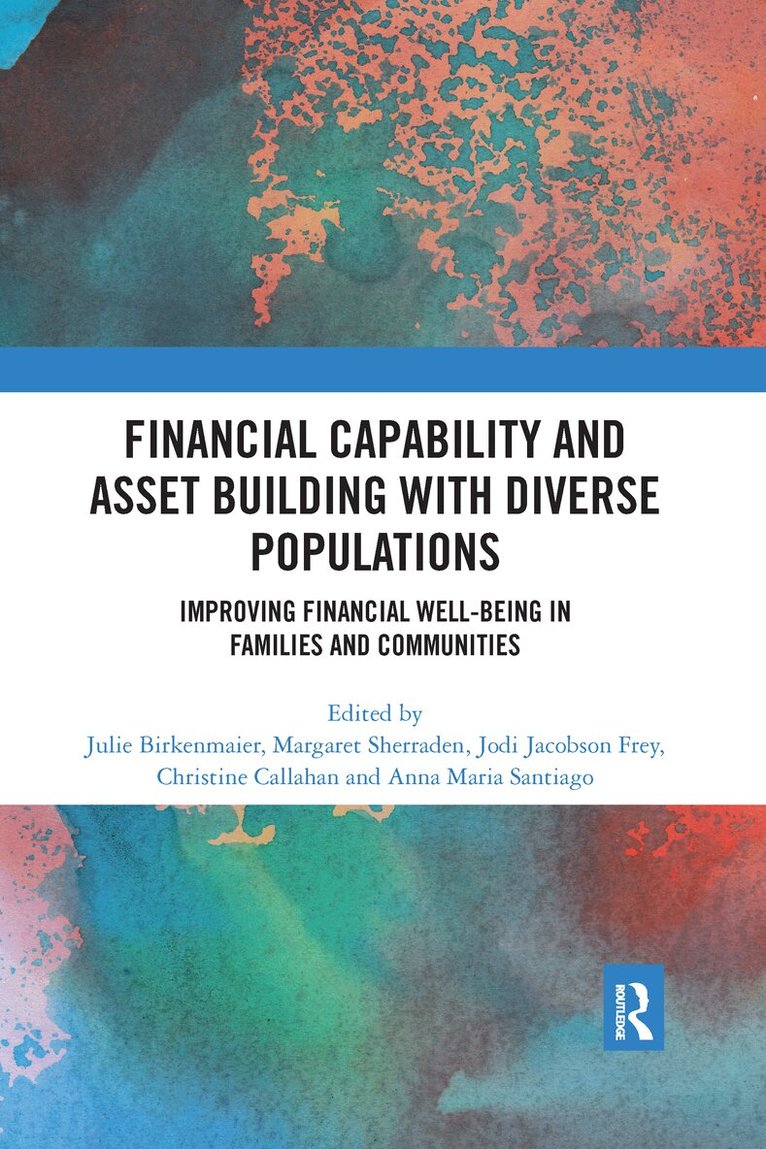
Financial Capability and Asset Building with Diverse Populations
Improving Financial Well-being in Families and Communities
Av Julie Birkenmaier, Margaret Sherraden m. fl.
Häftad, 2020
691 kr
Lägg i varukorg
Global economic recovery in the aftermath of the Great Recession has not been experienced equally: while the share of wealth owned by the richest 3% has grown, the share owned by the poorest 90% continues to decline, as reported by Oxfam in 2016. This wealth divide disproportionately affects racial …
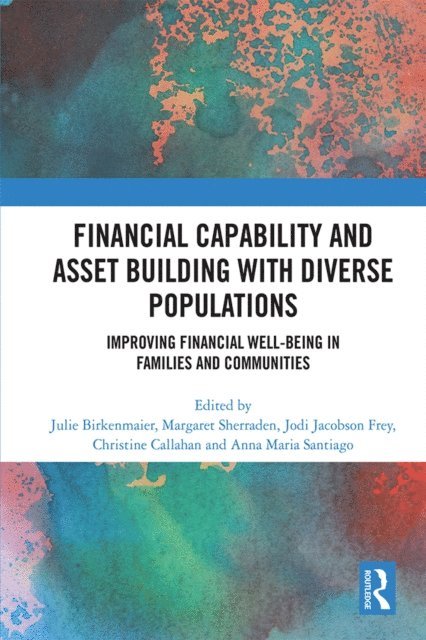
Financial Capability and Asset Building with Diverse Populations
Improving Financial Well-being in Families and Communities
Av Julie Birkenmaier, Margaret Sherraden m. fl.
Inbunden, 2018
2510 kr
Lägg i varukorg
Global economic recovery in the aftermath of the Great Recession has not been experienced equally: while the share of wealth owned by the richest 3% has grown, the share owned by the poorest 90% continues to decline, as reported by Oxfam in 2016. This wealth divide disproportionately affects racial …
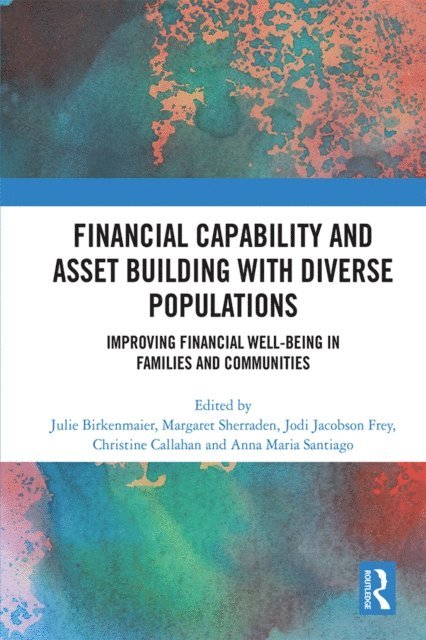
Financial Capability and Asset Building with Diverse Populations
Improving Financial Well-being in Families and Communities
Av Anna Maria Santiago, Christine Callahan m. fl.
E-bok, 2018
814 kr
Lägg i varukorg
Global economic recovery in the aftermath of the Great Recession has not been experienced equally: while the share of wealth owned by the richest 3% has grown, the share owned by the poorest 90% continues to decline, as reported by Oxfam in 2016. This wealth divide disproportionately affects racial …
Financial Capability and Asset Building with Diverse Populations
Improving Financial Well-being in Families and Communities
Av Anna Maria Santiago, Christine Callahan m. fl.
E-bok, 2018
796 kr
Lägg i varukorg
Global economic recovery in the aftermath of the Great Recession has not been experienced equally: while the share of wealth owned by the richest 3% has grown, the share owned by the poorest 90% continues to decline, as reported by Oxfam in 2016. This wealth divide disproportionately affects racial …