Anna Maria Santiago - Böcker
Visar alla böcker från författaren Anna Maria Santiago. Handla med fri frakt och snabb leverans.
6 produkter
6 produkter
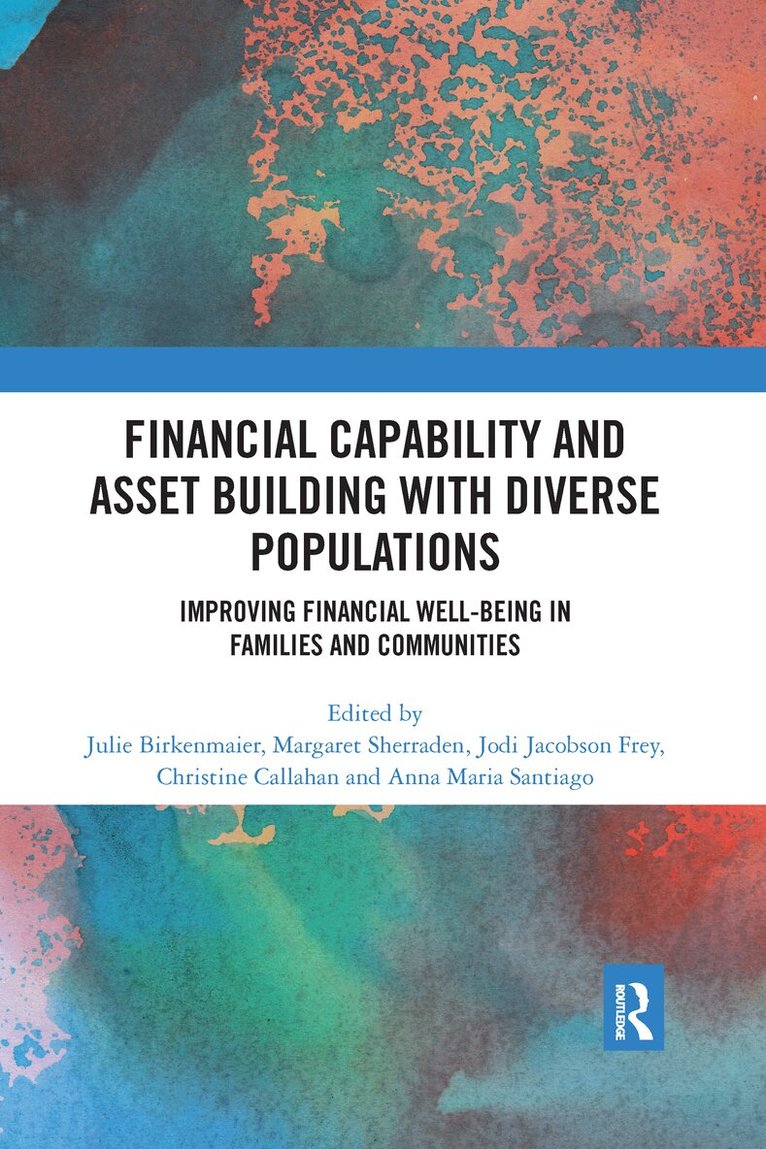
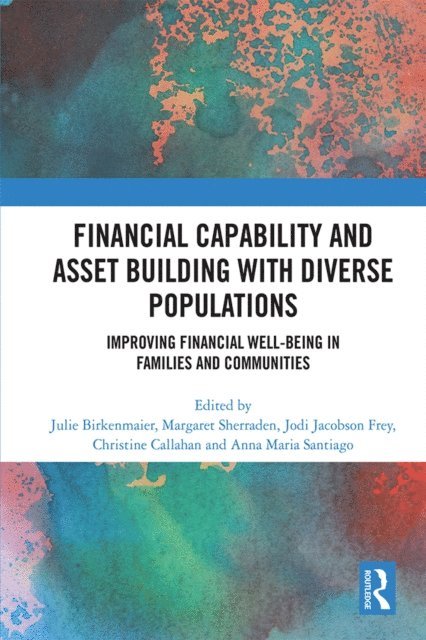
Financial Capability and Asset Building with Diverse Populations
Improving Financial Well-being in Families and Communities
Häftad, Engelska, 2020
616 kr
Skickas inom 10-15 vardagar
Global economic recovery in the aftermath of the Great Recession has not been experienced equally: while the share of wealth owned by the richest 3% has grown, the share owned by the poorest 90% continues to decline, as reported by Oxfam in 2016. This wealth divide disproportionately affects racial and ethnic minority communities. This book underscores the importance of financial capability and asset building (FCAB) practice, policy and research during a period when vulnerable populations face increasingly difficult economic and financial realities. At the same time, retrenchment and privatization of government-sponsored social services have eroded the safety net available for families experiencing poverty or near-poverty conditions. The proliferation of products and services available from both formal and informal financial institutions highlights the need to promote FCAB to avoid and/or recover from financial difficulties, crises and poverty. The contributors to this volume disseminate findings from interventions designed to increase financial knowledge, financial management and financial access across several vulnerable populations, including immigrant communities. Further, they demonstrate the need for culturally sensitive FCAB service delivery, considering opportunities and barriers posed by past and current life situations, experiences and environments experienced by different populations. The book is aimed at policymakers, researchers and practitioners who assist financially vulnerable people. This book was originally published as a special issue of the Journal of Community Practice.
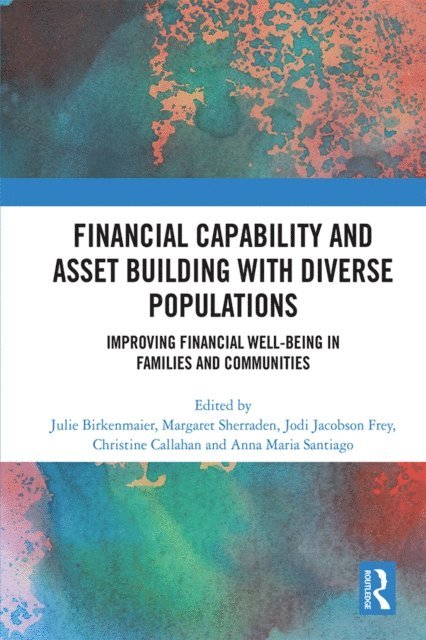
Financial Capability and Asset Building with Diverse Populations
Improving Financial Well-being in Families and Communities
Inbunden, Engelska, 2018
2 171 kr
Skickas inom 10-15 vardagar
Global economic recovery in the aftermath of the Great Recession has not been experienced equally: while the share of wealth owned by the richest 3% has grown, the share owned by the poorest 90% continues to decline, as reported by Oxfam in 2016. This wealth divide disproportionately affects racial and ethnic minority communities. This book underscores the importance of financial capability and asset building (FCAB) practice, policy and research during a period when vulnerable populations face increasingly difficult economic and financial realities. At the same time, retrenchment and privatization of government-sponsored social services have eroded the safety net available for families experiencing poverty or near-poverty conditions. The proliferation of products and services available from both formal and informal financial institutions highlights the need to promote FCAB to avoid and/or recover from financial difficulties, crises and poverty. The contributors to this volume disseminate findings from interventions designed to increase financial knowledge, financial management and financial access across several vulnerable populations, including immigrant communities. Further, they demonstrate the need for culturally sensitive FCAB service delivery, considering opportunities and barriers posed by past and current life situations, experiences and environments experienced by different populations. The book is aimed at policymakers, researchers and practitioners who assist financially vulnerable people. This book was originally published as a special issue of the Journal of Community Practice.
1 900 kr
Skickas inom 10-15 vardagar
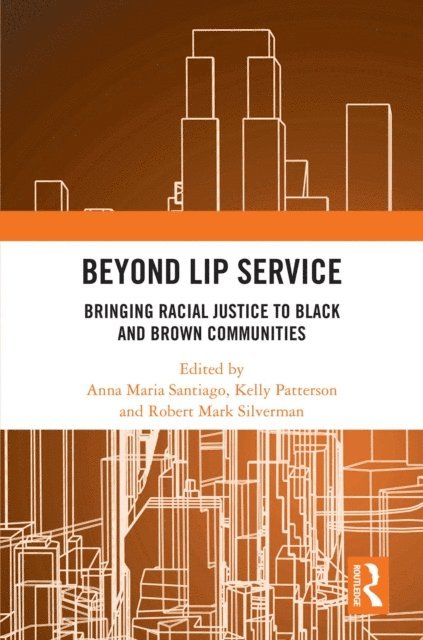
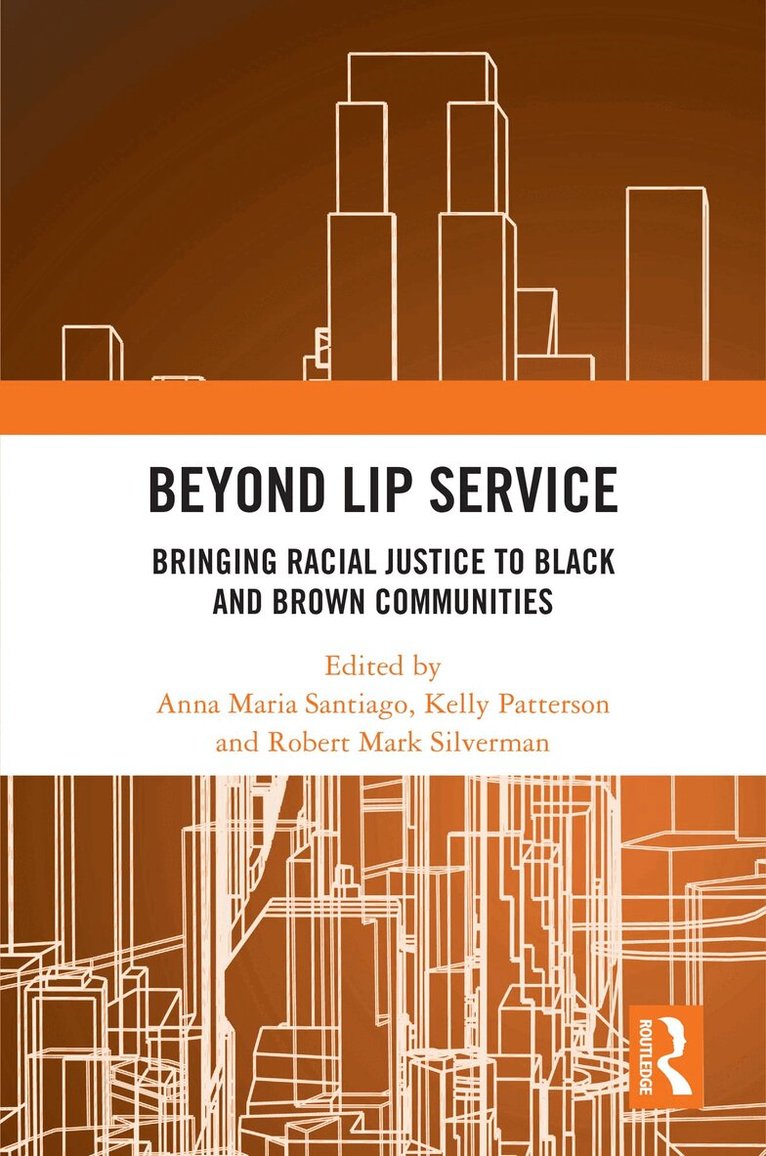
This book underscores the importance of moving beyond lip service or hollow platitudes to mobilize and expand the capacity of social justice movements to foster policy change and incubate new programs at the local, state, and federal levels.In the wake of global protests spurred by acts of police brutality in the United States, present-day problematic policing and racial injustice in Black and Brown communities surged to the forefront of political discourse in recent years. Institutionalized backlash politics, which emerged during the post-Civil Rights era, perpetuated and further exacerbated generations-long racial disparities and stymied systemic change. This edited volume describes pilot programs and community-based initiatives that show promise as tools for equity and racial justice in Black and Brown communities.This book will be of great value to scholars and academics interested in racism, justice, community development and social work. The chapters in this book were originally published in the Journal of Community Practice.
561 kr
Skickas inom 10-15 vardagar
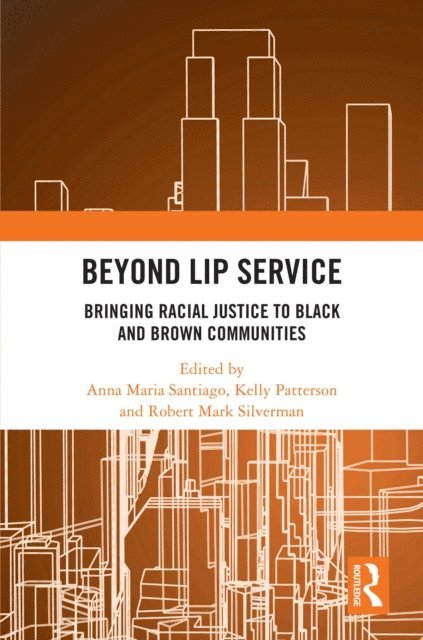
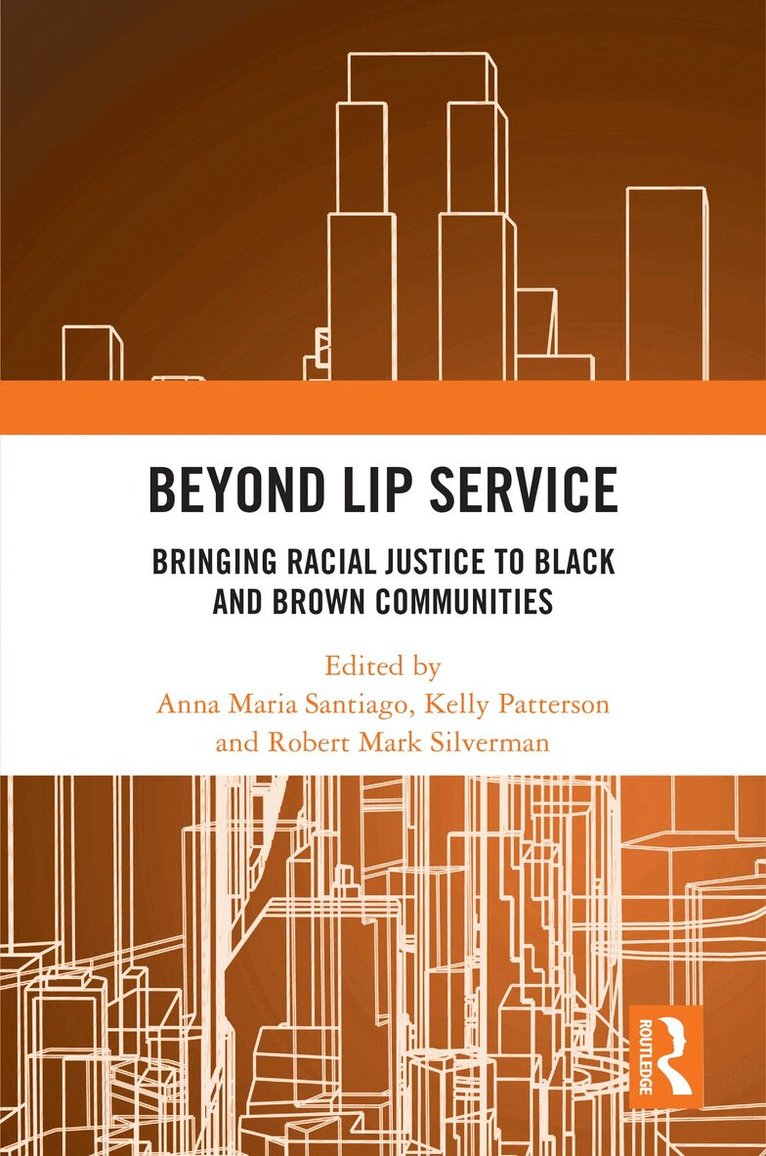
This book underscores the importance of moving beyond lip service or hollow platitudes to mobilize and expand the capacity of social justice movements to foster policy change and incubate new programs at the local, state, and federal levels.In the wake of global protests spurred by acts of police brutality in the United States, present-day problematic policing and racial injustice in Black and Brown communities surged to the forefront of political discourse in recent years. Institutionalized backlash politics, which emerged during the post-Civil Rights era, perpetuated and further exacerbated generations-long racial disparities and stymied systemic change. This edited volume describes pilot programs and community-based initiatives that show promise as tools for equity and racial justice in Black and Brown communities.This book will be of great value to scholars and academics interested in racism, justice, community development and social work. The chapters in this book were originally published in the Journal of Community Practice.
2 103 kr
Skickas inom 10-15 vardagar
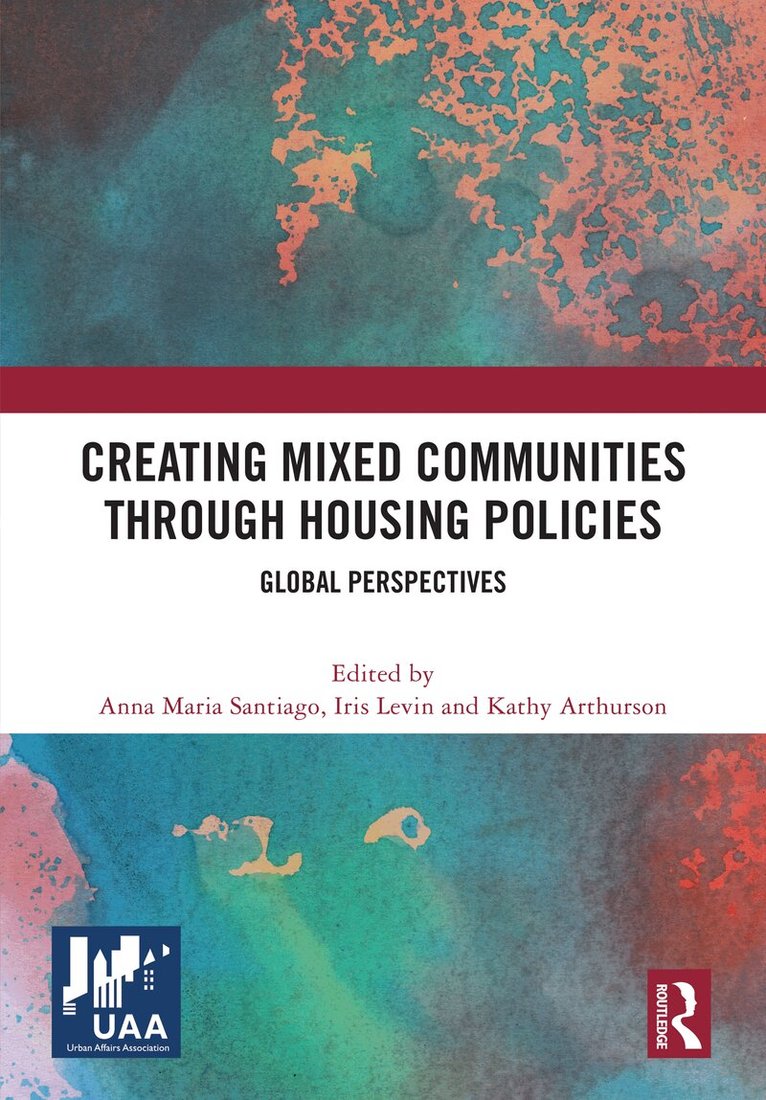
This book focuses on socially mixed (e.g. by income, tenure, ethnicity or any other characteristic) communities developed through housing renewal and critically examines the policies and practices in view of the growing urban inequality. The volume expands the discussion to the second phase of social mix – “social mix version 2.0” and offers constructive reflections on how social mix can “be better conceived and delivered, with fewer negative side effects” .The chapters in this book cover diverse national contexts and policy backgrounds, and represent the perspectives of many key stakeholders, including national and local governments, services and NGOs, developers and, most importantly, residents. Chapters present diverse case studies from Europe, the Middle East, Africa, India, Australia, and the United States and discuss projects that range in scale from small housing initiatives to neighborhoods and to whole districts. They focus on diverse experiences of social mix: between university students and young professionals and low-income social housing tenants, between older, low-income residents and younger, middle-class residents, between diverse ethnic and social class groups sharing a neighborhood, and between private and public housing residents. Chapters also vary on the tools used to create social mix, from local non-for-profit initiatives, a national policy intervention, and urban policies that aim to enhance social mix. Lastly, the book shows the range of analytical tools researchers have used to understand the diverse appearances of social mix, its underlying goals, and its consequent outcomes. These include comparative analyses of social mix in diverse national and political settings, including the Global East, an evaluation of social mix from the perspective of social justice, a historical analysis of the development of an urban district, and a design analysis of urban renewal projects.The chapters in this book were originally published as a special issue of Journal of Urban Affairs.
629 kr
Skickas inom 10-15 vardagar
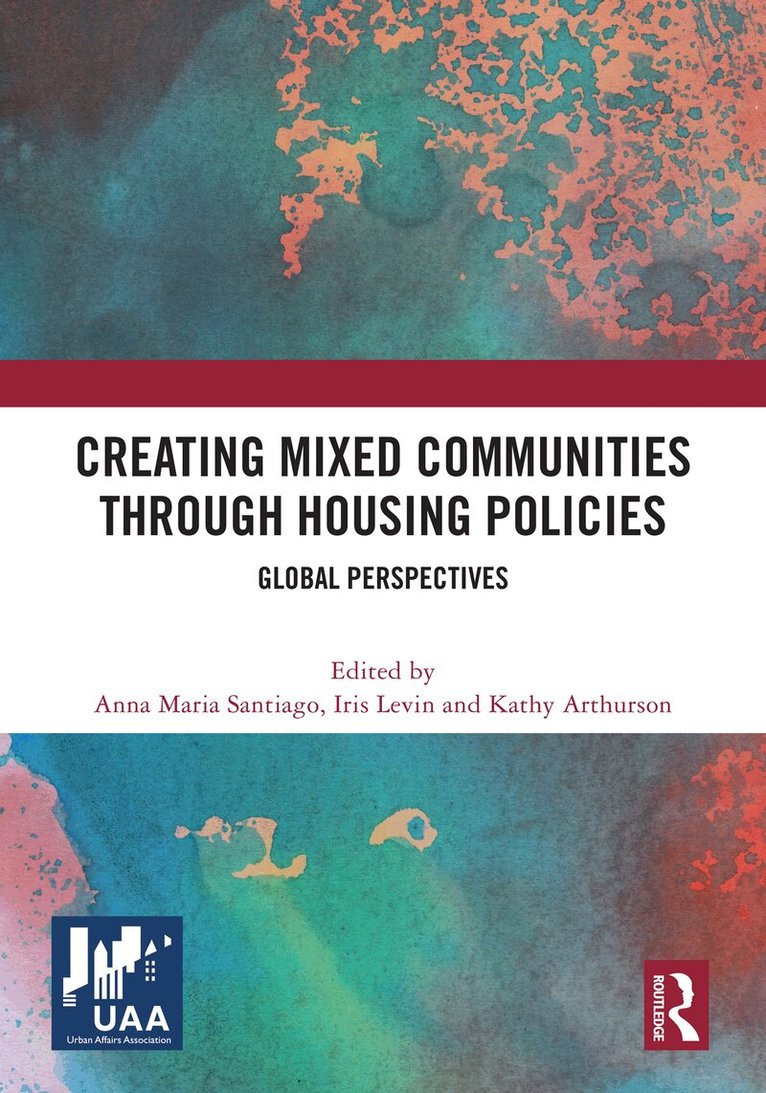
This book focuses on socially mixed (e.g. by income, tenure, ethnicity or any other characteristic) communities developed through housing renewal and critically examines the policies and practices in view of the growing urban inequality. The volume expands the discussion to the second phase of social mix – “social mix version 2.0” and offers constructive reflections on how social mix can “be better conceived and delivered, with fewer negative side effects” .The chapters in this book cover diverse national contexts and policy backgrounds, and represent the perspectives of many key stakeholders, including national and local governments, services and NGOs, developers and, most importantly, residents. Chapters present diverse case studies from Europe, the Middle East, Africa, India, Australia, and the United States and discuss projects that range in scale from small housing initiatives to neighborhoods and to whole districts. They focus on diverse experiences of social mix: between university students and young professionals and low-income social housing tenants, between older, low-income residents and younger, middle-class residents, between diverse ethnic and social class groups sharing a neighborhood, and between private and public housing residents. Chapters also vary on the tools used to create social mix, from local non-for-profit initiatives, a national policy intervention, and urban policies that aim to enhance social mix. Lastly, the book shows the range of analytical tools researchers have used to understand the diverse appearances of social mix, its underlying goals, and its consequent outcomes. These include comparative analyses of social mix in diverse national and political settings, including the Global East, an evaluation of social mix from the perspective of social justice, a historical analysis of the development of an urban district, and a design analysis of urban renewal projects.The chapters in this book were originally published as a special issue of Journal of Urban Affairs.