Iris Levin - Böcker
Visar alla böcker från författaren Iris Levin. Handla med fri frakt och snabb leverans.
7 produkter
7 produkter
2 171 kr
Skickas inom 10-15 vardagar
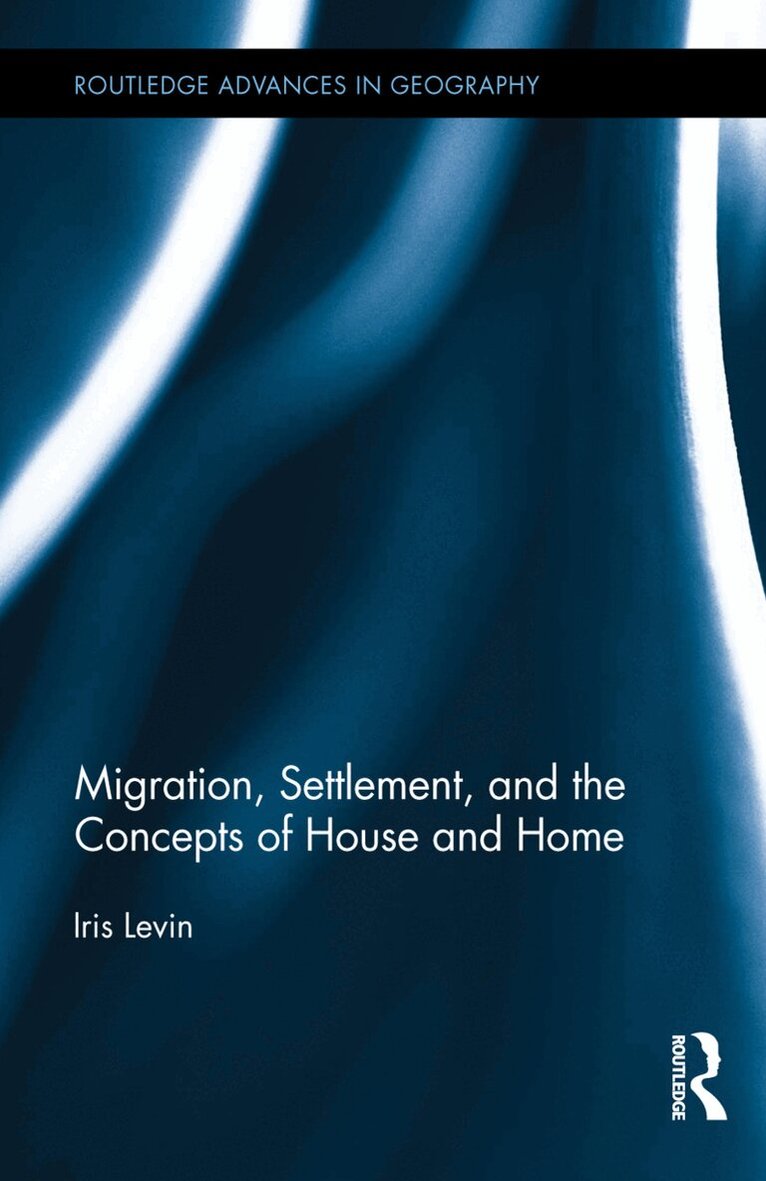
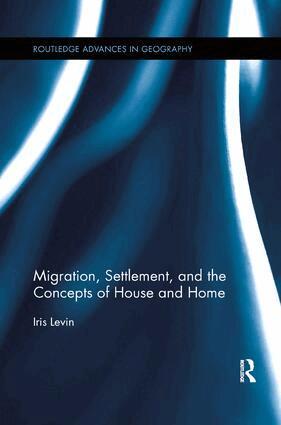
How do migrants feel "at home" in their houses? Literature on the migrant house and its role in the migrant experience of home-building is inadequate. This book offers a theoretical framework based on the notion of home-building and the concepts of home and house embedded within it. It presents innovative research on four groups of migrants who have settled in two metropolitan cities in two periods: migrants from Italy (migrated in the 1950s and 1960s) and from mainland China (migrated in the 1990s and 2000s) in Melbourne, Australia, and migrants from Morocco (migrated in the 1950s and 1960s) and from the former Soviet Union (migrated in the 1990s and 2000s) in Tel Aviv, Israel. The analysis draws on qualitative data gathered from forty-six in depth interviews with migrants in their home-environments, including extensive visual data. Levin argues that the physical form of the house is meaningful in a range of diverse ways during the process of home-building, and that each migrant group constructs a distinct form of home-building in their homes/houses, according to their specific circumstances of migration, namely the origin country, country of destination and period of migration, as well as the historical, economic and social contexts around migration.
980 kr
Skickas inom 10-15 vardagar
This book represents a variety of views about an enduring question that is central to the concerns of developmental psychologists--are there broad, developmental, cross-do-main mental representations and processes, or are they domain-specific? This book gives a state-of-the-art reading from researchers who are sympathic to the constructs of stage and structure, but who suggest alternatives to the Piagetian orthodoxy.
2 103 kr
Skickas inom 10-15 vardagar
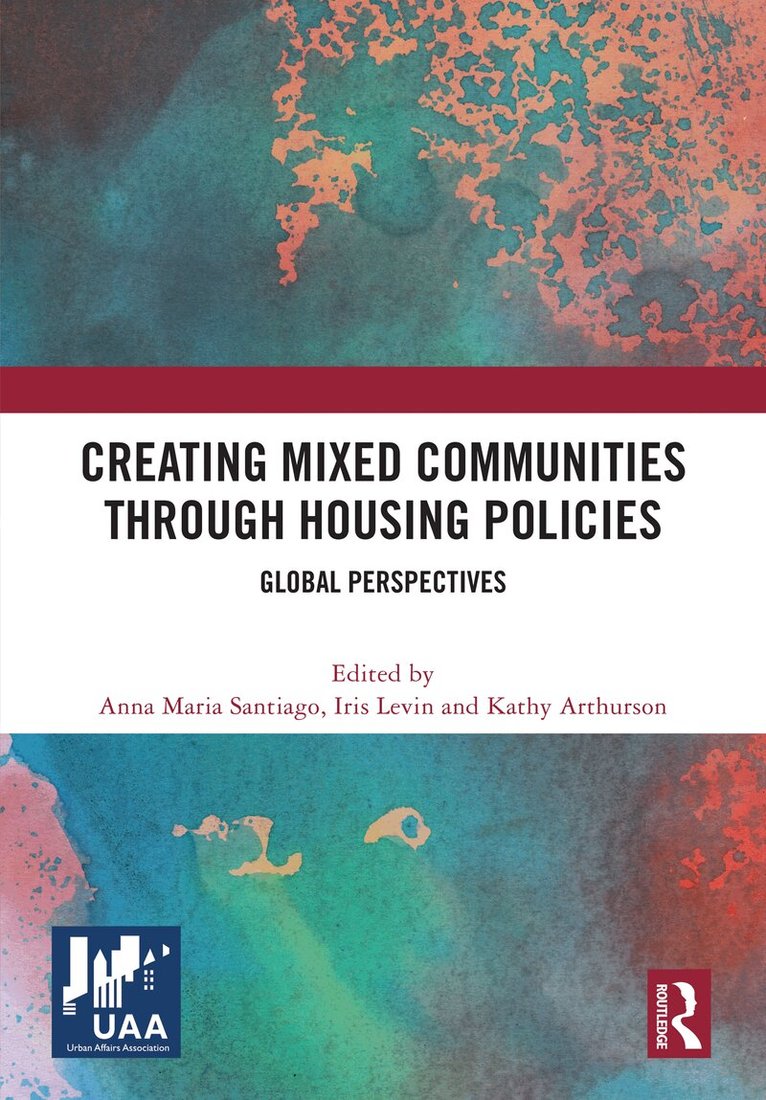
This book focuses on socially mixed (e.g. by income, tenure, ethnicity or any other characteristic) communities developed through housing renewal and critically examines the policies and practices in view of the growing urban inequality. The volume expands the discussion to the second phase of social mix – “social mix version 2.0” and offers constructive reflections on how social mix can “be better conceived and delivered, with fewer negative side effects” .The chapters in this book cover diverse national contexts and policy backgrounds, and represent the perspectives of many key stakeholders, including national and local governments, services and NGOs, developers and, most importantly, residents. Chapters present diverse case studies from Europe, the Middle East, Africa, India, Australia, and the United States and discuss projects that range in scale from small housing initiatives to neighborhoods and to whole districts. They focus on diverse experiences of social mix: between university students and young professionals and low-income social housing tenants, between older, low-income residents and younger, middle-class residents, between diverse ethnic and social class groups sharing a neighborhood, and between private and public housing residents. Chapters also vary on the tools used to create social mix, from local non-for-profit initiatives, a national policy intervention, and urban policies that aim to enhance social mix. Lastly, the book shows the range of analytical tools researchers have used to understand the diverse appearances of social mix, its underlying goals, and its consequent outcomes. These include comparative analyses of social mix in diverse national and political settings, including the Global East, an evaluation of social mix from the perspective of social justice, a historical analysis of the development of an urban district, and a design analysis of urban renewal projects.The chapters in this book were originally published as a special issue of Journal of Urban Affairs.
629 kr
Skickas inom 10-15 vardagar
This book focuses on socially mixed (e.g. by income, tenure, ethnicity or any other characteristic) communities developed through housing renewal and critically examines the policies and practices in view of the growing urban inequality. The volume expands the discussion to the second phase of social mix – “social mix version 2.0” and offers constructive reflections on how social mix can “be better conceived and delivered, with fewer negative side effects” .The chapters in this book cover diverse national contexts and policy backgrounds, and represent the perspectives of many key stakeholders, including national and local governments, services and NGOs, developers and, most importantly, residents. Chapters present diverse case studies from Europe, the Middle East, Africa, India, Australia, and the United States and discuss projects that range in scale from small housing initiatives to neighborhoods and to whole districts. They focus on diverse experiences of social mix: between university students and young professionals and low-income social housing tenants, between older, low-income residents and younger, middle-class residents, between diverse ethnic and social class groups sharing a neighborhood, and between private and public housing residents. Chapters also vary on the tools used to create social mix, from local non-for-profit initiatives, a national policy intervention, and urban policies that aim to enhance social mix. Lastly, the book shows the range of analytical tools researchers have used to understand the diverse appearances of social mix, its underlying goals, and its consequent outcomes. These include comparative analyses of social mix in diverse national and political settings, including the Global East, an evaluation of social mix from the perspective of social justice, a historical analysis of the development of an urban district, and a design analysis of urban renewal projects.The chapters in this book were originally published as a special issue of Journal of Urban Affairs.
724 kr
Skickas inom 10-15 vardagar
How do migrants feel "at home" in their houses? Literature on the migrant house and its role in the migrant experience of home-building is inadequate. This book offers a theoretical framework based on the notion of home-building and the concepts of home and house embedded within it. It presents innovative research on four groups of migrants who have settled in two metropolitan cities in two periods: migrants from Italy (migrated in the 1950s and 1960s) and from mainland China (migrated in the 1990s and 2000s) in Melbourne, Australia, and migrants from Morocco (migrated in the 1950s and 1960s) and from the former Soviet Union (migrated in the 1990s and 2000s) in Tel Aviv, Israel. The analysis draws on qualitative data gathered from forty-six in depth interviews with migrants in their home-environments, including extensive visual data. Levin argues that the physical form of the house is meaningful in a range of diverse ways during the process of home-building, and that each migrant group constructs a distinct form of home-building in their homes/houses, according to their specific circumstances of migration, namely the origin country, country of destination and period of migration, as well as the historical, economic and social contexts around migration.
1 593 kr
Skickas inom 10-15 vardagar
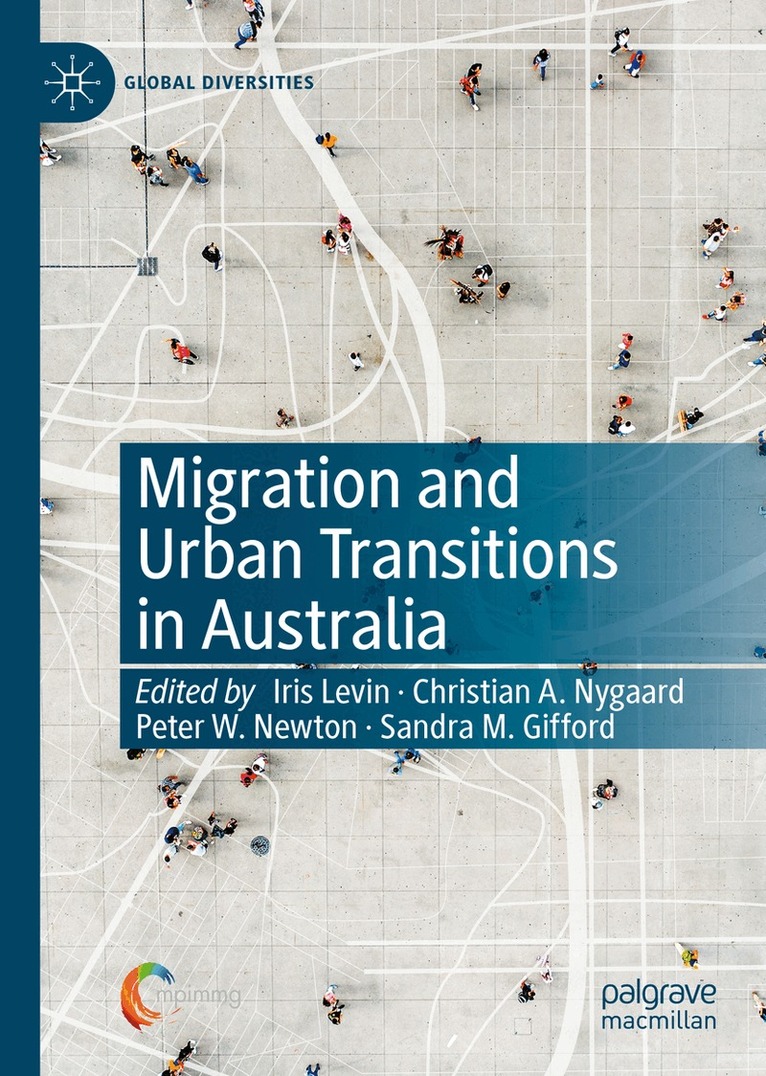
This book offers a critical reflection on the ways in which migration has shaped Australia’s cities, especially over the past twenty years. Australian cities are among the world’s most culturally diverse and are home to most of the nation’s population. This edited collection brings together contemporary research carried out by scholars across a range of diverse disciplines, all of whom are concerned with the intersections between migration and urban change. The chapters are organised under three sections: demographic, settlement and environmental transitions; urban form and housing transitions; and socio-cultural transitions. Drawing on diverse theoretical and methodological approaches, the chapters engage with a range of factors and influences affecting migration and urban development. This book will be of special interest to scholars and practitioners in the disciplines of sociology, urban planning, geography, public policy and environmental sustainability.
1 593 kr
Skickas inom 10-15 vardagar
This book offers a critical reflection on the ways in which migration has shaped Australia’s cities, especially over the past twenty years. This edited collection brings together contemporary research carried out by scholars across a range of diverse disciplines, all of whom are concerned with the intersections between migration and urban change.