Maria E. Gamboa-Aldeco - Böcker
Visar alla böcker från författaren Maria E. Gamboa-Aldeco. Handla med fri frakt och snabb leverans.
5 produkter
5 produkter
4 227 kr
Skickas inom 10-15 vardagar
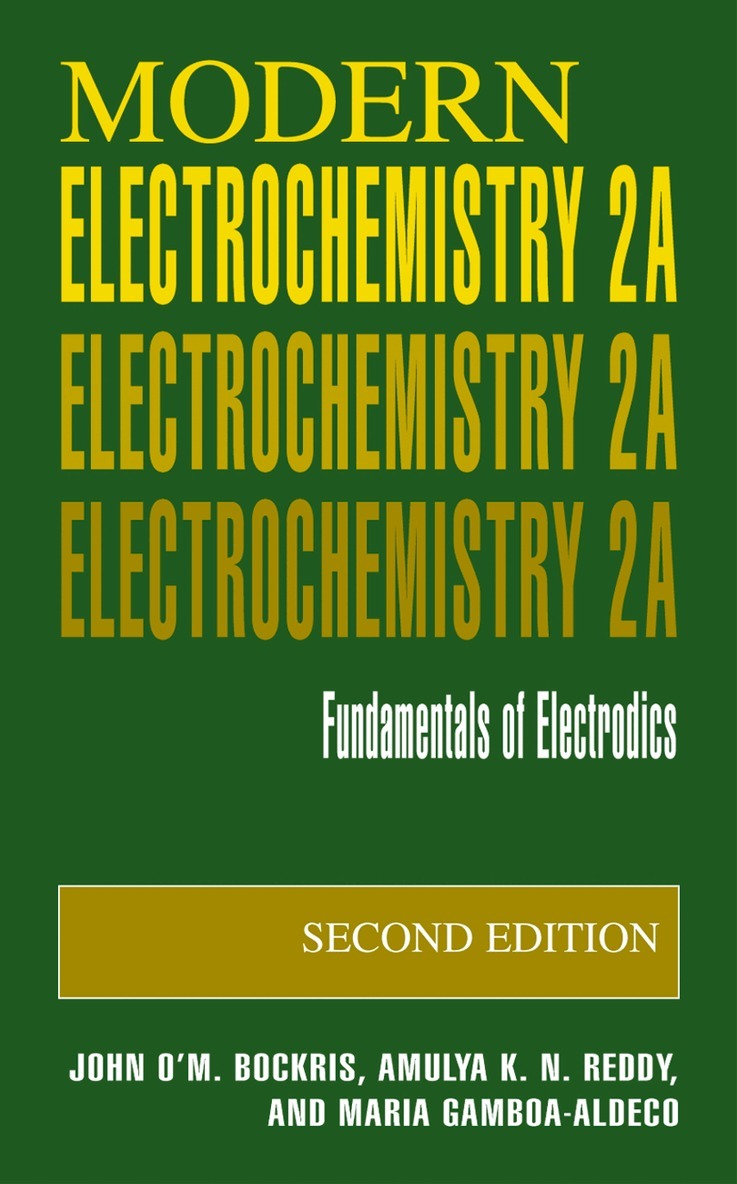
This text explains the subject of electrochemistry in clear, straightforward language for undergraduates and mature scientists who want to understand solutions at the molecular level. It takes full advantage of the advances in microscopy, computing power, and industrial applications in the quarter-century since the publication of the first edition. Such new techniques include scanning-tunnelling microscopy, which enables us to see atoms on electrodes; new computers capable of molecular dynamics calculations that are used in arriving at experimental values; and new room-temperature molten salts that make possible the long-postponed introduction of commercial electric cars. The advances in electrochemistry have necessitated a thorough rewriting of volume 2, which starts with two chapters that have been thoroughly revamped from the first edition. Transients, the electrochemical approach to measurement, have been given a whole chapter to themselves.The contributions of quantum chemists to electrochemistry have resulted in a new chapter on quantum-oriented electrochemistry, which is followed by new chapters on photoelectrochemistry, organoelectrochemistry, and environmental electrochemistry. Finally, the chapter on energy conversion and storage reflects the many advances in that technology. A completely new feature is the liberal supply of problem sets that give students the opportunity to reinforce the knowledge introduced in each chapter. Problem types represent three levels of difficulty: exercises for practice in the use of equations; somewhat more involved problems that relate the material to "real-life" situations; and more difficult "micro-research" problems, each of which may take around a day to solve.
4 016 kr
Skickas inom 10-15 vardagar
This text explains the subject of electrochemistry in clear, straightforward language for undergraduates and mature scientists who want to understand solutions at the molecular level. It takes full advantage of the advances in microscopy, computing power, and industrial applications in the quarter-century since the publication of the first edition. Such new techniques include scanning-tunnelling microscopy, which enables us to see atoms on electrodes; new computers capable of molecular dynamics calculations that are used in arriving at experimental values; and new room-temperature molten salts that make possible the long-postponed introduction of commercial electric cars. The advances in electrochemistry have necessitated a thorough rewriting of volume 2, which starts with two chapters that have been thoroughly revamped from the first edition. Transients, the electrochemical approach to measurement, have been given a whole chapter to themselves.The contributions of quantum chemists to electrochemistry have resulted in a new chapter on quantum-oriented electrochemistry, which is followed by new chapters on photoelectrochemistry, organoelectrochemistry, and environmental electrochemistry. Finally, the chapter on energy conversion and storage reflects the many advances in that technology. A completely new feature is the liberal supply of problem sets that give students the opportunity to reinforce the knowledge introduced in each chapter. Problem types represent three levels of difficulty: exercises for practice in the use of equations; somewhat more involved problems that relate the material to "real-life" situations; and more difficult "micro-research" problems, each of which may take around a day to solve.
534 kr
Skickas inom 10-15 vardagar
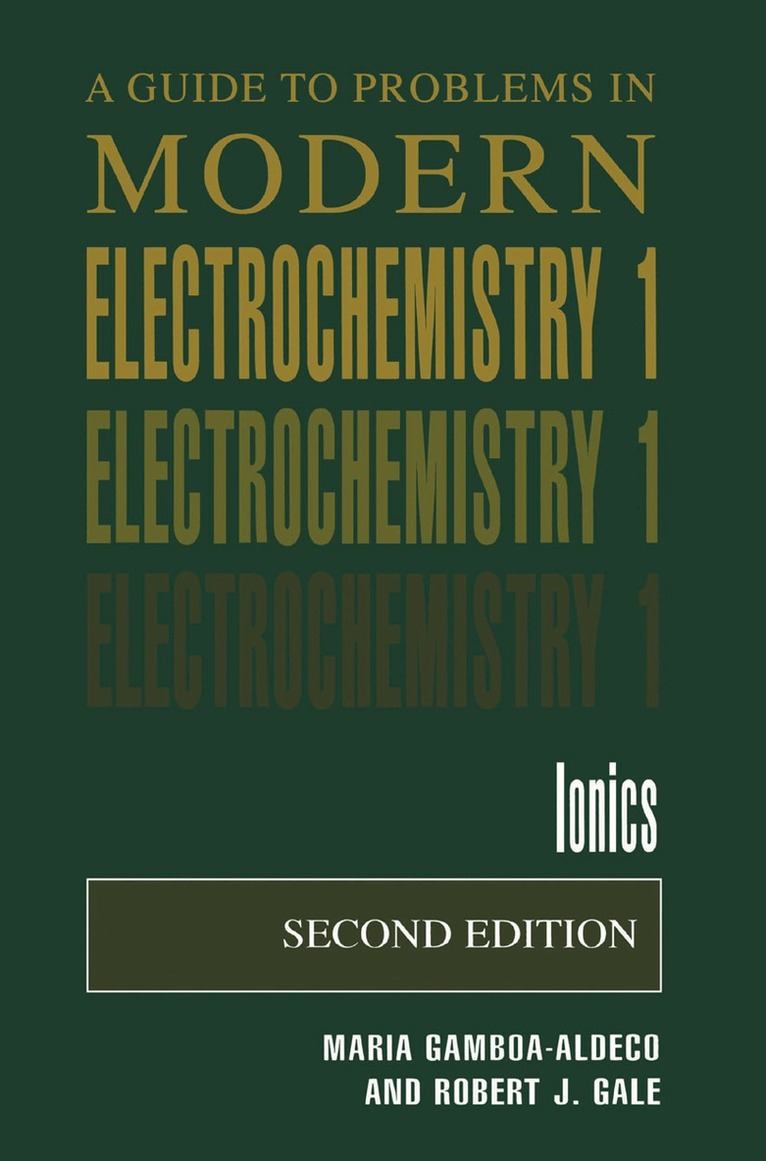
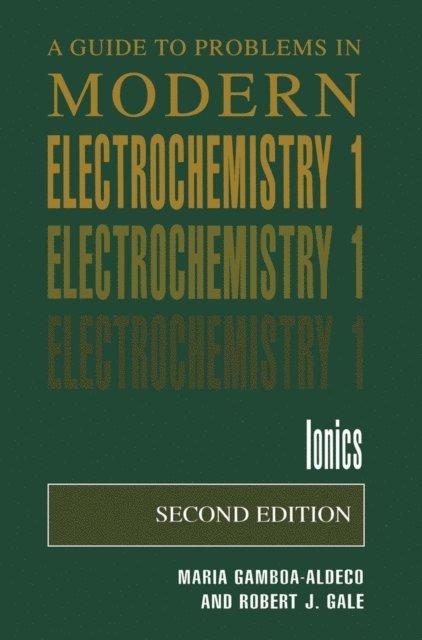
It has been always an incentive for students to find out whether his or her efforts to solve exercises have provided correct results, or to find tips for problems that he or she finds more difficult. These are the main reasons for the appearance of this book. As part of the textbook "Modern Electrochemistry 1: Ionics", "A Guide to Problems in Modern Electrochemistry: Part 1: Ionics" compiles many of the solutions to the exercises and problems presented in the text, as well as many new problems.
Del 42 - Modern Aspects of Electrochemistry
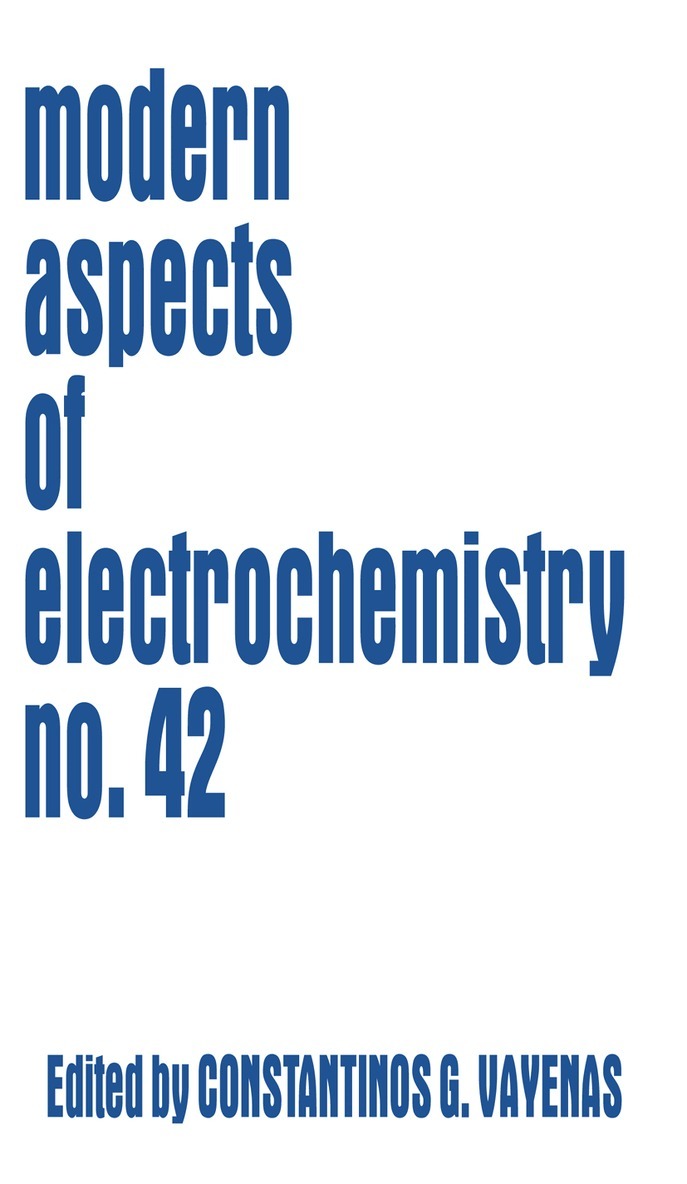
Modern Aspects of Electrochemistry 42
Inbunden, Engelska, 2008
1 589 kr
Skickas inom 10-15 vardagar
This volume analyzes and summarizes recent developments in several key interfacial electrochemical systems in the areas of fuel cell electrocatatalysis, electrosynthesis and electrodeposition. The six Chapters are written by internationally recognized experts in these areas and address both fundamental and practical aspects of several existing or emerging key electrochemical technologies. The Chapter by R. Adzic, N. Marinkovic and M. Vukmirovic provides a lucid and authoritative treatment of the electrochemistry and electrocatalysis of Ruthenium, a key element for the devel- ment of efficient electrodes for polymer electrolyte (PEM) fuel cells. Starting from fundamental surface science studies and interfacial considerations, this up-to-date review by some of the pioneers in this field, provides a deep insight in the complex catalytic-electrocatalytic phenomena occurring at the interfaces of PEM fuel cell electrodes and a comprehensive treatment of recent developments in this extremely important field. Several recent breakthroughs in the design of solid oxide fuel cell (SOFC) anodes and cathodes are described in the Chapter of H. Uchida and M. Watanabe. The authors, who have pioneered several of these developments, provide a lucid presentation d- cribing how careful fundamental investigations of interfacial electrocatalytic anode and cathode phenomena lead to novel electrode compositions and microstructures and to significant practical advances of SOFC anode and cathode stability and enhanced electrocatalysis.
Del 42 - Modern Aspects of Electrochemistry
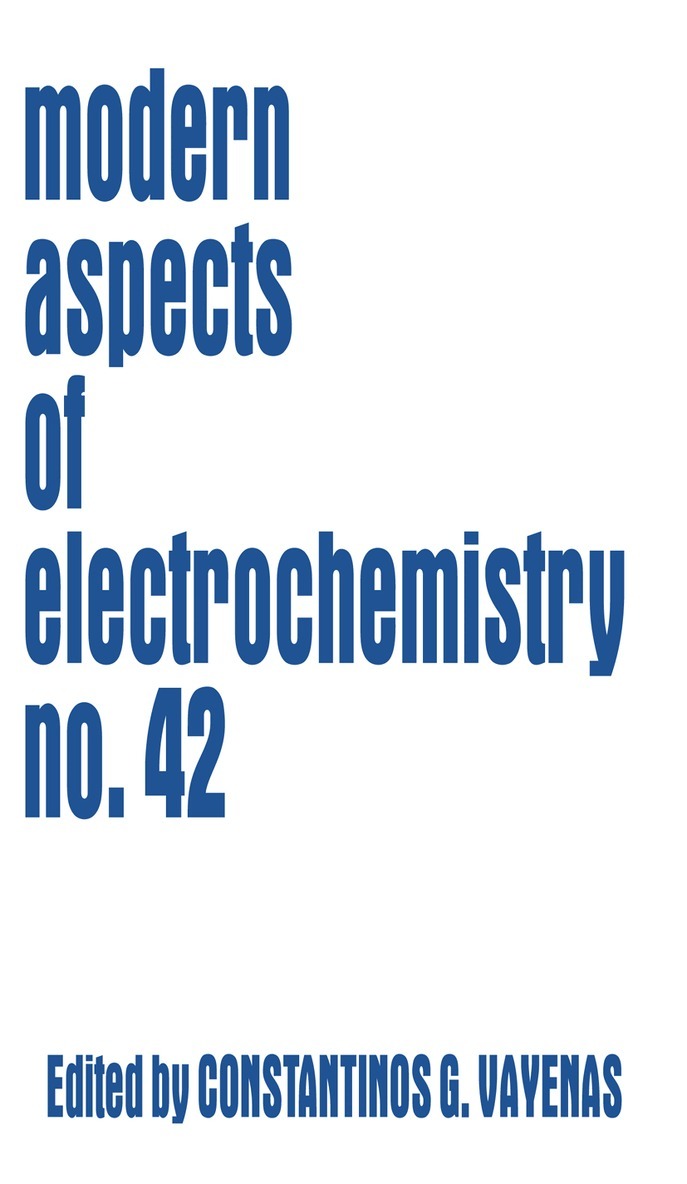
Modern Aspects of Electrochemistry 42
Häftad, Engelska, 2010
1 167 kr
Skickas inom 10-15 vardagar
This volume analyzes and summarizes recent developments in several key interfacial electrochemical systems in the areas of fuel cell electrocatatalysis, electrosynthesis and electrodeposition. The six Chapters are written by internationally recognized experts in these areas and address both fundamental and practical aspects of several existing or emerging key electrochemical technologies. The Chapter by R. Adzic, N. Marinkovic and M. Vukmirovic provides a lucid and authoritative treatment of the electrochemistry and electrocatalysis of Ruthenium, a key element for the devel- ment of efficient electrodes for polymer electrolyte (PEM) fuel cells. Starting from fundamental surface science studies and interfacial considerations, this up-to-date review by some of the pioneers in this field, provides a deep insight in the complex catalytic-electrocatalytic phenomena occurring at the interfaces of PEM fuel cell electrodes and a comprehensive treatment of recent developments in this extremely important field. Several recent breakthroughs in the design of solid oxide fuel cell (SOFC) anodes and cathodes are described in the Chapter of H. Uchida and M. Watanabe. The authors, who have pioneered several of these developments, provide a lucid presentation d- cribing how careful fundamental investigations of interfacial electrocatalytic anode and cathode phenomena lead to novel electrode compositions and microstructures and to significant practical advances of SOFC anode and cathode stability and enhanced electrocatalysis.