Maria Pia Donato - Böcker
Visar alla böcker från författaren Maria Pia Donato. Handla med fri frakt och snabb leverans.
6 produkter
6 produkter
Conflicting Duties: Science, Medicine and Religion in Rome, 1550 - 1750: Science, Medicine and Religion in Rome, 1550 - 1750
Inbunden, Engelska
1 047 kr
Tillfälligt slut
593 kr
Skickas inom 10-15 vardagar
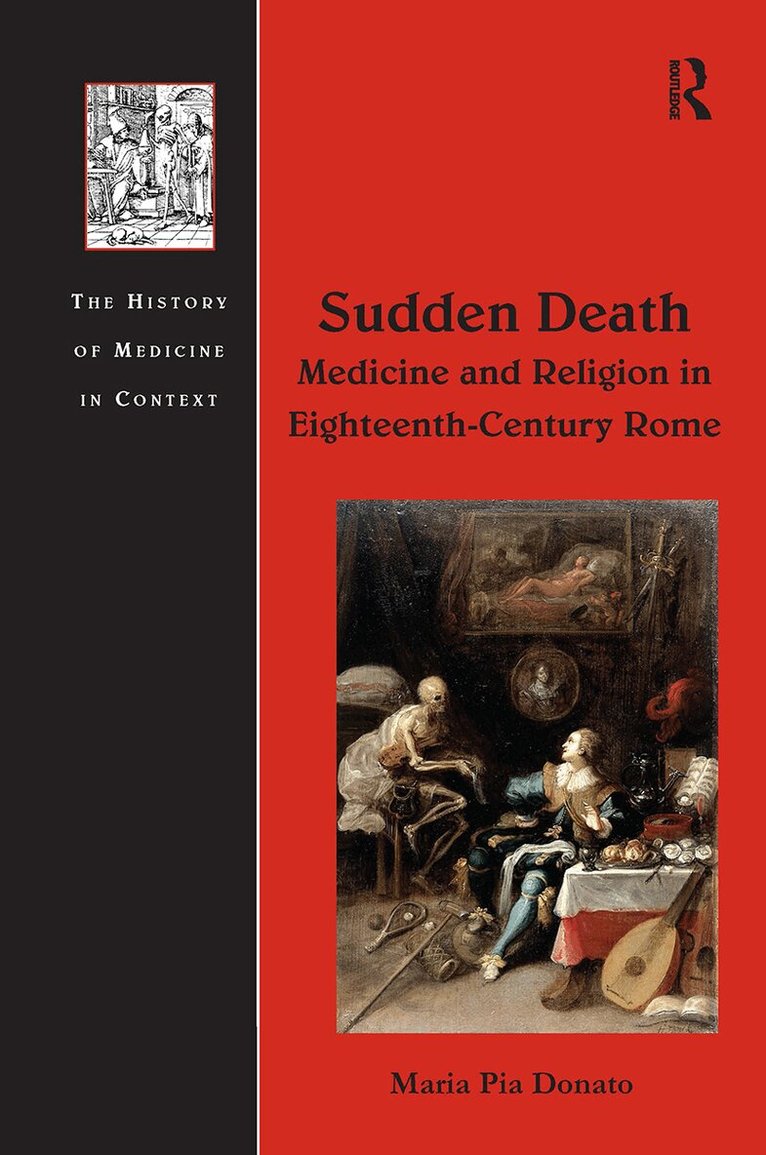
In 1705-1706, during the War of the Spanish Succession and two years after a devastating earthquake, an ’epidemic’ of mysterious sudden deaths terrorized Rome. In early modern society, a sudden death was perceived as a mala mors because it threatened the victim’s salvation by hindering repentance and last confession. Special masses were celebrated to implore God’s clemency and Pope Clement XI ordered his personal physician, Giovanni Maria Lancisi, to perform a series of dissections in the university anatomical theatre in order to discover the 'true causes' of the deadly events. It was the first investigation of this kind ever to take place for a condition which was not contagious. The book that Lancisi published on this topic, De subitaneis mortibus (’On Sudden Deaths’, 1707), is one of the earliest modern scientific investigations of death; it was not only an accomplished example of mechanical philosophy as applied to the life sciences in eighteenth-century Europe, but also heralded a new pathological anatomy (traditionally associated with Giambattista Morgagni). Moreover, Lancisi’s tract and the whole affair of the sudden deaths in Rome marked a significant break in the traditional attitude towards dying, introducing a more active approach that would later develop into the practice of resuscitation medicine. Sudden Death explores how a new scientific interpretation of death and a new attitude towards dying first came into being, breaking free from the Hippocratic tradition, which regarded death as the obvious limit of physician’s capacity, and leading the way to a belief in the 'conquest of death' by medicine which remains in force to this day.
2 289 kr
Skickas inom 10-15 vardagar
In 1705-1706, during the War of the Spanish Succession and two years after a devastating earthquake, an ’epidemic’ of mysterious sudden deaths terrorized Rome. In early modern society, a sudden death was perceived as a mala mors because it threatened the victim’s salvation by hindering repentance and last confession. Special masses were celebrated to implore God’s clemency and Pope Clement XI ordered his personal physician, Giovanni Maria Lancisi, to perform a series of dissections in the university anatomical theatre in order to discover the 'true causes' of the deadly events. It was the first investigation of this kind ever to take place for a condition which was not contagious. The book that Lancisi published on this topic, De subitaneis mortibus (’On Sudden Deaths’, 1707), is one of the earliest modern scientific investigations of death; it was not only an accomplished example of mechanical philosophy as applied to the life sciences in eighteenth-century Europe, but also heralded a new pathological anatomy (traditionally associated with Giambattista Morgagni). Moreover, Lancisi’s tract and the whole affair of the sudden deaths in Rome marked a significant break in the traditional attitude towards dying, introducing a more active approach that would later develop into the practice of resuscitation medicine. Sudden Death explores how a new scientific interpretation of death and a new attitude towards dying first came into being, breaking free from the Hippocratic tradition, which regarded death as the obvious limit of physician’s capacity, and leading the way to a belief in the 'conquest of death' by medicine which remains in force to this day.
1 298 kr
Kommande
986 kr
Kommande
1 712 kr
Skickas inom 5-8 vardagar
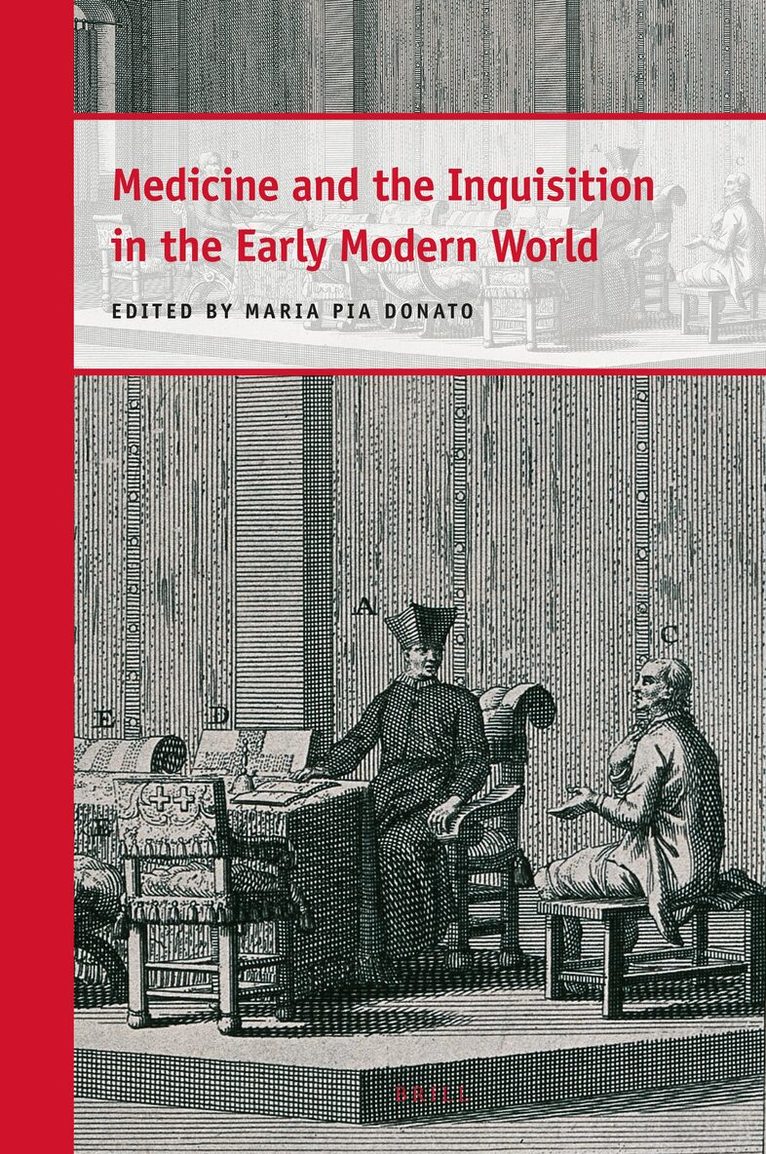
Medicine and the Inquisition offers a wide-ranging and nuanced account of the role played by the Roman, Spanish and Portuguese Inquisitions in shaping medical learning and practice in the period from 1500 to 1850.Until now, learned medicine has remained a secondary subject in scholarship on Inquisitions. This volume delves into physicians’ contributions to the inquisitorial machinery as well as the persecution of medical practitioners and the censorship of books of medicine.Although they are commonly depicted as all-pervasive systems of repression, the Inquisitions emerge from these essays as complex institutions. Authors investigate how boundaries between the medical and the religious were negotiated and transgressed in different contexts. The book sheds new light on the intellectual and social world of early modern physicians, paying particular attention to how they complied with, and at times undermined, ecclesiastical control and the hierarchies of power in which the medical profession was embedded.Contributors are Hervé Baudry, Bradford A. Bouley, Alessandra Celati, Maria Pia Donato, Martha Few, Guido M. Giglioni, Andrew Keitt, Hannah Marcus, and Timothy D. Walker. This volume includes the articles originally published in Volume XXIII, Nos. 1-2 (2018) of Brill's journal Early Science and Medicine with one additional chapter by Timothy D. Walker and an updated introduction.