Maria Rost Rublee - Böcker
Visar alla böcker från författaren Maria Rost Rublee. Handla med fri frakt och snabb leverans.
2 produkter
2 produkter
472 kr
Skickas inom 5-8 vardagar
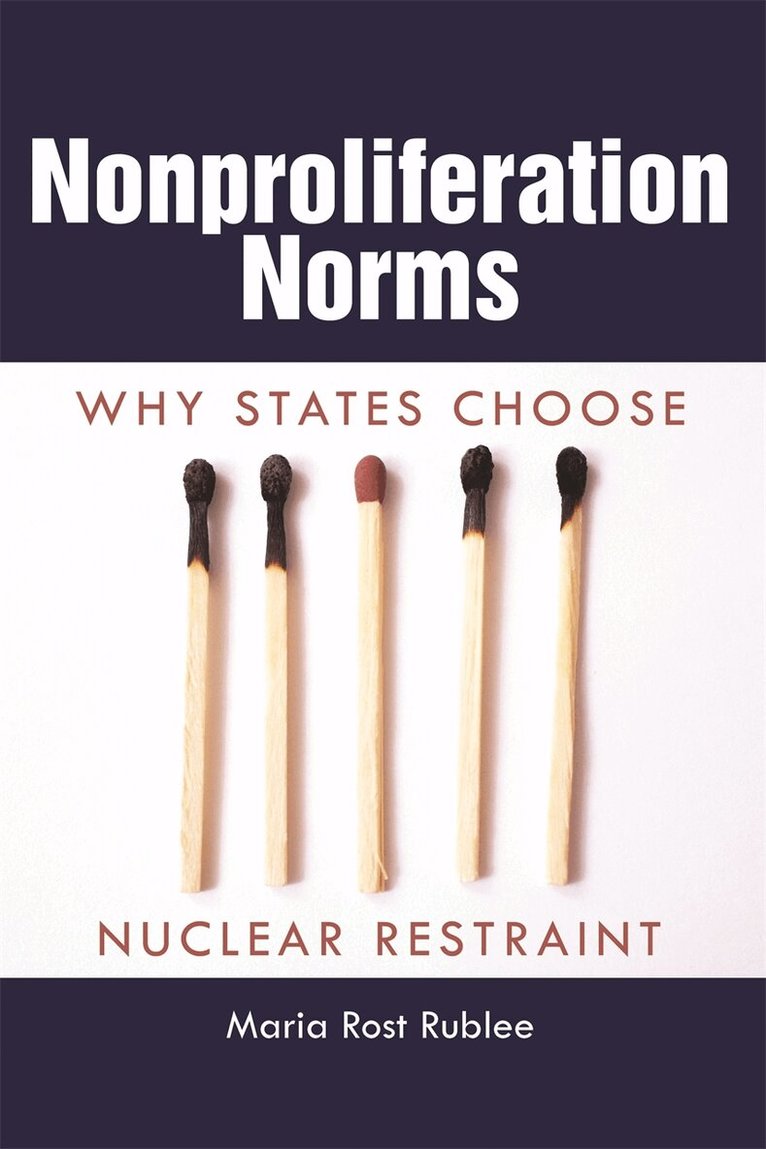
Too often, our focus on the relative handful of countries with nuclear weapons keeps us from asking an important question: Why do so many more states not have such weapons? More important, what can we learn from these examples of nuclear restraint? Maria Rost Rublee argues that in addition to understanding a state's security environment, we must appreciate the social forces that influence how states conceptualize the value of nuclear weapons. Much of what Rublee says also applies to other weapons of mass destruction, as well as national security decision making in general.The nuclear nonproliferation movement has created an international social environment that exerts a variety of normative pressures on how state elites and policymakers think about nuclear weapons. Within a social psychology framework, Rublee examines decision making about nuclear weapons in five case studies: Japan, Egypt, Libya, Sweden, and Germany.In each case, Rublee considers the extent to which nuclear forbearance resulted from persuasion (genuine transformation of preferences), social conformity (the desire to maximize social benefits and/or minimize social costs, without a change in underlying preferences), or identification (the desire or habit of following the actions of an important other).The book offers bold policy prescriptions based on a sharpened knowledge of the many ways we transmit and process nonproliferation norms. The social mechanisms that encourage nonproliferation-and the regime that created them-must be preserved and strengthened, Rublee argues, for without them states that have exercised nuclear restraint may rethink their choices.
11 912 kr
Tillfälligt slut
While the Cold War ended more than two decades ago and global nuclear stockpiles have shrunk dramatically, there are still around 18,000 nuclear warheads distributed among nine nuclear armed states. Against the backdrop of continual political tensions and conflict, the nuclear issue will continue to dominate headlines for several decades into the future. This new four-volume Major Work explores this important issue and aims to introduce readers to the key arguments and authors in the field. With such a wide variety of theoretical approaches and substantive topics under the umbrella of nuclear politics, this collection will not only allow the reader to peruse the diverse explanations for the regime, proliferation, nonproliferation and disarmament, it will also guide them through the intellectual history of the field. Volume One: The Nuclear Nonproliferation Regime Volume Two: Nuclear Proliferation Volume Three: Nuclear Nonproliferation Volume Four: Nuclear Disarmament and Alternative Voices on Nuclear Issues