• Fri frakt över 249 kr
  • •
  • Snabba leveranser
  • •
  • Billiga böcker
Kundservice

Du är på sajten för privatpersoner.

Företag, bibliotek eller offentlig verksamhet?

Du handlar på classic.bokus.com, där alla dina funktioner finns intakta.
Till classic.bokus.com
Bokus logotyp. Gå till startsidan.
  • Erbjudanden
  • Nyheter
  • Student
  • Topplistor
  • Barn & ungdom
  • Bokus Play
  • E-böcker
  • Pocketböcker
  • Spel & pussel

10% rabatt på allt med kod NYSTART10 →

Sidfot

Mina sidor

    Hjälp

    • Kundservice
    • Vanliga frågor och svar
    • Frakt och leverans
    • Retur vid ångerrätt
    • Reklamera vara
    • Betalning
    • Köpvillkor
    • Allmänna villkor
    • Information om webbplatsens tillgänglighet

    Om Bokus

    • Om oss
    • Pressrum
    • För studenter
    • För företag
    • För bibliotek och offentlig verksamhet
    • För leverantörer
    • Hållbarhet

    Populärt

    • Aktuella erbjudanden
    • Presentkort
    • Studentlitteratur
    • Nya böcker
    • Topplistor
    • Signerade böcker
    • Engelska böcker

    Inspiration

    • Boktips
    • BookTok
    • Populära bokserier
    • Barnbokskaraktärer
    • Populära författare
    Logotyp för Bokus
    Följ oss på Facebook (extern länk)Följ oss på Instagram (extern länk)Följ oss på YouTube (extern länk)Följ oss på TikTok (extern länk)
    bokus @ CookiesAnpassa cookiesIntegritetspolicyKöpvillkor
    Till Citymail hemsida (extern länk)Till Budbee hemsida (extern länk)Till Postnord hemsida (extern länk)Till Schenker hemsida (extern länk)Till Early Bird hemsida (extern länk)Till Walleys hemsida (extern länk)
    1. Samhälle och politik
    2. Politik och statsskick

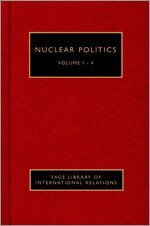
    Nuclear Politics

    AvMaria Rost Rublee,Ramesh Thakur

    Inbunden, Engelska, 2014

    Del i serien SAGE Library of International Relations

    12 134 kr

    Tillfälligt slut

    Beskrivning

    While the Cold War ended more than two decades ago and global nuclear stockpiles have shrunk dramatically, there are still around 18,000 nuclear warheads distributed among nine nuclear armed states. Against the backdrop of continual political tensions and conflict, the nuclear issue will continue to dominate headlines for several decades into the future. This new four-volume Major Work explores this important issue and aims to introduce readers to the key arguments and authors in the field. With such a wide variety of theoretical approaches and substantive topics under the umbrella of nuclear politics, this collection will not only allow the reader to peruse the diverse explanations for the regime, proliferation, nonproliferation and disarmament, it will also guide them through the intellectual history of the field.   Volume One: The Nuclear Nonproliferation Regime Volume Two: Nuclear Proliferation Volume Three: Nuclear Nonproliferation Volume Four: Nuclear Disarmament and Alternative Voices on Nuclear Issues

    Produktinformation

    • Utgivningsdatum:2014-02-19
    • Mått:156 x 234 x undefined mm
    • Vikt:3 100 g
    • Format:Inbunden
    • Språk:Engelska
    • Serie:SAGE Library of International Relations
    • Antal sidor:1 664
    • Upplaga:1
    • Förlag:SAGE Publications
    • ISBN:9781446282137

    Utforska kategorier

    • Politik och statsskick inom Samhälle och politik

    Recensioner i media

    An estimated 18,000 nuclear warheads exist in the arsenals of nine nuclear weapon armed countries - more than 5,000 of them deployed and nearly 2,000 on a state of alert ready to be launched in minutes. This frightening scenario of the actual potential for the use of the most destructive weapon of mass destruction invented by humankind with its long-term genetic and ecological impact demands that we examine the rationale for these weapons. The availability of a reader with some of the best intellectual work on the subject in this 4 volume publication edited by Professors Maria Rost Rublee and Ramesh Thakur is a an outstanding service to students and the general public as we move towards the elimination of nuclear weapons.

    Innehållsförteckning

    • VOLUME ONE: THE NUCLEAR NONPROLIFERATION REGIMENuclear Learning and U.S.-Soviet Security Regimes - Joseph Nye The Realist Nuclear Regime - Zachary Davis The Nuclear Nonproliferation Treaty: History and Current Problems - George Bunn Taking Stock of the Nuclear Nonproliferation Regime: Using Social Psychology to Understand Regime Effectiveness - Maria Rost Rublee The Puzzle of Trusting Relationships in the Nuclear Non-Proliferation Treaty - Jan Ruzicka and Nicholas Wheeler Nuclear Nonproliferation and Disarmament: Can the Power of Ideas Tame the Power of the State? - Ramesh Thakur The Ambivalence of Nuclear Histories - Itty AbrahamNuclear Weapons, International Law and the World Court: A Historic Encounter - Richard FalkThe Comprehensive Test-Ban Treaty’s Relevance to Global Security - Nancy GallagherStepping Stones to a Nuclear-Weapons-Free World - Ramesh ThakurPeeling the Orange: Regional Paths to a Nuclear-Weapon-Free World - Michael Hamel-GreenInternational Humanitarian Law and Nuclear Weapons: Irreconcilable Differences - Dean Granoff and Jonathan GranoffSpreading Temptation: Proliferation and Peaceful Nuclear Cooperation Agreements - Matthew FuhrmannImporting the Bomb: Sensitive Nuclear Assistance and Nuclear Proliferation - Matthew KroenigNuclear Power Without Nuclear Proliferation? - Steven Miller and Scott SaganProliferation Rings: New Challenges to the Nuclear Nonproliferation Regime - Chaim Braun and Christopher ChybaMultilateral Cooperation and the Prevention of Nuclear Terrorism: Pragmatism Over Idealism - Wyn Bowen, Matthew Cottee and Christopher HobbsA Security System Commensurate with the Risk of Nuclear Terrorism - Kenneth Brill and Kenneth LuongoEngaging India, Israel and Pakistan in the Nuclear Non-proliferation Regime - Jenny NielsenCan the NPT Regime Be Fixed or Should It Be Abandoned? - Ramesh Thakur, Jane Boulden, and Thomas WeissVOLUME TWO: NUCLEAR PROLIFERATIONThe Brooding Shadow: Systemic Incentives and Nuclear Weapons Proliferation - Benjamin FrankelWhy Nuclear Superiority Doesn’t Matter - Robert JervisExploding the Black Box: The Historical Sociology of Nuclear Proliferation - Steven FlankWhy Do States Build Nuclear Weapons? - Scott SaganIs There A Theory of Nuclear Proliferation? An Analysis of the Contemporary Debate - Tanya Ogilvie-WhiteThe Nuclear Taboo: The United States and the Normative Basis of Nuclear Non-Use - Nina TannenwaldTaboo or Tradition: The Non-Use of Nuclear Weapons in World Politics - T.V. PaulNuclear Myths and Political Realities - Kenneth WaltzThe Perils of Proliferation: Organization Theory, Deterrence Theory, and the Spread of Nuclear Weapons - Scott SaganThe Myth of Nuclear Deterrence - Ward WilsonBringing Israel’s Bomb Out of the Basement: Has Nuclear Ambiguity Outlived Its Shelf Life - Avner Cohen and Marvin MillerThe South Asian Nuclear Challenge - Ramesh ThakurIndia′s Pathway to Pokhran II: The Prospects and Sources of New Delhi′s Nuclear Weapons Program - Sumit GangulyPakistan′s Nuclear Weapons Program: Turning Points and Nuclear Choices - Samina AhmedNorth Korea’s Weapons of Mass Destruction: Badges, Shields, or Swords? - Victor ChaNuclear Proliferation and Regional Security Orders: Comparing North Korea and Iran - Amitav AcharyaThe Correlates of Nuclear Proliferation: A Quantitative Test - Sonali Singh and Christopher WayThe Perils of Predicting Proliferation - Alexander Montgomery and Scott SaganVOLUME THREE: NUCLEAR NONPROLIFERATIONThe Political Psychology of the Nuclear Nonproliferation Regime - Glenn ChafetzConstructivism and Social Psychology in Peace Studies: Understanding Nuclear Nonproliferation and Disarmament in East Asia - Maria Rost RubleeDomestic Sources of Preferences for Arms Cooperation: The Impact of Protest - Jeffrey KnopfThe Political Economy of Nuclear Restraint - Etel SolingenNever Say Never Again: Nuclear Reversal Revisited - Ariel LeviteBotching the Bomb: Why Nuclear Weapons Programs Often Fail on Their Own – and Why Iran’s Might, Too - Jacques HymansOf Gauchos and Gringos: Why Argentina Never Wanted the Bomb, and Why the United States Thought It Did - Jacques HymansCivil-Military Affairs and Security Institutions in the Southern Cone: The Sources of Argentine-Brazilian Nuclear Cooperation - Arturo VelázquezEgypt′s Nuclear Weapons Program: Lessons Learned - Maria Rost RubleeGerman National Identity and WMD Proliferation - Harald MüllerLessons of UNSCOM and UNMOVIC for WMD Non-Proliferation, Arms Control and Disarmament - Trevor FindlayThe Soviet Union and Nuclear Proliferation - William PotterNuclear U-Turns: Learning from South Korean and Taiwanese Rollback - Rebecca Hersman and Robert PetersNon-Proliferation and Counter-Terrorism Cooperation in Southeast Asia: Meeting Global Obligations Through Regional Security Architectures? - Tanya Ogilvie-WhiteLibya′s Nuclear Turnaround: Perspectives from Tripoli - Målfrid Braut-HegghammerTito’s Nuclear Legacy - William Potter, Djuro Miljanic and Ivo Slaus Discursive Foundations of Iran′s Nuclear Policy - Homeira MoshirzadehVOLUME FOUR: NUCLEAR DISARMAMENT AND ALTERNATIVE VOICES ON NUCLEAR ISSUESIs Nuclear Zero the Best Option? - Scott Sagan and Kenneth WaltzWhat’s Next? - George Perkovich and James ActonAbolishing Nuclear Armouries: Policy or Pipedream? - Michael QuinlanVerification and Security in a Nuclear-Weapon-Free World: Elements and Framework of a Nuclear Weapons Convention - Jürgen ScheffranNorth Korea Test as Spur to Nuclear Disarmament - Ramesh ThakurIf You Want Nonproliferation, Prepare for Disarmament - Ramesh ThakurIdeas, Beliefs, and Nuclear Policies: The Cases of South Africa and Ukraine - William Long and Suzette GrillotThe Nuclear Threshold States: Nuclear Disarmament and the Challenges and Opportunities Posed by Brazil and Japan - Maria Rost RubleeRegulating the Possession and Use of Nuclear Weapons: Ideas, Commissions and Agency in International Security Politics - Marianne HansonTacit Knowledge, Weapons Design, and the Uninvention of Nuclear Weapons - Donald MacKenzie and Graham SpinardiPutting Disarmament Back in the Frame - Neil CooperNuclearism, Human Rights and Constructions of Security (Part 1) - Ken BoothNuclear Reason: At the Limits of Strategy - Anthony BurkeSex and Death in the Rational World of Defense Intellectuals - Carol CohnGender and the Nuclear Weapons State: A Feminist Critique of the UK Government’s White Paper on Trident - Claire Duncanson and Catherine EschleReconstituting Security? : The Practices of Proliferation Control - David MutimerRelinquishing Nuclear Weapons: Identities, Networks and the British Bomb - Nick RitchieReviving Nuclear Ethics: A Renewed Research Agenda for the Twenty-First Century - Thomas Doyle