Maria Wiberg – författare
Visar alla böcker från författaren Maria Wiberg. Handla med fri frakt och snabb leverans.
3 produkter
3 produkter
Inbunden, Engelska, 2016
339 kr
Skickas
Stockholms Millesgården is one of the most exciting artists homes in the world. Building began in 1906 after Carl Milles, one of Swedens most prominent sculptors, and his wife Olga commissioned a home with studios on Herserud Cliff on the island of Lidingö. In 1936, the Milles couple donated their home to the Swedish people, and it has since turned into a renowned museum, boasting of a sculpture park by the water with meandering walkways, terraces and fountains. The award-winning addition of the art gallery in 1999 completed the artists grand vision and his lasting legacy. The book presents the rich history of the artists home with contemporary photographs by Yanan Li, illustrating one of the jewels of Sweden.
Inbunden, Engelska, 2014
1 003 kr
Skickas inom 10-15 vardagar
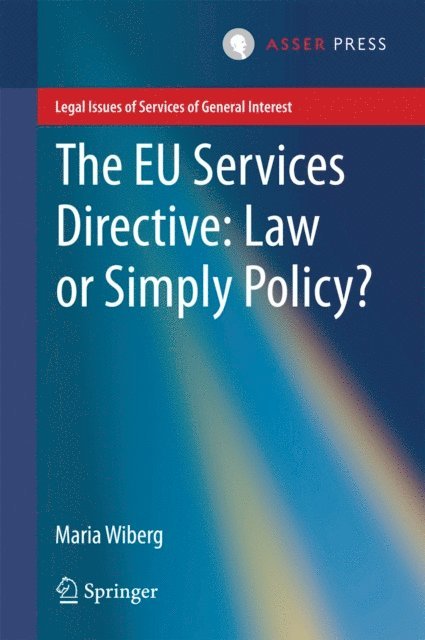
The EU Services Directive is difficult to achieve without also affecting issues of national social policy, closely related to the welfare state. The EU Services Directive’s characteristics have raised numerous legal questions essential for its full understanding and implementation. It has become a “moving target” for the national administrations. In this book important issues are covered: is the EU Services Directive to be interpreted as law or simply policy and what are its actual effects on the regulatory autonomy of the Member States? Does it represent a new and innovative instrument which facilitates prosperous integration within the EU or, has the EU legislator gone beyond its regulatory competence? This book helps to understand the EU Services Directive and its effects on the regulatory autonomy of the Member States of the European Union in a broader perspective. It is valuable for academics, practitioners and officials both nationally as well within the EU institutions.
E-bok
PDF, Engelska, 20141 303 kr
Läs direkt efter köp
The EU Services Directive is difficult to achieve without also affecting issues of national social policy, closely related to the welfare state. The EU Services Directive’s characteristics have raised numerous legal questions essential for its full understanding and implementation. It has become a “moving target” for the national administrations. In this book important issues are covered: is the EU Services Directive to be interpreted as law or simply policy and what are its actual effects on the regulatory autonomy of the Member States? Does it represent a new and innovative instrument which facilitates prosperous integration within the EU or, has the EU legislator gone beyond its regulatory competence? This book helps to understand the EU Services Directive and its effects on the regulatory autonomy of the Member States of the European Union in a broader perspective. It is valuable for academics, practitioners and officials both nationally as well within the EU institutions.