
Mariano Errichiello – författare
Visar alla böcker från författaren Mariano Errichiello. Handla med fri frakt och snabb leverans.
3 produkter
3 produkter
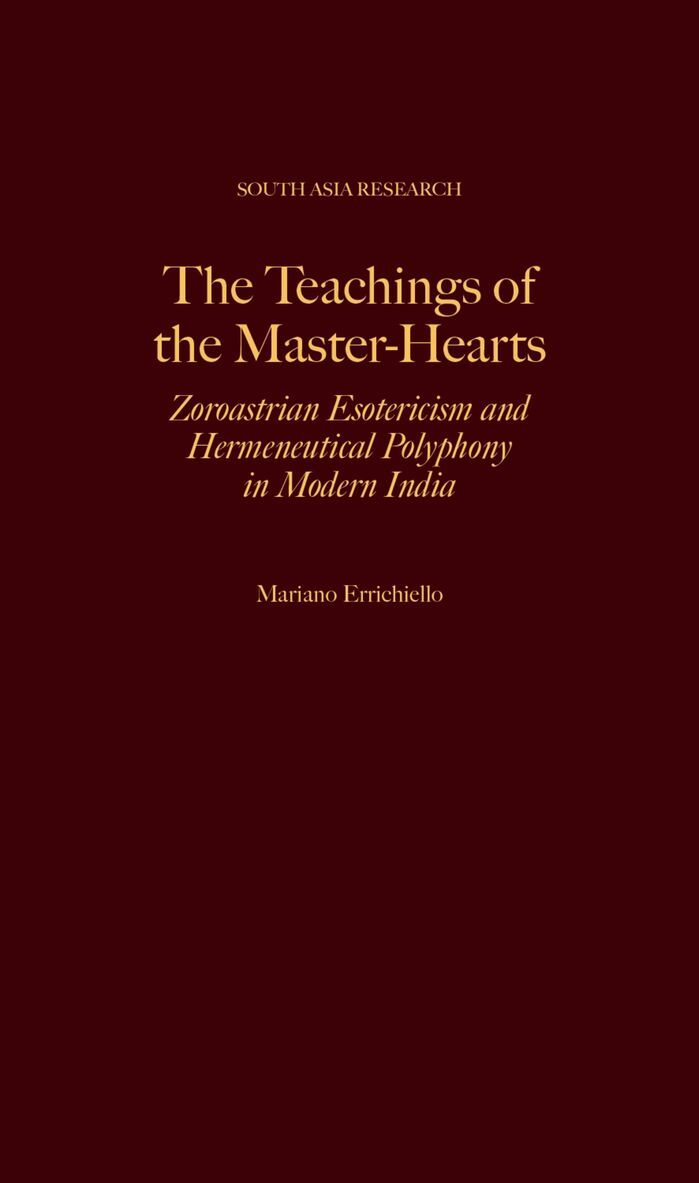
The Teachings of the Master-Hearts
Zoroastrian Esotericism and Hermeneutical Polyphony in Modern India
Inbunden, Engelska, 2027
957 kr
Kommande
The Teachings of the Master-Hearts examines the formation, development, and intellectual significance of Ilme K^ṣ^num, an esoteric interpretation of Zoroastrianism that emerged among Parsis in modern India. By situating Ilme K^ṣ^num within the broader historical context of British colonialism, scientific modernity, revivalist nationalism, and the interconnected Persianate world, Mariano Errichiello presents Parsis as active agents who navigated and reconfigured multiple religious and intellectual currents.The book combines historical and textual approaches to explore how modern Zoroastrians constructed and contested religious authenticity through diverse interpretive practices. Central to the study is the figure of Behramshah Naoroji Shroff and the esoteric teachings attributed to the "master-hearts" (s^ā^heb del^ā^n). Rather than treating Ilme K^ṣ^num as a marginal or derivative phenomenon, Errichiello frames it as a distinctive voice within a broader hermeneutical polyphony that characterizes modern Parsi religious thought.The work is structured in three main parts. The first develops a theoretical framework for the study of the socio-intellectual landscape of colonial India, examining how imperial power, scientific modernity, and revivalist nationalism shaped Parsi religious life. It also advances a conceptual model grounded in relational ontology and hermeneutics to interpret the plurality of religious expressions within the community through an analysis of the spaces and modes in which they are constituted. The second part anchors the study in textual scholarship through an English translation of a key Gujarati text of Ilme K^ṣ^num. The third part offers a glossary of technical K^ṣ^numic terms (logato), tracing their linguistic and conceptual genealogies across multiple languages and traditions. Taken together, the book's three sections position Ilme K^ṣ^num as a significant site of religious interpretation, challenging binary models and contributing to broader debates on esotericism, modernity, and the dynamics of religious change in South Asia.
752 kr
Skickas inom 5-8 vardagar
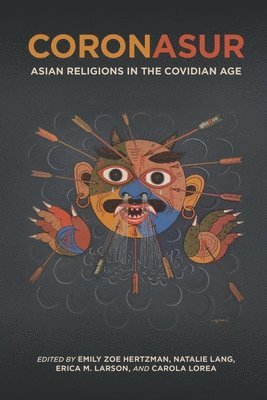
By the summer of 2020, when the coronavirus had fully entered our everyday vocabulary and our lives, religious communities and places of worship around the world were already undergoing profound changes. In Asian and Asian diaspora communities, diverse cultural tropes, beliefs, and artifacts were mobilized to make sense of Covid, including a repertoire of gods and demons like Coronasur, the virus depicted with the horns and fangs of a traditional Hindu demon. Various kinds of knowledge were invoked: theologies, indigenous medicines, and biomedical narratives, as well as ethical values and nationalist sentiments. CoronAsur: Asian Religions in the Covidian Age follows the documentation and analysis of the abrupt societal shifts triggered by the pandemic to understand current and future pandemic times, while revealing further avenues for research on religion that have opened up in the Covidian age. Developed in tandem with the research blog CoronAsur: Religion and COVID-19, this volume is a "phygital" publication, a work grounded in empirical roots as well as digitally born communication. It comprises thirty-eight essays that examine Asian religious communities—Muslim, Buddhist, Hindu, Daoist, and Christian as well as popular/folk and new religious movements, or NRMs—in terms of the changes brought on by and the ritual responses to the Covid pandemic.Studying religious narratives, practices, and changes in the Covidian age adds to our understanding of not only the specific groups in which they are situated, but also the coronavirus itself, its disputed etiologies and culturally contextualized exegeses. CoronAsur offers a comprehensive and timely discussion of Covidian transformations in religious communities’ engagements with media, spaces, and moral and political economies, documenting how religious practices and discourses have co-produced the meanings of the pandemic.
439 kr
Skickas inom 3-6 vardagar
By the summer of 2020, when the coronavirus had fully entered our everyday vocabulary and our lives, religious communities and places of worship around the world were already undergoing profound changes. In Asian and Asian diaspora communities, diverse cultural tropes, beliefs, and artifacts were mobilized to make sense of Covid, including a repertoire of gods and demons like Coronasur, the virus depicted with the horns and fangs of a traditional Hindu demon. Various kinds of knowledge were invoked: theologies, indigenous medicines, and biomedical narratives, as well as ethical values and nationalist sentiments. CoronAsur: Asian Religions in the Covidian Age follows the documentation and analysis of the abrupt societal shifts triggered by the pandemic to understand current and future pandemic times, while revealing further avenues for research on religion that have opened up in the Covidian age. Developed in tandem with the research blog CoronAsur: Religion and COVID-19, this volume is a "phygital" publication, a work grounded in empirical roots as well as digitally born communication. It comprises thirty-eight essays that examine Asian religious communities—Muslim, Buddhist, Hindu, Daoist, and Christian as well as popular/folk and new religious movements, or NRMs—in terms of the changes brought on by and the ritual responses to the Covid pandemic. Studying religious narratives, practices, and changes in the Covidian age adds to our understanding of not only the specific groups in which they are situated, but also the coronavirus itself, its disputed etiologies and culturally contextualized exegeses. CoronAsur offers a comprehensive and timely discussion of Covidian transformations in religious communities’ engagements with media, spaces, and moral and political economies, documenting how religious practices and discourses have co-produced the meanings of the pandemic.