Marie Nicole Pareja - Böcker
Visar alla böcker från författaren Marie Nicole Pareja. Handla med fri frakt och snabb leverans.
2 produkter
2 produkter
656 kr
Tillfälligt slut
The enduring legacy of the Silk Roads are the goods and ideas that they facilitated and the technology that they disseminated. However, these trade routes also encompassed a web of communication, crucial for our understanding of the development of cultures, yet obscured by lack of research. This volume centres on how the exchange routes transformed the frontier regions of the Silk Road. In doing so, it utilises a range of methods to reach an archaeological interpretation of the factors that linked people with the environment; movements, settlements, and beliefs. In contrast to historical perspectives that have dominated the field to date, the volume incorporates physical records that offer a more reliable and objective understanding of the past. Taken as a whole, the case studies provide an overview of current developments where multiple lines of evidence are employed to integrate and resolve different data sets. Because trade connected a diversity of cultures, interdisciplinary collaboration is fundamental to reach the full research potential. The papers demonstrate precisely this significance by stretching across Europe, Asia, and Africa from the 4th millennium BC to the 10th century AD. The book is particularly timely given the scope of the Belt and Road Initiative, which threatens numerous archaeological sites across the Silk Roads.
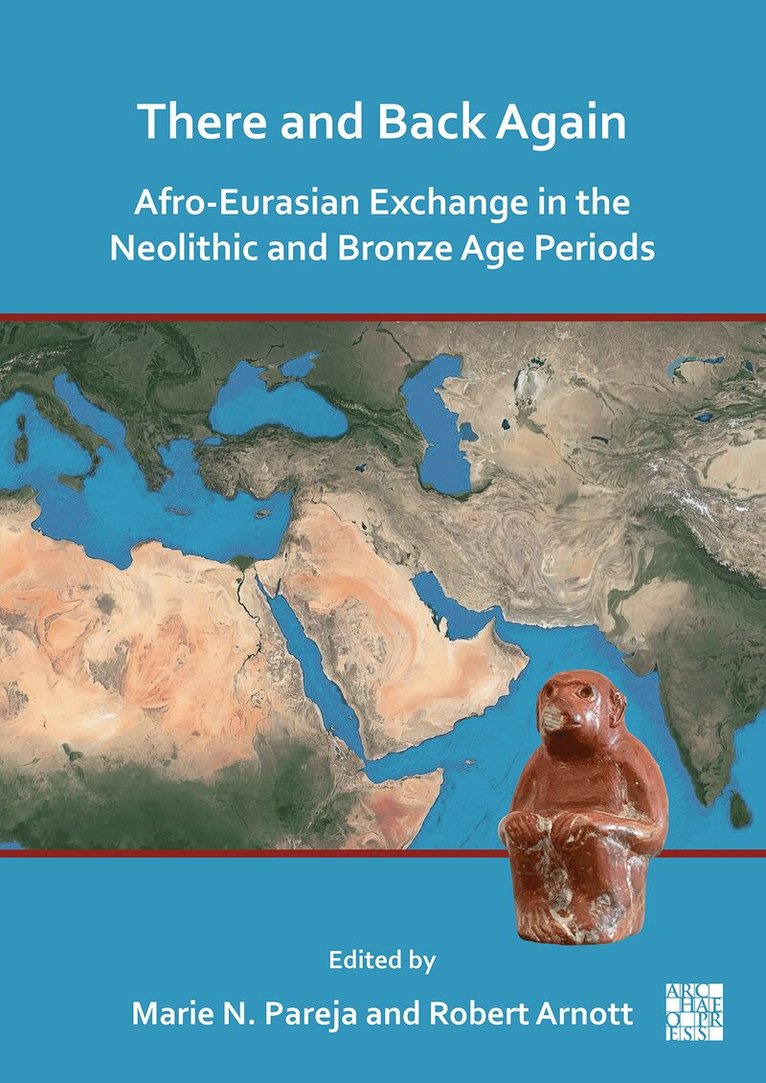
There and Back Again: Afro-Eurasian Exchange in the Neolithic and Bronze Age Periods
Afro-Eurasian Exchange in the Neolithic and Bronze Age Periods
Häftad, Engelska, 2024
531 kr
Skickas
The earliest contacts between the Aegean and the Indus were once thought to begin in the sixth century BCE, and yet there is now growing evidence of much earlier, indirect connections that extend into the third and fourth millennia BCE. There and Back Again evaluates the evidence for such contacts, particularly commodities such as tin and lapis lazuli, and discusses recently discovered objects, new methods of materials analysis techniques and topics, as well as iconographic investigation. Such studies clearly indicate the presence of indirect, or ‘trickle down’ contacts, where Mesopotamia functions as an intermediary between Africa and Europe in the west and Asia. In such a system, objects, iconography, and culture accumulate material and social value as they were exchanged through Mesopotamia and the Near East, to the Aegean and beyond. From the Early through Late Bronze Age, the Indus (and more broadly South Asia) remained critical to western regions for valuable, indispensable commodities destined for elites from Mesopotamia and other regions to the west. The volume’s case studies are complex and multifaceted, including but not limited to linguistics, iconography, paleobotany, archaeology, ancient disease and medicine, as well as scientific, materials, and technological analysis. As such, this collection of 11 papers constitutes the first of a series that seek to address a lingering lacuna in prehistoric studies: multi-disciplinary case-studies of Afro-Eurasian exchange.