Marie-Pierre Granger – författare
1 904 kr
Skickas inom 5-8 vardagar
395 kr
Läs direkt efter köp
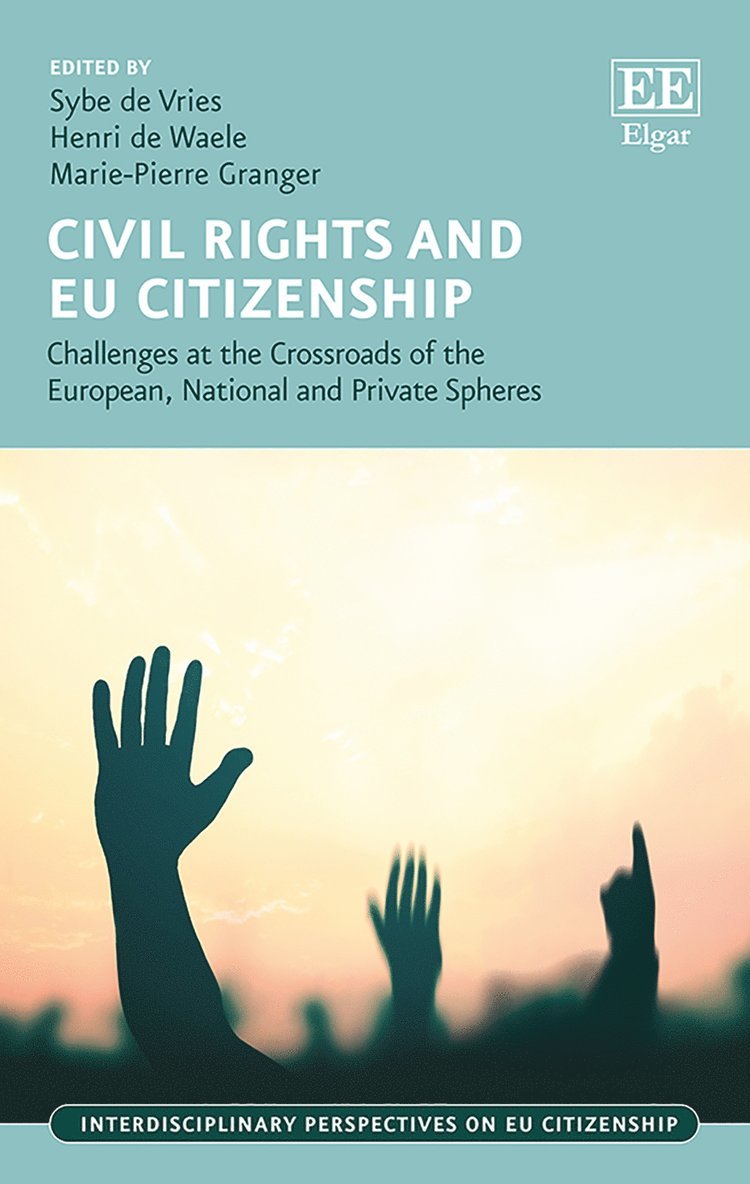
Split into two distinct thematic parts, it first evaluates relevant frameworks of civil rights protection, with special attention on enforcement mechanisms and the role of civil society organisations. Next, it engages extensively with a series of individual rights connected to EU citizenship. Comprising detailed studies on access to nationality, the right to free movement, non-discrimination, family life, data protection and the freedom of expression, this book maps the expanding role of European law in the national sphere. It identifies a number of challenges to core civil rights that the current supranational framework is at pains to address. The contributors suggest and develop several new ideas on how to take the EU integration project forward.
Civil Rights and EU Citizenship provides an innovative perspective on both the conceptual dimensions and the actual realities of rights-based citizenship which will be of interest to legal scholars, practitioners and policy-makers alike.
Contributors include: S. Adamo, P.J. Blanco, S. de Vries, H. de Waele, T. Dudek, M.-P. Granger, K. Irion, Á.E. Menéndez, J. Morijn, P. Phoa, O. Salat, H. van Eijken, J.G. Vega
2 846 kr
Skickas inom 5-8 vardagar
786 kr
Läs direkt efter köp
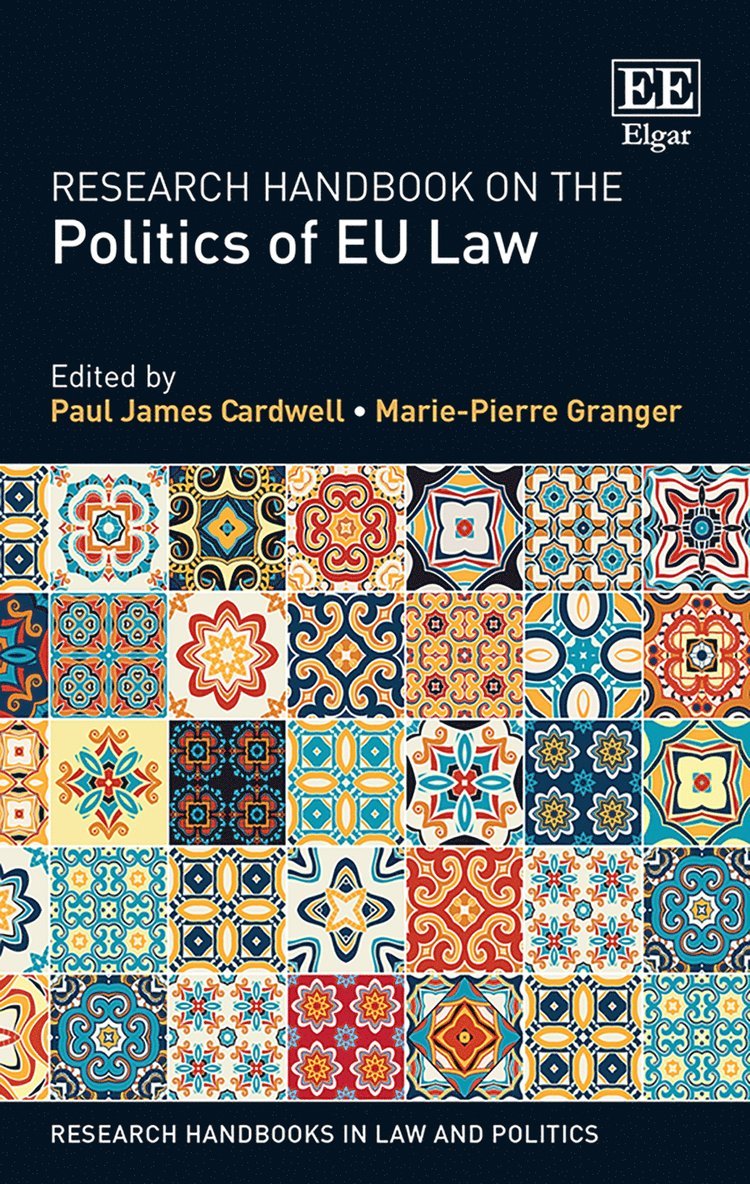
Expert contributors from international and interdisciplinary backgrounds set the politics of EU law in both a historical and contemporary context, exploring the relations between different EU institutions across a variety of substantive policy areas. Identifying the main sites of interaction between law and politics, chapters highlight key theoretical insights providing an in-depth understanding of the field. With up-to-date coverage of the latest developments, this Research Handbook analyses the impact of Brexit, economic and financial crises, migration crises and important trends for law and governance.
Discerning and forward-thinking, this Research Handbook will be key reading for students and scholars of European law, European politics, and those with an interest in exploring the interface between the two. Its accessible approach will also engage practitioners in EU law and politics, including lawyers and national government and EU institution officials.
Contributors include: A.S. Aldrich, K. Alexandris Polomarkakis, S. Bekker, M. Blauberger, J. Borg-Barthet, P.J. Cardwell, W.T. Daniel, R. Dickson, M. Everson, E. Fahey, A. Frese, M. Gaglia Bareli, M. Geelhoed, M.-P. Granger, A. Heindlmaier, E. Herlin-Karnell, F. Mendez, M. Mendez, E. Morgera, L. Parks, N. Pérez-Solórzano Borragán, M. Sánchez Barrueco, S. Saurugger, S. Smismans, F. Terpan, A. Tryfonidou, E. Tsioumani, R. Zahn
2 088 kr
Läs direkt efter köp
The Court of Justice of the European Union (CJEU) has started to implement what is arguably the most signi cant set of reforms since the Nice Treaty, with notably the doubling of the number of judges at the General Court and the disappearance of the Civil Service Tribunal. Controversies surrounding the process and outcomes of the reforms called for a broader re ection on the European Courts and the way they cope with old and new challenges. To this end, this volume brings together junior and seasoned academics and practitioners to take stock of the various aspects of these reforms and the overall functioning of the EU Judiciary, from comparative, ‘insider’, and ‘outsider’ perspectives.
Broadening and deepening our understanding of the reorganisation of the EU Judiciary, the contributors offer incisive analyses of reforms and evolutions, including:
– a critical appraisal of the reform process and the role and powers of the CJEU;– implications of the reforms for the Court of Justice and the General Court;– lessons from the practice of the now dismantled Civil Service Tribunal;– a re ection on the future Uni ed Patent Court;– an evaluation of the role of the CJEU’s members and staffs and their selection;– an insider’s perspective into the workings of the repeat players (Legal Services of the European Commission and of the European Parliament) and the parties’ lawyers;– an assessment of the procedural reforms before the Court of Justice and the General Court with a speci c focus on the PPU;– the unfolding and impact of the digital revolution (e-Curia) on the CJEU;– the challenges of the languages regime and legal reasoning before the CJEU.Comparative perspectives elucidate speci c judiciary reforms across Europe, including detailed analyses of developments at the European Court of Human Rights, the French Conseil Constitutionnel, and the Supreme Court of the United Kingdom.
As a timely assessment of the effects of recent reforms on the EU Courts’ decision-making practices, roles, and identities, and more broadly on the legitimacy of the EU and its institutions as a whole, this book is unparalleled. It will be of great value to practitioners engaged in EU litigation, scholars of European law and policymakers at EU institutions, and all those interested in judicial process and reform.
2 088 kr
Läs direkt efter köp
The Court of Justice of the European Union (CJEU) has started to implement what is arguably the most signi cant set of reforms since the Nice Treaty, with notably the doubling of the number of judges at the General Court and the disappearance of the Civil Service Tribunal. Controversies surrounding the process and outcomes of the reforms called for a broader re ection on the European Courts and the way they cope with old and new challenges. To this end, this volume brings together junior and seasoned academics and practitioners to take stock of the various aspects of these reforms and the overall functioning of the EU Judiciary, from comparative, ‘insider’, and ‘outsider’ perspectives.
Broadening and deepening our understanding of the reorganisation of the EU Judiciary, the contributors offer incisive analyses of reforms and evolutions, including:
– a critical appraisal of the reform process and the role and powers of the CJEU;– implications of the reforms for the Court of Justice and the General Court;– lessons from the practice of the now dismantled Civil Service Tribunal;– a re ection on the future Uni ed Patent Court;– an evaluation of the role of the CJEU’s members and staffs and their selection;– an insider’s perspective into the workings of the repeat players (Legal Services of the European Commission and of the European Parliament) and the parties’ lawyers;– an assessment of the procedural reforms before the Court of Justice and the General Court with a speci c focus on the PPU;– the unfolding and impact of the digital revolution (e-Curia) on the CJEU;– the challenges of the languages regime and legal reasoning before the CJEU.Comparative perspectives elucidate speci c judiciary reforms across Europe, including detailed analyses of developments at the European Court of Human Rights, the French Conseil Constitutionnel, and the Supreme Court of the United Kingdom.
As a timely assessment of the effects of recent reforms on the EU Courts’ decision-making practices, roles, and identities, and more broadly on the legitimacy of the EU and its institutions as a whole, this book is unparalleled. It will be of great value to practitioners engaged in EU litigation, scholars of European law and policymakers at EU institutions, and all those interested in judicial process and reform.
1 093 kr
Tillfälligt slut