Emmanuel Guinchard – författare
2 151 kr
Skickas inom 5-8 vardagar
1 787 kr
Skickas inom 10-15 vardagar
2 322 kr
Läs direkt efter köp
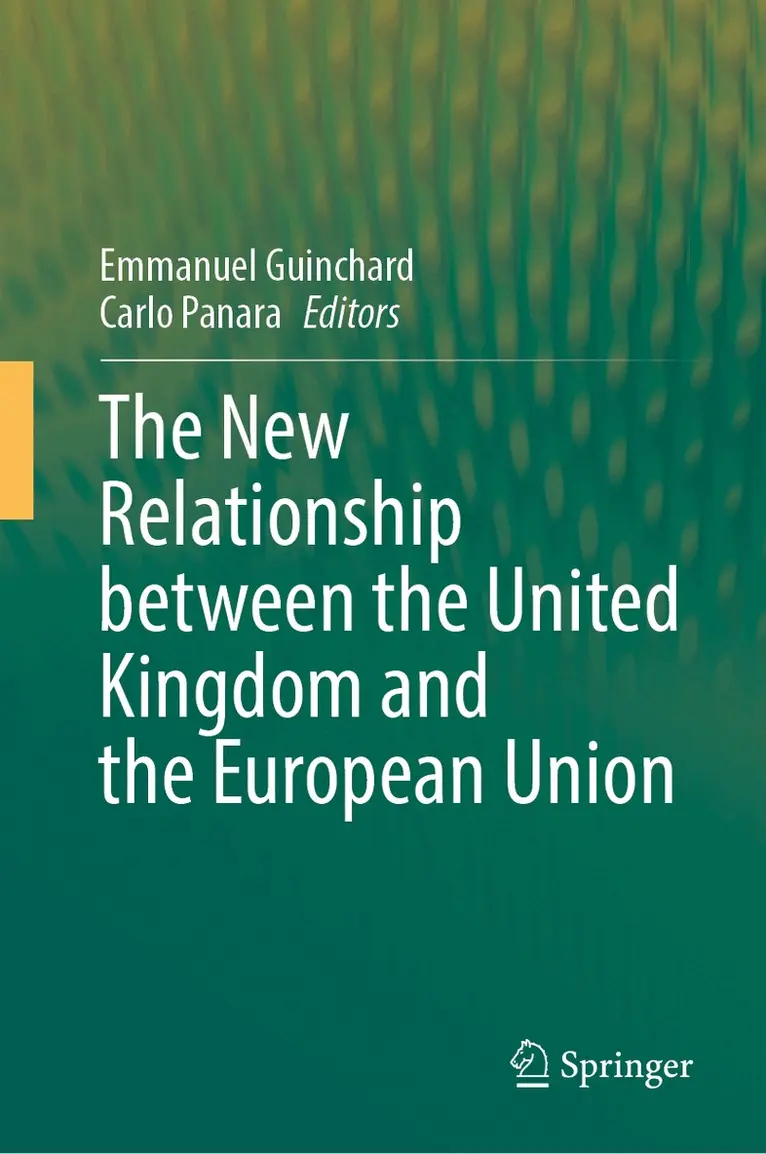
Brexit has reshuffled the cards of the relationship between the United Kingdom and the European Union. It is a one in a lifetime event, which ended nearly 50 years of EU Membership. EU law as such no longer applies in the United Kingdom and British citizens and companies no longer benefit from its advantages. Part of the previous regime has however been maintained (at times with amendments) through the series of treaties negotiated between the UK and the EU in 2019 and 2020, in particular the Trade and Cooperation Agreement of 2020, to which the 2023 Windsor Agreement can be added. The end result is a legal regime which is perhaps even more complex than EU law itself. This book aims to provide the reader with a clarification of this legal regime as well as provide context to it and suggestions to improve it. All key topics are covered, such as citizens of the EU in the UK and British citizens in the EU, trade in goods and in services, criminal justice, public procurement, Northern Ireland, the UK overseas territories, the dispute settlement, security and defence, international trade agreements of the UK post-Brexit, environmental protection, European civil justice, financial services, education and research, and the European offices of the UK local authorities and devolved administrations after Brexit. All the chapters follow, wherever possible, the same triadic structure. The first part looks at the regime prior to Brexit; the second part analyses the current regime; and the third part discusses ongoing and predictable trends. The concluding chapter attempts to identify some themes likely to impact on the forthcoming preparation of the 2026 review.
1 787 kr
Skickas inom 10-15 vardagar
2 088 kr
Läs direkt efter köp
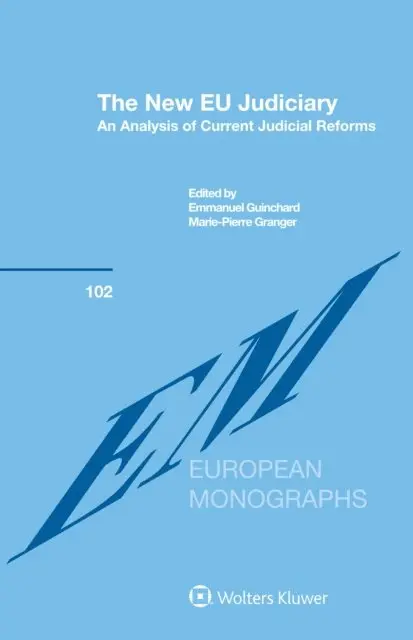
The Court of Justice of the European Union (CJEU) has started to implement what is arguably the most signi cant set of reforms since the Nice Treaty, with notably the doubling of the number of judges at the General Court and the disappearance of the Civil Service Tribunal. Controversies surrounding the process and outcomes of the reforms called for a broader re ection on the European Courts and the way they cope with old and new challenges. To this end, this volume brings together junior and seasoned academics and practitioners to take stock of the various aspects of these reforms and the overall functioning of the EU Judiciary, from comparative, ‘insider’, and ‘outsider’ perspectives.
Broadening and deepening our understanding of the reorganisation of the EU Judiciary, the contributors offer incisive analyses of reforms and evolutions, including:
– a critical appraisal of the reform process and the role and powers of the CJEU;– implications of the reforms for the Court of Justice and the General Court;– lessons from the practice of the now dismantled Civil Service Tribunal;– a re ection on the future Uni ed Patent Court;– an evaluation of the role of the CJEU’s members and staffs and their selection;– an insider’s perspective into the workings of the repeat players (Legal Services of the European Commission and of the European Parliament) and the parties’ lawyers;– an assessment of the procedural reforms before the Court of Justice and the General Court with a speci c focus on the PPU;– the unfolding and impact of the digital revolution (e-Curia) on the CJEU;– the challenges of the languages regime and legal reasoning before the CJEU.Comparative perspectives elucidate speci c judiciary reforms across Europe, including detailed analyses of developments at the European Court of Human Rights, the French Conseil Constitutionnel, and the Supreme Court of the United Kingdom.
As a timely assessment of the effects of recent reforms on the EU Courts’ decision-making practices, roles, and identities, and more broadly on the legitimacy of the EU and its institutions as a whole, this book is unparalleled. It will be of great value to practitioners engaged in EU litigation, scholars of European law and policymakers at EU institutions, and all those interested in judicial process and reform.
2 088 kr
Läs direkt efter köp
The Court of Justice of the European Union (CJEU) has started to implement what is arguably the most signi cant set of reforms since the Nice Treaty, with notably the doubling of the number of judges at the General Court and the disappearance of the Civil Service Tribunal. Controversies surrounding the process and outcomes of the reforms called for a broader re ection on the European Courts and the way they cope with old and new challenges. To this end, this volume brings together junior and seasoned academics and practitioners to take stock of the various aspects of these reforms and the overall functioning of the EU Judiciary, from comparative, ‘insider’, and ‘outsider’ perspectives.
Broadening and deepening our understanding of the reorganisation of the EU Judiciary, the contributors offer incisive analyses of reforms and evolutions, including:
– a critical appraisal of the reform process and the role and powers of the CJEU;– implications of the reforms for the Court of Justice and the General Court;– lessons from the practice of the now dismantled Civil Service Tribunal;– a re ection on the future Uni ed Patent Court;– an evaluation of the role of the CJEU’s members and staffs and their selection;– an insider’s perspective into the workings of the repeat players (Legal Services of the European Commission and of the European Parliament) and the parties’ lawyers;– an assessment of the procedural reforms before the Court of Justice and the General Court with a speci c focus on the PPU;– the unfolding and impact of the digital revolution (e-Curia) on the CJEU;– the challenges of the languages regime and legal reasoning before the CJEU.Comparative perspectives elucidate speci c judiciary reforms across Europe, including detailed analyses of developments at the European Court of Human Rights, the French Conseil Constitutionnel, and the Supreme Court of the United Kingdom.
As a timely assessment of the effects of recent reforms on the EU Courts’ decision-making practices, roles, and identities, and more broadly on the legitimacy of the EU and its institutions as a whole, this book is unparalleled. It will be of great value to practitioners engaged in EU litigation, scholars of European law and policymakers at EU institutions, and all those interested in judicial process and reform.