Marilyn Reizbaum - Böcker
Visar alla böcker från författaren Marilyn Reizbaum. Handla med fri frakt och snabb leverans.
5 produkter
5 produkter
1 603 kr
Skickas inom 10-15 vardagar
How does recent scholarship on ethnicity and race speak to the Jewish dimension of James Joyce's writing? What light has Joyce himself already cast on the complex question of their relationship? This book poses these questions in terms of models of the other drawn from psychoanalytic and cultural studies and from Jewish cultural studies, arguing that in Joyce the emblematic figure of otherness is "the Jew."The work of Emmanuel Levinas, Sander Gilman, Gillian Rose, Homi Bhabha, among others, is brought to bear on the literature, by Jews and non-Jews alike, that has forged the representation of Jews and Judaism in this century. Joyce was familiar with this literature, like that of Theodor Herzl. Joyce sholarship has largely neglected even these sources, however, including Max Nordau, who contributed significantly to the philosophy of Zionism, and the literature on the "psychobiology" of race—so prominent in the fin de siècle—all of which circulates around and through Joyce's depictions of Jews and Jewishness.Several Joyce scholars have shown the significance of the concept of the other for Joyce's work and, more recently, have employed a variety of approaches from within contemporary deliberations of the ideology of race, gender, and nationality to illuminate its impact. The author combines these approaches to demonstrate how any modern characterization of otherness must be informed by historical representations of "the Jew" and, consequently, by the history of anti-Semitism. She does so through a thematics and poetics of Jewishness that together form a discourse and method for Joyce's novel.
371 kr
Skickas inom 7-10 vardagar
How does recent scholarship on ethnicity and race speak to the Jewish dimension of James Joyce's writing? What light has Joyce himself already cast on the complex question of their relationship? This book poses these questions in terms of models of the other drawn from psychoanalytic and cultural studies and from Jewish cultural studies, arguing that in Joyce the emblematic figure of otherness is "the Jew."The work of Emmanuel Levinas, Sander Gilman, Gillian Rose, Homi Bhabha, among others, is brought to bear on the literature, by Jews and non-Jews alike, that has forged the representation of Jews and Judaism in this century. Joyce was familiar with this literature, like that of Theodor Herzl. Joyce sholarship has largely neglected even these sources, however, including Max Nordau, who contributed significantly to the philosophy of Zionism, and the literature on the "psychobiology" of race—so prominent in the fin de siècle—all of which circulates around and through Joyce's depictions of Jews and Jewishness.Several Joyce scholars have shown the significance of the concept of the other for Joyce's work and, more recently, have employed a variety of approaches from within contemporary deliberations of the ideology of race, gender, and nationality to illuminate its impact. The author combines these approaches to demonstrate how any modern characterization of otherness must be informed by historical representations of "the Jew" and, consequently, by the history of anti-Semitism. She does so through a thematics and poetics of Jewishness that together form a discourse and method for Joyce's novel.
1 808 kr
Skickas inom 10-15 vardagar
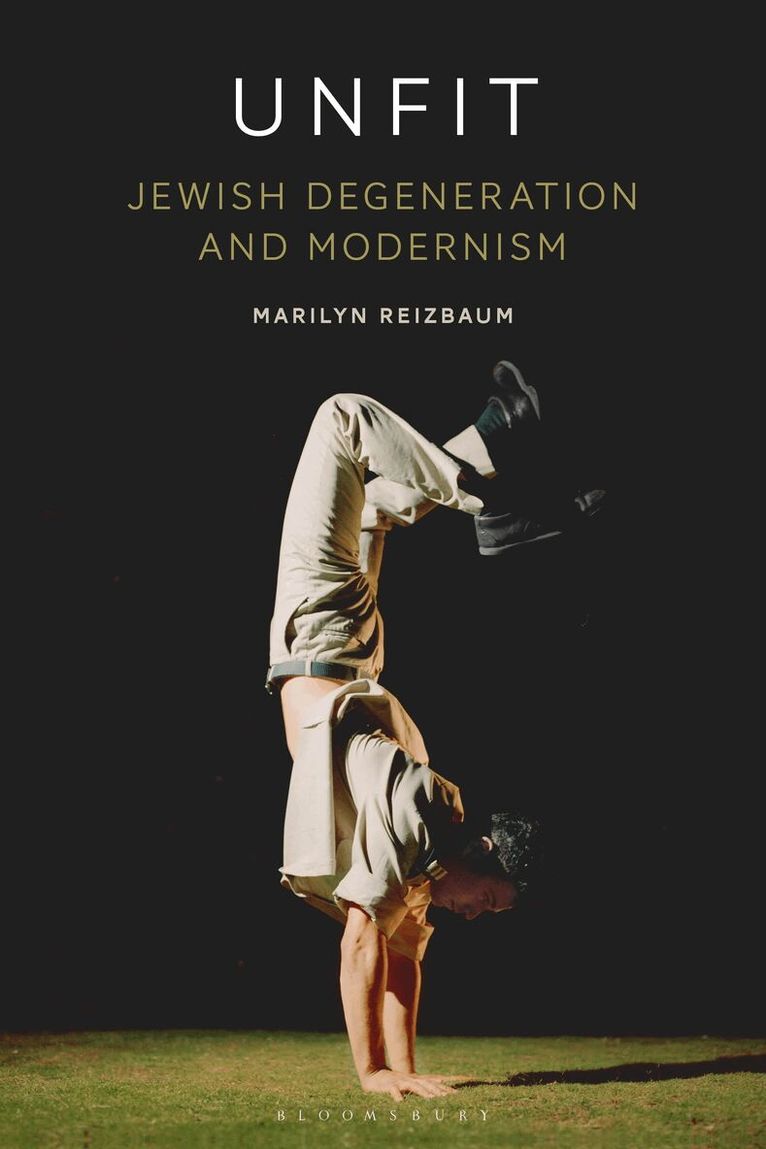
An obsession with “degeneration” was a central preoccupation of modernist culture at the start of the 20th century. Less attention has been paid to the fact that many of the key thinkers in “degeneration theory” – including Cesare Lombroso, Max Nordau, and Magnus Hirschfeld – were Jewish. Unfit: Jewish Degeneration and Modernism is the first in-depth study of the Jewish cultural roots of this strand of modernist thought and its legacies for modernist and contemporary culture. Marilyn Reizbaum explores how literary works from Bram Stoker’s Dracula, through James Joyce’s Ulysses to Pat Barker’s Regeneration trilogy, the crime movies of Mervyn LeRoy, and the photography of Claude Cahun and Adi Nes manifest engagements with ideas of degeneration across the arts of the 20th century. This is a major new study that sheds new light on modernist thought, art and culture.
515 kr
Skickas inom 10-15 vardagar
An obsession with “degeneration” was a central preoccupation of modernist culture at the start of the 20th century. Less attention has been paid to the fact that many of the key thinkers in “degeneration theory” – including Cesare Lombroso, Max Nordau, and Magnus Hirschfeld – were Jewish. Unfit: Jewish Degeneration and Modernism is the first in-depth study of the Jewish cultural roots of this strand of modernist thought and its legacies for modernist and contemporary culture. Marilyn Reizbaum explores how literary works from Bram Stoker’s Dracula, through James Joyce’s Ulysses to Pat Barker’s Regeneration trilogy, the crime movies of Mervyn LeRoy, and the photography of Claude Cahun and Adi Nes manifest engagements with ideas of degeneration across the arts of the 20th century. This is a major new study that sheds new light on modernist thought, art and culture.
437 kr
Skickas inom 10-15 vardagar
A collection of 18 essays, each of which offers commentary on one of the episodes in ""Ulysses"". Throughout, the common critical concern is with varying articulations of ""femininities"" and ""masculinities"" in Joyce's modernist epic. Each contributor attends to the extensive and various markings of gender in ""Ulysses"" and examines the ways in which such markings generate and en-gender other meanings. Gender is treated as a form of overwriting, in senses that include both excess and layering. In this collection the differentiations of ""masculine"" and ""feminine"", their definitions and elaborations, are approached in multiple ways and in changing contexts. Familial roles, labour assignments, perceptual modes, colonialist categories, sexualities, ethnicities, ways of knowing and learning, scents, tastes and eating habits are but a few of the cultural phenomena the scholars explore. The essays are also responsive to influential trends such as historicism, psychoanalysis and culture critique.