Mario Kaiser - Böcker
Visar alla böcker från författaren Mario Kaiser. Handla med fri frakt och snabb leverans.
3 produkter
3 produkter
1 093 kr
Skickas inom 10-15 vardagar
Kann Wissenschaft ein Gegenstand nicht nur für Erkenntniskritik und historische Analyse, sondern auch für die Soziologie sein? Lange hieß es: nein! Spätestens mit Robert K. Merton ändert sich dies: Seither beschäftigt sich eine Wissenschaftssoziologie mit der Frage, wie die Produktion, Verbreitung und Geltung gesicherten Wissens möglich sind.Das erhebliche Inventar an Theorien und Methoden, das zur Beantwortung dieser Frage zur Verfügung steht, verdankt sich der Soziologie als Heimatdisziplin der Wissenschaftssoziologie – angereichert hat sie es durch ihre Eingliederung in eine interdisziplinäre Wissenschaftsforschung sowie durch Kooperationen mit Nachbardisziplinen. Ob Diskurse oder Systeme, ob Organisationen oder Institutionen der Wissenschaft, ob Interaktionen mit Politik oder Öffentlichkeiten, ob neue Medien oder neue Arbeitsweisen, ob Nichtwissens- oder Technowissenschaftskulturen – wie die Beiträge des Handbuchs schlaglichtartig zeigen, widmet sich die heutige Wissenschaftssoziologie diesen und weiteren Themen mit hoher Auflösungskraft und Differenzierung. Die Wissenschaftssoziologie untersucht sowohl die heterogenen Bedingungen und ambivalenten Effekte der Produktion, Verbreitung und Geltung gesicherten Wissens als auch der zunehmenden Wissensbasierung der Gesellschaft insgesamt. Es spricht deshalb einiges dafür, dass sie heute als Bindestrichsoziologie mit gesellschaftsdiagnostischem Potenzial betrachtet werden kann.
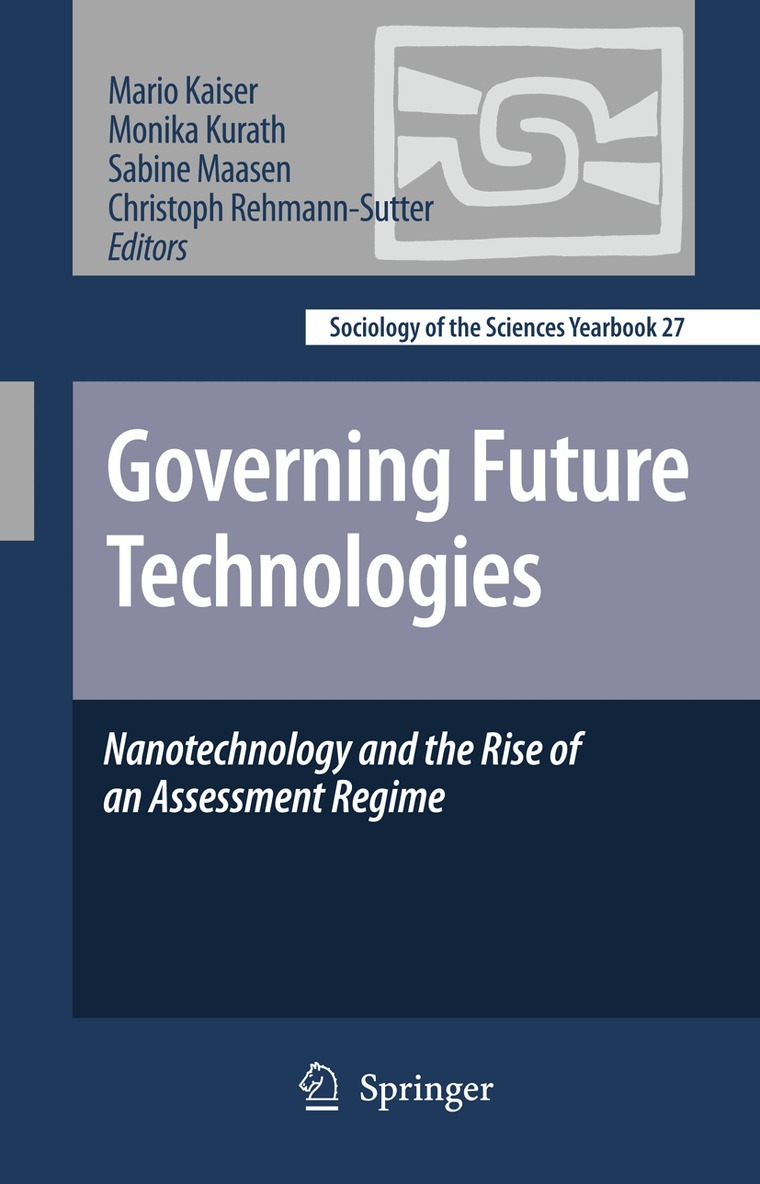
Governing Future Technologies
Nanotechnology and the Rise of an Assessment Regime
Inbunden, Engelska, 2009
1 064 kr
Skickas inom 10-15 vardagar
Nanotechnology has been the subject of extensive ‘assessment hype,’ unlike any previous field of research and development. A multiplicity of stakeholders have started to analyze the implications of nanotechnology: Technology assessment institutions around the world, non-governmental organizations, think tanks, re-insurance companies, and academics from science and technology studies and applied ethics have turned their attention to this growing field’s implications. In the course of these assessment efforts, a social phenomenon has emerged – a phenomenon the editors define as assessment regime.Despite the variety of organizations, methods, and actors involved in the evaluation and regulation of emerging nanotechnologies, the assessment activities comply with an overarching scientific and political imperative: Innovations are only welcome if they are assessed against the criteria of safety, sustainability, desirability, and acceptability. So far, such deliberations and reflections have played only a subordinate role. This book argues that with the rise of the nanotechnology assessment regime, however, things have changed dramatically: Situated at the crossroads of democratizing science and technology, good governance, and the quest for sustainable innovations, the assessment regime has become constitutive for technological development.The contributions in this book explore and critically analyse nanotechnology’s assessment regime: To what extent is it constitutive for technology in general, for nanotechnology in particular? What social conditions render the regime a phenomenon sui generis? And what are its implications for science and society?
Governing Future Technologies
Nanotechnology and the Rise of an Assessment Regime
Häftad, Engelska, 2012
1 064 kr
Skickas inom 10-15 vardagar
Nanotechnology has been the subject of extensive ‘assessment hype,’ unlike any previous field of research and development. A multiplicity of stakeholders have started to analyze the implications of nanotechnology: Technology assessment institutions around the world, non-governmental organizations, think tanks, re-insurance companies, and academics from science and technology studies and applied ethics have turned their attention to this growing field’s implications. In the course of these assessment efforts, a social phenomenon has emerged – a phenomenon the editors define as assessment regime.Despite the variety of organizations, methods, and actors involved in the evaluation and regulation of emerging nanotechnologies, the assessment activities comply with an overarching scientific and political imperative: Innovations are only welcome if they are assessed against the criteria of safety, sustainability, desirability, and acceptability. So far, such deliberations and reflections have played only a subordinate role. This book argues that with the rise of the nanotechnology assessment regime, however, things have changed dramatically: Situated at the crossroads of democratizing science and technology, good governance, and the quest for sustainable innovations, the assessment regime has become constitutive for technological development.The contributions in this book explore and critically analyse nanotechnology’s assessment regime: To what extent is it constitutive for technology in general, for nanotechnology in particular? What social conditions render the regime a phenomenon sui generis? And what are its implications for science and society?