Mark A. Nathan – författare
Visar alla böcker från författaren Mark A. Nathan. Handla med fri frakt och snabb leverans.
6 produkter
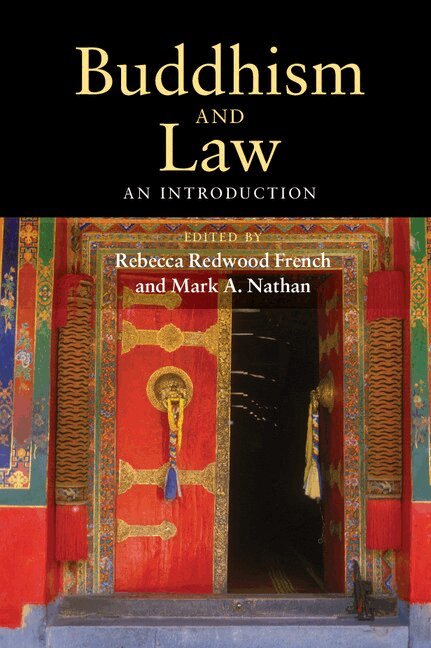
Buddhism and Law
An Introduction
Av Rebecca Redwood French, Mark A. Nathan
Inbunden, 2014
764 kr
Lägg i varukorg
As the first comprehensive study of Buddhism and law in Asia, this interdisciplinary volume challenges the concept of Buddhism as an apolitical religion without implications for law. Buddhism and Law draws on the expertise of the foremost scholars in Buddhist studies and in law to trace the legal …
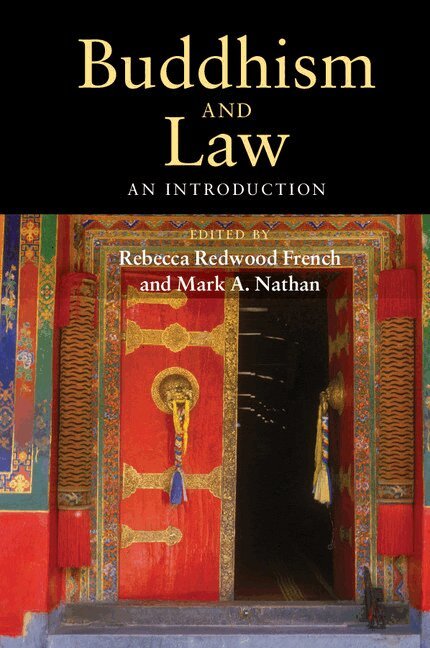
Buddhism and Law
An Introduction
Av Rebecca Redwood French, Mark A. Nathan
Häftad, 2014
499 kr
Lägg i varukorg
As the first comprehensive study of Buddhism and law in Asia, this interdisciplinary volume challenges the concept of Buddhism as an apolitical religion without implications for law. Buddhism and Law draws on the expertise of the foremost scholars in Buddhist studies and in law to trace the legal …
From the Mountains to the Cities
A History of Buddhist Propagation in Modern Korea
Häftad, 2021
300 kr
Lägg i varukorg
At the start of the twentieth century, the Korean Buddhist tradition was arguably at the lowest point in its 1,500-year history in the peninsula. Discriminatory policies and punitive measures imposed on the monastic community during the Chosŏn dynasty (1392–1910) had severely weakened Buddhist …
Buddhism and Law
An Introduction
Av Mark A. Nathan, Rebecca Redwood French
E-bok, 2014
606 kr
Lägg i varukorg
As the first comprehensive study of Buddhism and law in Asia, this interdisciplinary volume challenges the concept of Buddhism as an apolitical religion without implications for law. Buddhism and Law draws on the expertise of the foremost scholars in Buddhist studies and in law to trace the legal …
Buddhism and Law
An Introduction
Av Mark A. Nathan, Rebecca Redwood French
E-bok, 2014
620 kr
Lägg i varukorg
As the first comprehensive study of Buddhism and law in Asia, this interdisciplinary volume challenges the concept of Buddhism as an apolitical religion without implications for law. Buddhism and Law draws on the expertise of the foremost scholars in Buddhist studies and in law to trace the legal …
From the Mountains to the Cities
A History of Buddhist Propagation in Modern Korea
Inbunden, 2018
900 kr
Tillfälligt slut
At the start of the twentieth century, the Korean Buddhist tradition was arguably at the lowest point in its 1,500-year history in the peninsula. Discriminatory policies and punitive measures imposed on the monastic community during the Choson dynasty (1392–1910) had severely weakened Buddhist …