Mark Bauerlein – författare
Visar alla böcker från författaren Mark Bauerlein. Handla med fri frakt och snabb leverans.
6 produkter
6 produkter
955 kr
Skickas inom 7-10 vardagar
From the author team of the discipline's most widely used literature anthology, this accessible and instructive guide introduces students to the language of literary study.
Featuring an engaging and accessible writing style, this supplemental reference manual for the introductory student has over 400 entries and serves to demystify literature and the terms, techniques, and analysis tools that literary scholars use.
363 kr
Skickas inom 10-15 vardagar
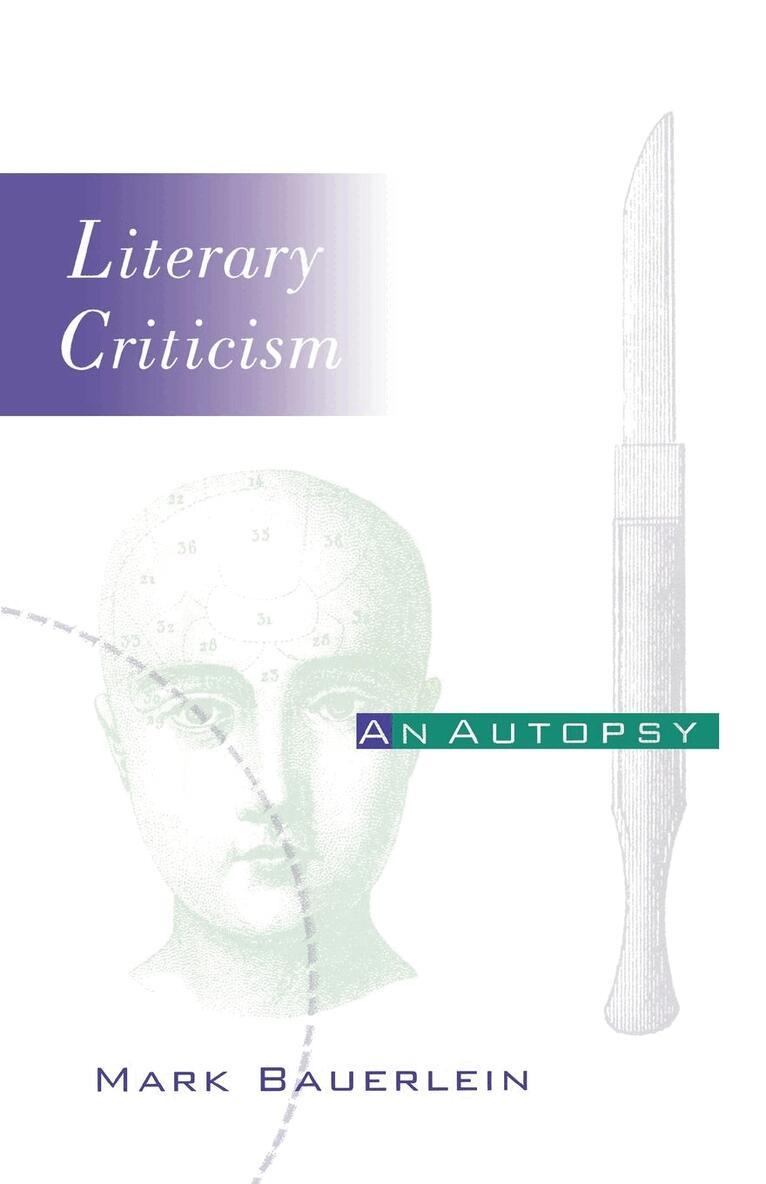
As the study of literature has extended to cultural contexts, critics have developed a language all their own. Yet, argues Mark Bauerlein, scholars of literature today are so unskilled in pertinent sociohistorical methods that they compensate by adopting cliches and catchphrases that serve as substitutes for information and logic. Thus by labeling a set of ideas an "ideology" they avoid specifying those ideas, or by saying that someone "essentializes" a concept they convey the air of decisive refutation. As long as a paper is generously sprinkled with the right words, clarification is deemed superfluous.Bauerlein contends that such usages only serve to signal political commitments, prove membership in subgroups, or appeal to editors and tenure committees, and that current textual practices are inadequate to the study of culture and politics they presume to undertake. His book discusses 23 commonly encountered terms-from "deconstruction" and "gender" to "problematize" and "rethink"-and offers a diagnosis of contemporary criticism through their analysis. He examines the motives behind their usage and the circumstances under which they arose and tells why they continue to flourish.A self-styled "handbook of counterdisciplinary usage," Literary Criticism: An Autopsy shows how the use of illogical, unsound, or inconsistent terms has brought about a breakdown in disciplinary focus. It is an insightful and entertaining work that challenges scholars to reconsider their choice of words-and to eliminate many from critical inquiry altogether.
100 kr
Tillfälligt slut
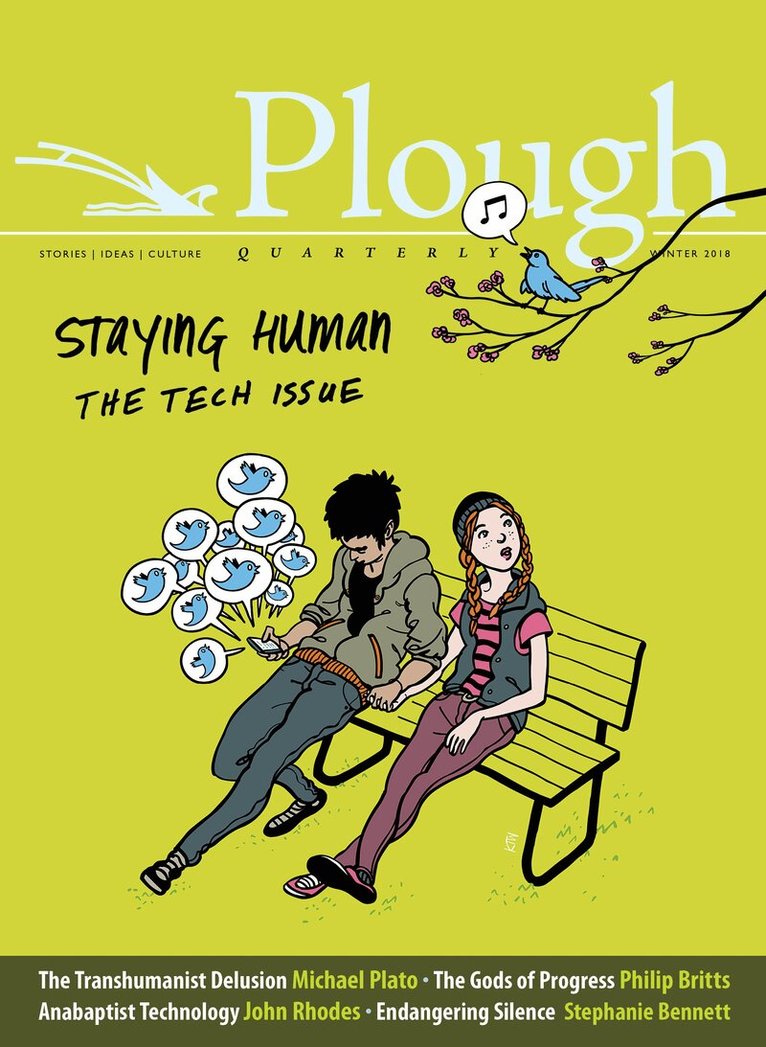
This issue of Plough Quarterly explores the effects of technology on human flourishing.Whether its artificial intelligence, genome editing, Big Tech monopolies, or social media–induced depression, we live in a world that is being reshaped by technology from the ground up. How do we stay human?This issue of Plough Quarterly addresses challenges ranging from the lure of transhumanism to the erosion of silence by the smartphone. Technophobia is no answer, our contributors agree, but neither is a refusal to tackle real dangers. They ask: Why not try living without a computer or a television? Why give tablets to children when Steve Jobs refused to give them to his kids? Why write using a keyboard when you could wield a fountain pen?Technological asceticism of this kind won’t solve society-wide dilemmas. But it can help us maintain the spiritual independence needed to respond to them rightly.Also in this issue: original poetry by Jacob Stratman; reviews of new books by Ian Johnson, Steve Roud, and Markus Rathey; insights from Wendell Berry, Viktor Frankl, Ivan Illich, Carl Sandburg, C. S. Lewis, Alfred Delp, and Christoph Blumhardt; and art by Pieter Bruegel the Elder, Jack Baumgartner, Nicholas Roerich, Rachel Newling, Kay Polk, Suellen McCrary, Stephen Scott Young, Jie Wei Zhou, Kiéra Malone, Torkel Pettersson, Mari Rast, Albrecht Dürer, René Magritte, and Kyle T. Webster.Plough Quarterly features stories, ideas, and culture for people eager to put their faith into action. Each issue brings you in-depth articles, interviews, poetry, book reviews, and art to help you put Jesus’ message into practice and find common cause with others.
218 kr
Skickas inom 5-8 vardagar
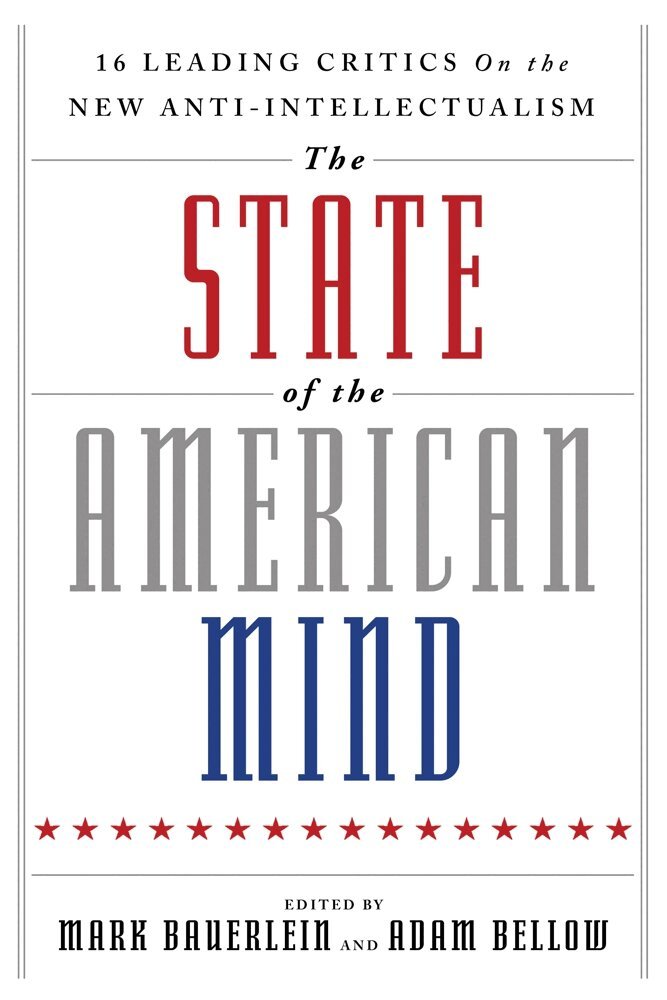
In 1987, Allan Bloom’s The Closing of the American Mind was published; a wildly popular book that drew attention to the shift in American culture away from the tenants that made America-and Americans-unique. Bloom focused on a breakdown in the American curriculum, but many sensed that the issue affected more than education. The very essence of what it meant to be an American was disappearing. That was over twenty years ago. Since then, the United States has experienced unprecedented wealth, more youth enrolling in higher education than ever before, and technology advancements far beyond what many in the 1980s dreamed possible. And yet, the state of the American mind seems to have deteriorated further. Benjamin Franklin’s “self-made man” has become a man dependent on the state. Independence has turned into self-absorption. Liberty has been curtailed in the defense of multiculturalism. In order to fully grasp the underpinnings of this shift away from the self-reliant, well-informed American, editors Mark Bauerlein and Adam Bellow have brought together a group of cultural and educational experts to discuss the root causes of the decline of the American mind. The writers of these fifteen original essays include E. D. Hirsch, Nicholas Eberstadt, and Dennis Prager, as well as Daniel Dreisbach, Gerald Graff, Richard Arum, Robert Whitaker, David T. Z. Mindich, Maggie Jackson, Jean Twenge, Jonathan Kay, Ilya Somin, Steve Wasserman, Greg Lukianoff, and R. R. Reno. Their essays are compiled into three main categories: States of Mind: Indicators of Intellectual and Cognitive DeclineThese essays broach specific mental deficiencies among the population, including lagging cultural IQ, low Biblical literacy, poor writing skills, and over-medication. Personal and Cognitive Habits/InterestsThese essays turn to specific mental behaviors and interests, including avoidance of the news, short attention spans, narcissism, and conspiracy obsessions. National ConsequencesThese essays examine broader trends affecting populations and institutions, including rates of entitlement claims, voting habits, and a low-performing higher education system. The State of the American Mind is both an assessment of our current state as well as a warning, foretelling what we may yet become. For anyone interested in the intellectual fate of America, The State of the American Mind offers an accessible and critical look at life in America and how our collective mind is faring.
222 kr
Tillfälligt slut
At the beginning of the twentieth century, Atlanta was regarded as the gateway to the new, enlightened and racially progressive South. White business owners employed black workers and made their fortunes, while black leaders led congregations, edited periodicals, and taught classes. But in 1906, in a bitter gubernatorial contest, Georgia politicians played the race card and white supremacists trumpeted a "Negro crime" scare. Seizing on rumors of black predation against white women, they launched a campaign based on fears of miscegenation and white subservience. Atlanta slipped into a climate of racial phobia and sexual hysteria that culminated in a bloody riot, which stymied race relations for fifty years. Drawing on new archival materials, Mark Bauerlein traces the origins, development and brutal climax of Atlanta's descent into hatred and violence in the fateful summer of 1906. "Negrophobia" is history at its best--a dramatic moment in time impeccably recreated in a suspenseful narrative, focusing on figures such as Booker T. Washington and W. E. B.DuBois; author Margaret Mitchell and future NAACP leader Walter White; and an assortment of black victims and white politicians who witnessed and participated in this American tragedy.
157 kr
Tillfälligt slut
In 1906, in a bitter gubernatorial contest, Georgia politicians played the race card and white supremacists trumpeted a Negro crime scare. Drawing on new archival materials, Mark Bauerlein traces the origins, development and brutal climax of Atlanta's descent into hatred and violence in that fateful summer. Negrophobia is history at its best--a dramatic moment in time impeccably recreated in a suspenseful narrative.