Mark E. Caprio - Böcker
Visar alla böcker från författaren Mark E. Caprio. Handla med fri frakt och snabb leverans.
5 produkter
5 produkter
1 790 kr
Skickas inom 7-10 vardagar
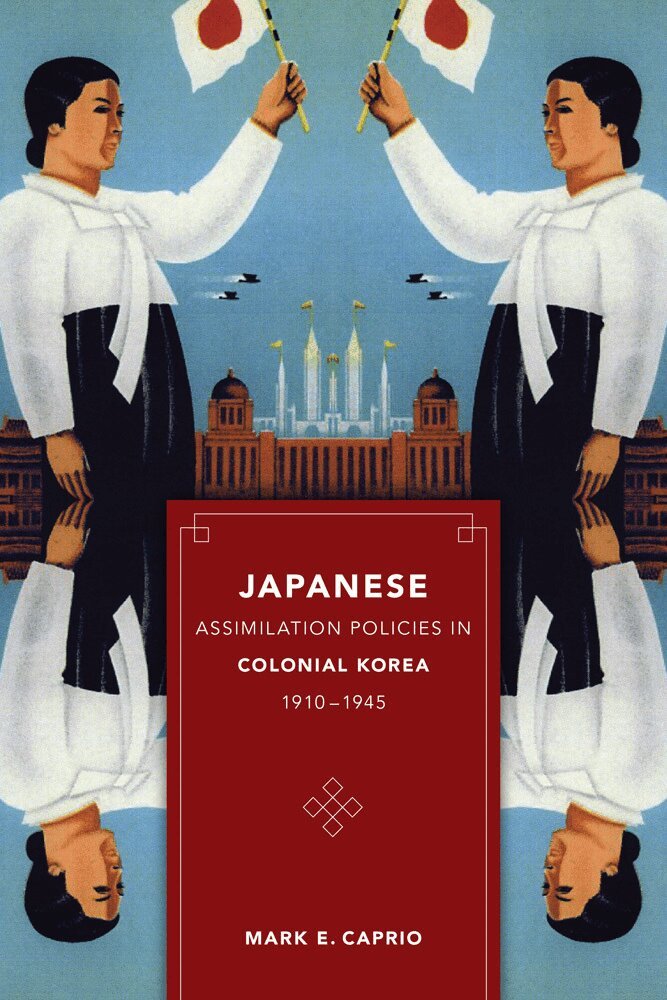
From the late nineteenth century, Japan sought to incorporate the Korean Peninsula into its expanding empire. Japan took control of Korea in 1910 and ruled it until the end of World War II. During this colonial period, Japan advertised as a national goal the assimilation of Koreans into the Japanese state. It never achieved that goal. Mark Caprio here examines why Japan's assimilation efforts failed. Utilizing government documents, personal travel accounts, diaries, newspapers, and works of fiction, he uncovers plenty of evidence for the potential for assimilation but very few practical initiatives to implement the policy.Japan's early history of colonial rule included tactics used with peoples such as the Ainu and Ryukyuan that tended more toward obliterating those cultures than to incorporating the people as equal Japanese citizens. Following the annexation of Taiwan in 1895, Japanese policymakers turned to European imperialist models, especially those of France and England, in developing strengthening its plan for assimilation policies. But, although Japanese used rhetoric that embraced assimilation, Japanese people themselves, from the top levels of government down, considered Koreans inferior and gave them few political rights. Segregation was built into everyday life. Japanese maintained separate communities in Korea, children were schooled in two separate and unequal systems, there was relatively limited intermarriage, and prejudice was ingrained. Under these circumstances, many Koreans resisted assimilation. By not actively promoting Korean-Japanese integration on the ground, Japan's rhetoric of assimilation remained just that.
517 kr
Skickas inom 7-10 vardagar
From the late nineteenth century, Japan sought to incorporate the Korean Peninsula into its expanding empire. Japan took control of Korea in 1910 and ruled it until the end of World War II. During this colonial period, Japan advertised as a national goal the assimilation of Koreans into the Japanese state. It never achieved that goal. Mark Caprio here examines why Japan's assimilation efforts failed. Utilizing government documents, personal travel accounts, diaries, newspapers, and works of fiction, he uncovers plenty of evidence for the potential for assimilation but very few practical initiatives to implement the policy.Japan's early history of colonial rule included tactics used with peoples such as the Ainu and Ryukyuan that tended more toward obliterating those cultures than to incorporating the people as equal Japanese citizens. Following the annexation of Taiwan in 1895, Japanese policymakers turned to European imperialist models, especially those of France and England, in developing strengthening its plan for assimilation policies. But, although Japanese used rhetoric that embraced assimilation, Japanese people themselves, from the top levels of government down, considered Koreans inferior and gave them few political rights. Segregation was built into everyday life. Japanese maintained separate communities in Korea, children were schooled in two separate and unequal systems, there was relatively limited intermarriage, and prejudice was ingrained. Under these circumstances, many Koreans resisted assimilation. By not actively promoting Korean-Japanese integration on the ground, Japan's rhetoric of assimilation remained just that.
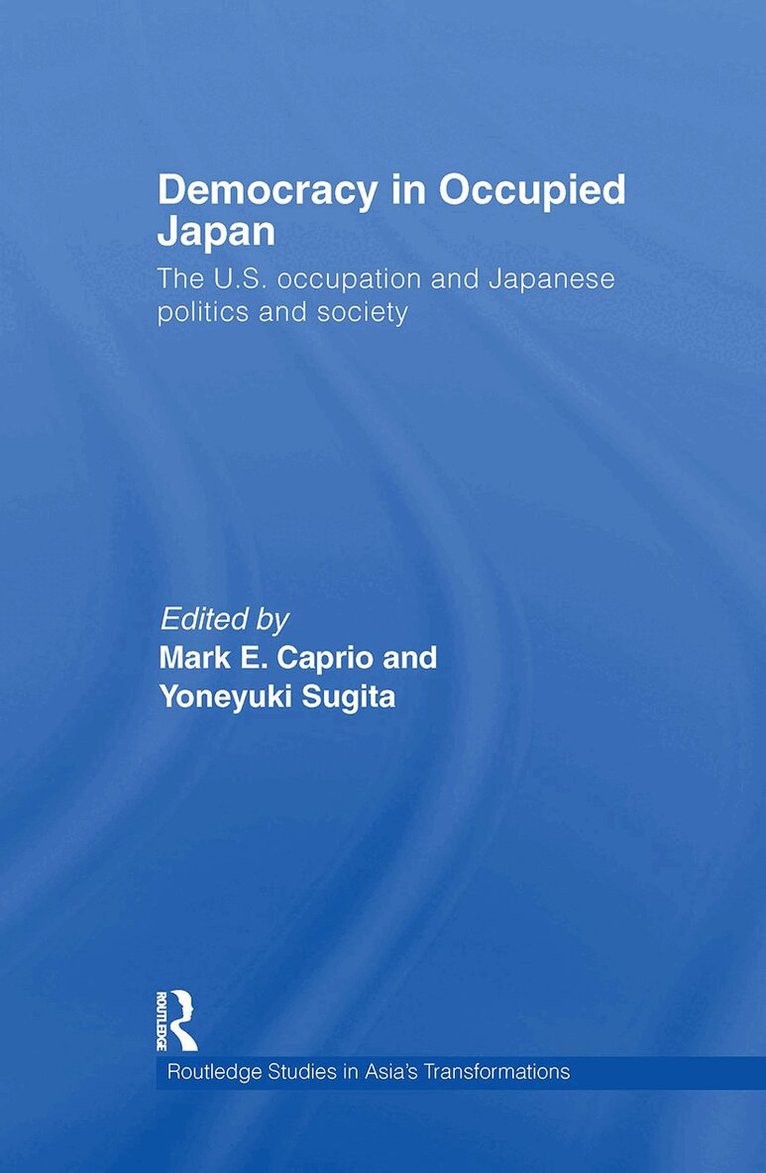
Democracy in Occupied Japan
The U.S. Occupation and Japanese Politics and Society
Inbunden, Engelska, 2007
1 473 kr
Skickas inom 10-15 vardagar
With expert contributions from both the US and Japan, this book examines the legacies of the US Occupation on Japanese politics and society, and discusses the long-term impact of the Occupation on contemporary Japan. Focusing on two central themes – democracy and the interplay of US-initiated reforms and Japan's endogenous drive for democratization and social justice – the contributors address key questions:How did the US authorities and the Japanese people define democracy? To what extent did America impose their notions of democracy on Japan? How far did the Japanese pursue impulses toward reform, rooted in their own history and values? Which reforms were readily accepted and internalized, and which were ultimately subverted by the Japanese as impositions from outside? These questions are tackled by exploring the dynamics of the reform process from the three perspectives of innovation, continuity and compromise, specifically determining the effect that this period made to Japanese social, economic, and political understanding. Critically examines previously unexplored issues that influenced postwar Japan such as the effect of labour and healthcare legislation, textbook revision, and minority policy. Illuminating contemporary Japan, its achievements, its potential and its quandaries, this book will appeal to students and scholars of Japanese-US relations, Japanese history and Japanese politics.
Democracy in Occupied Japan
The U.S. Occupation and Japanese Politics and Society
Häftad, Engelska, 2009
454 kr
Skickas inom 10-15 vardagar
With expert contributions from both the US and Japan, this book examines the legacies of the US Occupation on Japanese politics and society, and discusses the long-term impact of the Occupation on contemporary Japan. Focusing on two central themes – democracy and the interplay of US-initiated reforms and Japan's endogenous drive for democratization and social justice – the contributors address key questions:How did the US authorities and the Japanese people define democracy? To what extent did America impose their notions of democracy on Japan? How far did the Japanese pursue impulses toward reform, rooted in their own history and values? Which reforms were readily accepted and internalized, and which were ultimately subverted by the Japanese as impositions from outside? These questions are tackled by exploring the dynamics of the reform process from the three perspectives of innovation, continuity and compromise, specifically determining the effect that this period made to Japanese social, economic, and political understanding. Critically examines previously unexplored issues that influenced postwar Japan such as the effect of labour and healthcare legislation, textbook revision, and minority policy. Illuminating contemporary Japan, its achievements, its potential and its quandaries, this book will appeal to students and scholars of Japanese-US relations, Japanese history and Japanese politics.
3 565 kr
Kommande
This Handbook examines relations between Japan and Korea from1850 to the present.Analysing almost 200 years of Japan and Korea relations uncovers a relationship that has been both congenial and confrontational. This Handbook examines these relations in this age of modernity by dividing it into four periods: precolonial relations (1850–1905); colonial rule; (1905–1945) postwar/post-liberation (1945–1965); and the modern period (1965–present). With contributions from an international team of experts, the themes of confrontation and cooperation run throughout the book, with chapters focusing on key aspects such as influences from international powers, the era of Japanese colonization, Japan’s relations with the two Koreas and nationalism and historical revisionism.As a comprehensive overview of diplomatic and cultural conflicts and co-operations between Japan and Korea in the modern era, this Handbook will be a valuable resource to students and scholars of Korean and Japanese history, politics, culture and international relations.