Mark Garrett Cooper - Böcker
Visar alla böcker från författaren Mark Garrett Cooper. Handla med fri frakt och snabb leverans.
6 produkter
6 produkter
1 077 kr
Skickas inom 7-10 vardagar
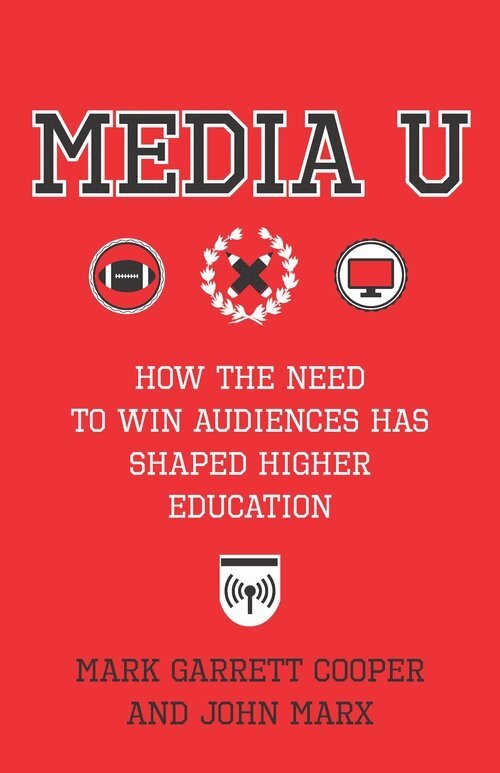
Are homecoming games and freshman composition, Twitter feeds and scholarly monographs really mortal enemies? Media U presents a provocative rethinking of the development of American higher education centered on the insight that universities are media institutions. Tracing over a century of media history and the academy, Mark Garrett Cooper and John Marx argue that the fundamental goal of the American research university has been to cultivate audiences and convince them of its value.Media U shows how universities have appropriated new media technologies to convey their message about higher education, the aims of research, and campus life. The need to create an audience stamps each of the university’s steadily proliferating disciplines, shapes its structure, and determines its division of labor. Cooper and Marx examine how the research university has sought to inform publics and convince them of its value to American society, from the rise of football and Great Books programs in the early twentieth century through a midcentury communications complex linking big science, New Criticism, and design, from the co-option of 1960s student activist media through the early-twenty-first-century reception of MOOCs and the latest promises of technological disruption. The book considers the ways in which universities have used media platforms to reconcile national commitments to equal opportunity with corporate capitalism as well as the vexed relationship of democracy and hierarchy. By exploring how media engagement brought the American university into being and continues to shape academic labor, Media U presents essential questions and resources for reimagining the university and confronting its future.
275 kr
Skickas inom 7-10 vardagar
Are homecoming games and freshman composition, Twitter feeds and scholarly monographs really mortal enemies? Media U presents a provocative rethinking of the development of American higher education centered on the insight that universities are media institutions. Tracing over a century of media history and the academy, Mark Garrett Cooper and John Marx argue that the fundamental goal of the American research university has been to cultivate audiences and convince them of its value.Media U shows how universities have appropriated new media technologies to convey their message about higher education, the aims of research, and campus life. The need to create an audience stamps each of the university’s steadily proliferating disciplines, shapes its structure, and determines its division of labor. Cooper and Marx examine how the research university has sought to inform publics and convince them of its value to American society, from the rise of football and Great Books programs in the early twentieth century through a midcentury communications complex linking big science, New Criticism, and design, from the co-option of 1960s student activist media through the early-twenty-first-century reception of MOOCs and the latest promises of technological disruption. The book considers the ways in which universities have used media platforms to reconcile national commitments to equal opportunity with corporate capitalism as well as the vexed relationship of democracy and hierarchy. By exploring how media engagement brought the American university into being and continues to shape academic labor, Media U presents essential questions and resources for reimagining the university and confronting its future.
296 kr
Skickas inom 7-10 vardagar
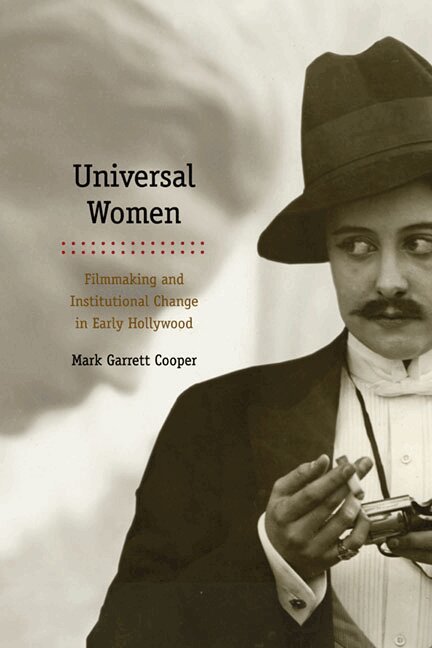
A Choice Outstanding Academic Title, 2011.Between 1912 and 1919, the Universal Film Manufacturing Company credited eleven women with directing at least 170 films, but by the mid-1920s all of these directors had left Universal and only one still worked in the film industry at all. Two generations of cinema historians have either overlooked or been stymied by the mystery of why Universal first systematically supported and promoted women directors and then abruptly reversed that policy. In this trailblazing study, Mark Garrett Cooper approaches the phenomenon as a case study in how corporate movie studios interpret and act on institutional culture in deciding what it means to work as a man or woman. In focusing on issues of institutional change, Cooper challenges interpretations that explain women's exile from the film industry as the inevitable result of a transhistorical sexism or as an effect of a broadly cultural revision of gendered work roles. Drawing on a range of historical and sociological approaches to studying corporate institutions, Cooper examines the relationship between institutional organization and aesthetic conventions during the formative years when women filmmakers such as Ruth Ann Baldwin, Cleo Madison, Ruth Stonehouse, Elise Jane Wilson, and Ida May Park directed films for Universal.
617 kr
Skickas inom 10-15 vardagar
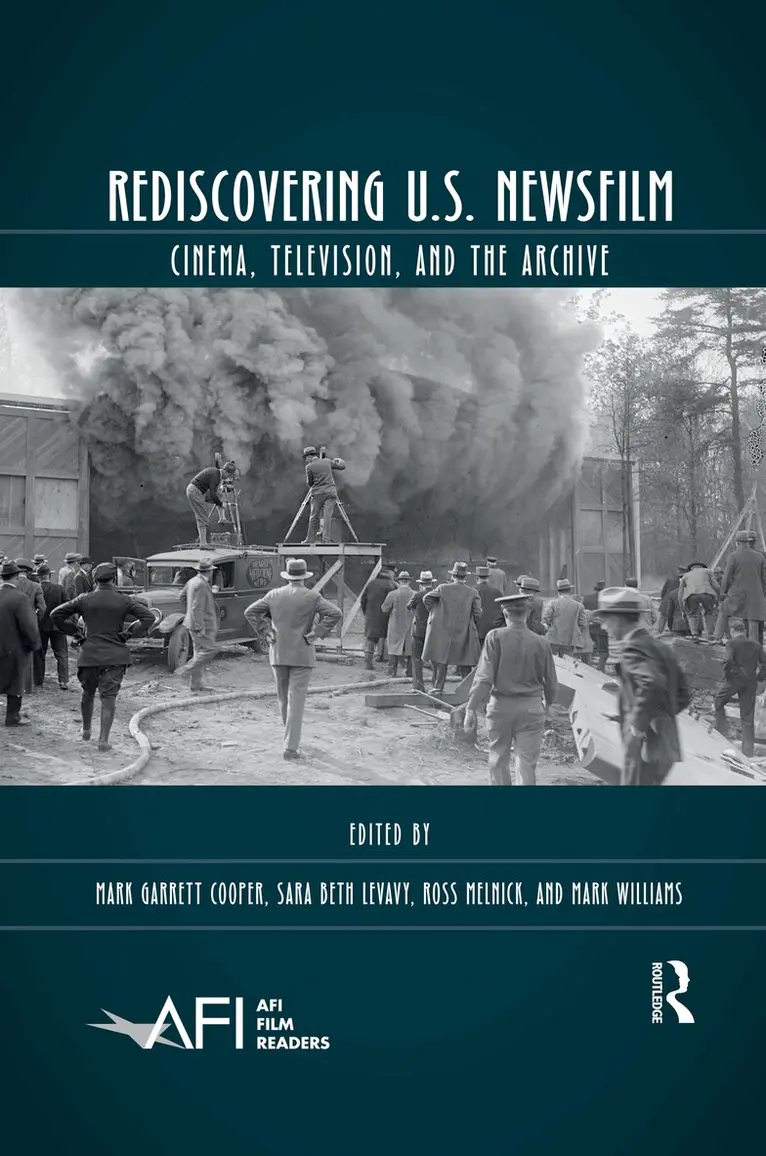
The twentieth century generated tens of thousands of hours of American newsfilm but not the scholarly apparatus necessary to analyze and contextualize them. Assembling new approaches to the study of U.S. newsfilm in cinema and television, this book makes a long overdue critical intervention in the field of film and media studies by addressing the format’s inherent intermediality; its mediation of "events" for local, national, and transnational communities; its distinctive archival legacies; and, consequently, its integral place in film and television studies more broadly. This collection brings fresh, contemporary methodologies and analysis to bear on a vast amount of material that has languished in relative obscurity for far too long.
283 kr
Skickas inom 7-10 vardagar
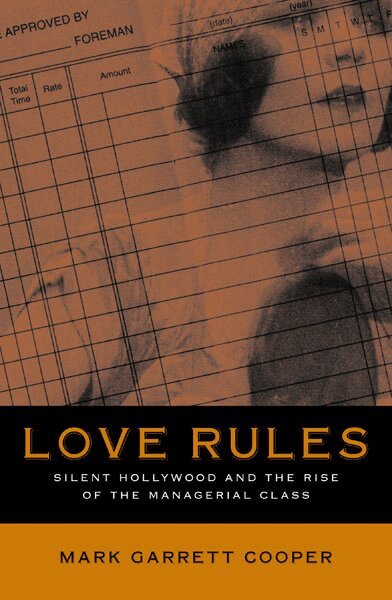
Traces the surprising connections between silent films and the rise of bureaucracyArguing for a sweeping new consideration of the shift from print to cinema as a governing system for organizing modern American social relations, this book uncovers an intimate connection between Hollywood romances of the silent era and the empowerment of a managerial class. During the 1910s and 1920s, American movies told love stories through what rapidly became ubiquitous images. Again and again, silent features showed lovers separated by seeming happenstance and reunited as if by magical forces. Mark Garrett Cooper argues that this “magic” implies the expertise of the corporate movie studio with its hierarchies of professional experts. In other words, the Hollywood love story amounts to a managerial technique. Through close study of such films as Birth of a Nation, Enoch Arden, The Crowd, Why Change Your Wife? and The Jazz Singer, Love Rules shows how cinematic romance offers an object lesson in how to arrange American society-a lesson that implies that such work can be accomplished only by a managerial class.Love Rules offers a boldly original account of how the Hollywood feature film supplanted the “imagined community” of print culture and, in doing so, played a key role in the transformation of American mass culture.
2 088 kr
Skickas inom 10-15 vardagar
The twentieth century generated tens of thousands of hours of American newsfilm but not the scholarly apparatus necessary to analyze and contextualize them. Assembling new approaches to the study of U.S. newsfilm in cinema and television, this book makes a long overdue critical intervention in the field of film and media studies by addressing the format’s inherent intermediality; its mediation of "events" for local, national, and transnational communities; its distinctive archival legacies; and, consequently, its integral place in film and television studies more broadly. This collection brings fresh, contemporary methodologies and analysis to bear on a vast amount of material that has languished in relative obscurity for far too long.