Mark Henrickson – författare
Visar alla böcker från författaren Mark Henrickson. Handla med fri frakt och snabb leverans.
16 produkter
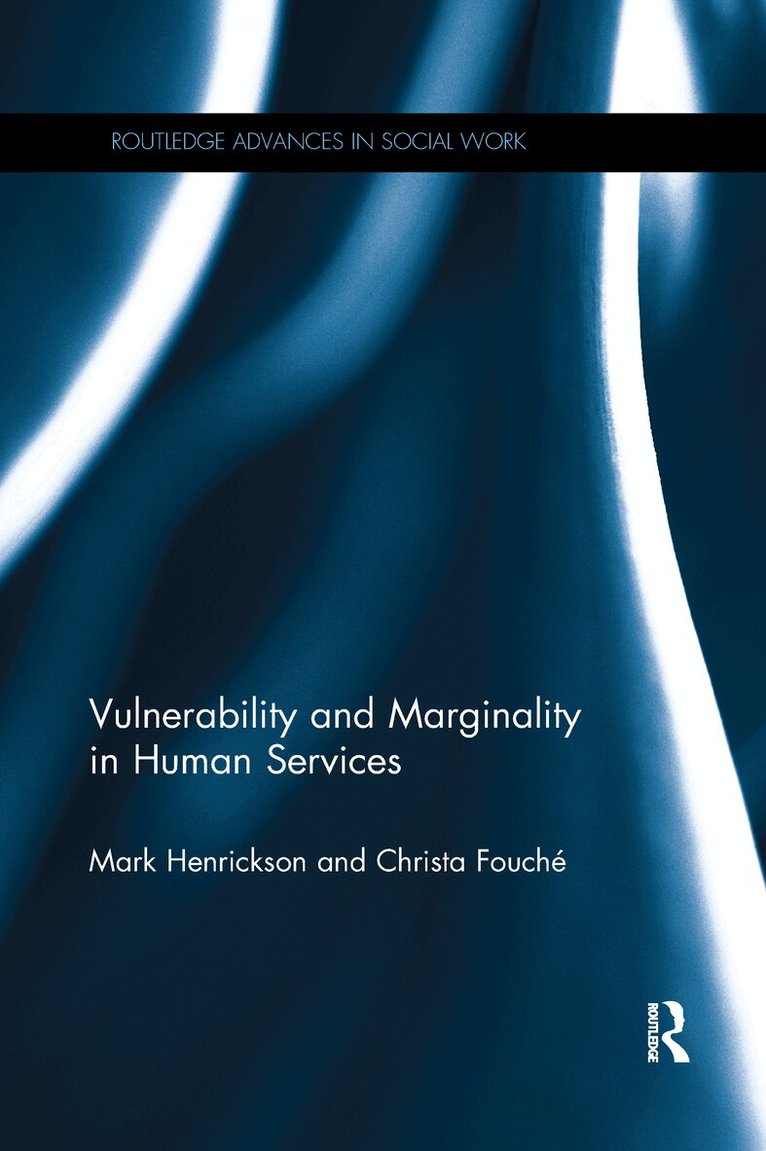
Vulnerability and Marginality in Human Services
Av Mark Henrickson, Christa Fouché
Häftad, 2020
646 kr
Lägg i varukorg
Vulnerability has traditionally been conceived as a dichotomised status, where an individual by reason of a personal characteristic is classified as vulnerable or not. However, vulnerability is not static, and most, if not all, people are vulnerable at some time in their lives. Similarly, …
Vulnerability and Marginality in Human Services
Av Christa Fouche, Mark Henrickson
E-bok, 2017
762 kr
Lägg i varukorg
Vulnerability has traditionally been conceived as a dichotomised status, where an individual by reason of a personal characteristic is classified as vulnerable or not. However, vulnerability is not static, and most, if not all, people are vulnerable at some time in their lives. Similarly, …
Vulnerability and Marginality in Human Services
Av Christa Fouche, Mark Henrickson
E-bok, 2017
785 kr
Lägg i varukorg
Vulnerability has traditionally been conceived as a dichotomised status, where an individual by reason of a personal characteristic is classified as vulnerable or not. However, vulnerability is not static, and most, if not all, people are vulnerable at some time in their lives. Similarly, …
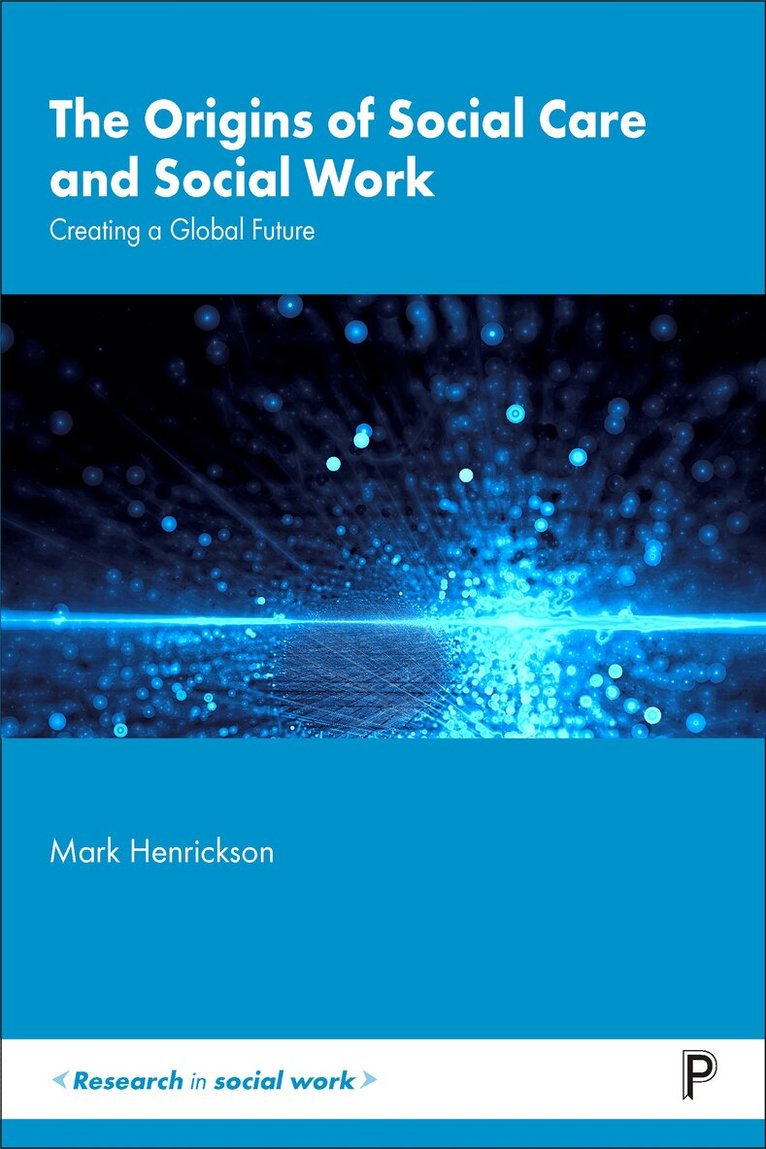
Origins of Social Care and Social Work
Creating a Global Future
Inbunden, 2022
1046 kr
Lägg i varukorg
European and North American notions of helping - or managing - poor and marginalised people have deep roots in religious texts and traditions which continue to influence contemporary social policy and social work practice in ways which many do not realise.Bringing together interdisciplinary …
Origins of Social Care and Social Work
Creating a Global Future
Häftad, 2024
404 kr
Lägg i varukorg
European and North American notions of helping - or managing - poor and marginalised people have deep roots in religious texts and traditions which continue to influence contemporary social policy and social work practice in ways which many do not realise.Bringing together interdisciplinary …
HIV, Sex and Sexuality in Later Life
Av Mark Henrickson, Casey Charles m. fl.
Häftad, 2024
416 kr
Lägg i varukorg
Following the development of anti-retroviral therapies (ARVs), many people affected by HIV in the 1980s and 1990s have now been living with the condition for decades.Drawing on perspectives from leading scholars in Bangladesh, Canada, Hong Kong, New Zealand, Switzerland, Ukraine, the UK and the US, …
HIV, Sex and Sexuality in Later Life
Av Mark Henrickson, Casey Charles m. fl.
Inbunden, 2022
810 kr
Lägg i varukorg
Following the development of anti-retroviral therapies (ARVs), many people affected by HIV in the 1980s and 1990s have now been living with the condition for decades.Drawing on perspectives from leading scholars in Bangladesh, Canada, Hong Kong, New Zealand, Switzerland, Ukraine, the UK and the US, …
HIV, Sex and Sexuality in Later Life
Av Tetyana Semigina, Kan Diana Kwok m. fl.
E-bok, 2022
444 kr
Lägg i varukorg
Following the development of anti-retroviral therapies (ARVs), many people affected by HIV in the 1980s and 1990s have now been living with the condition for decades. Drawing on perspectives from leading scholars in Bangladesh, Canada, Hong Kong, New Zealand, Switzerland, Ukraine, the UK and the …
HIV, Sex and Sexuality in Later Life
Av Tetyana Semigina, Kan Diana Kwok m. fl.
E-bok, 2022
439 kr
Lägg i varukorg
Following the development of anti-retroviral therapies (ARVs), many people affected by HIV in the 1980s and 1990s have now been living with the condition for decades. Drawing on perspectives from leading scholars in Bangladesh, Canada, Hong Kong, New Zealand, Switzerland, Ukraine, the UK and the …
Vulnerability and Marginality in Human Services
Av Mark Henrickson, Christa Fouché
Inbunden, 2017
2521 kr
Lägg i varukorg
Vulnerability has traditionally been conceived as a dichotomised status, where an individual by reason of a personal characteristic is classified as vulnerable or not. However, vulnerability is not static, and most, if not all, people are vulnerable at some time in their lives. Similarly, …
Social Work Education
Voices from the Asia Pacific
Av Carolyn Noble, Mark Henrickson
Häftad, 2013
350 kr
Lägg i varukorg
In this second edition we hear four new voices, from Cambodia, Fiji, Japan and Vietnam, together with revised and updated chapters from social work educators in Australia, China, Hong Kong, India, Korea, Nepal, and New Zealand.
Social Work Field Education and Supervision Across Asia Pacific
Av Carolyn Noble, Mark Henrickson
Häftad, 2022
308 kr
Lägg i varukorg
Pushing Boundaries in Social Work Around the World, Vol. 2
Policy and Global Perspectives
Av Mark Henrickson, Darla Spence Coffey
Häftad, 2025
551 kr
Lägg i varukorg
This book provides examples of how social workers have pushed back against neoliberalism, attempts to co-opt or silence social workers, and reproduce philosophical and ethical assumptions that divide humans from each other and from the natural world.This is the second book of a two-volume set that …
Pushing Boundaries in Social Work Around the World, Vol. 2
Policy and Global Perspectives
Av Darla Spence Coffey, Mark Henrickson
E-bok, 2025
710 kr
Lägg i varukorg
This book provides examples of how social workers have pushed back against neoliberalism, attempts to co-opt or silence social workers, and reproduce philosophical and ethical assumptions that divide humans from each other and from the natural world.This is the second book of a two-volume set that …
Pushing Boundaries in Social Work Around the World, Vol. 1
Women, Children and Isms
Av Mark Henrickson, Darla Spence Coffey
Häftad, 2025
551 kr
Lägg i varukorg
This book provides examples of how social workers have pushed back against civic and private corporate powers that attempt to control women, children, racialised and stigmatised groups, migrants, and indigenous peoples, and public policy agendas that continue to vulnerabilise and marginalise …
Pushing Boundaries in Social Work Around the World, Vol. 1
Women, Children and Isms
Av Darla Spence Coffey, Mark Henrickson
E-bok, 2025
710 kr
Lägg i varukorg
This book provides examples of how social workers have pushed back against civic and private corporate powers that attempt to control women, children, racialised and stigmatised groups, migrants, and indigenous peoples, and public policy agendas that continue to vulnerabilise and marginalise …