Mark J. Nyvlt – författare
Visar alla böcker från författaren Mark J. Nyvlt. Handla med fri frakt och snabb leverans.
4 produkter
4 produkter
Inbunden, Engelska, 2011
1 527 kr
Skickas inom 10-15 vardagar
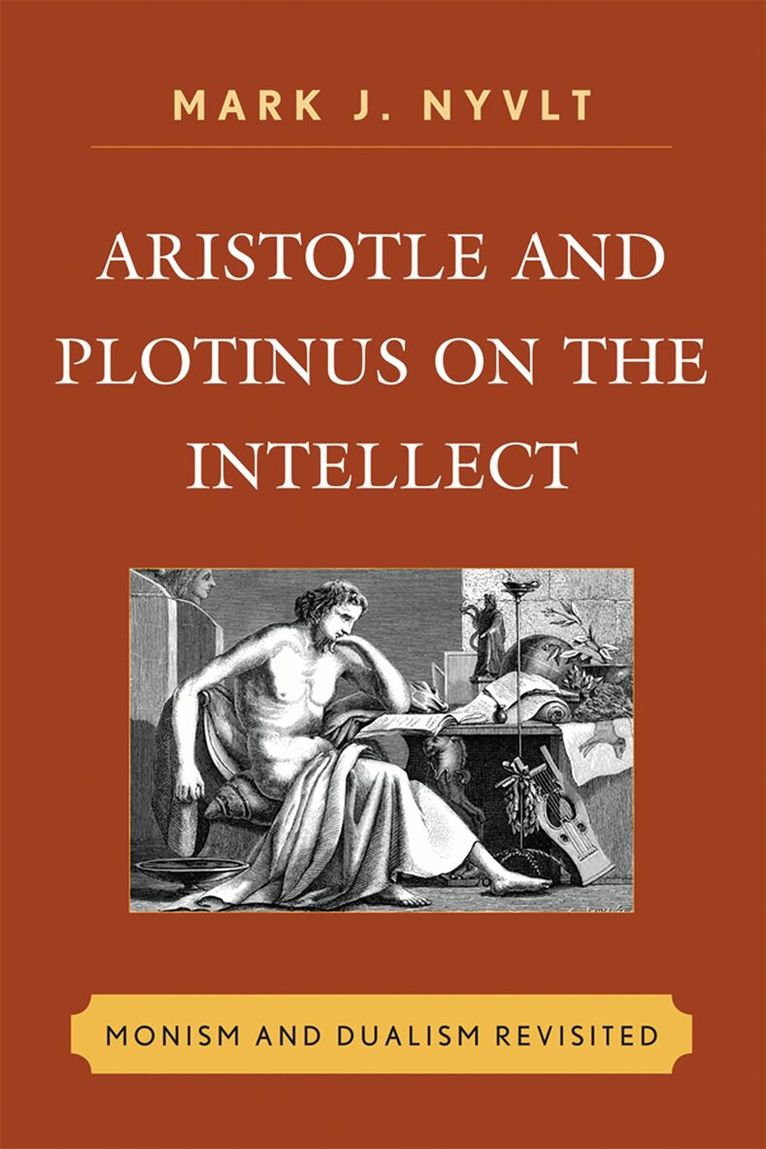
This book emphasizes that Aristotle was aware of the philosophical attempt to subordinate divine Intellect to a prior and absolute principle. Nyvlt argues that Aristotle transforms the Platonic doctrine of Ideal Numbers into an astronomical account of the unmoved movers, which function as the multiple intelligible content of divine Intellect. Thus, within Aristotle we have in germ the Plotinian doctrine that the intelligibles are within the Intellect. While the content of divine Intellect is multiple, it does not imply that divine Intellect possesses a degree of potentiality, given that potentiality entails otherness and contraries. Rather, the very content of divine Intellect is itself; it is Thought Thinking Itself. The pure activity of divine Intellect, moreover, allows for divine Intellect to know the world, and the acquisition of this knowledge does not infect divine Intellect with potentiality. The status of the intelligible object(s) within divine Intellect is pure activity that is identical with divine Intellect itself, as T. De Koninck and H. Seidl have argued. Therefore, the intelligible objects within divine Intellect are not separate entities that determine divine Intellect, as is the case in Plotinus.
Del 3 - Foro Di Studi Avanzati
Odyssey of Eidos
Reflections on Aristotle's Response to Plato
Häftad, Engelska, 2023
274 kr
Skickas inom 5-8 vardagar
Del 3 - Foro Di Studi Avanzati
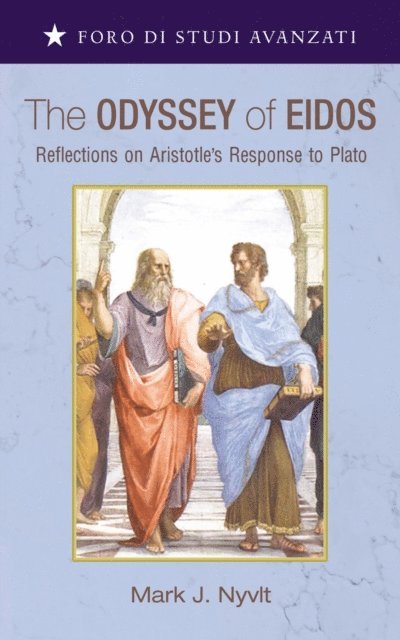
Odyssey of Eidos
Reflections on Aristotle's Response to Plato
Inbunden, Engelska, 2023
409 kr
Skickas inom 5-8 vardagar
E-bok
Engelska, 2023455 kr
Läs direkt efter köp
Aristotle sets the horizons of our inquiry: What is it when we say we know something? And is the object of knowledge a universal or particular [tode ti] object? Aristotle''s critique of Plato''s theory of form/Forms in light of his notion of actuality has generated a variety of topics that frame our inquiry: "Understanding Eidos as Form in the Works of Aristotle as Plato''s Critical Student"; "Aristotle on Plato''s Forms as Causes"; "Notes on the Relationship between Plato''s Parmenides and Aristotle''s Metaphysics Alpha"; "''Separate'' and ''Inactive''? Aristotle''s Most Challenging Critique of Plato''s ''Forms''"; "Too Much Unity in a City Is Destructive of the City: Aristotle against Plato''s Unification Project of the Polis"; "Aristotle on the Soul as Actuality"; "Delphic Piety in the De Anima of Alexander of Aphrodisias"; "Aristotle and Plotinus: Act and Potency and the Two Acts"; and "Al-Fārābīon Habit and Imagination." Here, the Peripatetic readings of form and actuality are parsed from the precipice of historical, analytic, and continental approaches to the mind/language/object problem, with advocacy of the importance of Aristotle''s contribution to this inquiry for the present age.