• Fri frakt över 249 kr
  • •
  • Snabba leveranser
  • •
  • Billiga böcker
Kundservice

Du är på sajten för privatpersoner.

Företag, bibliotek eller offentlig verksamhet?

Du handlar på classic.bokus.com, där alla dina funktioner finns intakta.
Till classic.bokus.com
Bokus logotyp. Gå till startsidan.
  • Erbjudanden
  • Nyheter
  • Student
  • Topplistor
  • Barn & ungdom
  • Bokus Play
  • E-böcker
  • Pocketböcker
  • Spel & pussel

10% rabatt på allt med kod: NYSTART10 →

Sidfot

Mina sidor

    Hjälp

    • Kundservice
    • Vanliga frågor och svar
    • Frakt och leverans
    • Retur vid ångerrätt
    • Reklamera vara
    • Betalning
    • Köpvillkor
    • Allmänna villkor
    • Information om webbplatsens tillgänglighet

    Om Bokus

    • Om oss
    • Pressrum
    • För studenter
    • För företag
    • För bibliotek och offentlig verksamhet
    • För leverantörer
    • Hållbarhet

    Populärt

    • Aktuella erbjudanden
    • Presentkort
    • Studentlitteratur
    • Nya böcker
    • Topplistor
    • Signerade böcker
    • Engelska böcker

    Inspiration

    • Boktips
    • BookTok
    • Populära bokserier
    • Barnbokskaraktärer
    • Populära författare
    Logotyp för Bokus
    Följ oss på Facebook (extern länk)Följ oss på Instagram (extern länk)Följ oss på YouTube (extern länk)Följ oss på TikTok (extern länk)
    bokus @ CookiesAnpassa cookiesIntegritetspolicyKöpvillkor
    Till Citymail hemsida (extern länk)Till Budbee hemsida (extern länk)Till Postnord hemsida (extern länk)Till Schenker hemsida (extern länk)Till Early Bird hemsida (extern länk)Till Walleys hemsida (extern länk)
    1. Filosofi och religion
    2. Filosofi
    3. Filosofiska discipliner

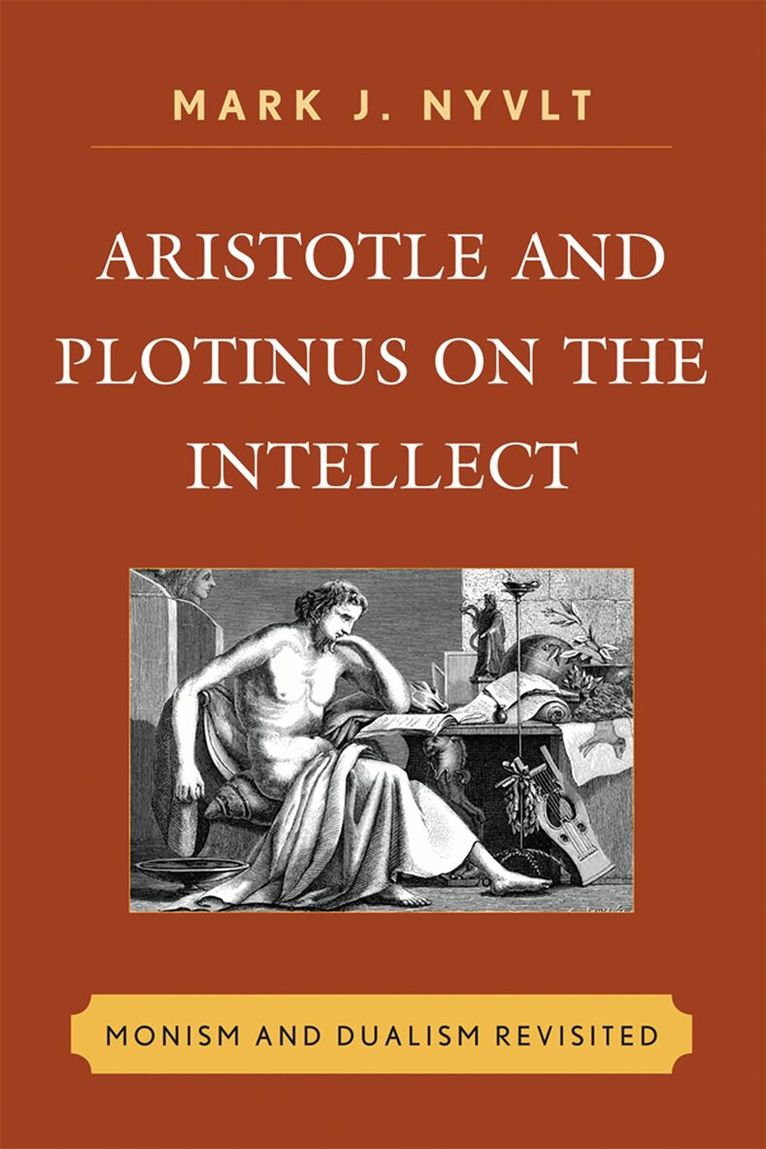
    Aristotle and Plotinus on the Intellect

    Monism and Dualism Revisited

    AvMark J. Nyvlt

    Inbunden, Engelska, 2011

    1 533 kr

    Beställningsvara. Skickas inom 10-15 vardagar. Fri frakt över 249 kr.

    Beskrivning

    This book emphasizes that Aristotle was aware of the philosophical attempt to subordinate divine Intellect to a prior and absolute principle. Nyvlt argues that Aristotle transforms the Platonic doctrine of Ideal Numbers into an astronomical account of the unmoved movers, which function as the multiple intelligible content of divine Intellect. Thus, within Aristotle we have in germ the Plotinian doctrine that the intelligibles are within the Intellect. While the content of divine Intellect is multiple, it does not imply that divine Intellect possesses a degree of potentiality, given that potentiality entails otherness and contraries. Rather, the very content of divine Intellect is itself; it is Thought Thinking Itself. The pure activity of divine Intellect, moreover, allows for divine Intellect to know the world, and the acquisition of this knowledge does not infect divine Intellect with potentiality. The status of the intelligible object(s) within divine Intellect is pure activity that is identical with divine Intellect itself, as T. De Koninck and H. Seidl have argued. Therefore, the intelligible objects within divine Intellect are not separate entities that determine divine Intellect, as is the case in Plotinus.

    Produktinformation

    • Utgivningsdatum:2011-11-17
    • Mått:164 x 239 x 23 mm
    • Vikt:576 g
    • Format:Inbunden
    • Språk:Engelska
    • Antal sidor:278
    • Förlag:Bloomsbury Publishing Plc
    • ISBN:9780739167755

    Utforska kategorier

    • Filosofiska discipliner inom Filosofi och religion

    Mer om författaren

    Mark J. Nyvlt is an assistant professor at the Dominican University College, Ottawa.

    Recensioner i media

    The philosophical ambitions of this study are wonderful. . . .Nyvlt tries to avoid broad strokes and boldly strides into the scholarly controversies concerning his historical study. . . .Nyvlt’s study will be a stimulating. . . .read for scholars interested in the philosophy of God and in ancient philosophy. Let us look forward to his future work.

    Innehållsförteckning

    • Foreword by Klaus BrinkmannAcknowledgementsIntroductionPart IChapter One: Aristotle On The Platonic Two-Principles Doctrine:The One and The Indefinite Dyad Chapter Two: Speusippus and Aristotle Chapter Three: Aristotelian Henology Chapter Four: The Anatomy of Aristotle’s Metaphysics Chapter Five: The Unmoved Mover and The Simplicity and Priority of nou:V: Metaphysics L 7, De Anima III.4-5, and Metaphysics L 9 Part IIChapter Six: The =Epistrofhv of the One and The Derivation of nou:V Chapter Seven: Plotinus On Phantasia: Phantasia As The Home Of Self-Consciousness Within The Soul Chapter Eight: Alcinous and Alexander On The Intelligibles Within nou:V Chapter Nine: Plotinus On The Simplicity of nou:V: An Appropriation And Critique Of Aristotle’s Noetic Doctrine Conclusion