Marta Brković Dodig - Böcker
Visar alla böcker från författaren Marta Brković Dodig. Handla med fri frakt och snabb leverans.
4 produkter
4 produkter
Routledge Companion to Games in Architecture and Urban Planning
Tools for Design, Teaching, and Research
Häftad, Engelska, 2021
691 kr
Skickas inom 10-15 vardagar
The Routledge Companion to Games in Architecture and Urban Planning aims to identify and showcase the rich diversity of games, including: simulation games, game-like approaches, game scenarios, and gamification processes for teaching/learning, design and research in architecture and urban planning.This collection creates an opportunity for exchange and reflection on games in architecture and urban planning. Theoretical discussions, descriptive accounts, and case studies presenting empirical evidence are featured; combined with reflections, constructive critical analysis, discussions of connections, and various influences on this field.Twenty-eight international contributors have come together from eleven countries and five continents to present their studies on games in architecture and urban planning, pose new questions, and advocate for innovative perspectives.
Routledge Companion to Games in Architecture and Urban Planning
Tools for Design, Teaching, and Research
Inbunden, Engelska, 2019
3 256 kr
Skickas inom 10-15 vardagar
The Routledge Companion to Games in Architecture and Urban Planning aims to identify and showcase the rich diversity of games, including: simulation games, game-like approaches, game scenarios, and gamification processes for teaching/learning, design and research in architecture and urban planning.This collection creates an opportunity for exchange and reflection on games in architecture and urban planning. Theoretical discussions, descriptive accounts, and case studies presenting empirical evidence are featured; combined with reflections, constructive critical analysis, discussions of connections, and various influences on this field.Twenty-eight international contributors have come together from eleven countries and five continents to present their studies on games in architecture and urban planning, pose new questions, and advocate for innovative perspectives.
2 325 kr
Kommande
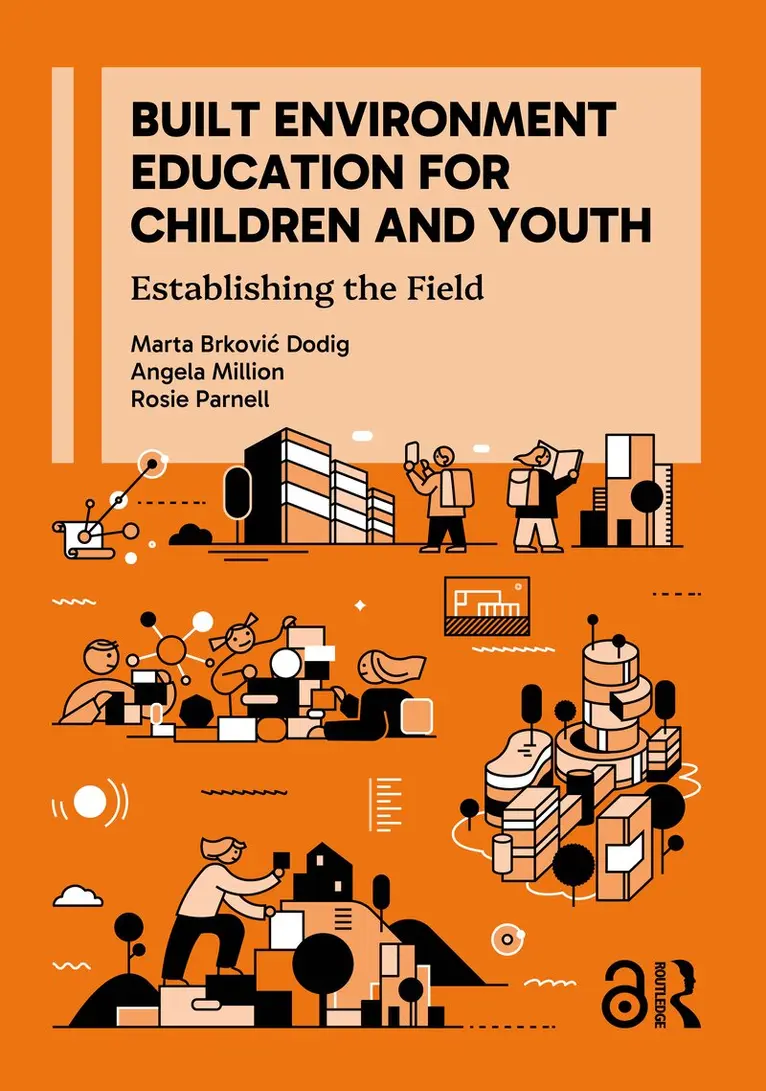
How do children learn about the spaces in which they live, play, and grow? Built Environment Education for Children and Youth is an essential guide to a dynamic yet fragmented field, bringing together educators, architects, spatial designers and planners, as well as cultural practitioners working in museums, schools, universities, architecture centres, professional bodies, networks and private practice, to explore how young people can meaningfully engage with their built environments. By engaging with the built environment, young people develop agency and spatial literacy that support their sense of belonging, underpin civic participation, and open up more equitable possibilities for shaping the places they inhabit. Grounded in a broad international evidence base—drawing on an analysis of 385+ Built Environment Education initiatives in institutional settings, 30 practitioner interviews and 15 in-depth studies—this book reflects BEE state of the art practice across world regions and contexts. Depicting innovative pedagogies and real-world examples, it charts a path towards a more cohesive and inclusive approach to built environment education and Baukultur. Whether you're an educator, designer, planner or policymaker, this engaging resource will inspire you to shape the future of built environment education— by strengthening the next generation’s capacity to understand and shape place, recognising children as spatial agents in their own right.
575 kr
Kommande
How do children learn about the spaces in which they live, play, and grow? Built Environment Education for Children and Youth is an essential guide to a dynamic yet fragmented field, bringing together educators, architects, spatial designers and planners, as well as cultural practitioners working in museums, schools, universities, architecture centres, professional bodies, networks and private practice, to explore how young people can meaningfully engage with their built environments. By engaging with the built environment, young people develop agency and spatial literacy that support their sense of belonging, underpin civic participation, and open up more equitable possibilities for shaping the places they inhabit. Grounded in a broad international evidence base—drawing on an analysis of 385+ Built Environment Education initiatives in institutional settings, 30 practitioner interviews and 15 in-depth studies—this book reflects BEE state of the art practice across world regions and contexts. Depicting innovative pedagogies and real-world examples, it charts a path towards a more cohesive and inclusive approach to built environment education and Baukultur. Whether you're an educator, designer, planner or policymaker, this engaging resource will inspire you to shape the future of built environment education— by strengthening the next generation’s capacity to understand and shape place, recognising children as spatial agents in their own right.