Marta L. Werner – författare
Visar alla böcker från författaren Marta L. Werner. Handla med fri frakt och snabb leverans.
5 produkter
Emily Dickinson's Open Folios
Scenes of Reading, Surfaces of Writing
Inbunden, 1996
1369 kr
Lägg i varukorg
Emily Dickinson's Open Folios: Scenes of Reading, Surfaces of Writing is a fine facsimile edition and aesthetic exploration of a group of forty late drafts and fragments hitherto known as the "Lord letters." The drafts are presented in facsimile form on high-quality paper alongside typed …
Emily Dickinson's Open Folios
Scenes of Reading, Surfaces of Writing
E-bok, 2025
1394 kr
Lägg i varukorg
Emily Dickinson''s Open Folios: Scenes of Reading, Surfaces of Writing is a fine facsimile edition and aesthetic exploration of a group of forty late drafts and fragments hitherto known as the "Lord letters." The drafts are presented in facsimile form on high-quality paper alongside typed …
Ordinary Mysteries
Common Journal of Nathaniel and Sophia Hawthorne, 1842-1843, Memoirs, American Philosophical Society (vol. 256)
Av Nicholas R. Lawrence, Marta L. Werner
Inbunden, 2005
725 kr
Lägg i varukorg
Writing in Time
Emily Dickinson's Master Hours
Häftad, 2021
561 kr
Lägg i varukorg
Winner of the 2023 Richard J. Finneran Award for the best book about editorial theory or practice.For more than half a century, the story of Emily Dickinson’s “Master” documents has been the largely biographical tale of three letters to an unidentified individual. Writing in Time seeks to tell a …
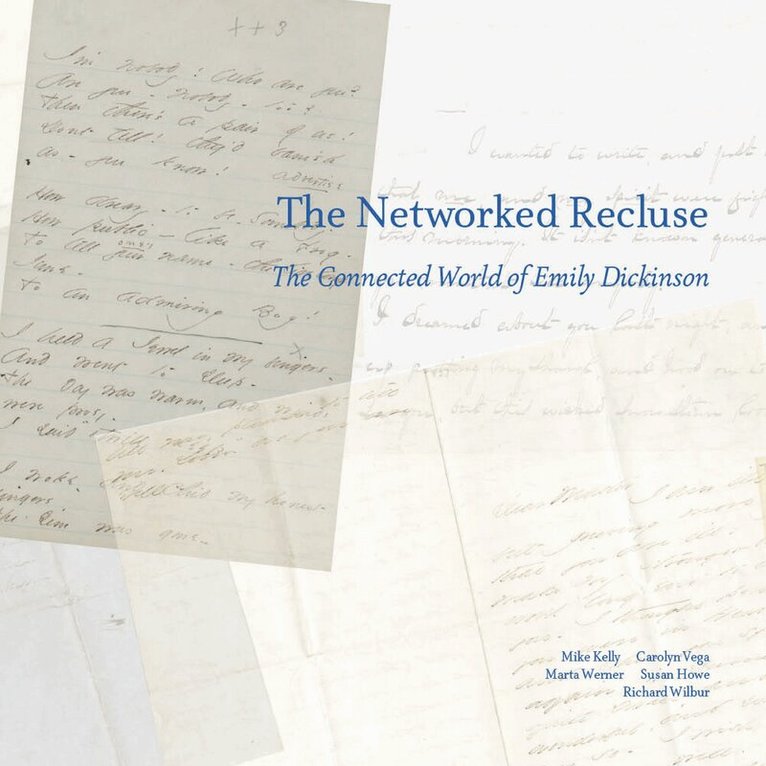
Networked Recluse
The Connected World of Emily Dickinson
Av Michael Kelly, Marta L. Werner m. fl.
Häftad, 2017
518 kr
Tillfälligt slut
The image is so well known it is practically iconic: The reclusive poet, feminine and fragile, weaving verse of beguiling complexity from the room in which she kept herself sequestered from the world. The Belle of Amherst, the distinctive American voice, the singer of the soul’s mysteries: Emily …