Martin Jähnert - Böcker
Visar alla böcker från författaren Martin Jähnert. Handla med fri frakt och snabb leverans.
6 produkter
6 produkter
Del 56 - Archimedes
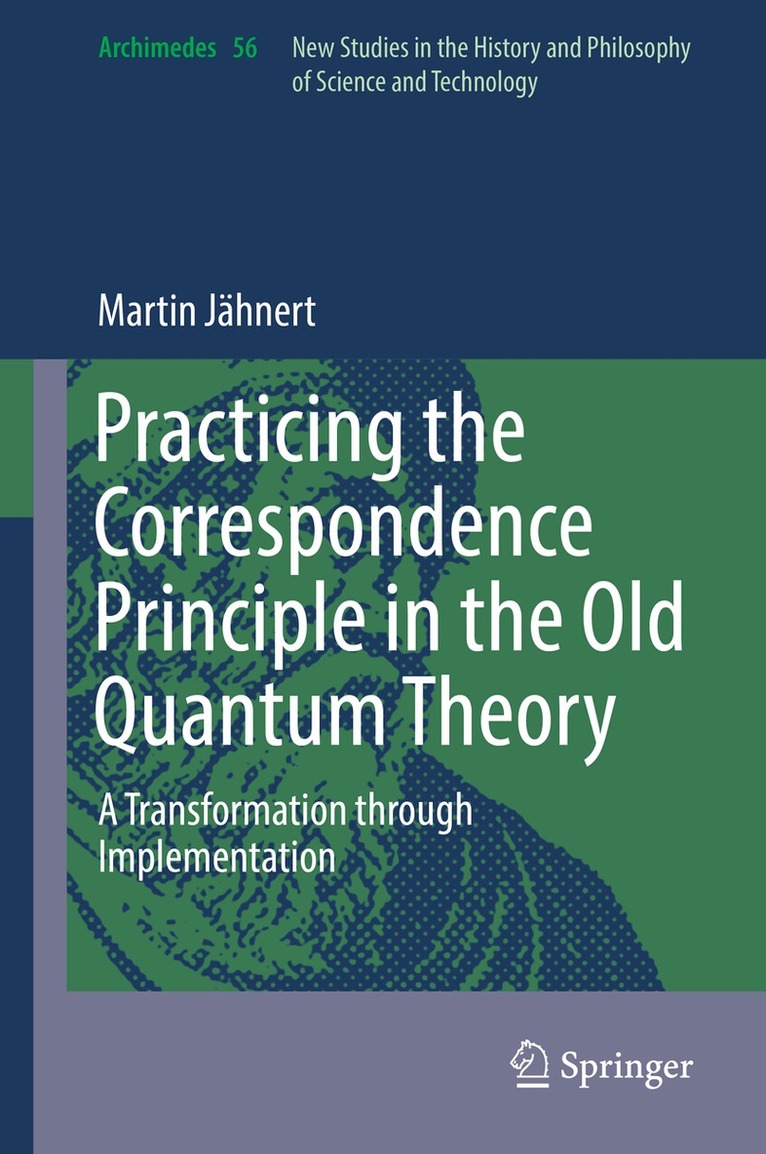
Practicing the Correspondence Principle in the Old Quantum Theory
A Transformation through Implementation
Inbunden, Engelska, 2019
1 281 kr
Skickas inom 10-15 vardagar
This book presents a history of the correspondence principle from a new perspective. The author provides a unique exploration of the relation between the practice of theory and conceptual development in physics. In the process, he argues for a new understanding of the history of the old quantum theory and the emergence of quantum mechanics.The analysis looks at how the correspondence principle was disseminated and how the principle was applied as a research tool during the 1920s. It provides new insights into the interaction between theoretical tools and scientific problems and shows that the use of this theoretical tool changed the tool itself in a process of transformation through implementation. This process, the author claims, was responsible for the conceptual development of the correspondence principle. This monograph connects to the vast literature in the history of science, which analyzed theoretical practices as based on tacit knowledge, skills, and calculation techniques. It contributes to the historical understanding of quantum physics and the emergence of quantum mechanics. Studying how physicists used a set of tools to solve problems, the author spells out the ‟skillful guessing” that went into the making of quantum theoretical arguments and argues that the integration and implementation of technical resources was a central driving force for the conceptual and theoretical transformation in the old quantum theory.
Del 56 - Archimedes
Practicing the Correspondence Principle in the Old Quantum Theory
A Transformation through Implementation
Häftad, Engelska, 2020
1 099 kr
Skickas inom 5-8 vardagar
This book presents a history of the correspondence principle from a new perspective. The author provides a unique exploration of the relation between the practice of theory and conceptual development in physics. In the process, he argues for a new understanding of the history of the old quantum theory and the emergence of quantum mechanics.The analysis looks at how the correspondence principle was disseminated and how the principle was applied as a research tool during the 1920s. It provides new insights into the interaction between theoretical tools and scientific problems and shows that the use of this theoretical tool changed the tool itself in a process of transformation through implementation. This process, the author claims, was responsible for the conceptual development of the correspondence principle. This monograph connects to the vast literature in the history of science, which analyzed theoretical practices as based on tacit knowledge, skills, and calculation techniques. It contributes to the historical understanding of quantum physics and the emergence of quantum mechanics. Studying how physicists used a set of tools to solve problems, the author spells out the ‟skillful guessing” that went into the making of quantum theoretical arguments and argues that the integration and implementation of technical resources was a central driving force for the conceptual and theoretical transformation in the old quantum theory.
Anne de Bretagne und der Abschluss des Nationalen Werdens in Frankreich - Die Vereinigung Frankreichs mit der Bretagne
Häftad, Tyska, 2009
511 kr
Skickas inom 3-6 vardagar
Idées et visiteurs
Le surnaturel des apparitions dans le "Heimweg" de Harald Martenstein - Besucher und andere übernatürliche Erscheinungen in Harald Martensteins "Heimweg"
Häftad, Franska, 2009
507 kr
Skickas inom 3-6 vardagar
492 kr
Skickas inom 3-6 vardagar
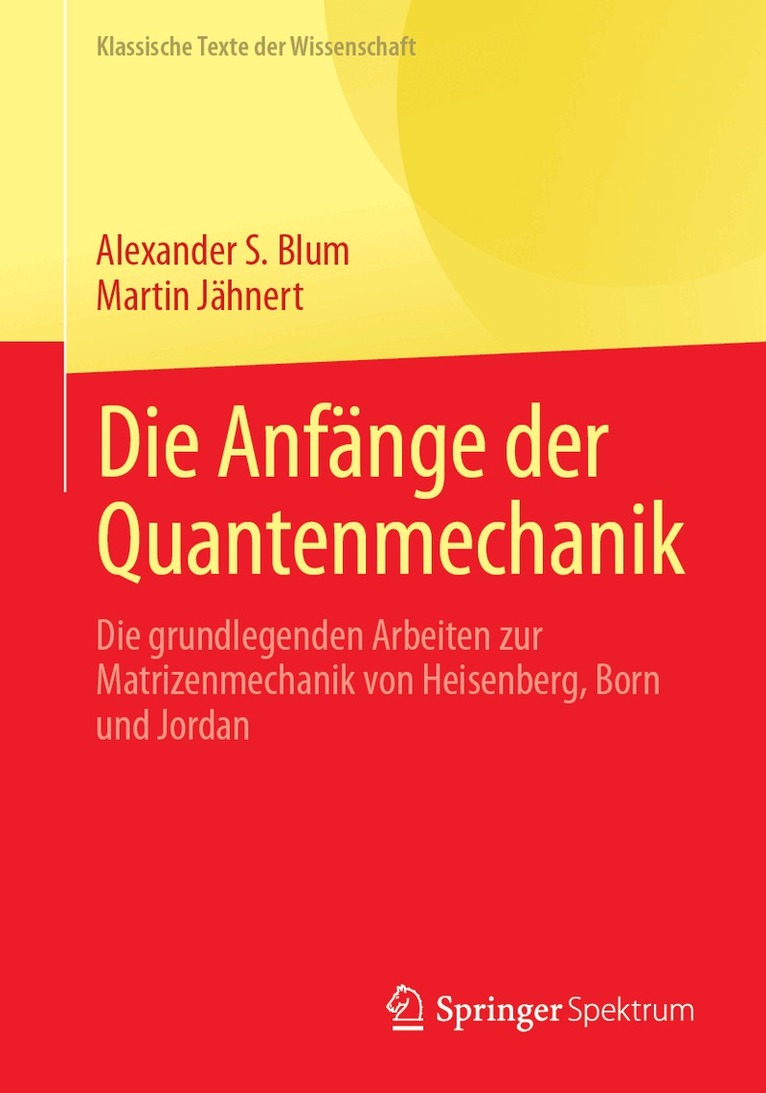
Die Anfänge der Quantenmechanik
Die grundlegenden Arbeiten zur Matrizenmechanik von Heisenberg, Born und Jordan
Häftad, Tyska, 2025
408 kr
Skickas inom 10-15 vardagar
Als im Jahr 1900 mit Plancks Quantenhypothese die Krise der klassischen Physik beginnt, ist Werner Heisenberg noch nicht einmal geboren. Im Sommer 1925 ist er es, der mit einer kurzen, kryptischen Arbeit, „Über quantentheoretische Umdeutung kinematischer und mechanischer Beziehungen“, eine neue Quantenmechanik begründet, die im Mikroskopischen an die Stelle der Newtonschen Mechanik tritt. In den nächsten Monaten wird diese Theorie mit seinen Göttinger Kollegen Max Born und Pascual Jordan mathematisch ausgearbeitet – als Matrizenmechanik, bevor Erwin Schrödinger kurz darauf mit seiner Wellengleichung einen ganz anderen Zugang zur Quantenmechanik bietet. Doch die Ursprünge der Quantenmechanik liegen hier, in den matrizenmechanischen Arbeiten von Heisenberg, Born und Jordan, welche in diesem Band mit einem ausführlichen Kommentar versammelt sind, der auch Studierenden der Physik den Zugang zu diesen bahnbrechenden Arbeiten ermöglicht.