• Fri frakt över 249 kr
  • •
  • Snabba leveranser
  • •
  • Billiga böcker
Kundservice

Du är på sajten för privatpersoner.

Företag, bibliotek eller offentlig verksamhet?

Du handlar på classic.bokus.com, där alla dina funktioner finns intakta.
Till classic.bokus.com
Bokus logotyp. Gå till startsidan.
  • Erbjudanden
  • Nyheter
  • Student
  • Topplistor
  • Barn & ungdom
  • Bokus Play
  • E-böcker
  • Pocketböcker
  • Spel & pussel

10% rabatt på allt med kod: NYSTART10 →

Sidfot

Mina sidor

    Hjälp

    • Kundservice
    • Vanliga frågor och svar
    • Frakt och leverans
    • Retur vid ångerrätt
    • Reklamera vara
    • Betalning
    • Köpvillkor
    • Allmänna villkor
    • Information om webbplatsens tillgänglighet

    Om Bokus

    • Om oss
    • Pressrum
    • För studenter
    • För företag
    • För bibliotek och offentlig verksamhet
    • För leverantörer
    • Hållbarhet

    Populärt

    • Aktuella erbjudanden
    • Presentkort
    • Studentlitteratur
    • Nya böcker
    • Topplistor
    • Signerade böcker
    • Engelska böcker

    Inspiration

    • Boktips
    • BookTok
    • Populära bokserier
    • Barnbokskaraktärer
    • Populära författare
    Logotyp för Bokus
    Följ oss på Facebook (extern länk)Följ oss på Instagram (extern länk)Följ oss på YouTube (extern länk)Följ oss på TikTok (extern länk)
    bokus @ CookiesAnpassa cookiesIntegritetspolicyKöpvillkor
    Till Citymail hemsida (extern länk)Till Budbee hemsida (extern länk)Till Postnord hemsida (extern länk)Till Schenker hemsida (extern länk)Till Early Bird hemsida (extern länk)Till Walleys hemsida (extern länk)
    1. Samhälle och politik
    2. Samhälle och kultur
    3. Kultur och medier
    4. Kulturvetenskap

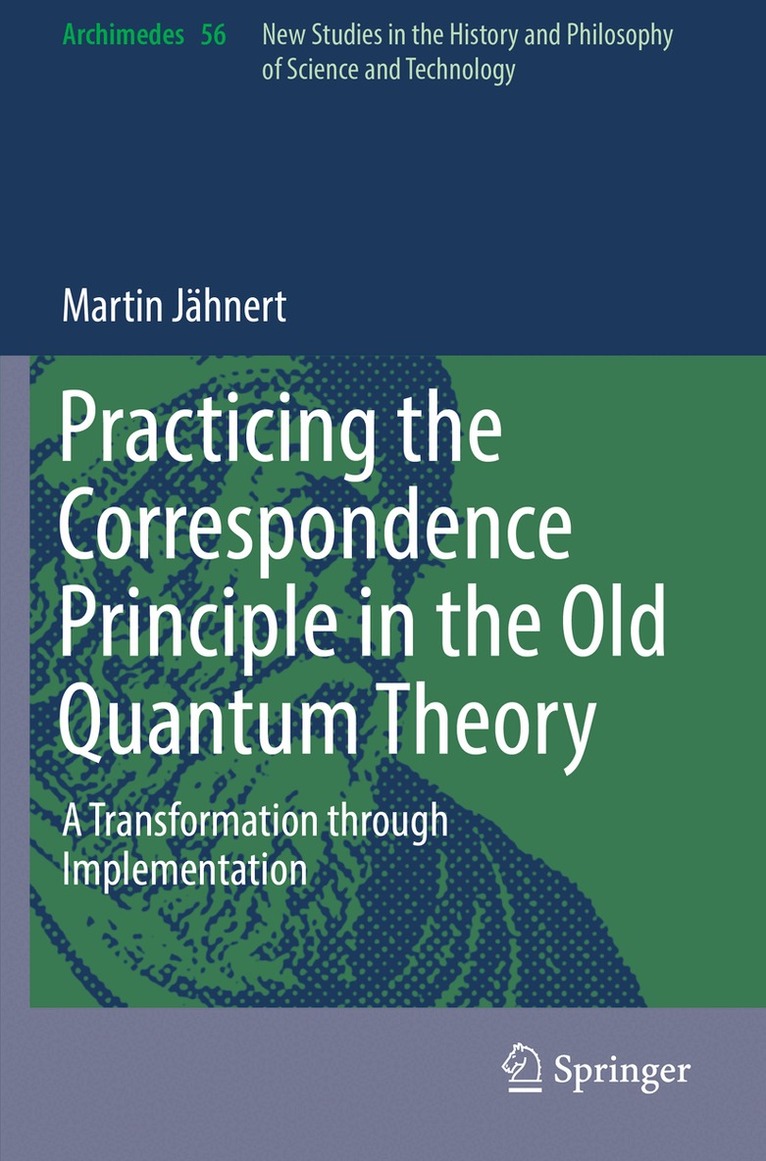
    Practicing the Correspondence Principle in the Old Quantum Theory

    A Transformation through Implementation

    AvMartin Jähnert

    Häftad, Engelska, 2020

    Del 56 i serien Archimedes

    1 119 kr

    Beställningsvara. Skickas inom 5-8 vardagar. Fri frakt över 249 kr.

    Fler format och utgåvor

    Inbunden

    1 301 kr

    Beskrivning

    This book presents a history of the correspondence principle from a new perspective. The author provides a unique exploration of the relation between the practice of theory and conceptual development in physics. In the process, he argues for a new understanding of the history of the old quantum theory and the emergence of quantum mechanics.The analysis looks at how the correspondence principle was disseminated and how the principle was applied as a research tool during the 1920s. It provides new insights into the interaction between theoretical tools and scientific problems and shows that the use of this theoretical tool changed the tool itself in a process of transformation through implementation. This process, the author claims, was responsible for the conceptual development of the correspondence principle. This monograph connects to the vast literature in the history of science, which analyzed theoretical practices as based on tacit knowledge, skills, and calculation techniques. It contributes to the historical understanding of quantum physics and the emergence of quantum mechanics. Studying how physicists used a set of tools to solve problems, the author spells out the ‟skillful guessing” that went into the making of quantum theoretical arguments and argues that the integration and implementation of technical resources was a central driving force for the conceptual and theoretical transformation in the old quantum theory.

    Produktinformation

    • Utgivningsdatum:2020-08-14
    • Mått:155 x 235 x 17 mm
    • Vikt:470 g
    • Format:Häftad
    • Språk:Engelska
    • Serie:Archimedes
    • Antal sidor:293
    • Förlag:Springer Nature Switzerland AG
    • ISBN:9783030133023

    Utforska kategorier

    • Kulturvetenskap inom Samhälle och politik
    • Kvantfysik inom Naturvetenskap och teknik
    • Naturvetenskapens filosofi inom Naturvetenskap och teknik

    Mer om författaren

    Martin Jähnert is a historian of science focused on conceptual developments in 19th- and 20th-century physics. As a fellow at the Berlin Center for the History of Knowledge he is currently working on the history of photometry as practiced at lighthouses in the 19th century. He was part of the project History and Foundation of Quantum Physics at the Max Planck Institute for the History of Science where he worked on the conceptual development of the old quantum theory, in particular of the correspondence principle and the interpretational debate on quantum mechanics in the 1920s. Jähnert studied History and Physics at Humboldt-Universität zu Berlin and completed his Ph.D. thesis Practicing the Correspondence Principle in the Old Quantum Theory at the Max Planck Institute for the History of Science and the Technische Universität Berlin. Currently he is a post-doc at the Berlin Center for the History Knowledge with the project “Photometry at the Lighthouse”.

    Recensioner i media

    “His writing is also clear, to be sure … . No doubt this novel interpretation will be carefully scrutinized by experts in the near future, as it clearly involves an interesting new twist on how quantum mechanics arose, in particular a new view of the immediate events that led up to Heisenberg’s breakthrough.” (David Rowe, NTM, Vol. 29 (3), September, 2021)“This book provides an original contribution to the study of the history of quantum mechanics. … The monograph is carefully written and logically organised, it further provides valuable insights based on a rich historical documentation.” (Bassano Vacchini, zbMATH 1428.81004, 2020)

    Innehållsförteckning

    • 1. Introduction.- 2. The Correspondence Principle in Copenhagen 1913–1923: Origin, Formulation and Consolidation.- 3. The Correspondence Principle in the Quantum Network 1918–1926.- 4. Using the Magic Wand: Sommerfeld, Multiplet Intensities and the Correspondence Principle.- 5. Fertilizer on a Sandy Acreage: Franck, Hund and the Ramsauer Effect.- 6. That I Cannot Conceive of After the Results of Your Dissertation: Fritz Reiche and the F-sum Rule.- 7. Copenhagen Reactions: The Intensity Problem in Copenhagen, 1924–1925.- 8. Conclusion.- A. Applications of the Correspondence Principle 1918–1928.- Archives.- Bibliography.