Martin Meeker - Böcker
Visar alla böcker från författaren Martin Meeker. Handla med fri frakt och snabb leverans.
3 produkter
3 produkter
989 kr
Skickas inom 7-10 vardagar
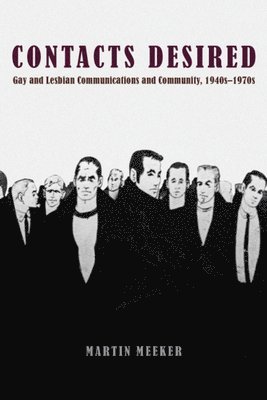
Whether one thinks homosexuals are born or made, they generally are not born into gay families, nor are they socialized to be gay by their peers or schools. How then do people become aware of homosexuality and, in some cases, integrate into gay communities? The making of homosexual identity is the result of a communicative process that entails scarching, listening, looking, reading, and finding. "Contacts Desired" proposes that this communicative process has a history, and it sets out to tell that story. Martin Meeker here argues that over the course of the twentieth century, a series of important innovations occurred in the networks that linked individuals to a larger social knowledge of homosexuality. He points to three key innovations in particular: the emergence of the homophile movement in the 1950s; the mass media treatments of homosexuals in the late 1950s and early 1960s; and the popularization of do-it-yourself publishing from the late 1940s to the 1970s, which offered bar guides, handmade magazines, and other materials that gay men and lesbians could use to seek one another out.In the process, Meeker unearths a treasure trove of archival materials that reveals how homosexuals played a crucial role in transforming the very structure of communications and urban communities since the postwar era.
298 kr
Skickas inom 7-10 vardagar
Whether one thinks homosexuals are born or made, they generally are not born into gay families, nor are they socialized to be gay by their peers or schools. How then do people become aware of homosexuality and, in some cases, integrate into gay communities? The making of homosexual identity is the result of a communicative process that entails scarching, listening, looking, reading, and finding. "Contacts Desired" proposes that this communicative process has a history, and it sets out to tell that story. Martin Meeker here argues that over the course of the twentieth century, a series of important innovations occurred in the networks that linked individuals to a larger social knowledge of homosexuality. He points to three key innovations in particular: the emergence of the homophile movement in the 1950s; the mass media treatments of homosexuals in the late 1950s and early 1960s; and the popularization of do-it-yourself publishing from the late 1940s to the 1970s, which offered bar guides, handmade magazines, and other materials that gay men and lesbians could use to seek one another out.In the process, Meeker unearths a treasure trove of archival materials that reveals how homosexuals played a crucial role in transforming the very structure of communications and urban communities since the postwar era.
313 kr
Skickas inom 10-15 vardagar
From the history of gay and lesbian studies to the emergence of video bars, from an interview with Cherrie Moraga to a photo record of 1950s gay Los Angeles these essays tackle the past, present and future of gay sexuality from all directions.