Martin Plot – författare
Visar alla böcker från författaren Martin Plot. Handla med fri frakt och snabb leverans.
17 produkter
17 produkter
Inbunden, Engelska, 2012
2 249 kr
Skickas inom 10-15 vardagar
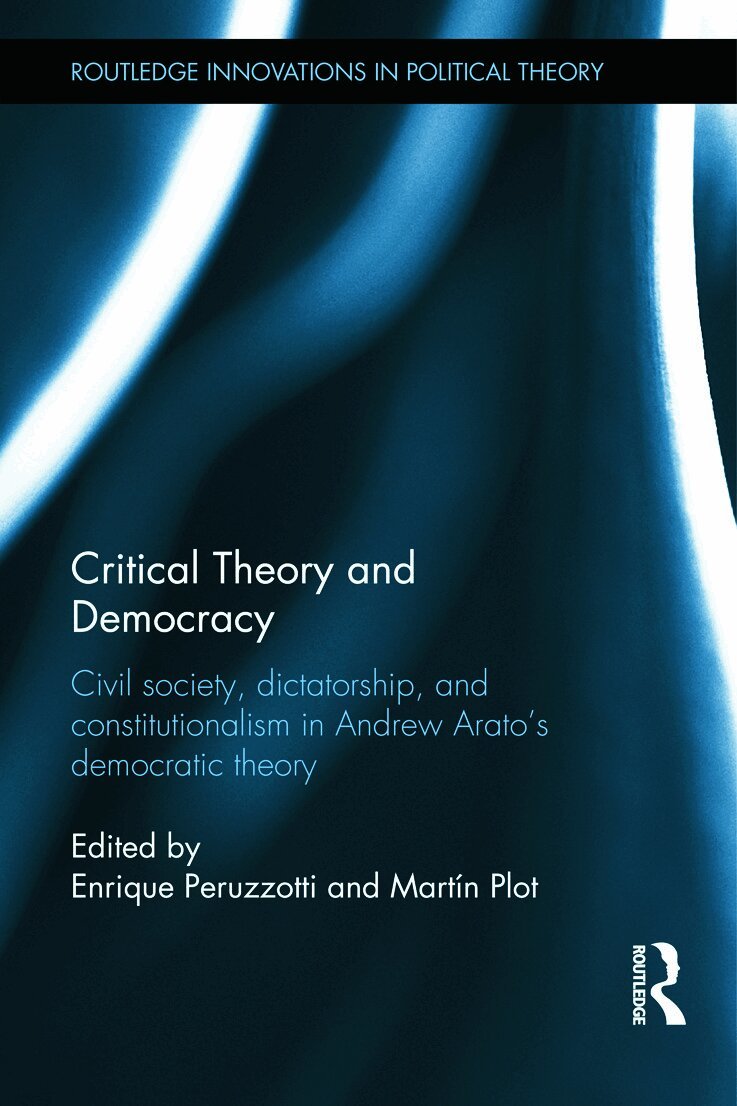
This book focuses on Andrew Arato’s democratic theory and its relevance to contemporary issues such as processes of democratization, civil society, constitution-making, and the modern Executive.Andrew Arato is -both globally and disciplinarily- a prominent thinker in the fields of democratic theory, constitutional law, and comparative politics, influencing several generations of scholars. This is the first volume to systematically address his democratic theory. Including contributions from leading scholars such as Dick Howard, Ulrich Preuss, Hubertus Buchstein, Janos Kis, Uri Ram, Leonardo Avritzer, Carlos de la Torre, and Nicolás Lynch, this book is organized around three major areas of Arato´s influence on contemporary political and social thought. The first section offers a comprehensive view of Arato’s scholarship from his early work on critical theory and Western Marxism to his current research on constitution-making and its application. The second section shifts its focus from the previous, comprehensive approach, to a much more specific one: Arato´s widespread influence on the study of civil society in democratization processes in Latin America. The third section includes a previously unpublished work, ‘A conceptual history of dictatorship (and its rivals,)’ one of the few systematic interrogations on the meaning of a political form of fundamental relevance in the contemporary world. Critical Theory and Democracy will be of interest to critical and social theorists, and all Arato scholars.
E-bok
Engelska, 2012892 kr
Läs direkt efter köp
This book focuses on Andrew Arato’s democratic theory and its relevance to contemporary issues such as processes of democratization, civil society, constitution-making, and the modern Executive.Andrew Arato is -both globally and disciplinarily- a prominent thinker in the fields of democratic theory, constitutional law, and comparative politics, influencing several generations of scholars. This is the first volume to systematically address his democratic theory. Including contributions from leading scholars such as Dick Howard, Ulrich Preuss, Hubertus Buchstein, Janos Kis, Uri Ram, Leonardo Avritzer, Carlos de la Torre, and Nicolás Lynch, this book is organized around three major areas of Arato´s influence on contemporary political and social thought. The first section offers a comprehensive view of Arato’s scholarship from his early work on critical theory and Western Marxism to his current research on constitution-making and its application. The second section shifts its focus from the previous, comprehensive approach, to a much more specific one: Arato´s widespread influence on the study of civil society in democratization processes in Latin America. The third section includes a previously unpublished work, ‘A conceptual history of dictatorship (and its rivals,)’ one of the few systematic interrogations on the meaning of a political form of fundamental relevance in the contemporary world. Critical Theory and Democracy will be of interest to critical and social theorists, and all Arato scholars.
E-bok
PDF, Engelska, 2012892 kr
Läs direkt efter köp
This book focuses on Andrew Arato’s democratic theory and its relevance to contemporary issues such as processes of democratization, civil society, constitution-making, and the modern Executive.Andrew Arato is -both globally and disciplinarily- a prominent thinker in the fields of democratic theory, constitutional law, and comparative politics, influencing several generations of scholars. This is the first volume to systematically address his democratic theory. Including contributions from leading scholars such as Dick Howard, Ulrich Preuss, Hubertus Buchstein, Janos Kis, Uri Ram, Leonardo Avritzer, Carlos de la Torre, and Nicolás Lynch, this book is organized around three major areas of Arato´s influence on contemporary political and social thought. The first section offers a comprehensive view of Arato’s scholarship from his early work on critical theory and Western Marxism to his current research on constitution-making and its application. The second section shifts its focus from the previous, comprehensive approach, to a much more specific one: Arato´s widespread influence on the study of civil society in democratization processes in Latin America. The third section includes a previously unpublished work, ‘A conceptual history of dictatorship (and its rivals,)’ one of the few systematic interrogations on the meaning of a political form of fundamental relevance in the contemporary world. Critical Theory and Democracy will be of interest to critical and social theorists, and all Arato scholars.
Häftad, Engelska, 2014
777 kr
Skickas inom 10-15 vardagar
This book focuses on Andrew Arato’s democratic theory and its relevance to contemporary issues such as processes of democratization, civil society, constitution-making, and the modern Executive.Andrew Arato is -both globally and disciplinarily- a prominent thinker in the fields of democratic theory, constitutional law, and comparative politics, influencing several generations of scholars. This is the first volume to systematically address his democratic theory. Including contributions from leading scholars such as Dick Howard, Ulrich Preuss, Hubertus Buchstein, Janos Kis, Uri Ram, Leonardo Avritzer, Carlos de la Torre, and Nicolás Lynch, this book is organized around three major areas of Arato´s influence on contemporary political and social thought. The first section offers a comprehensive view of Arato’s scholarship from his early work on critical theory and Western Marxism to his current research on constitution-making and its application. The second section shifts its focus from the previous, comprehensive approach, to a much more specific one: Arato´s widespread influence on the study of civil society in democratization processes in Latin America. The third section includes a previously unpublished work, ‘A conceptual history of dictatorship (and its rivals,)’ one of the few systematic interrogations on the meaning of a political form of fundamental relevance in the contemporary world. Critical Theory and Democracy will be of interest to critical and social theorists, and all Arato scholars.
E-bok
Engelska, 2014570 kr
Läs direkt efter köp
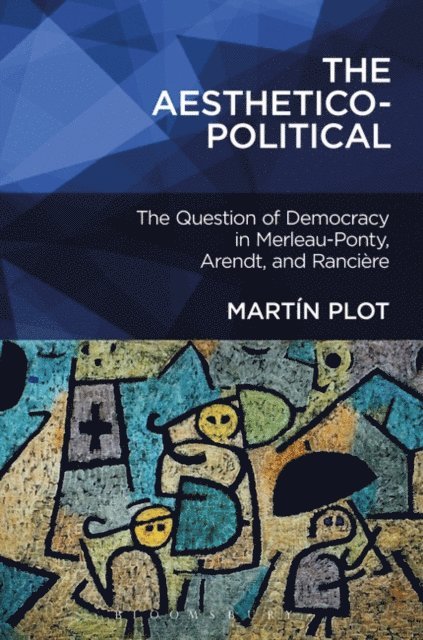
This study uses new arguments to reinvestigate the relation between aesthetics and politics in the contemporary debates on democratic theory and radical democracy. First, Carl Schmitt and Claude Lefort help delineate the contours of an aesthetico-political understanding of democracy, which is developed further by studying Merleau-Ponty, Rancière, and Arendt. The ideas of Merleau-Ponty serve to establish a general "ontological" framework that aims to contest the dominant currents in contemporary democratic theory. It is argued that Merleau-Ponty, Arendt, and Rancière share a general understanding of the political as the contingently contested spaces and times of appearances. However, the articulation of their thought leads to reconsider and explore under-theorized as well as controversial dimensions of their work.This search for new connections between the political and the aesthetic thought of Arendt and Merleau-Ponty on one hand and the current widespread interest in Rancière's aesthetic politics on the other make this book a unique study that will appeal to anyone who is interested in political theory and contemporary continental philosophy.
E-bok
PDF, Engelska, 2014570 kr
Läs direkt efter köp
This study uses new arguments to reinvestigate the relation between aesthetics and politics in the contemporary debates on democratic theory and radical democracy. First, Carl Schmitt and Claude Lefort help delineate the contours of an aesthetico-political understanding of democracy, which is developed further by studying Merleau-Ponty, Rancière, and Arendt. The ideas of Merleau-Ponty serve to establish a general "ontological" framework that aims to contest the dominant currents in contemporary democratic theory. It is argued that Merleau-Ponty, Arendt, and Rancière share a general understanding of the political as the contingently contested spaces and times of appearances. However, the articulation of their thought leads to reconsider and explore under-theorized as well as controversial dimensions of their work.This search for new connections between the political and the aesthetic thought of Arendt and Merleau-Ponty on one hand and the current widespread interest in Rancière's aesthetic politics on the other make this book a unique study that will appeal to anyone who is interested in political theory and contemporary continental philosophy.
Inbunden, Engelska, 2014
1 937 kr
Skickas inom 10-15 vardagar
This study uses new arguments to reinvestigate the relation between aesthetics and politics in the contemporary debates on democratic theory and radical democracy. First, Carl Schmitt and Claude Lefort help delineate the contours of an aesthetico-political understanding of democracy, which is developed further by studying Merleau-Ponty, Rancière, and Arendt. The ideas of Merleau-Ponty serve to establish a general "ontological" framework that aims to contest the dominant currents in contemporary democratic theory. It is argued that Merleau-Ponty, Arendt, and Rancière share a general understanding of the political as the contingently contested spaces and times of appearances. However, the articulation of their thought leads to reconsider and explore under-theorized as well as controversial dimensions of their work.This search for new connections between the political and the aesthetic thought of Arendt and Merleau-Ponty on one hand and the current widespread interest in Rancière's aesthetic politics on the other make this book a unique study that will appeal to anyone who is interested in political theory and contemporary continental philosophy.
Häftad, Engelska, 2016
545 kr
Skickas inom 10-15 vardagar
This study uses new arguments to reinvestigate the relation between aesthetics and politics in the contemporary debates on democratic theory and radical democracy. First, Carl Schmitt and Claude Lefort help delineate the contours of an aesthetico-political understanding of democracy, which is developed further by studying Merleau-Ponty, Rancière, and Arendt. The ideas of Merleau-Ponty serve to establish a general "ontological" framework that aims to contest the dominant currents in contemporary democratic theory. It is argued that Merleau-Ponty, Arendt, and Rancière share a general understanding of the political as the contingently contested spaces and times of appearances. However, the articulation of their thought leads to reconsider and explore under-theorized as well as controversial dimensions of their work.This search for new connections between the political and the aesthetic thought of Arendt and Merleau-Ponty on one hand and the current widespread interest in Rancière's aesthetic politics on the other make this book a unique study that will appeal to anyone who is interested in political theory and contemporary continental philosophy.
Inbunden, Engelska, 2024
1 356 kr
Skickas inom 10-15 vardagar
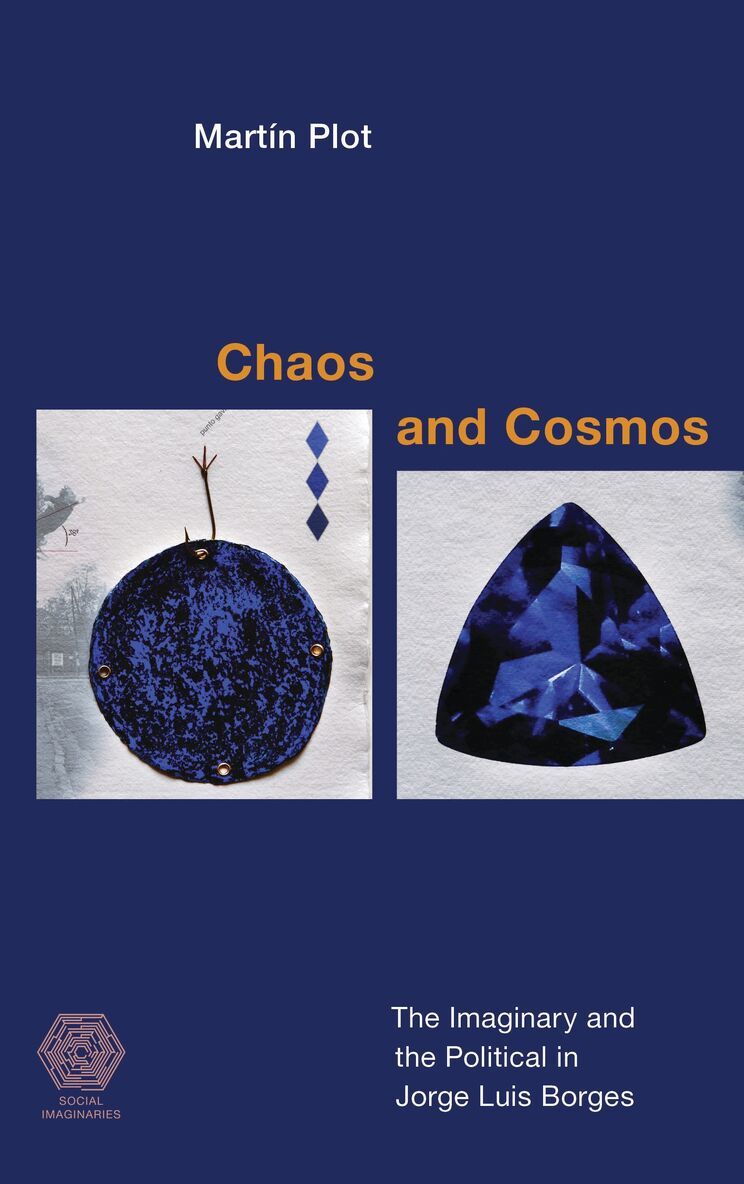
Chaos and Cosmos offers a new and unique interpretation of Argentine essayist and fiction writer Jorge Luis Borges as a thinker of what continental twentieth century political theory called the political. While not a political writer in the traditional sense, Borges was indeed an author whose response to the advent of totalitarianism, in particular in its Nazi form, generated the most experimental, insightful, and rigorous short fiction and non-fiction political interrogation. As is well known, Borges’ writing went beyond originality; it created a genre of its own, and the Borgesian style is not limited to form. This Borgesian style fundamentally relates to how his response to the advent of totalitarianism led to sharp and philosophically sophisticated interrogations-in-fiction of the political, understood in this book as related to three main distinctive dimensions: that of the question of the forms of society, that of the relationship between the imaginary and the real, and that of the relationship between the same and the other. Chaos and Cosmos introduces the reader to Borges as an experimental writer, as an Argentine citizen, as a thinker of global political phenomena, and as a South American Pragmatist. The book also makes incursions in a political theorizing of its own, intertwining an interpretation of Borges’ essays and fiction pieces from the 1930s and 1940s with the central concerns of philosophers and political thinkers such as William James, Maurice Merleau-Ponty, Hannah Arendt, Claude Lefort, Michael Foucault, Richard Rorty, and Judith Butler.
E-bok
Engelska, 2024487 kr
Läs direkt efter köp
Chaos and Cosmos offers a new and unique interpretation of Argentine essayist and fiction writer Jorge Luis Borges as a thinker of what continental twentieth century political theory called the political. While not a political writer in the traditional sense, Borges was indeed an author whose response to the advent of totalitarianism, in particular in its Nazi form, generated the most experimental, insightful, and rigorous short fiction and non-fiction political interrogation. As is well known, Borges’ writing went beyond originality; it created a genre of its own, and the Borgesian style is not limited to form. This Borgesian style fundamentally relates to how his response to the advent of totalitarianism led to sharp and philosophically sophisticated interrogations-in-fiction of the political, understood in this book as related to three main distinctive dimensions: that of the question of the forms of society, that of the relationship between the imaginary and the real, and that of the relationship between the same and the other. Chaos and Cosmos introduces the reader to Borges as an experimental writer, as an Argentine citizen, as a thinker of global political phenomena, and as a South American Pragmatist. The book also makes incursions in a political theorizing of its own, intertwining an interpretation of Borges’ essays and fiction pieces from the 1930s and 1940s with the central concerns of philosophers and political thinkers such as William James, Maurice Merleau-Ponty, Hannah Arendt, Claude Lefort, Michael Foucault, Richard Rorty, and Judith Butler.
Häftad, Engelska, 2026
468 kr
Skickas inom 10-15 vardagar
Choice 2025 Outstanding Academic TitleThis book offers a new and unique interpretation of Argentine essayist and fiction writer Jorge Luis Borges as a thinker of what continental twentieth century political theory called the political. While not a political writer in the traditional sense, Borges was indeed an author whose response to the advent of totalitarianism, in particular in its Nazi form, generated the most experimental, insightful, and rigorous short fiction and non-fiction political interrogation. As is well known, Borges’ writing went beyond originality; it created a genre of its own, and the Borgesian style is not limited to form. This Borgesian style fundamentally relates to how his response to the advent of totalitarianism led to sharp and philosophically sophisticated interrogations-in-fiction of the political, understood in this book as related to three main distinctive dimensions: that of the question of the forms of society, that of the relationship between the imaginary and the real, and that of the relationship between the same and the other. Chaos and Cosmos introduces the reader to Borges as an experimental writer, as an Argentine citizen, as a thinker of global political phenomena, and as a South American Pragmatist. The book also makes incursions in a political theorizing of its own, intertwining an interpretation of Borges’ essays and fiction pieces from the 1930s and 1940s with the central concerns of philosophers and political thinkers such as William James, Maurice Merleau-Ponty, Hannah Arendt, Claude Lefort, Michael Foucault, Richard Rorty, and Judith Butler.
E-bok
PDF, Spanska, 2026108 kr
Läs direkt efter köp
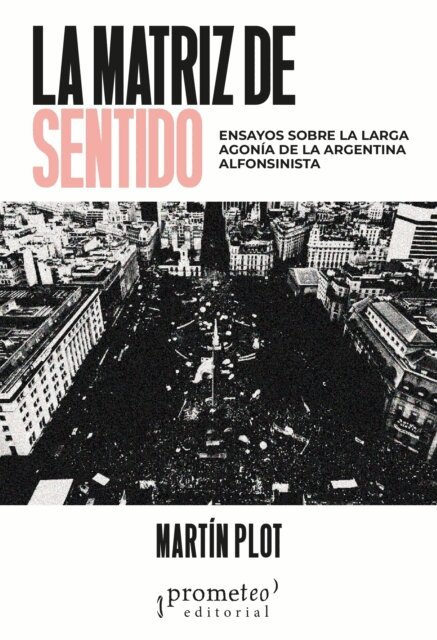
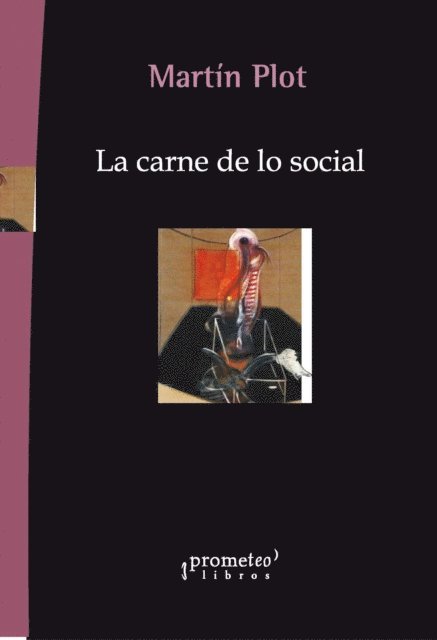
Como llegamos hasta este punto en que la democracia tal como la conocimos en las ultimas cuatro decadas corre peligro? Las intervenciones de Martin Plot, recorriendo los conflictos centrales de los ultimos 12 anos de la politica argentina, ofrecen una respuesta. En un nivel que podemos llamar discursivo con la condicion de entender que el autor retiene en ese nivel todos los hechos economicos, sociales y politicos relevantes del periodo, podran captarse, junto a la reaparicion de la virulencia del autoritarismo liberal, los efectos tragicos de la captura del progresismo y el peronismo en un faccionalismo excluyente escenificado como hostilidad a la renovacion de figuras, ideas y repertorios politicos. Pero al mismo tiempo, bajo la argumentacion precisa y al mismo tiempo poetica de los textos, podremos discernir una arquitectura que funda un poderoso y poco discutido punto de mira sobre el proceso politico: la concepcion de este como una disputa acerca del regimen politico-constitucional - entendida como una disputa social por su interpretacion - que se une al uso operativo de lo mas actual de la filosofia politica para entender la coyuntura. Martin Plot (Ph.D. New School for Social Research, Alfred Schutz Memorial Award in Philosophy and Sociology) es Investigador Independiente del CONICET y Profesor Regular Titular de Teorias de la Democracia en la Escuela Interdisciplinaria de Altos Estudios Sociales de la UNSAM. Es autor de El kitsch politico (Prometeo, 2003), La carne de lo social (Prometeo, 2008), Indivisible: Democracia y terror en tiempos de Bush y Obama (Prometeo, 2011), The Aesthetico-Political: The Question of Democracy in Merleau-Ponty, Arendt, and Ranciere (Bloomsbury Academic, 2014) y Chaos and Cosmos: The Imaginary and the Political in Jorge Luis Borges (Rowman & Littlefield, 2024).
Häftad, Spanska
283 kr
Skickas inom 3-6 vardagar
Häftad, Spanska
338 kr
Skickas inom 3-6 vardagar
E-bok
PDF, Spanska, 202349 kr
Läs direkt efter köp
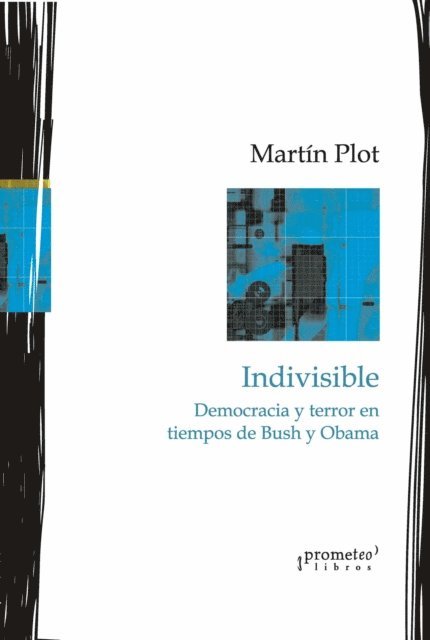
En ''Indivisible'' Martín Plot lee la política norteamericana, de Bush a Obama, bajo la luz que le provee al autor su mirada doblemente descentrada: de argentino largamente radicado en los Estados Unidos, y de teórico de la política ''de la carne'', en clave merleau-pontyana, en el mundo de una política que se pretende descarnada. El resultado es notable: un tránsito altamente informado y comprometido por la política estadounidense de la última década, en que la política de guerra contra el terrorismo del gobierno Bush es puesta en espejo de la política de la dictaduras del Cono Sur en los años ´70, y en que el acervo teórico del que se nutre Plot es puesto en juego para iluminar el sentido del advenimiento del gobierno de Obama, y también de sus dificultades. No se trata nunca para el autor de hacer gala de sus evidentes conocimientos teóricos, sino de que estos puedan echar luz sobre aquello que sucede: Arendt, Lefort, pero también Schmitt y Hobbes, Tocqueville o Laclau, están allí, puntuando el relato, al servicio de un análisis que está siempre, ante todo, orientado por la preocupación de contribuir a la inteligencia del acontecimiento político.Quien, sin ser habitué de los autores que pueblan el libro, conozca la política norteamericana encontrará sin dudas en ''Indivisible'' herramientas impensadas para comprenderla; quien, como esta lectora, comparta el mundo de referencias teóricas pero desconozca por su parte la trama fina de la política norteamericana, encontrará allí la información de la que carece, tratada con la agudeza teórica y el compromiso ético-político que habitan siempre la mirada descentrada de Martín Plot.
E-bok
PDF, Spanska, 202349 kr
Läs direkt efter köp
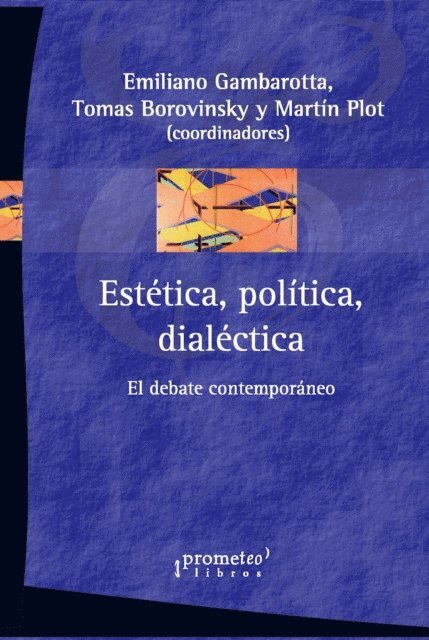
Los ensayos que componen este volumen son una acabada muestra de la potencialidad que la estética y una dialéctica abierta tienen para aproximarnos a la comprensión de la política contemporánea. La caída de los fundamentos trascendentes que guiaron la humana capacidad de juicio nos ha arrojado a la experiencia de una vida colectiva tan precaria como incierta. Frente a esta realidad, los autores toman distancia tanto de la reconstrucción sin más de principios orientadores universales como de la lógica del aparecer que circunscribe lo político a la novedad del acontecimiento. Su camino será el pensar esa incierta precariedad como una forma del ser con el otro, del aparecer y del desplazar que conforman nuestra vida pública; un camino que no puede ser reducido a las lógicas del antagonismo ni de la hospitalidad, de lo sedimentado y de lo nuevo, pero atento a todas ellas. Esta aventura de pensar desde las ruinas de lo que fue, y hacerlo por fuera del habitual pesimismo decadentista, es forjada en un notable trabajo de orfebrería que, inspirado en un conjunto de autores hoy clásicos, va más allá de ellos en el desafío de pensar nuestro presente.
E-bok
PDF, Spanska, 202354 kr
Läs direkt efter köp
Este sobresaliente libro busca rescatar el concepto de lo político de los reduccionismos tanto instrumental como racionalista. Apoyándose en reconstrucciones de primer nivel de las ideas de Merlau-Ponty y Lefort, Martín Plot ofrece una imagen de la democracia moderna capaz de dar cuenta del hecho de la pluralidad, conceptualizando una forma de conflicto que integra en vez de destruir. Este trabajo nos aporta un largamente esperado puente a realidades contemporáneas en las que ni las viejas marcas de certidumbre ni las polaridades izquierda/derecha o radical/conservador proveen ya de guía. En momentos en que la tentación populista se hace presente una vez más, Plot renueva la esperanza en una democracia tan radical como liberal. Andrew Arato (New School for Social Research)Martín Plot despliega aquí una nueva forma de pensar la política en el marco de las instituciones democráticas. Apoyándose en el pensamiento de Claude Lefort, desarrolla la noción de que el acontecimiento central en el advenimiento de la modernidad política es el desacoplamiento de lo teológico y lo político, interpretando esta ruptura como una forma de pensar la irreducible pluralidad de la vida política moderna. El profesor Plot muestra como el proyecto de Lefort difiere del de Habermas, y para hacerlo explora los recursos aportados por Merleau-Ponty a la filosofía política contemporánea.Bernard Flynn(State University of New York)