Martin W. Lewis - Böcker
Visar alla böcker från författaren Martin W. Lewis. Handla med fri frakt och snabb leverans.
5 produkter
5 produkter
290 kr
Skickas inom 7-10 vardagar
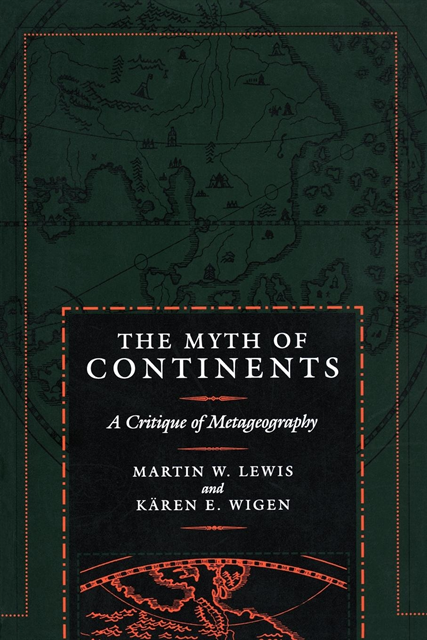
In this thoughtful and engaging critique, geographer Martin W. Lewis and historian Karen Wigen reexamine the basic geographical divisions we take for granted, and challenge the unconscious spatial frameworks that govern the way we perceive the world. Arguing that notions of East vs. West, First World vs. Third World, and even the sevenfold continental system are simplistic and misconceived, the authors trace the history of such misconceptions. Their up-to-the-minute study reflects both on the global scale and its relation to the specific continents of Europe, Asia, and Africa--actually part of one contiguous landmass. The Myth of Continents sheds new light on how our metageographical assumptions grew out of cultural concepts: how the first continental divisions developed from classical times; how the Urals became the division between the so-called continents of Europe and Asia; how countries like Pakistan and Afghanistan recently shifted macroregions in the general consciousness.This extremely readable and thought-provoking analysis also explores the ways that new economic regions, the end of the cold war, and the proliferation of communication technologies change our understanding of the world. It stimulates thinking about the role of large-scale spatial constructs as driving forces behind particular worldviews and encourages everyone to take a more thoughtful, geographically informed approach to the task of describing and interpreting the human diversity of the planet.
Wagering the Land
Ritual, Capital, and Environmental Degradation in the Cordillera of Northern Luzon, 1900-1986
Häftad, Engelska, 2022
835 kr
Skickas inom 3-6 vardagar
Wagering the Land: Ritual, Capital, and Environmental Degradation in the Cordillera of Northern Luzon, 1900–1986 by Martin W. Lewis traces the dramatic transformation of Buguias, a highland community in the Philippines, as subsistence agriculture gave way to commercial vegetable production in the decades following World War II. Drawing on years of ethnographic fieldwork and oral histories, Lewis shows how prosperity from the vegetable boom financed spectacular redistributive feasts while simultaneously eroding the ecological foundations of village life through deforestation, soil loss, water shortages, and chemical contamination. Far from displacing “tradition,” however, commercialization reinforced the region’s ritual economy: ancestors were honored with ever larger sacrifices, and the ethic of gambling—placing one’s fortunes at risk in hope of a windfall—became a cultural template that united high-stakes farming with ritual obligation. In Buguias, capital accumulation and religious practice were not opposing forces but mutually sustaining enterprises, producing a distinctive, if fragile, synthesis of market capitalism and ritual Paganism.Structured in two parts, the book reconstructs prewar subsistence systems, social hierarchies, and trade relations before turning to the postwar decades of boom and crisis. Lewis carefully documents how wealthy farmers and traders, rather than impoverished cultivators, were often at the forefront of ecological destruction, bulldozing hilltops, clearing cloud forests, and intensifying chemical use. At the same time, the profits of commercialization underwrote the continuation—and expansion—of prestige feasts that bound community life together. By situating Buguias in the wider context of political ecology and global capitalism, Wagering the Land challenges conventional wisdom that markets inevitably dissolve communal traditions or that environmental decline is primarily a story of poverty at the margins. Instead, Lewis demonstrates how ritual and risk, ecology and economy, fused into a form of “aberrant development” that preserved social order even as it undermined its own material base. This deeply researched and vividly written study offers essential insights for anthropologists, geographers, historians of Southeast Asia, and all readers interested in the complex entanglements of tradition, capitalism, and environmental change.This title is part of UC Press's Voices Revived program, which commemorates University of California Press’s mission to seek out and cultivate the brightest minds and give them voice, reach, and impact. Drawing on a backlist dating to 1893, Voices Revived makes high-quality, peer-reviewed scholarship accessible once again using print-on-demand technology. This title was originally published in 1992.
Wagering the Land
Ritual, Capital, and Environmental Degradation in the Cordillera of Northern Luzon, 1900-1986
Inbunden, Engelska, 2022
1 513 kr
Skickas inom 3-6 vardagar
Wagering the Land: Ritual, Capital, and Environmental Degradation in the Cordillera of Northern Luzon, 1900–1986 by Martin W. Lewis traces the dramatic transformation of Buguias, a highland community in the Philippines, as subsistence agriculture gave way to commercial vegetable production in the decades following World War II. Drawing on years of ethnographic fieldwork and oral histories, Lewis shows how prosperity from the vegetable boom financed spectacular redistributive feasts while simultaneously eroding the ecological foundations of village life through deforestation, soil loss, water shortages, and chemical contamination. Far from displacing “tradition,” however, commercialization reinforced the region’s ritual economy: ancestors were honored with ever larger sacrifices, and the ethic of gambling—placing one’s fortunes at risk in hope of a windfall—became a cultural template that united high-stakes farming with ritual obligation. In Buguias, capital accumulation and religious practice were not opposing forces but mutually sustaining enterprises, producing a distinctive, if fragile, synthesis of market capitalism and ritual Paganism.Structured in two parts, the book reconstructs prewar subsistence systems, social hierarchies, and trade relations before turning to the postwar decades of boom and crisis. Lewis carefully documents how wealthy farmers and traders, rather than impoverished cultivators, were often at the forefront of ecological destruction, bulldozing hilltops, clearing cloud forests, and intensifying chemical use. At the same time, the profits of commercialization underwrote the continuation—and expansion—of prestige feasts that bound community life together. By situating Buguias in the wider context of political ecology and global capitalism, Wagering the Land challenges conventional wisdom that markets inevitably dissolve communal traditions or that environmental decline is primarily a story of poverty at the margins. Instead, Lewis demonstrates how ritual and risk, ecology and economy, fused into a form of “aberrant development” that preserved social order even as it undermined its own material base. This deeply researched and vividly written study offers essential insights for anthropologists, geographers, historians of Southeast Asia, and all readers interested in the complex entanglements of tradition, capitalism, and environmental change.This title is part of UC Press's Voices Revived program, which commemorates University of California Press’s mission to seek out and cultivate the brightest minds and give them voice, reach, and impact. Drawing on a backlist dating to 1893, Voices Revived makes high-quality, peer-reviewed scholarship accessible once again using print-on-demand technology. This title was originally published in 1992.
1 417 kr
Skickas inom 7-10 vardagar
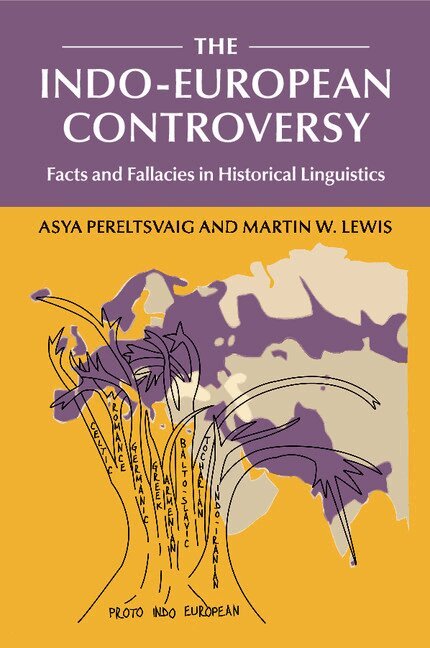
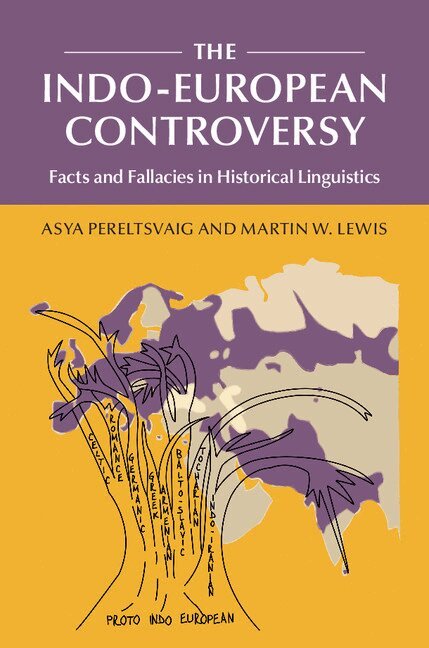
Over the past decade, a group of prolific and innovative evolutionary biologists has sought to reinvent historical linguistics through the use of phylogenetic and phylogeographical analysis, treating cognates like genes and conceptualizing the spread of languages in terms of the diffusion of viruses. Using these techniques, researchers claim to have located the origin of the Indo-European language family in Neolithic Anatolia, challenging the near-consensus view that it emerged in the grasslands north of the Black Sea thousands of years later. But despite its widespread celebration in the global media, this new approach fails to withstand scrutiny. As languages do not evolve like biological species and do not spread like viruses, the model produces incoherent results, contradicted by the empirical record at every turn. This book asserts that the origin and spread of languages must be examined primarily through the time-tested techniques of linguistic analysis, rather than those of evolutionary biology.
441 kr
Skickas inom 7-10 vardagar
Over the past decade, a group of prolific and innovative evolutionary biologists has sought to reinvent historical linguistics through the use of phylogenetic and phylogeographical analysis, treating cognates like genes and conceptualizing the spread of languages in terms of the diffusion of viruses. Using these techniques, researchers claim to have located the origin of the Indo-European language family in Neolithic Anatolia, challenging the near-consensus view that it emerged in the grasslands north of the Black Sea thousands of years later. But despite its widespread celebration in the global media, this new approach fails to withstand scrutiny. As languages do not evolve like biological species and do not spread like viruses, the model produces incoherent results, contradicted by the empirical record at every turn. This book asserts that the origin and spread of languages must be examined primarily through the time-tested techniques of linguistic analysis, rather than those of evolutionary biology.