Martyn Chorlton - Böcker
Visar alla böcker från författaren Martyn Chorlton. Handla med fri frakt och snabb leverans.
10 produkter
10 produkter
178 kr
Skickas inom 11-20 vardagar
Becoming the fourth largest aircraft manufacturer in the United States when Consolidated merged with Vultee in 1943, Convair quickly built a reputation for designing and building some of the largest and most powerful aircraft in the world. From the XA-41 ground-attack aircraft in 1944 through to the CV-880 and CV-990 airliners of the early 1960s, Convair pushed the boundaries with every project they undertook. Some were inevitably more successful than others but all would make their mark in aviation history.The novelty of the turboprop-powered Tradewind flying-boat, the glamour of the F-102 Delta Dagger and F-106 Delta Dart and the brutish power and futuristic appearance of the B-58 Hustler are all trademark Convair machines.Discover the history behind these incredible machines, and many others as well, in this profusely illustrated book by aviation writer Martyn Chorlton.
178 kr
Tillfälligt slut
The Vought F-8 Crusader was a classic post-war aircraft; loved by its pilots, this big machine was nicknamed ‘The Last of the Gunfighters’ because of its primary armament of four 20 mm Colt cannon. The F-8 entered service with the US Navy in 1957 and remained as one of its front line fighters until 1976, having served with distinction during the Vietnam War. Reconnaissance versions served on until 1987, while it was the French Navy who doggedly held onto their F-8s until the arrival of the Rafale in 2000.The A-7 Corsair II came about as a replacement for another US Navy aircraft, the A-4 Skyhawk, and in an effort to cut down on research and development costs, the new light attack aircraft used the same components as the F-8. Much shorter than its older sibling, the A-7 entered service in 1967 and was immediately pressed into service alongside the F-8 in Vietnam with both the US Navy and, later, the USAF. Retired by the ANG in 1991, the A-7 remained operational until 2014 with the Greek Air Force.
168 kr
Skickas inom 11-20 vardagar
The RAF’s first and last jet-powered delta-winged fighter, the Javelin was also the very last aircraft to be built by the Gloster Aircraft Company. The twin-engine Javelin was a complex aircraft and development began as early as 1946, the intention being for the aircraft to be a replacement for the Gloster Meteor. Designed to be the first specifically built all-weather interceptor, the Javelin experienced a protracted development period and did not enter RAF service until 1956. Progressing through nine operational marks, the Javelin proved to be more than capable of intercepting the Canberra at altitude. To keep pace with increasingly better performing Soviet bombers, the fighter’s engines were progressively upgraded from 8,000 lb each in the Mk 1 to 12,300 lbs of thrust in the Mk 8.The Javelin remained the RAF’s sole all-weather fighter until the arrival of the English Electric Lightning. Operating alongside the Lightning, the Javelin was retired from operational service in 1968 although one machine, now on display at IWM Duxford, remained in service with the A&AEE until 1975.
178 kr
Skickas inom 11-20 vardagar
Initially designed and built by Hunting Percival, the Jet Provost was a jet-powered development of the piston Provost trainer, which only entered service five years before its more powerful younger sibling. The Jet Provost became the RAF’s first ab initio jet trainer when it entered service in 1955 and would staunchly remain in this crucial role until 1993 when it was replaced by the turboprop-powered Tucano.During its long service career with the RAF, the Jet Provost progressed through seven marks, although it was only from the T.3 onwards that numbers began to climb. In 1960, Hunting Percival, which was renamed Hunting three years earlier, was taken over by BAC. It was under this new management that the Jet Provost was offered to a world audience with some success in Ceylon (now Sri Lanka), Iraq, Venezuela and Sudan. It was at this point that a dedicated ground-attack version was created in the shape of the Strikemaster, of which 146 were built, serving with a number of air forces across the globe.
158 kr
Skickas
With its roots dating back to the late 1940s and the de Havilland Comet airliner, the Nimrod already had pedigree when it first appeared in the late 1960s in place of the Avro Shackleton in the Maritime Reconnaissance role. Fewer than fifty were built for the RAF, the type being steadily upgraded throughout its career right up to its retirement in 2011. Compared to the Shackleton, the Nimrod brought comfort and reliability to its multi-role long-range activities, including anti-submarine warfare, maritime surveillance and anti-surface warfare. The Nimrod saw action during the Falklands War, the Gulf Wars, Afghanistan and a continued contribution (since 1977) to Operation Tapestry – the protection of the UK’s Sovereign Sea Areas.Specialist versions of the Nimrod also served in the signals intelligence role while other attempted developments failed, such as the Airborne Early Warning role and the final, costly MRA.4 versions, neither of which entered RAF service.This book tells the story of this remarkable aircraft.
168 kr
Skickas
The Blackburn, later Hawker Siddeley, Buccaneer enjoyed an incredible service career that lasted over four decades. Designed as a carrier-borne attack aircraft, the Buccaneer was a solid aircraft designed to take the punishment of carrier operations and the constant stresses to the airframe caused by low-level flying. The aircraft entered service with the Royal Navy in 1962 in place of the Supermarine Scimitar and would continue with the senior service until 1978. The RAF received their first aircraft in 1969 – a legacy of the cancelled TSR.2 and F-111K, which resulted in a capability gap that had to be closed. The Buccaneer went on to serve the RAF in the low-level strike and reconnaissance role until 1994, serving with distinction during the Gulf War of early 1991.A robust and reliable aircraft that was popular with both its air and ground crews, the Buccaneer was a breed apart. A truly great British piece of engineering.
170 kr
Skickas inom 10-15 vardagar
A definitive technical guide to the early Allison-engined P-51 Mustang variants.While the introduction of the Merlin engine did improve the Mustang’s performance and produce the bubble-canopied fighters with which we associate the name, credit must be given to the Allison-engined variants that preceded it. From its inception in early 1940, the Mustang’s development was extraordinarily rapid – such was the need for a fighter at the time, and the confidence in its design. By early January 1942, the Mustang was in service with the RAF, flying low-level armed reconnaissance operations over Northern France. Despite later Merlin variants arriving in-theatre, this remained a hunting ground for the Allison Mustangs through to D-Day and beyond – a remarkable service length.This book shows how, in American hands the Allison-engined Mustangs performed as dive-bombers and fighters, serving with distinction in North Africa and the Far East.
175 kr
Skickas inom 10-15 vardagar
A definitive technical guide to one of the most underrated medium bombers of the Second World War.The Martin B-26 Marauder never fully managed to shake off an undeserved early reputation as a dangerous aircraft to fly. Deemed superior to all other designs on the table at the time, almost a 1,000 had been ordered before the aircraft first took to the air November 1940. From late 1941 the first B-26s became operational in the Pacific, followed by the Mediterranean, but it is in the European theatre that the type was most prolific. It was particularly during the Normandy Landings and later the advance beyond ‘the bulge’ into Germany, were the B-26s medium level tactical ability shone through.This compact volume charts the full history of this aircraft, from serving with the RAF, SAAF and Free French Air Force in the Mediterranean to the little credited Balkan Air Force in support of Tito’s Partisans in Yugoslavia. Sadly the B-26 was unfairly treated at the beginning of its career and even more so at the end as many of the 5,200+ aircraft built were scrapped only days after the end of the war.Alongside stunning artwork including technical illustrations, Martyn Chorlton shows why, as a great aircraft in many respects, the B-26 deserves to be in a better place.
162 kr
Skickas
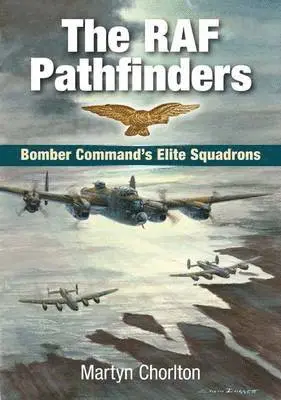
The formation of the Pathfinder Force in August 1942 produced a steady but certain change in the fortunes of Bomber Command. Its effectiveness against targets during the early years of the war had been very difficult to gauge. When examined in detail afterwards, aerial photographs showed that only one third of the aircraft were successfully reaching their target area and less than this were actually placing their bombs with target accuracy. It was known during the large-scale bombing of Coventry in the autumn of 1940 that the Germans had used an elite force of pathfinder aircraft, armed with incendiaries, who had acted as target finders for the main force of German bombers. What was now needed for the RAF were some similar specialist squadrons, with crews handpicked for their discipline, courage, high morale and, in particular, skills in a wider than normal range of flying jobs. Sidney Bufton, Deputy Director of Bomber Operations, developed the concept of a new Target Finding Force, and his tenacity in putting pressure upon senior Air Ministry staff to implement his ideas and bring Bomber Command out of the doldrums paid off.The new force was finally accepted and the choice of Don Bennett as its first Commander was inspired. Bennett was restless, imaginative, and receptive to change. He never accepted second best and he became a legend to all who served under him. Pathfinder Squadrons were equipped with the best available aircraft, which included the famous Lancaster bomber and later, increasingly, the Mosquito which was a hugely versatile and successful fighter bomber. Would be aircrew for the RAF came as volunteers from all parts of the world including Canada, America, Australia and New Zealand. To join a Pathfinder Squadron was a rare privilege but with it went a huge leap in the likelihood of being shot down. Pathfinder aircrew and aircraft had to lead the way for their following Bomber Force in hazardous raid after raid. They flew at night but it took a full 25 minutes to run the gauntlet of the Berlin defences from end to end at full stretch. They were highly vulnerable to the wall of flak thrown up by German city defenders, as well as to attacks by night-fighters. By the end of the war some 56,000 crewmen of Bomber Command had lost their lives.Martyn Chorlton has written a gripping account of the RAF's Pathfinder Squadrons, recalling the challenges faced in the smoke-filled skies over occupied Europe. It is also a tribute to the brave young men whose exploits, lives and, in all too many cases, deaths have left a powerful torch to bear for all who care about freedom. The book carries a moving foreward by Michael Wadsworth, Chaplain to the Pathfinders Association.
142 kr
Skickas
This book provides a detailed history of the wartime airfields of the North West of England, including Cark, Crosby-on-Eden, Great Orton and Millom. It is presented in an illustrated format.