Marvin Rausand – författare
1 511 kr
Läs direkt efter köp
1 802 kr
Läs direkt efter köp
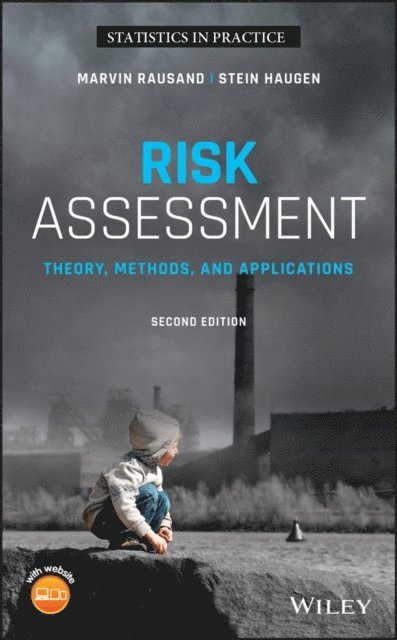
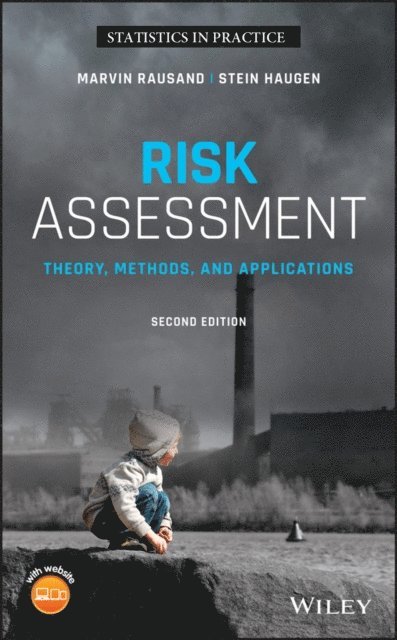
With its balanced coverage of theory and applications along with standards and regulations, Risk Assessment: Theory, Methods, and Applications serves as a comprehensive introduction to the topic. The book serves as a practical guide to current risk analysis and risk assessment, emphasizing the possibility of sudden, major accidents across various areas of practice from machinery and manufacturing processes to nuclear power plants and transportation systems.
The author applies a uniform framework to the discussion of each method, setting forth clear objectives and descriptions, while also shedding light on applications, essential resources, and advantages and disadvantages. Following an introduction that provides an overview of risk assessment, the book is organized into two sections that outline key theory, methods, and applications.
Introduction to Risk Assessment defines key concepts and details the steps of a thorough risk assessment along with the necessary quantitative risk measures. Chapters outline the overall risk assessment process, and a discussion of accident models and accident causation offers readers new insights into how and why accidents occur to help them make better assessments.
Risk Assessment Methods and Applications carefully describes the most relevant methods for risk assessment, including preliminary hazard analysis, HAZOP, fault tree analysis, and event tree analysis. Here, each method is accompanied by a self-contained description as well as workflow diagrams and worksheets that illustrate the use of discussed techniques. Important problem areas in risk assessment, such as barriers and barrier analysis, human errors, and human reliability, are discussed along with uncertainty and sensitivity analysis.
Each chapter concludes with a listing of resources for further study of the topic, and detailed appendices outline main results from probability and statistics, related formulas, and a listing of key terms used in risk assessment. A related website features problems that allow readers to test their comprehension of the presented material and supplemental slides to facilitate the learning process.
Risk Assessment is an excellent book for courses on risk analysis and risk assessment at the upper-undergraduate and graduate levels. It also serves as a valuable reference for engineers, researchers, consultants, and practitioners who use risk assessment techniques in their everyday work.
1 802 kr
Läs direkt efter köp
With its balanced coverage of theory and applications along with standards and regulations, Risk Assessment: Theory, Methods, and Applications serves as a comprehensive introduction to the topic. The book serves as a practical guide to current risk analysis and risk assessment, emphasizing the possibility of sudden, major accidents across various areas of practice from machinery and manufacturing processes to nuclear power plants and transportation systems.
The author applies a uniform framework to the discussion of each method, setting forth clear objectives and descriptions, while also shedding light on applications, essential resources, and advantages and disadvantages. Following an introduction that provides an overview of risk assessment, the book is organized into two sections that outline key theory, methods, and applications.
Introduction to Risk Assessment defines key concepts and details the steps of a thorough risk assessment along with the necessary quantitative risk measures. Chapters outline the overall risk assessment process, and a discussion of accident models and accident causation offers readers new insights into how and why accidents occur to help them make better assessments.
Risk Assessment Methods and Applications carefully describes the most relevant methods for risk assessment, including preliminary hazard analysis, HAZOP, fault tree analysis, and event tree analysis. Here, each method is accompanied by a self-contained description as well as workflow diagrams and worksheets that illustrate the use of discussed techniques. Important problem areas in risk assessment, such as barriers and barrier analysis, human errors, and human reliability, are discussed along with uncertainty and sensitivity analysis.
Each chapter concludes with a listing of resources for further study of the topic, and detailed appendices outline main results from probability and statistics, related formulas, and a listing of key terms used in risk assessment. A related website features problems that allow readers to test their comprehension of the presented material and supplemental slides to facilitate the learning process.
Risk Assessment is an excellent book for courses on risk analysis and risk assessment at the upper-undergraduate and graduate levels. It also serves as a valuable reference for engineers, researchers, consultants, and practitioners who use risk assessment techniques in their everyday work.
1 930 kr
Skickas
2 167 kr
Läs direkt efter köp
Handbook and reference for industrial statisticians and system reliability engineers
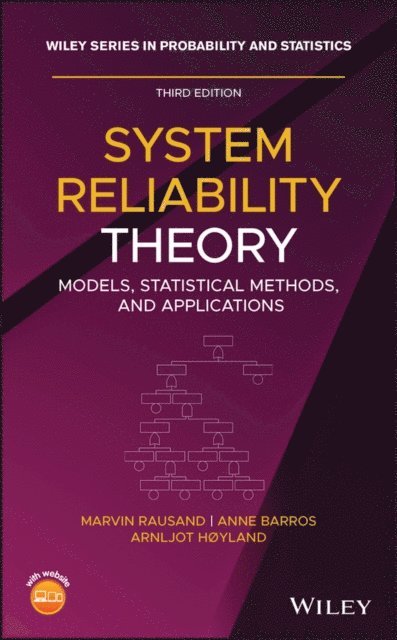
System Reliability Theory: Models, Statistical Methods, and Applications, Third Edition presents an updated and revised look at system reliability theory, modeling, and analytical methods. The new edition is based on feedback to the second edition from numerous students, professors, researchers, and industries around the world. New sections and chapters are added together with new real-world industry examples, and standards and problems are revised and updated.
System Reliability Theory covers a broad and deep array of system reliability topics, including:
· In depth discussion of failures and failure modes
· The main system reliability assessment methods
· Common-cause failure modeling
· Deterioration modeling
· Maintenance modeling and assessment using Python code
· Bayesian probability and methods
· Life data analysis using R
Perfect for undergraduate and graduate students taking courses in reliability engineering, this book also serves as a reference and resource for practicing statisticians and engineers.
Throughout, the book has a practical focus, incorporating industry feedback and real-world industry problems and examples.
2 167 kr
Läs direkt efter köp
Handbook and reference for industrial statisticians and system reliability engineers
System Reliability Theory: Models, Statistical Methods, and Applications, Third Edition presents an updated and revised look at system reliability theory, modeling, and analytical methods. The new edition is based on feedback to the second edition from numerous students, professors, researchers, and industries around the world. New sections and chapters are added together with new real-world industry examples, and standards and problems are revised and updated.
System Reliability Theory covers a broad and deep array of system reliability topics, including:
· In depth discussion of failures and failure modes
· The main system reliability assessment methods
· Common-cause failure modeling
· Deterioration modeling
· Maintenance modeling and assessment using Python code
· Bayesian probability and methods
· Life data analysis using R
Perfect for undergraduate and graduate students taking courses in reliability engineering, this book also serves as a reference and resource for practicing statisticians and engineers.
Throughout, the book has a practical focus, incorporating industry feedback and real-world industry problems and examples.
1 875 kr
Läs direkt efter köp
Introduces risk assessment with key theories, proven methods, and state-of-the-art applications
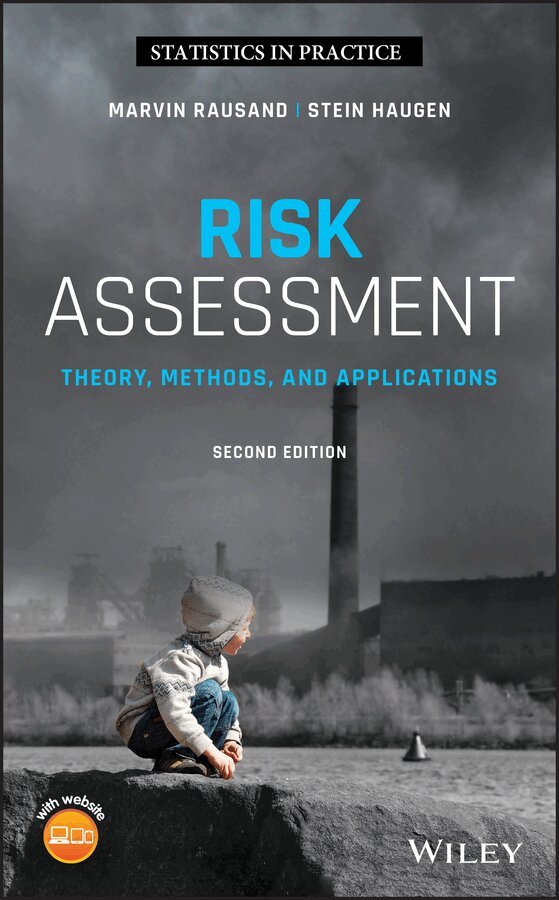
Risk Assessment: Theory, Methods, and Applications remains one of the few textbooks to address current risk analysis and risk assessment with an emphasis on the possibility of sudden, major accidents across various areas of practice—from machinery and manufacturing processes to nuclear power plants and transportation systems. Updated to align with ISO 31000 and other amended standards, this all-new 2nd Edition discusses the main ideas and techniques for assessing risk today.
The book begins with an introduction of risk analysis, assessment, and management, and includes a new section on the history of risk analysis. It covers hazards and threats, how to measure and evaluate risk, and risk management. It also adds new sections on risk governance and risk-informed decision making; combining accident theories and criteria for evaluating data sources; and subjective probabilities. The risk assessment process is covered, as are how to establish context; planning and preparing; and identification, analysis, and evaluation of risk. Risk Assessment also offers new coverage of safe job analysis and semi-quantitative methods, and it discusses barrier management and HRA methods for offshore application. Finally, it looks at dynamic risk analysis, security and life-cycle use of risk.
Serves as a practical and modern guide to the current applications of risk analysis and assessment, supports key standards, and supplements legislation related to risk analysis Updated and revised to align with ISO 31000 Risk Management and other new standards and includes new chapters on security, dynamic risk analysis, as well as life-cycle use of risk analysis Provides in-depth coverage on hazard identification, methodologically outlining the steps for use of checklists, conducting preliminary hazard analysis, and job safety analysis Presents new coverage on the history of risk analysis, criteria for evaluating data sources, risk-informed decision making, subjective probabilities, semi-quantitative methods, and barrier management Contains more applications and examples, new and revised problems throughout, and detailed appendices that outline key terms and acronyms Supplemented with a book companion website containing Solutions to problems, presentation material and an Instructor ManualRisk Assessment: Theory, Methods, and Applications, Second Edition is ideal for courses on risk analysis/risk assessment and systems engineering at the upper-undergraduate and graduate levels. It is also an excellent reference and resource for engineers, researchers, consultants, and practitioners who carry out risk assessment techniques in their everyday work.
1 756 kr
Skickas
1 875 kr
Läs direkt efter köp
Introduces risk assessment with key theories, proven methods, and state-of-the-art applications
Risk Assessment: Theory, Methods, and Applications remains one of the few textbooks to address current risk analysis and risk assessment with an emphasis on the possibility of sudden, major accidents across various areas of practice—from machinery and manufacturing processes to nuclear power plants and transportation systems. Updated to align with ISO 31000 and other amended standards, this all-new 2nd Edition discusses the main ideas and techniques for assessing risk today.
The book begins with an introduction of risk analysis, assessment, and management, and includes a new section on the history of risk analysis. It covers hazards and threats, how to measure and evaluate risk, and risk management. It also adds new sections on risk governance and risk-informed decision making; combining accident theories and criteria for evaluating data sources; and subjective probabilities. The risk assessment process is covered, as are how to establish context; planning and preparing; and identification, analysis, and evaluation of risk. Risk Assessment also offers new coverage of safe job analysis and semi-quantitative methods, and it discusses barrier management and HRA methods for offshore application. Finally, it looks at dynamic risk analysis, security and life-cycle use of risk.
Serves as a practical and modern guide to the current applications of risk analysis and assessment, supports key standards, and supplements legislation related to risk analysis Updated and revised to align with ISO 31000 Risk Management and other new standards and includes new chapters on security, dynamic risk analysis, as well as life-cycle use of risk analysis Provides in-depth coverage on hazard identification, methodologically outlining the steps for use of checklists, conducting preliminary hazard analysis, and job safety analysis Presents new coverage on the history of risk analysis, criteria for evaluating data sources, risk-informed decision making, subjective probabilities, semi-quantitative methods, and barrier management Contains more applications and examples, new and revised problems throughout, and detailed appendices that outline key terms and acronyms Supplemented with a book companion website containing Solutions to problems, presentation material and an Instructor ManualRisk Assessment: Theory, Methods, and Applications, Second Edition is ideal for courses on risk analysis/risk assessment and systems engineering at the upper-undergraduate and graduate levels. It is also an excellent reference and resource for engineers, researchers, consultants, and practitioners who carry out risk assessment techniques in their everyday work.
2 236 kr
Skickas inom 10-15 vardagar
2 741 kr
Läs direkt efter köp
Currently, reliability issues are not addressed effectively in new product development. Product reliability depends on the technical decisions made in the early stages and the impact of commercial outcomes in the latter stages. With an effective methodology for reliability performance and specification, one can make better decisions.
Product Reliability develops a framework linking reliability specifications and product performance in new product development by: (1) considering how customer needs and business aims can be translated into product development so that desired performance is met/exceeded; (2) discussing the data requirements, tools and techniques needed to build models vital to decision-making; (3) providing an approach applicable to many products.
This book is suitable for managers and engineers involved in new product design. It can be used as a text for graduate courses on design, manufacturing, new product development and operations management and in various engineering disciplines.
2 152 kr
Skickas inom 5-8 vardagar