Mary Ann Heiss – författare
Visar alla böcker från författaren Mary Ann Heiss. Handla med fri frakt och snabb leverans.
6 produkter
6 produkter
Häftad, Engelska, 1997
668 kr
Skickas inom 3-6 vardagar
Heiss provides a detailed account of the 1951 seizure of British oil holdings in Iran by prime minister Mohammed Mossadegh, a turning point in cold war history.
Inbunden, Engelska, 2020
636 kr
Skickas inom 10-15 vardagar
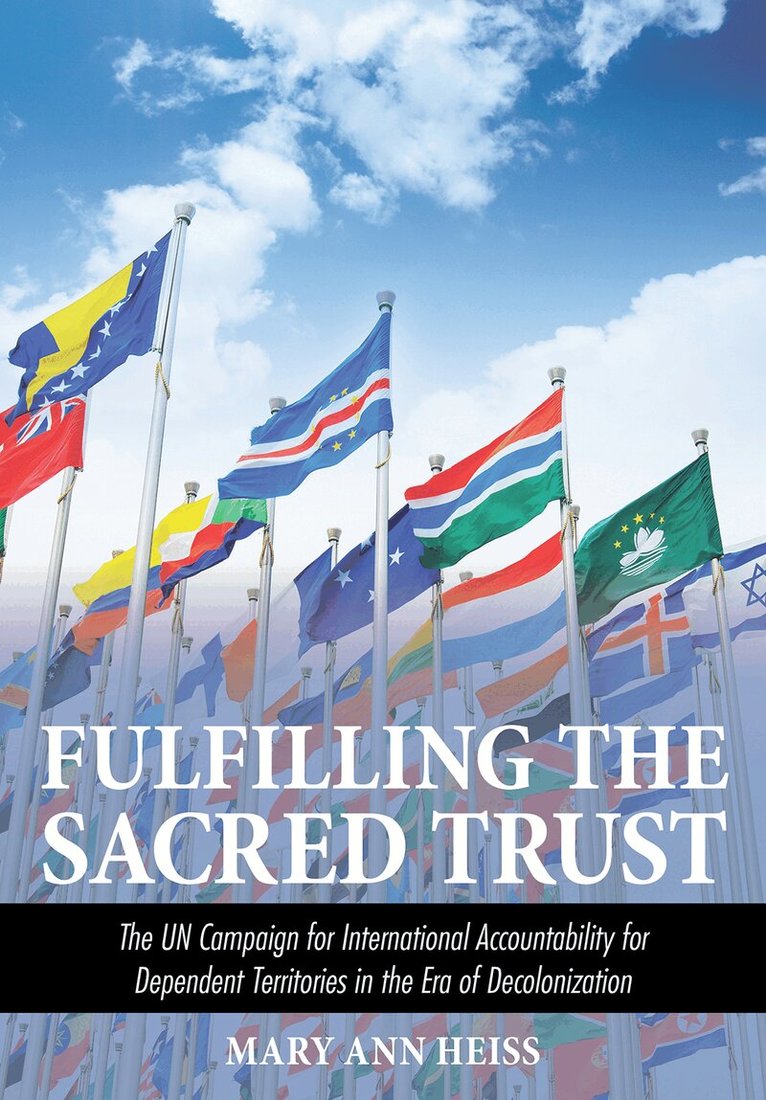
Fulfilling the Sacred Trust explores the implementation of international accountability for dependent territories under the United Nations during the early Cold War era. Although the Western nations that drafted the UN Charter saw the organization as a means of maintaining the international status quo they controlled, newly independent nations saw the UN as an instrument of decolonization and an agent of change disrupting global political norms. Mary Ann Heiss documents the unprecedented process through which these new nations came to wrest control of the United Nations from the World War II victors that founded it, allowing the UN to become a vehicle for global reform.Heiss examines the consequences of these early changes on the global political landscape in the midst of heightened international tensions playing out in Europe, the developing world, and the UN General Assembly. She puts this anti-colonial advocacy for accountability into perspective by making connections between the campaign for international accountability in the United Nations and other postwar international reform efforts such as the anti-apartheid movement, Pan-Africanism, the Non-Aligned Movement, and the drive for global human rights.Chronicling the combative history of this campaign, Fulfilling the Sacred Trust details the global impact of the larger UN reformist effort. Heiss demonstrates the unintended impact of decolonization on the United Nations and its agenda, as well as the shift in global influence from the developed to the developing world.
E-bok
Engelska, 2008623 kr
Läs direkt efter köp
There is no shortage of literature addressing the workings, influence, and importance of NATO and the Warsaw Pact individually or how the two blocs faced off during the decades of the Cold War. However, little has been written about the various intrabloc tensions that plagued both alliances during the Cold War or about how those tensions affected the alliances’ operation. The essays in NATO and the Warsaw Pact seek to address that glaring gap in the historiography by utilizing a wide range of case studies to explore these often-significant tensions, dispelling in the process all thoughts that the alliances always operated smoothly and without internal dissent. The volume is divided into two parts, one on each alliance. An introductory essay by S. Victor Papacosma spells out the themes addressed in the individual essays and the volume’s coherent historiographical contribution. They include, but are not limited to, military and political matters, the consequences of World War II for the non-Western world, the role of individuals in shaping historical events, and the unintended consequences of policy choices and developments. The international group of contributors brings to bear considerable policymaking and academic experience. In approaching the Cold War–era alliances from a new angle and in drawing on recently declassified documentation, this volume adds to the literature in recent international history and will be of interest to scholars in such fields as U.S. foreign relations, European diplomatic history, and security and defense studies, among others. Visit the Parallel History Project on Cooperative Security site for more information and news related to NATO and the Warsaw Pact.
E-bok
PDF, Engelska, 2008623 kr
Läs direkt efter köp
There is no shortage of literature addressing the workings, influence, and importance of NATO and the Warsaw Pact individually or how the two blocs faced off during the decades of the Cold War. However, little has been written about the various intrabloc tensions that plagued both alliances during the Cold War or about how those tensions affected the alliances’ operation. The essays in NATO and the Warsaw Pact seek to address that glaring gap in the historiography by utilizing a wide range of case studies to explore these often-significant tensions, dispelling in the process all thoughts that the alliances always operated smoothly and without internal dissent. The volume is divided into two parts, one on each alliance. An introductory essay by S. Victor Papacosma spells out the themes addressed in the individual essays and the volume’s coherent historiographical contribution. They include, but are not limited to, military and political matters, the consequences of World War II for the non-Western world, the role of individuals in shaping historical events, and the unintended consequences of policy choices and developments. The international group of contributors brings to bear considerable policymaking and academic experience. In approaching the Cold War–era alliances from a new angle and in drawing on recently declassified documentation, this volume adds to the literature in recent international history and will be of interest to scholars in such fields as U.S. foreign relations, European diplomatic history, and security and defense studies, among others. Visit the Parallel History Project on Cooperative Security site for more information and news related to NATO and the Warsaw Pact.
906 kr
Tillfälligt slut
Heiss provides a detailed account of the 1951 seizure of British oil holdings in Iran by prime minister Mohammed Mossadegh, a turning point in cold war history.
Inbunden, Engelska, 2001
1 083 kr
Tillfälligt slut