Peter L. Hahn – författare
Visar alla böcker från författaren Peter L. Hahn. Handla med fri frakt och snabb leverans.
17 produkter
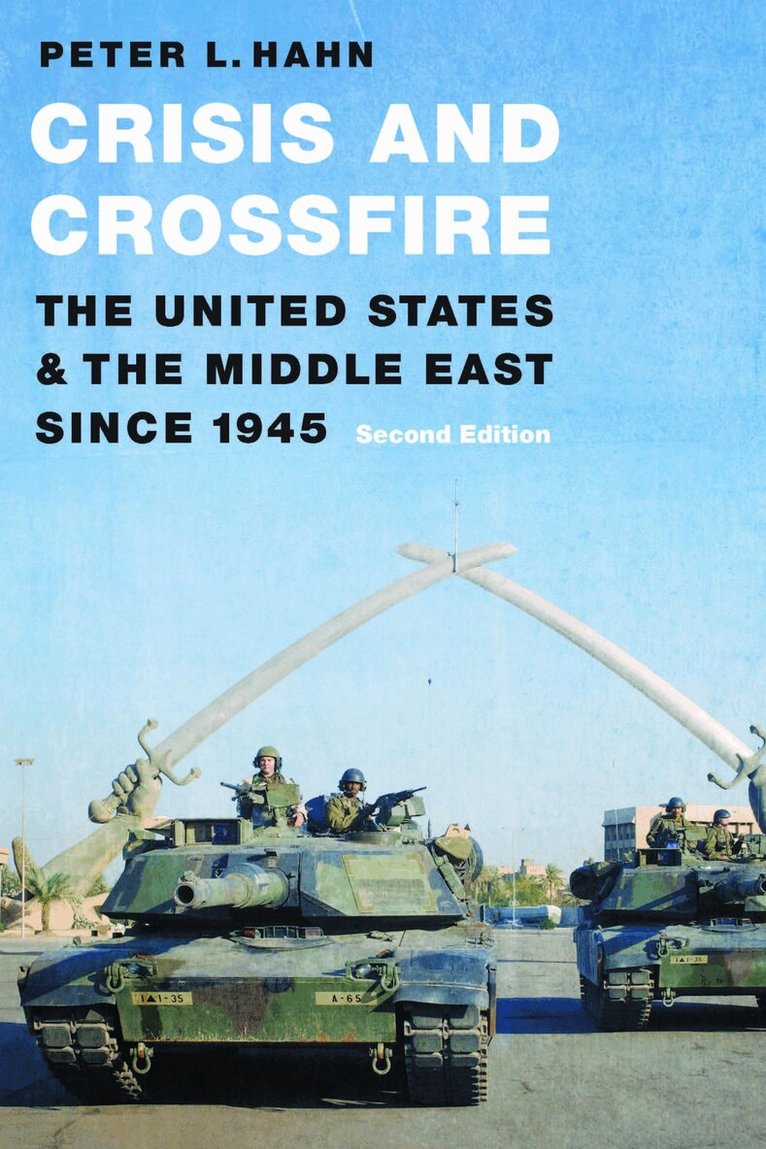
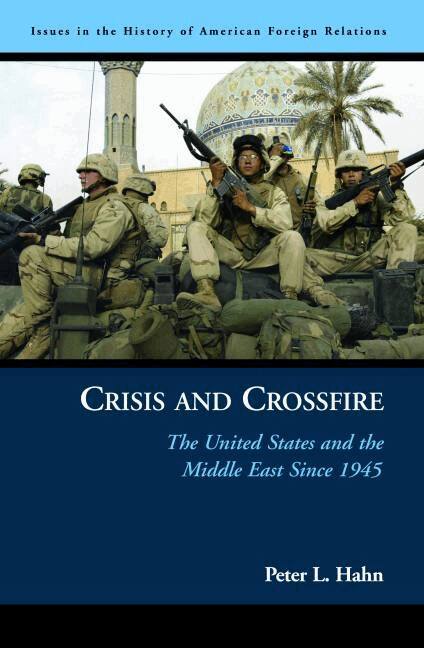
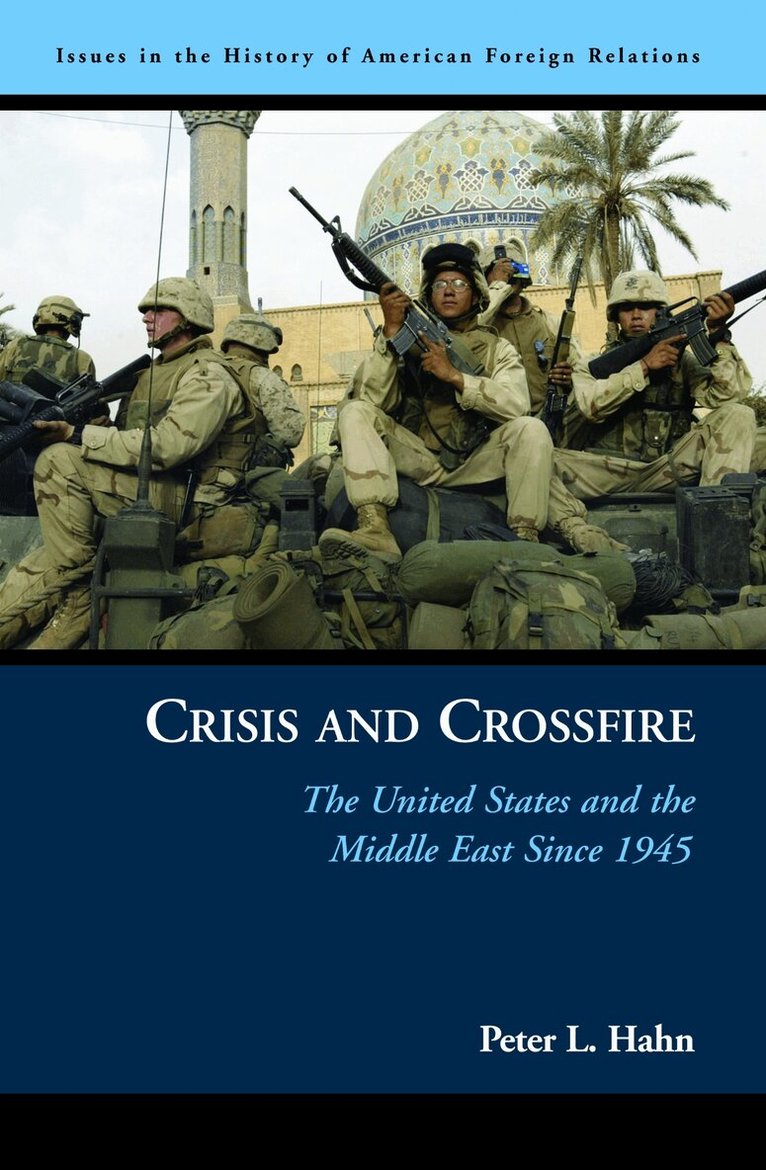
Crisis and Crossfire
The United States and the Middle East Since 1945
Häftad, 2025
334 kr
Lägg i varukorg
Crisis and Crossfire traces the origins of the contemporary challenges facing the United States in the Middle East by analyzing the broad contours of U.S. policy in the region since the government’s first involvement there in the 1940s. Peter L. Hahn evaluates U.S. policy in the context of such …
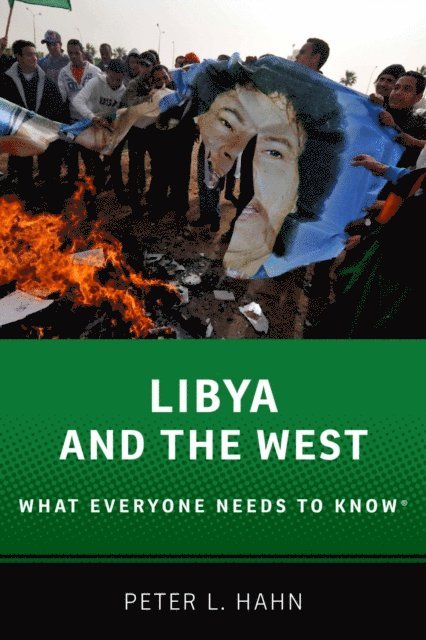
Libya and the West
What Everyone Needs to Know®
Inbunden, 2025
712 kr
Lägg i varukorg
Libya and the West: What Everyone Needs to Know® is a welcome update to the literature on Western diplomatic relations with Libya. It specifically analyzes the complicated relationships that Italy, Britain, the United States, and France developed with Libya beginning in the 1910s. On the basis of a …
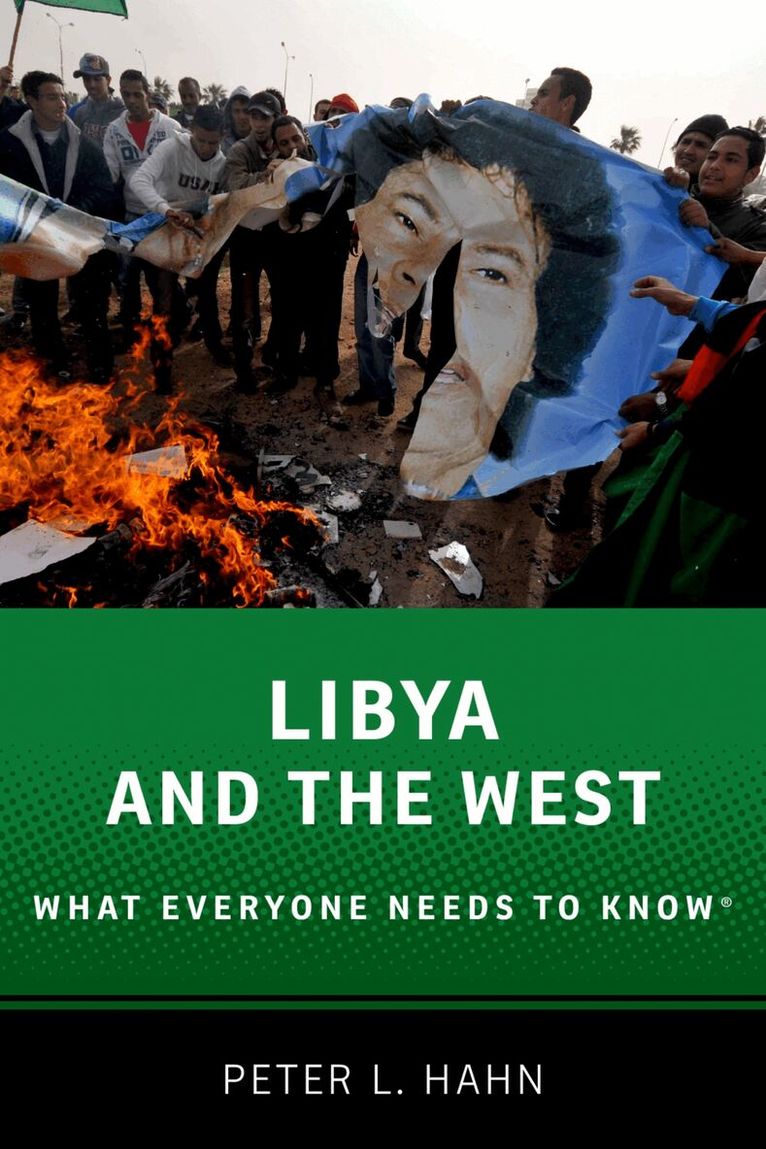
Libya and the West
What Everyone Needs to Know®
Häftad, 2025
157 kr
Lägg i varukorg
Libya and the West: What Everyone Needs to Know® is a welcome update to the literature on Western diplomatic relations with Libya. It specifically analyzes the complicated relationships that Italy, Britain, the United States, and France developed with Libya beginning in the 1910s. On the basis of …
Libya and the West
What Everyone Needs to Know®
E-bok, 2025
137 kr
Lägg i varukorg
Libya and the West: What Everyone Needs to Know ® is a welcome update to the literature on Western diplomatic relations with Libya. It specifically analyzes the complicated relationships that Italy, Britain, the United States, and France developed with Libya beginning in the 1910s. On the basis of …
Libya and the West
What Everyone Needs to Know®
E-bok, 2025
134 kr
Lägg i varukorg
Libya and the West: What Everyone Needs to Know ® is a welcome update to the literature on Western diplomatic relations with Libya. It specifically analyzes the complicated relationships that Italy, Britain, the United States, and France developed with Libya beginning in the 1910s. On the basis of …
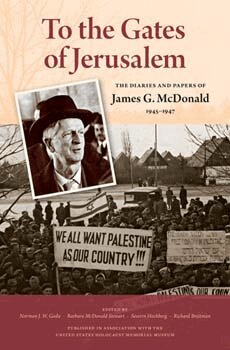
To the Gates of Jerusalem
The Diaries and Papers of James G. McDonald, 1945-1947
Av James G. McDonald, Peter L. Hahn m. fl.
Inbunden, 2014
355 kr
Lägg i varukorg
This volume, the third in a series of James G. McDonald's edited diaries and papers, covers his work from 1945, with the formation of the Anglo-American Committee, through 1947, with the United Nations' decision to partition Palestine between Jews and Arabs. The "Anglo-American Committee of Inquiry …
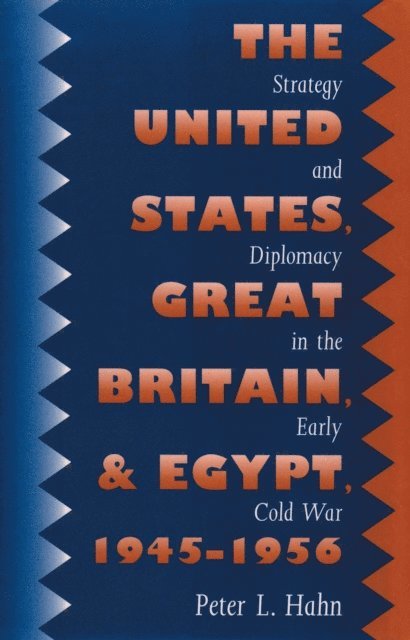
United States, Great Britain, and Egypt, 1945-1956
Strategy and Diplomacy in the Early Cold War
Häftad, 2004
616 kr
Lägg i varukorg
Egypt figured prominently in United States policy in the Middle East after World War II because of its strategic, political, and economic importance. Peter Hahn explores the triangular relationship between the United States, Great Britain, and Egypt in order to analyze the justifications and …
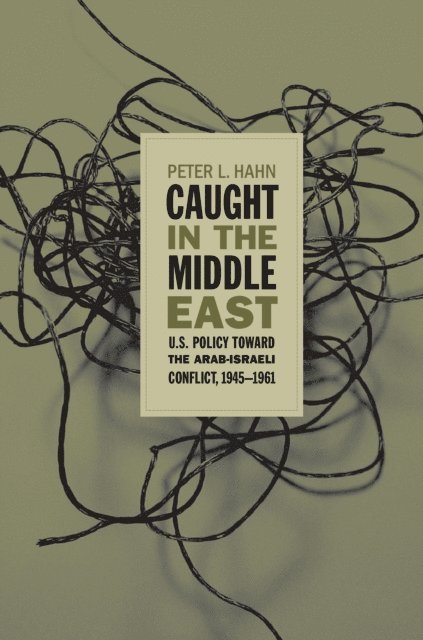
Caught in the Middle East
U.S. Policy Toward the Arab-Israeli Conflict, 1945-1961
Häftad, 2006
472 kr
Lägg i varukorg
Postwar American officials desired - in principle - to promote Arab-Israeli peace in order to stabilize the Middle East. Yet Peter L. Hahn shows how, during the Truman and Eisenhower administrations, that desire for peace was not always an American priority, as U.S. leaders consistently gave more …
Caught in the Middle East
U.S. Policy toward the Arab-Israeli Conflict, 1945-1961
E-bok, 2005
535 kr
Lägg i varukorg
American postwar efforts to ameliorate Arab-Israeli relations entangled the United States in the Arab-Israeli conflict in complex ways. Peter L. Hahn explores the diplomatic and cultural factors that influenced the policies of Presidents Truman and Eisenhower as they faced the escalation of one of …
A to Z of United States-Middle East Relations
Häftad, 2010
732 kr
Lägg i varukorg
The current state of affairs between the United States and the Middle East is probably the most volatile and absorbing relationship the U.S. is involved in today. Prior to 1941, however, the U.S. preferred to limit its involvement with the Middle East to launching ministries of evangelism and …
Historical Dictionary of United States-Middle East Relations
Inbunden, 2016
1415 kr
Lägg i varukorg
U.S. foreign relations in the Middle East has remained crucial through many decades and the complications facing the United States in the Middle East have become even more acute. While the United States downgraded its military operations in Iraq, that country failed to achieve a stable, democratic …
United States, Great Britain, and Egypt, 1945-1956
Strategy and Diplomacy in the Early Cold War
E-bok, 2014
535 kr
Lägg i varukorg
Egypt figured prominently in United States policy in the Middle East after World War II because of its strategic, political, and economic importance. Peter Hahn explores the triangular relationship between the United States, Great Britain, and Egypt in order to analyze the justifications and …
Crisis and Crossfire
The United States and the Middle East Since 1945
Av Peter L Hahn
Häftad, 2005
272 kr
Lägg i varukorg
Although it seems almost incredible today, the United States had relatively little interest in the Middle East before 1945. But the dynamics and outcome of World War II elevated the importance of the Middle East in the American mind, and the United States has viewed the region with vital interest …
United States, Great Britain, and Egypt, 1945-1956
Strategy and Diplomacy in the Early Cold War
E-bok, 2014
535 kr
Lägg i varukorg
Egypt figured prominently in United States policy in the Middle East after World War II because of its strategic, political, and economic importance. Peter Hahn explores the triangular relationship between the United States, Great Britain, and Egypt in order to analyze the justifications and …
Caught in the Middle East
U.S. Policy toward the Arab-Israeli Conflict, 1945-1961
E-bok, 2005
535 kr
Lägg i varukorg
American postwar efforts to ameliorate Arab-Israeli relations entangled the United States in the Arab-Israeli conflict in complex ways. Peter L. Hahn explores the diplomatic and cultural factors that influenced the policies of Presidents Truman and Eisenhower as they faced the escalation of one of …
Empire and Revolution
The United States and the Third World Since 1945
Av Peter L. Hahn, Mary Ann Heiss
Inbunden, 2001
1162 kr
Tillfälligt slut
Crisis and Crossfire
The United States and the Middle East Since 1945
Av Peter L Hahn
Inbunden, 2005
509 kr
Tillfälligt slut
Although it seems almost incredible today, the United States had relatively little interest in the Middle East before 1945. But the dynamics and outcome of World War II elevated the importance of the Middle East in the American mind, and the United States has viewed the region with vital interest …