Mary Vincent – författare
Visar alla böcker från författaren Mary Vincent. Handla med fri frakt och snabb leverans.
4 produkter
Spain, 1833-2002
People and State
Av Mary Vincent
E-bok, 2007
370 kr
Lägg i varukorg
This book provides a cultural history of Spanish politics from the civil war of 1833 to the Spanish adoption of the Euro in 2002, a period dominated for the most part by violent military interventions in the political process, a succession of weak, unstable, but repressive governments, and the …
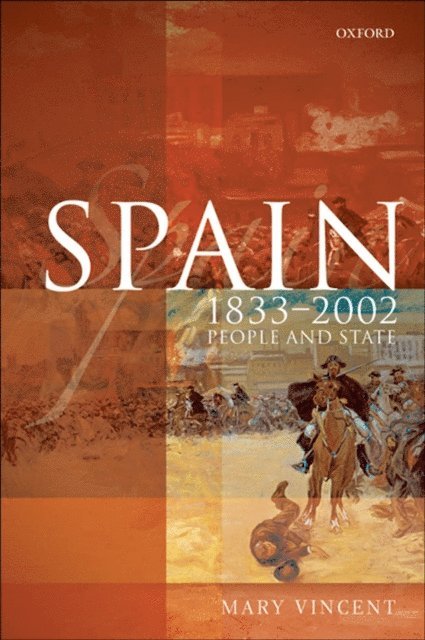
Spain, 1833-2002
People and State
Av Mary Vincent
E-bok, 2007
370 kr
Lägg i varukorg
This book provides a cultural history of Spanish politics from the civil war of 1833 to the Spanish adoption of the Euro in 2002, a period dominated for the most part by violent military interventions in the political process, a succession of weak, unstable, but repressive governments, and the …
Catholicism in the Second Spanish Republic
Religion and Politics in Salamanca 1930-1936
Av Mary Vincent
Inbunden, 1996
4325 kr
Lägg i varukorg
The Second Spanish Republic survived unchallenged for a mere five years, its fall plunging Spain into a bitter civil war. The brief political history of the republic was characterized by the rapid polarization of right and left - a process in which religion played a crucial role. Many of the …
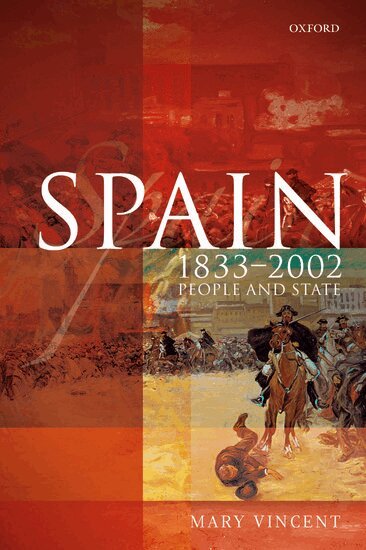
Spain, 1833-2002
People and State
Av Mary Vincent
Häftad, 2007
489 kr
Lägg i varukorg
This book provides a cultural history of Spanish politics from the civil war of 1833 to the Spanish adoption of the Euro in 2002, a period dominated for the most part by violent military interventions in the political process, a succession of weak, unstable, but repressive governments, and the …